Global trade relies heavily on the efficiency of ocean freight. If you are a business owner or supply chain manager sourcing products from the world’s largest manufacturing hub, understanding exactly how to ship containers overseas is critical to your bottom line. Navigating international logistics, customs clearance, and long-distance ocean transit can seem daunting, but it doesn’t have to be.
At Jazlog, we are a premier China freight forwarder dedicated to bridging the gap between Chinese manufacturers and global markets. Whether you are shipping to the USA, Canada, Australia, the UK, Europe, or Africa, this comprehensive guide will walk you through the essential steps to ensure your cargo arrives safely, on time, and within budget.
European Rail Transport Trends and Cost Analysis: China to Europe Rail Freight
1. Introduction to European Rail Transport Trends
Overview of Current Rail Transport Landscape in Europe
Europe’s rail transport infrastructure is a finely interwoven tapestry of high-capacity lines, regional connectors, and intermodal terminals that collectively facilitate both freight and passenger mobility. For freight engineers, the network isn’t just steel and sleepers—it’s a living circulatory system, where efficiency and reliability define competitive advantage. With increasing industrial activity across Central and Eastern Europe, rail corridors are now accommodating heavier axle loads and higher container throughput, demanding precise coordination in scheduling, yard operations, and rolling stock allocation.
Key Drivers Influencing Rail Transport Growth
The uptick in rail transport can be attributed to several intersecting factors. Regulatory support from the EU, focused on decarbonization targets and modal shift incentives, has pushed freight operators toward greener solutions. Technological innovation, including automated shunting yards and real-time tracking systems, has enhanced operational reliability. Moreover, market demand from sectors such as automotive, electronics, and e-commerce has increased pressure for faster, more predictable delivery cycles.
Significance of China to Europe Rail Freight
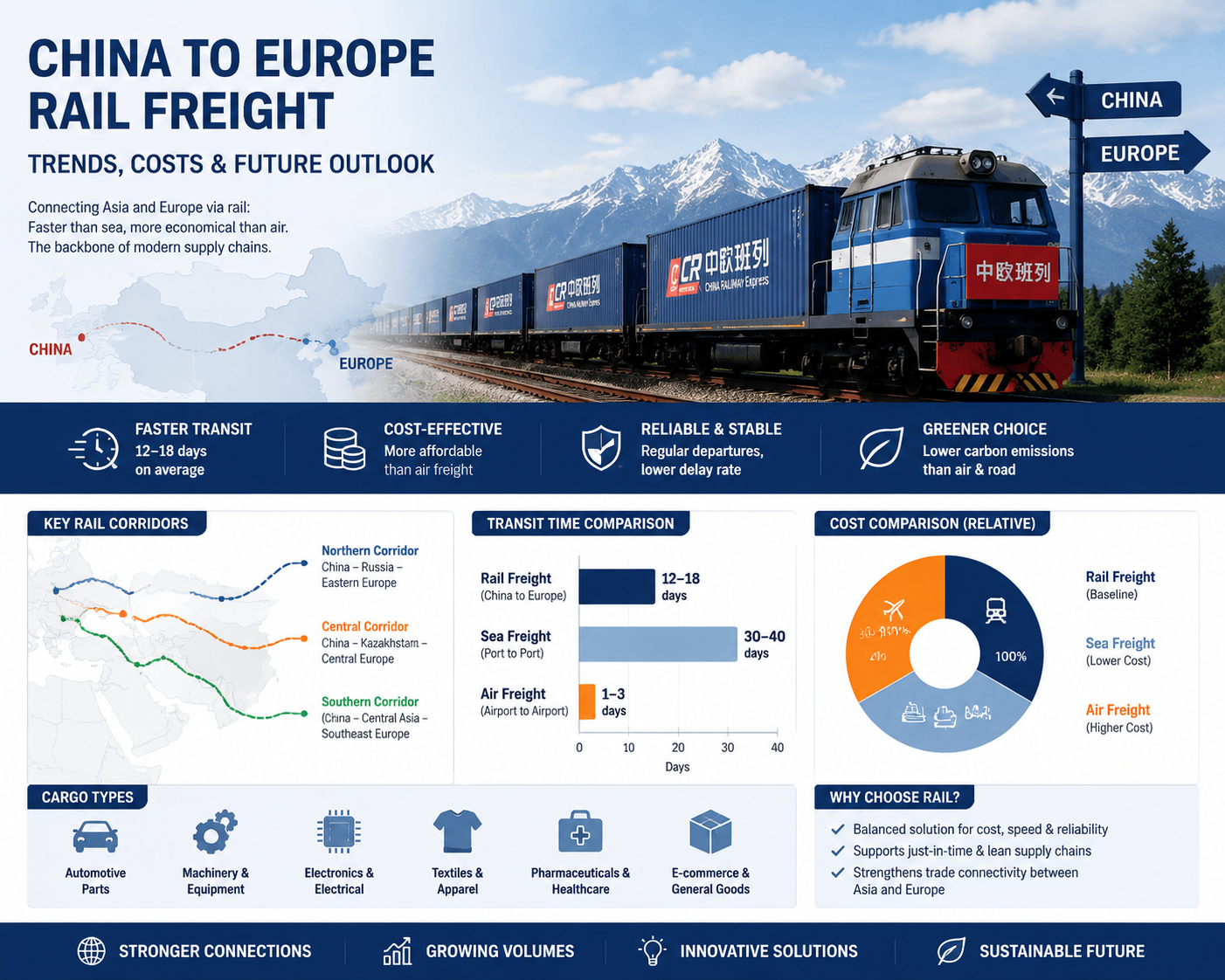
China to Europe rail freight has emerged as a crucial alternative to traditional maritime and air transport, particularly for mid-value, time-sensitive cargo. This land bridge enables manufacturers to mitigate sea congestion while reducing costs relative to air freight, all without sacrificing transit reliability. For engineers in supply chain planning, it represents an optimized logistical solution, balancing speed, cost, and risk.
2. Historical Development of Rail Freight Between China and Europe
Evolution of the Belt and Road Initiative
The Belt and Road Initiative (BRI) has acted as a catalyst for rail connectivity across Eurasia. Launched to enhance trade and infrastructure synergy, the BRI has systematically expanded transcontinental freight corridors. It prioritizes dual objectives: facilitating industrial exports from China and stimulating economic integration within participating European regions.
Milestones in China-Europe Rail Connectivity
Significant milestones include the establishment of dedicated freight services from Chongqing, Wuhan, and Yiwu to major European hubs such as Duisburg, Warsaw, and Madrid. Over the last decade, rail operators have achieved impressive frequency enhancements, with weekly departures becoming commonplace and transit routes optimized for minimum dwell times at border crossings.
Changes in Freight Volumes Over the Past Decade
Freight volumes have grown exponentially, reflecting both industrial globalization and regional supply chain diversification. Containerized rail traffic has expanded from a niche mode to a mainstream logistics choice, with annual growth rates often exceeding 20% for strategic trade corridors. This trend underscores the viability of rail as a backbone for transcontinental trade.
3. Key Rail Corridors Connecting China to Europe
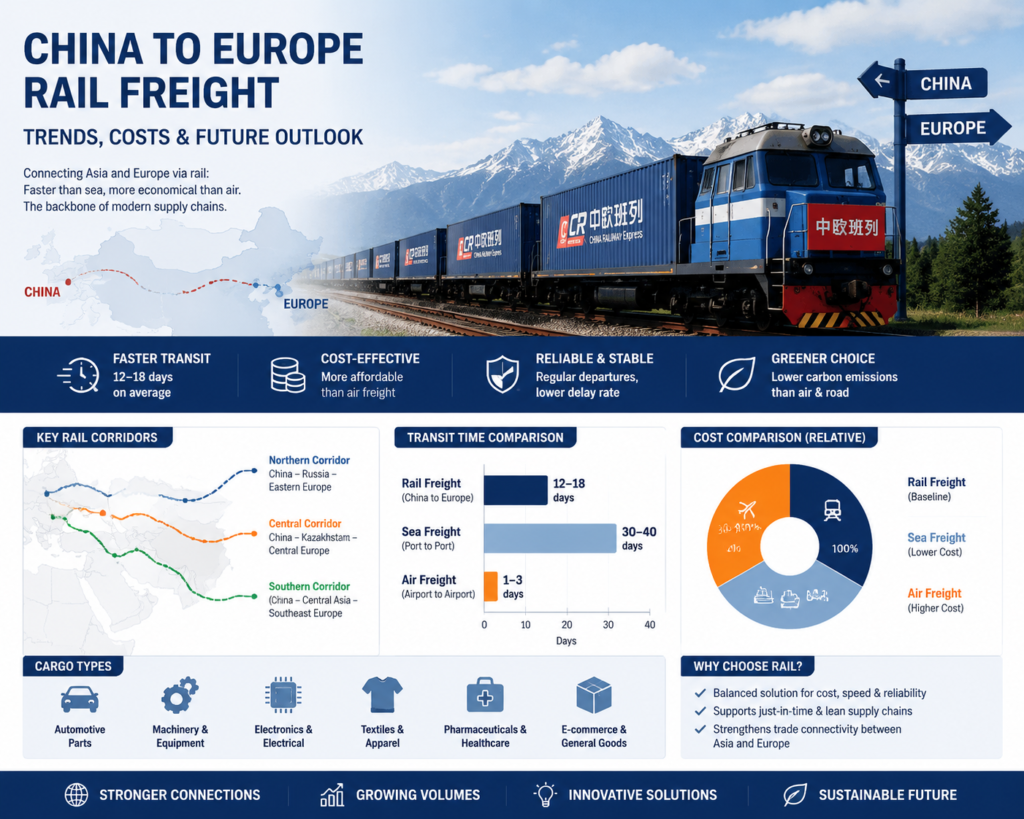
Northern Corridor: China to Russia and Eastern Europe
The Northern Corridor leverages the Trans-Siberian Railway, navigating vast stretches of Russia to link China with Eastern European markets. Its high-capacity lines and robust signaling systems accommodate heavy cargo, although climatic extremes necessitate specialized rolling stock and adaptive operational strategies.
Central Corridor: China to Central Europe via Kazakhstan
This corridor, traversing Kazakhstan and Poland, optimizes transit efficiency while bypassing congested northern routes. For supply engineers, the corridor offers predictable delivery schedules and reduced border handling complexity, which is particularly attractive for electronics and machinery shipments.
Southern Corridor: China to Southeast Europe
The Southern Corridor extends through Central Asia into the Balkans, providing access to Greece, Hungary, and surrounding markets. While slightly slower, this route offers strategic diversification and redundancy, ensuring supply chains are not vulnerable to single-point disruptions.
4. Rail Freight Market Dynamics
Market Size and Growth Trends
The market for China to Europe rail freight has grown into a multibillion-dollar sector, characterized by continuous expansion in volume and operational sophistication. The trend is underpinned by both increased manufacturing output in China and European industrial demand for timely replenishment.
Competitive Landscape of Rail Operators
Several dominant rail operators—state-owned and private—vie for market share, often emphasizing transit time reliability, integrated logistics services, and end-to-end cargo tracking. Competition drives continuous improvement in infrastructure utilization, scheduling precision, and digital interoperability.
Emerging Market Players and Partnerships
Smaller logistics providers and joint ventures are introducing niche services, such as refrigerated container transport or modular cargo solutions. Strategic partnerships with European rail authorities and port operators further enhance connectivity and provide engineers with innovative options for supply chain design.
5. Cost Structures of China to Europe Rail Freight
Breakdown of Transportation Costs
Transportation costs comprise line-haul charges, border handling fees, terminal operations, and rolling stock maintenance. Detailed cost modeling allows engineers to identify leverage points, optimize load factor, and negotiate multi-leg pricing agreements.
Cost Comparison with Sea and Air Freight
Rail strikes a cost balance: significantly cheaper than air freight while offering faster delivery than maritime routes. For industrial engineers, this middle ground enables scheduling flexibility without breaking the budget.
Factors Affecting Rail Freight Pricing
Pricing is influenced by corridor congestion, fuel price fluctuations, seasonal demand spikes, and currency exchange rates. Long-term contracts and volume commitments often provide cost stability in otherwise volatile market conditions.
6. Transit Time Analysis
Average Delivery Times by Corridor
Typical transit from China to Western Europe via rail ranges between 14 to 20 days, depending on route selection, customs efficiency, and rolling stock performance. Engineers must integrate these timelines into broader production and inventory planning.
Comparison with Alternative Transport Modes
While maritime transit can exceed 35 days and air freight averages 3–7 days, rail offers a sweet spot for mid-term logistics planning. Its predictability is often more critical than raw speed for industrial supply chains.
Seasonal and Operational Influences on Transit Time
Winter temperature extremes, maintenance schedules, and regional holidays can impact transit times. Risk mitigation through buffer planning and dynamic scheduling is standard practice among experienced supply chain engineers.
7. Cargo Types and Rail Suitability
Common Commodities Transported via Rail
Electronics, automotive components, machinery, textiles, and consumer goods dominate rail freight. Their standard dimensions and moderate value profiles make them ideal for containerized transport with minimal risk exposure.
Specialized Cargo Handling Requirements
Hazardous materials, oversized machinery, and temperature-sensitive goods demand tailored solutions, including reinforced wagons, active refrigeration, and enhanced monitoring systems.
High-Value and Time-Sensitive Goods Considerations
High-value cargo benefits from advanced security protocols and real-time tracking, while time-sensitive items require corridor prioritization and rapid transfer at transshipment hubs to prevent delays.
8. Regulatory Framework and Customs Procedures
International Rail Regulations and Compliance
Compliance with UIC standards and European national rail regulations is mandatory. Engineers must ensure wagons, couplings, and signaling interfaces adhere to these technical norms to prevent costly operational interruptions.
Customs Clearance Challenges Across Borders
Each border crossing entails document verification, cargo inspection, and potential reclassification. Bottlenecks can be minimized by leveraging digital customs declarations and pre-clearance procedures.
Harmonization Efforts Between China and European Countries
Bilateral agreements streamline paperwork, standardize container inspections, and reduce transit dwell times. Harmonized regulatory frameworks create operational predictability critical for high-volume supply chains.
9. Technological Innovations in Rail Freight
Tracking and Digital Freight Platforms
IoT-enabled containers provide end-to-end visibility, capturing temperature, shock, and geolocation data. Engineers use these insights for predictive maintenance, route optimization, and cargo integrity assurance.
Automation and Smart Logistics Solutions
Automated shunting yards, AI-driven scheduling, and predictive load balancing reduce human error, optimize throughput, and increase overall network capacity.
Role of AI and Predictive Analytics in Rail Operations
Predictive models forecast congestion, maintenance windows, and energy consumption, enabling supply planners to dynamically adjust freight schedules and minimize operational risk.
10. Environmental and Sustainability Factors
Carbon Footprint Comparison with Sea and Air Freight
Rail transport reduces carbon emissions by up to 80% compared to air freight and up to 50% compared to trucks, reinforcing Europe’s decarbonization objectives while maintaining supply chain efficiency.
Energy Efficiency of Rail Transport
Electrified lines, regenerative braking, and energy-efficient locomotives enhance sustainability metrics, which increasingly influence corporate logistics decision-making.
Green Logistics Initiatives in Europe
Rail operators participate in carbon offset programs, adopt energy-smart terminals, and integrate multimodal solutions to reduce the environmental impact of freight movements.
11. Infrastructure Challenges and Opportunities
Rail Network Capacity Constraints
Bottlenecks occur in key hubs and transshipment points, requiring sophisticated scheduling algorithms and infrastructure expansion projects to maintain throughput.
Investment in Intermodal Terminals and Hubs
Modern intermodal terminals facilitate seamless cargo transfers between rail, road, and sea, enhancing speed, reducing dwell times, and optimizing load consolidation.
Cross-Border Infrastructure Modernization
Upgrading signaling systems, track gauge standardization, and bridge reinforcement are critical to maintain operational reliability across international corridors.
12. Risk Management in China-Europe Rail Freight
Security and Cargo Theft Prevention
High-value goods demand GPS tracking, sealed containers, and monitored terminals to mitigate theft risk. Risk assessments often dictate routing choices and transit scheduling.
Political and Economic Risk Considerations
Geopolitical tensions, currency fluctuations, and policy shifts can disrupt supply chains. Contingency planning and scenario analysis help engineers design resilient logistics networks.
Contingency Planning for Operational Disruptions
Backup routing, flexible scheduling, and inventory buffer strategies are essential for mitigating unexpected rail delays, ensuring continuity for industrial clients.
13. Trade Policy Impacts
Influence of Tariffs and Trade Agreements
Tariff adjustments and preferential trade agreements can alter freight economics, influencing routing decisions and overall supply chain cost structures.
Role of International Partnerships and Collaborations
Collaborations between logistics providers, rail operators, and governments streamline customs procedures, reduce redundancies, and enhance operational efficiency.
Brexit and Its Effects on Rail Routes
Brexit introduced additional customs documentation, border inspections, and regulatory complexity, prompting route adjustments and additional lead-time considerations for supply engineers.
14. Case Studies of Successful Rail Transport Operations
Major Logistics Providers and Their Strategies
DHL, DB Schenker, and COSCO have optimized corridor scheduling, container standardization, and hub utilization to achieve reliable China to Europe rail freight services.
Lessons Learned from Cross-Border Challenges
Operational bottlenecks, regulatory compliance hurdles, and infrastructure limitations highlight the need for robust project management and proactive contingency measures.
Benchmarking Performance Metrics
KPIs such as transit time adherence, cargo integrity, and terminal dwell time provide benchmarks for continuous improvement and informed logistics planning.
15. Cost Optimization Strategies
Leveraging Intermodal Transport for Efficiency
Integrating rail with maritime or road transport reduces costs while maintaining flexibility, particularly for routes where rail alone cannot reach the final destination efficiently.
Volume Consolidation and Cargo Sharing
Pooling shipments with other clients or within supply chains maximizes container utilization, reduces per-unit transport costs, and minimizes environmental impact.
Long-Term Contracts and Pricing Negotiations
Securing multi-year agreements with rail operators ensures stable pricing, preferential scheduling, and capacity guarantees for high-volume shippers.
16. Future Trends and Outlook
Projected Growth of China-Europe Rail Freight
Forecasts indicate continued double-digit growth in rail shipments as manufacturers seek alternatives to congested ports and air routes, reinforcing the importance of rail in global supply chains.
Technological and Operational Advancements on the Horizon
Hyper-connected wagons, blockchain-based documentation, and AI-driven network optimization will enhance predictability, transparency, and efficiency.
Strategic Recommendations for Businesses and Logistics Planners
Supply chain engineers should prioritize corridor diversification, technology adoption, and proactive regulatory engagement to leverage the full potential of China to Europe rail freight.
17. Comparative Analysis with Alternative Transport Modes
Rail vs Sea Freight: Cost and Speed Trade-Offs
Rail offers faster transit with moderate costs, while sea freight provides the lowest per-unit cost but suffers from port congestion and longer lead times.
Rail vs Air Freight: Suitability for Different Cargo Types
Air freight is reserved for ultra-time-sensitive and high-value shipments, whereas rail provides a balanced option for industrial goods where cost and speed must be optimized.
Hybrid Solutions and Multimodal Integration
Combining rail with road or sea transport provides flexibility, mitigates risk, and allows engineers to fine-tune delivery schedules and cost structures.
18. Conclusion and Key Takeaways
Summary of Major Trends and Insights
China to Europe rail freight continues to expand, offering competitive transit times, reliable service, and environmental advantages relative to alternative transport modes.
Recommendations for Supply Chain Decision-Makers
Strategic use of diversified corridors, technology integration, and intermodal solutions can enhance efficiency, reduce costs, and safeguard operations against disruptions.
Final Thoughts on the Future of China to Europe Rail Freight
Rail freight is poised to become a cornerstone of transcontinental logistics, blending operational resilience, environmental responsibility, and economic viability to support industrial supply chains well into the next decade.
Ready to Ship Your Containers Overseas?
Figuring out how to ship containers overseas doesn’t have to be a barrier to your business growth. By understanding your cargo needs, choosing the right Incoterms, and partnering with an experienced logistics provider, you can streamline your entire supply chain.
At Jazlog, we are more than just a vendor; we are your strategic logistics partner in China. Whether you need standard FCL/LCL shipping, complex dangerous goods handling, or a completely hands-off DDP solution, our team is ready to deliver.