Global trade relies heavily on the efficiency of ocean freight. If you are a business owner or supply chain manager sourcing products from the world’s largest manufacturing hub, understanding exactly how to ship containers overseas is critical to your bottom line. Navigating international logistics, customs clearance, and long-distance ocean transit can seem daunting, but it doesn’t have to be.
At Jazlog, we are a premier China freight forwarder dedicated to bridging the gap between Chinese manufacturers and global markets. Whether you are shipping to the USA, Canada, Australia, the UK, Europe, or Africa, this comprehensive guide will walk you through the essential steps to ensure your cargo arrives safely, on time, and within budget.
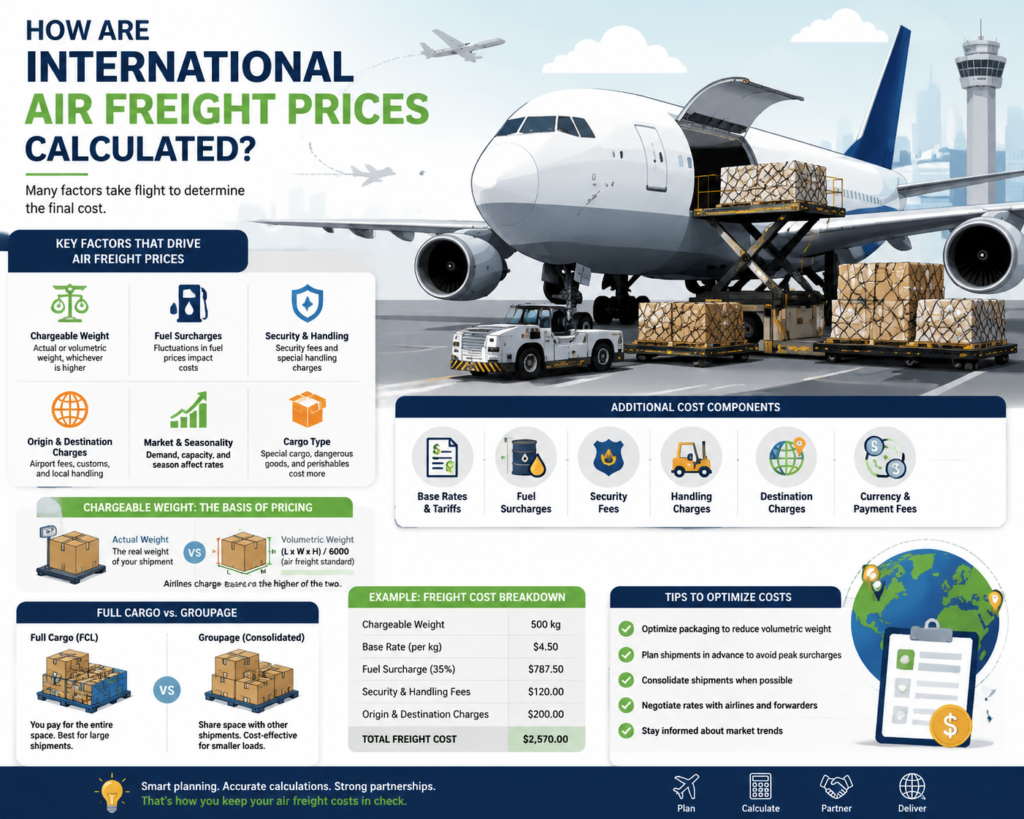
1. Introduction to International Air Freight Pricing
1.1 Overview of Air Freight in Global Trade
International air freight is the unsung hero of global trade, moving critical goods at altitudes that make our heads spin. From high-tech semiconductors to artisanal cheese wheels, air freight ensures products traverse continents in a fraction of the time it would take by sea, bridging markets and maintaining supply chain synchronicity. It’s a sophisticated ballet of logistics, where every kilogram, cubic inch, and flight schedule choreographs the rhythm of commerce.
1.2 Importance of Understanding Freight Costs
Understanding air freight pricing is like knowing how to read a pickleball scoreboard in the final set—it can make or break your strategy. Misjudging freight costs can lead to eroded margins, supply chain bottlenecks, and unhappy clients, whereas knowing the ins and outs allows shippers to optimize every shipment and forecast expenses with surgical precision.
1.3 Key Factors Influencing Pricing
Pricing isn’t just a number slapped on a cargo manifest; it’s an intricate equation influenced by cargo dimensions, weight, service type, fuel fluctuations, regional tariffs, and even geopolitical tremors that ripple across global markets. Each factor acts like a cog in a high-performance gear system, and missing one can throw the whole calculation off.
2. Types of Air Freight Services
2.1 Standard Air Freight
Standard air freight is the reliable workhorse, delivering non-urgent cargo efficiently and cost-effectively. Ideal for bulk shipments that don’t require hyper-speed, it balances transit time with budgetary constraints, ensuring your goods land in good order without the premium price tag of express services.
2.2 Express Air Freight
Express air freight is the fastball of the air freight world—lightning-quick and often necessary for perishable or time-sensitive shipments. Think of it as sending a shipment on a supersonic pickleball serve: every hour counts, and delay is measured in lost opportunities and potential spoilage.
2.3 Charter Air Freight
Charter air freight caters to specialized logistics needs, offering exclusive aircraft for oversized, irregular, or mission-critical cargo. It’s the Rolls-Royce of shipping—customizable, high-cost, but unbeatable in speed and flexibility when standard options simply won’t cut it.
3. Freight Classification and Cargo Types
3.1 General Cargo vs. Special Cargo
General cargo includes common commodities—electronics, clothing, machinery—that move through standard handling channels. Special cargo, on the other hand, demands bespoke treatment, from temperature-controlled containers to reinforced packaging that withstands turbulence-induced stress.
3.2 Dangerous Goods and Hazardous Materials
Hazardous materials, ranging from flammable liquids to corrosive chemicals, are regulated with an almost military precision. Airlines impose strict packaging, labeling, and handling standards, and any slip-up can trigger heavy fines or, worse, safety hazards mid-flight.
3.3 Perishable and Temperature-Sensitive Cargo
Perishable goods, including fresh seafood, flowers, or vaccines, require constant climate-controlled environments. Delays or improper handling can turn high-value cargo into a costly disaster, making precise timing and storage conditions critical to preserving integrity.
4. Chargeable Weight Explained
4.1 Actual Weight vs. Volumetric Weight
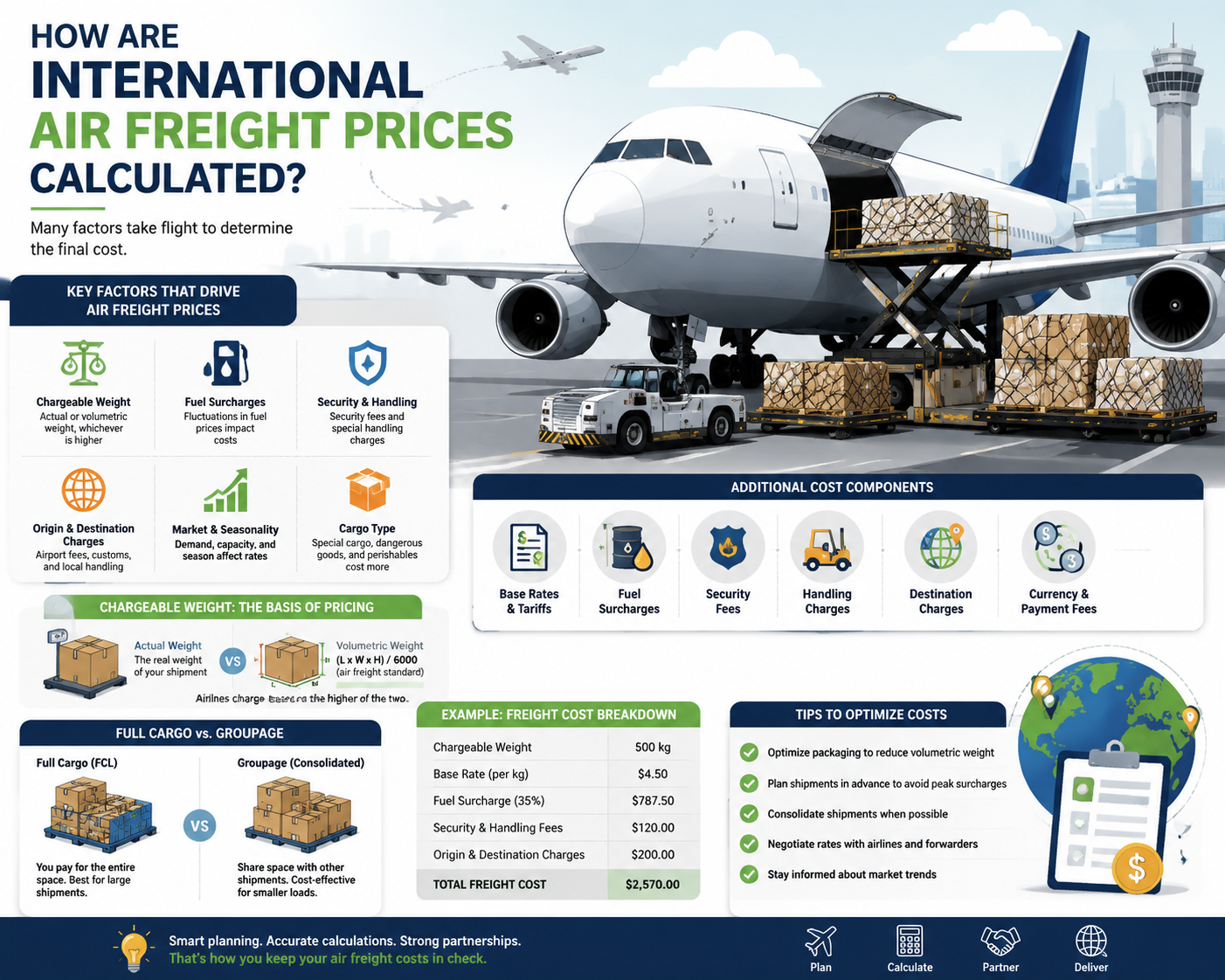
Chargeable weight isn’t always what you see on the scale. Airlines calculate it based on either actual weight or volumetric weight, whichever is higher, to account for light but bulky shipments that occupy significant space in the aircraft cabin or cargo hold.
4.2 Calculating Volumetric Weight
Volumetric weight is derived from the formula: length × width × height ÷ a conversion factor, often 5000 or 6000 depending on the airline. This ensures that shippers pay proportionally for the space their cargo consumes, rather than just its physical heft.
4.3 How Airlines Determine Chargeable Weight
Airlines assess each shipment individually, comparing actual and volumetric weights, applying rounding rules, and sometimes imposing minimum weight thresholds to standardize pricing. The result is the chargeable weight, the cornerstone of the final freight cost.
5. Dimensional Weight Factors
5.1 Importance of Package Dimensions
Dimensions dictate space utilization on aircraft, impacting loading efficiency, fuel consumption, and ultimately, cost. Oversized packages may incur surcharges, emphasizing the need for precise measurement and smart packaging strategies.
5.2 Dimensional Weight Formula
The dimensional weight formula transforms bulky parcels into monetary value. It’s a simple yet potent equation that converts cubic measurements into billable kilograms, forcing shippers to think in terms of volume as well as weight.
5.3 Examples of Dimensional Weight Calculations
Consider a box measuring 120 cm × 80 cm × 60 cm. Using a divisor of 5000, the volumetric weight is 115.2 kg, which may surpass the actual weight and become the chargeable figure, illustrating the significant impact of size on pricing.
6. Base Rates and Tariffs
6.1 Understanding Airline Base Rates
Base rates represent the foundational cost airlines charge per kilogram or per unit volume. They act as a starting point for pricing, subject to surcharges, tariffs, and market adjustments that transform a simple calculation into a multifactor equation.
6.2 Role of Tariffs in International Shipping
Tariffs are region-specific and can include import/export duties, airport taxes, and government-imposed levies. Ignoring them is like playing pickleball with a blindfold—unexpected charges will strike when you least expect them.
6.3 How Base Rates Vary by Region
Rates fluctuate due to regional demand, air traffic congestion, and economic factors. Shipping from high-traffic hubs like Frankfurt or Singapore will differ substantially from smaller airports with fewer connections, reflecting supply-and-demand dynamics.
7. Fuel Surcharges
7.1 How Fuel Prices Affect Freight Costs
Fuel represents a volatile component of air freight pricing, with global oil market swings directly influencing surcharges. Airlines pass these costs to shippers, creating dynamic pricing environments that change almost daily.
7.2 Calculating Fuel Surcharges
Fuel surcharges are calculated as a percentage of the base rate, tied to current jet fuel prices. They compensate airlines for fluctuating energy costs, ensuring operations remain profitable despite market instability.
7.3 Strategies to Manage Fuel-Related Expenses
Forward contracts, bulk shipments, and fuel-efficient routing can mitigate fuel-related cost spikes. Strategic planning allows shippers to avoid being burned by sudden fuel price surges.
8. Security and Handling Fees
8.1 Airport Security Charges
Security fees cover mandatory screening and anti-terrorism measures at airports. They’re unavoidable and vary depending on airport size, risk level, and regional regulations.
8.2 Special Cargo Handling Fees
Special cargo often requires bespoke loading equipment, strapping, or cushioning, all of which contribute to additional handling fees that must be factored into the total freight cost.
8.3 Additional Handling for Fragile or Sensitive Items
Fragile items—think precision instruments or glassware—demand careful packaging, manual loading, and monitoring, each adding incremental costs to the overall shipment.
9. Destination and Origin Charges
9.1 Airport-Specific Fees
Airports levy fees for landing, parking, and cargo handling. Major international hubs often charge higher rates due to congestion and operational complexity.
9.2 Customs and Import/Export Charges
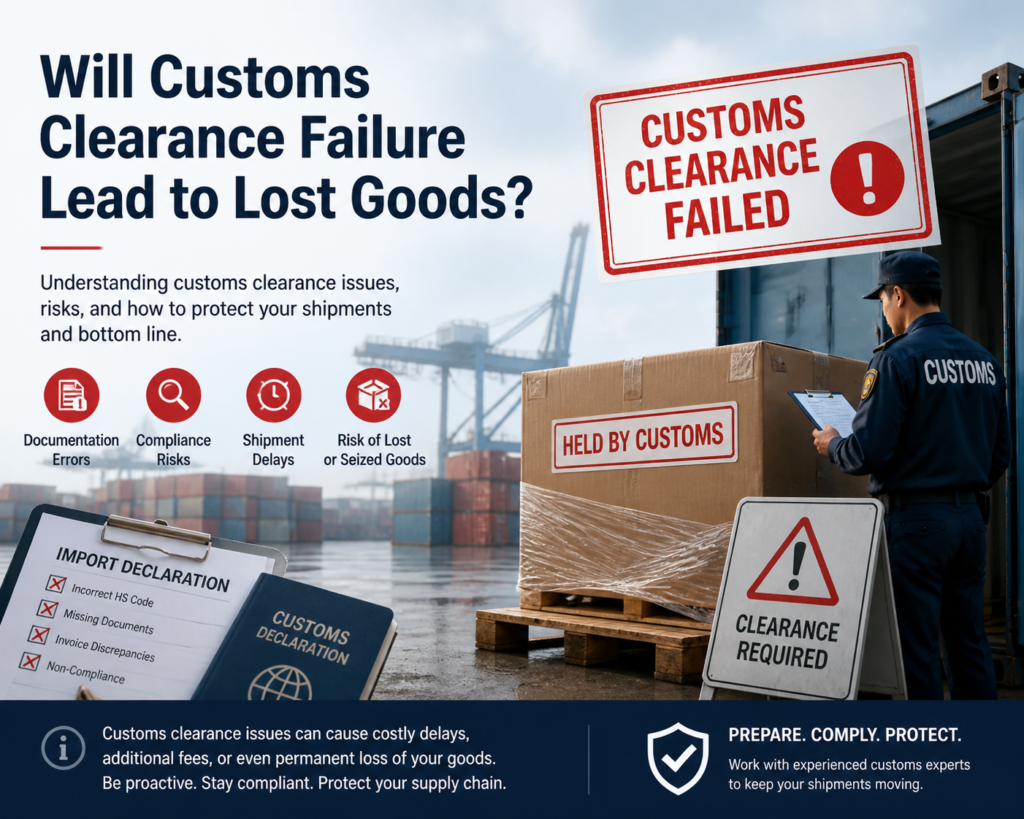
Customs duties, clearance fees, and inspection charges are part of the international shipping equation, influencing both the timing and cost of deliveries.
9.3 Local Handling Charges at Origin and Destination
Local fees, including terminal handling and ground transportation coordination, add another layer of cost, highlighting the multifaceted nature of freight pricing.
10. Seasonal and Market Influences
10.1 Peak Season Surcharges
Holidays and high-demand periods trigger peak season surcharges, inflating freight costs. Awareness of seasonal trends can prevent budgetary surprises.
10.2 Impact of Global Demand Fluctuations
Global supply chain disruptions, from container shortages to airline staffing issues, create market-driven price volatility that shippers must monitor.
10.3 Geopolitical and Economic Factors
Trade wars, sanctions, and currency fluctuations can dramatically affect air freight pricing, making geopolitical literacy a critical skill for logistics managers.
11. Consolidation and Groupage Shipping
11.1 Benefits of Cargo Consolidation
Combining multiple shipments reduces per-unit cost, improves space utilization, and streamlines customs processing, offering both financial and operational efficiencies.
11.2 How Consolidation Affects Pricing
Consolidation spreads costs across multiple consignments, making it ideal for SMEs looking to optimize budget without sacrificing speed.
11.3 Comparing Full Cargo vs. Groupage Rates
Full cargo charters offer speed and control, while groupage shipments lower costs at the expense of transit time, presenting a trade-off between budget and urgency.
12. Minimum and Maximum Freight Charges
12.1 Understanding Minimum Freight Charges
Airlines often impose minimum charges to cover operational overheads, ensuring that even small parcels contribute to revenue.
12.2 Maximum Chargeable Limits for Certain Cargo
Certain oversized or high-value shipments have maximum rates to prevent disproportionate charges, balancing profitability with fairness.
12.3 How These Limits Affect Small and Large Shipments
Understanding these thresholds allows shippers to strategically package goods and optimize costs, particularly when dealing with mixed-size
consignments.
13. Currency and Payment Considerations
13.1 Impact of Currency Exchange Rates
Freight transactions in foreign currencies are susceptible to exchange rate fluctuations, which can dramatically alter costs if not hedged or forecasted properly.
13.2 Payment Terms and Methods
Advance payments, letters of credit, and net terms all influence cash flow and risk exposure, impacting total shipment expenses.
13.3 Risk Management for International Transactions
Mitigating currency and payment risks involves hedging, contractual protections, and strategic invoicing, ensuring smooth cross-border financial operations.
14. Discount Structures and Negotiated Rates
14.1 Airline Corporate Discounts
Frequent shippers or high-volume clients often secure discounted rates, rewarding loyalty and scale with tangible cost savings.
14.2 Freight Forwarder Negotiated Rates
Forwarders leverage aggregated shipments to negotiate favorable pricing, passing benefits to clients who might otherwise pay higher standalone rates.
14.3 Volume-Based Pricing Advantages
Shipping larger volumes can trigger tiered discounts, encouraging consolidation and strategic planning to maximize financial efficiency.
15. Calculating Total Freight Cost
15.1 Step-by-Step Cost Breakdown
Start with base rates, add fuel surcharges, security, handling, origin/destination fees, and then apply tariffs, taxes, and discounts to arrive at the total.
15.2 Including All Surcharges and Fees
Neglecting hidden costs, from dimensional weight adjustments to peak season surcharges, can lead to significant budget overruns.
15.3 Example of a Comprehensive Freight Calculation
A 200-kg shipment from Shanghai to New York might have base charges, fuel surcharges, handling fees, and customs duties, combining to illustrate the complexity behind a seemingly simple price.
16. Tools and Resources for Freight Cost Estimation
16.1 Online Freight Calculators
These tools provide quick estimates, allowing shippers to model different scenarios and anticipate costs before booking.
16.2 Freight Management Software
Advanced software integrates multi-modal logistics, tracking, and dynamic pricing for a complete operational view.
16.3 Consulting with Logistics Experts
Experienced freight consultants help navigate complex regulations, optimize routing, and negotiate better rates, offering strategic advantages for businesses of all sizes.
17. Common Mistakes in Air Freight Pricing
17.1 Miscalculating Volumetric Weight
Overlooking volumetric weight can lead to underestimation of charges, especially for light, bulky cargo.
17.2 Ignoring Hidden Fees
Hidden fees, from terminal handling to customs clearance, are easy to overlook but can significantly inflate costs.
17.3 Failing to Account for Seasonal Surcharges
Shipping during peak season without anticipating surcharges can result in unpleasant budget surprises and operational stress.
18. Future Trends in Air Freight Pricing
18.1 Technology-Driven Pricing Models
AI, machine learning, and predictive analytics are revolutionizing pricing, enabling real-time, demand-based adjustments for more accurate cost projections.
18.2 Impact of Sustainability and Green Logistics
Carbon footprint considerations, eco-friendly aircraft, and fuel-efficient operations are reshaping freight pricing, integrating environmental costs into traditional calculations.
18.3 Emerging Market Trends and Predictions
Expansion of e-commerce, regional trade agreements, and digital logistics platforms will continue to drive innovation and alter pricing structures globally.
19. Conclusion and Key Takeaways
19.1 Summarizing Main Pricing Factors
Freight cost is a multi-layered construct influenced by weight, volume, service type, fuel, fees, and global market dynamics, demanding careful consideration.
19.2 Tips for Optimizing Air Freight Costs
Strategic planning, consolidation, awareness of surcharges, and leveraging software tools help shippers control expenses while maintaining efficiency.
19.3 Final Advice for Shippers and Businesses
Approach international air freight like a well-calculated pickleball strategy: anticipate variables, monitor trends, and execute with precision to keep costs manageable and shipments on point.
Ready to Ship Your Containers Overseas?
Figuring out how to ship containers overseas doesn’t have to be a barrier to your business growth. By understanding your cargo needs, choosing the right Incoterms, and partnering with an experienced logistics provider, you can streamline your entire supply chain.
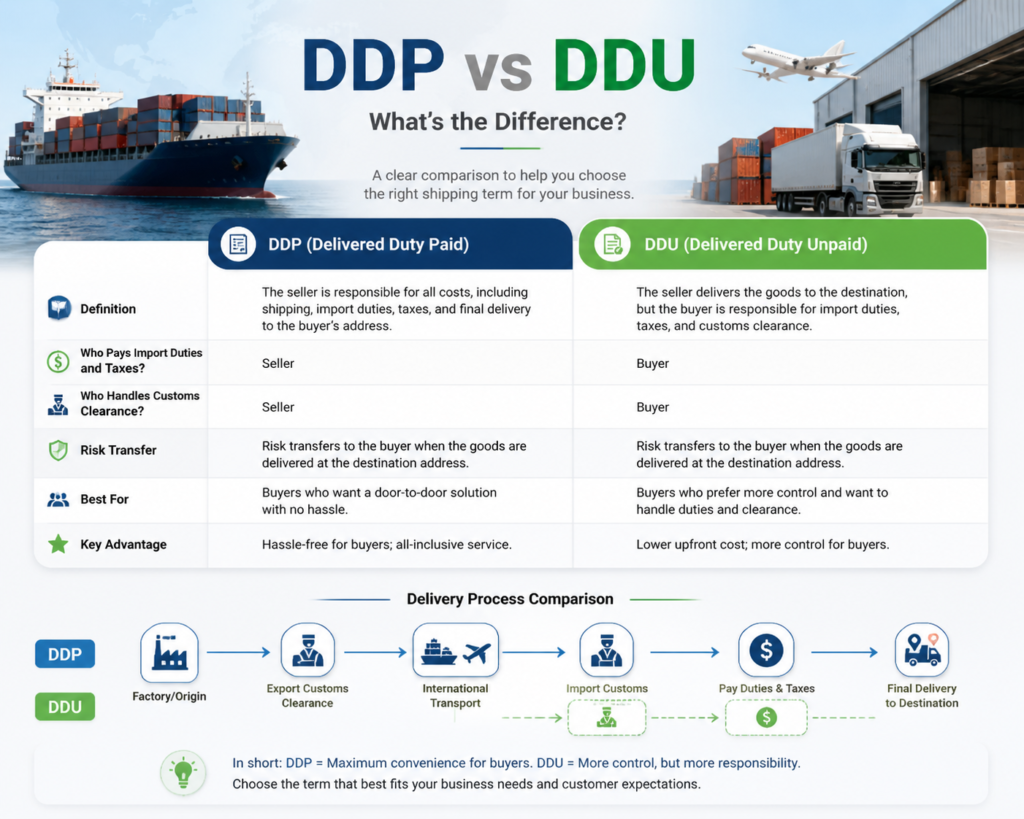
At Jazlog, we are more than just a vendor; we are your strategic logistics partner in China. Whether you need standard FCL/LCL shipping, complex dangerous goods handling, or a completely hands-off DDP solution, our team is ready to deliver.