In the international shipping and logistics industry, DDP (Delivered Duty Paid) and DDU (Delivered Duty Unpaid) are two commonly used shipping terms. They have significant implications for the responsibilities and obligations of both the buyer and seller, particularly in cross-border trade. This article will explain the meaning, differences, and implications of these two terms for freight forwarders and clients.
Basic Definitions of DDP and DDU
- DDP (Delivered Duty Paid)
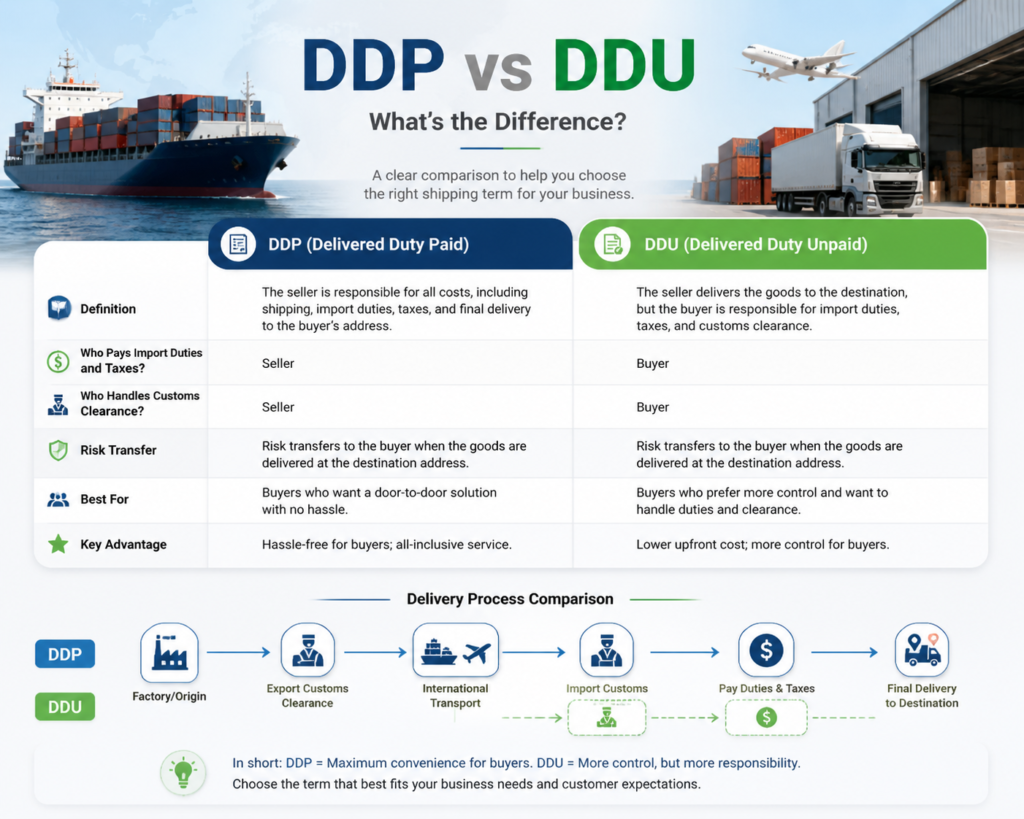
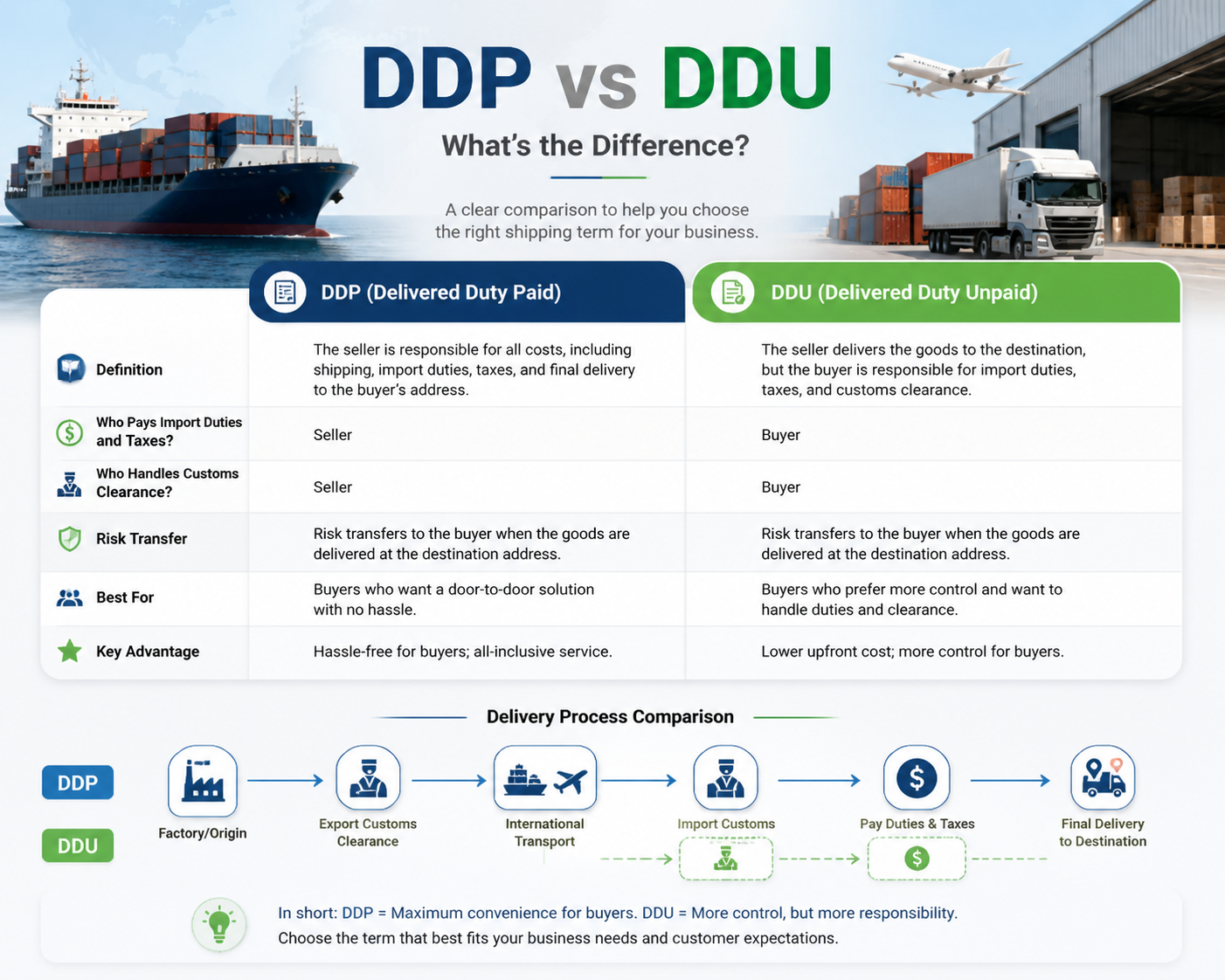
DDP means the seller bears all costs and risks until the goods are delivered to the buyer’s designated location, including completing all customs procedures and paying any customs duties. The seller is responsible for transportation, insurance, clearance, and all taxes, leaving only the receipt of goods to the buyer. - DDU (Delivered Duty Unpaid)
DDU means the seller is responsible for transporting the goods to the buyer’s designated destination but does not cover any import duties or taxes. The buyer must handle the customs clearance and pay the applicable duties and taxes at the destination.
Key Differences Between DDP and DDU
- Responsibility for Duties and Taxes
- Under DDP terms, the seller is responsible for all fees, including customs duties, taxes, and other clearance charges.
- Under DDU terms, the buyer is responsible for handling the import customs clearance and paying all duties, taxes, and related fees.
- Risk During Transportation
- In DDP terms, the seller assumes all risks during transportation, including loss or damage of goods.
- In DDU terms, the seller is only responsible for delivering the goods to the destination, while the buyer assumes the risk when the goods arrive.
- Customs Clearance
- Under DDP, the seller is responsible for customs clearance at the destination and pays all related fees.
- Under DDU, the buyer is responsible for customs clearance and must pay the associated fees.
- Applicable Scenarios
- DDP is suitable for buyers who prefer the seller to take full responsibility for the entire process, especially when the buyer is unfamiliar with the import process.
- DDU is more suitable for buyers who are experienced with the import process and prefer to handle customs clearance and payment of related fees themselves.
Key Differences Between DDP and DDU
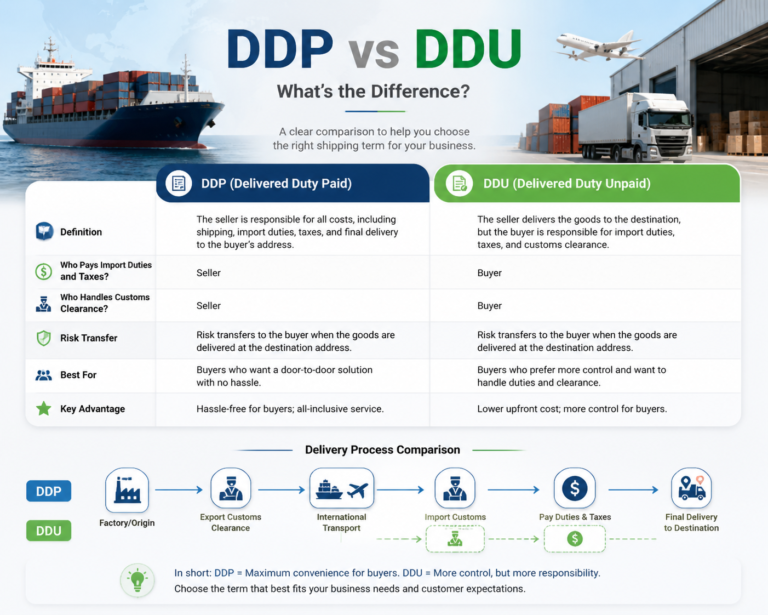
- Responsibility for Duties and Taxes
- Under DDP terms, the seller is responsible for all fees, including customs duties, taxes, and other clearance charges.
- Under DDU terms, the buyer is responsible for handling the import customs clearance and paying all duties, taxes, and related fees.
- Risk During Transportation
- In DDP terms, the seller assumes all risks during transportation, including loss or damage of goods.
- In DDU terms, the seller is only responsible for delivering the goods to the destination, while the buyer assumes the risk when the goods arrive.
- Customs Clearance
- Under DDP, the seller is responsible for customs clearance at the destination and pays all related fees.
- Under DDU, the buyer is responsible for customs clearance and must pay the associated fees.
- Applicable Scenarios
- DDP is suitable for buyers who prefer the seller to take full responsibility for the entire process, especially when the buyer is unfamiliar with the import process.
- DDU is more suitable for buyers who are experienced with the import process and prefer to handle customs clearance and payment of related fees themselves.
Impact of DDP and DDU on Freight Forwarders
For freight forwarders, understanding the differences between DDP and DDU is crucial for optimizing shipping processes. DDP involves more responsibilities and costs for the seller, which means the freight forwarder will need to offer more services, such as customs clearance, insurance arrangements, and more. On the other hand, DDU generally means the freight forwarder needs to work closely with the buyer to ensure that they can handle customs clearance at the destination.
Why Choose DDP or DDU?
- Choosing DDP: If you are a seller who wants to offer a comprehensive service to attract more buyers, DDP is an ideal option. This method is especially useful for buyers who require fast delivery and wish to avoid customs clearance and tax-related issues.
- Choosing DDU: If the buyer has experience with customs clearance and can manage these costs, DDU can be a great choice. The seller can reduce shipping costs, while the buyer has more control over the customs process.
Ready to Ship Your Containers Overseas?
Figuring out how to ship containers overseas doesn’t have to be a barrier to your business growth. By understanding your cargo needs, choosing the right Incoterms, and partnering with an experienced logistics provider, you can streamline your entire supply chain.
At Jazlog, we are more than just a vendor; we are your strategic logistics partner in China. Whether you need standard FCL/LCL shipping, complex dangerous goods handling, or a completely hands-off DDP solution, our team is ready to deliver.