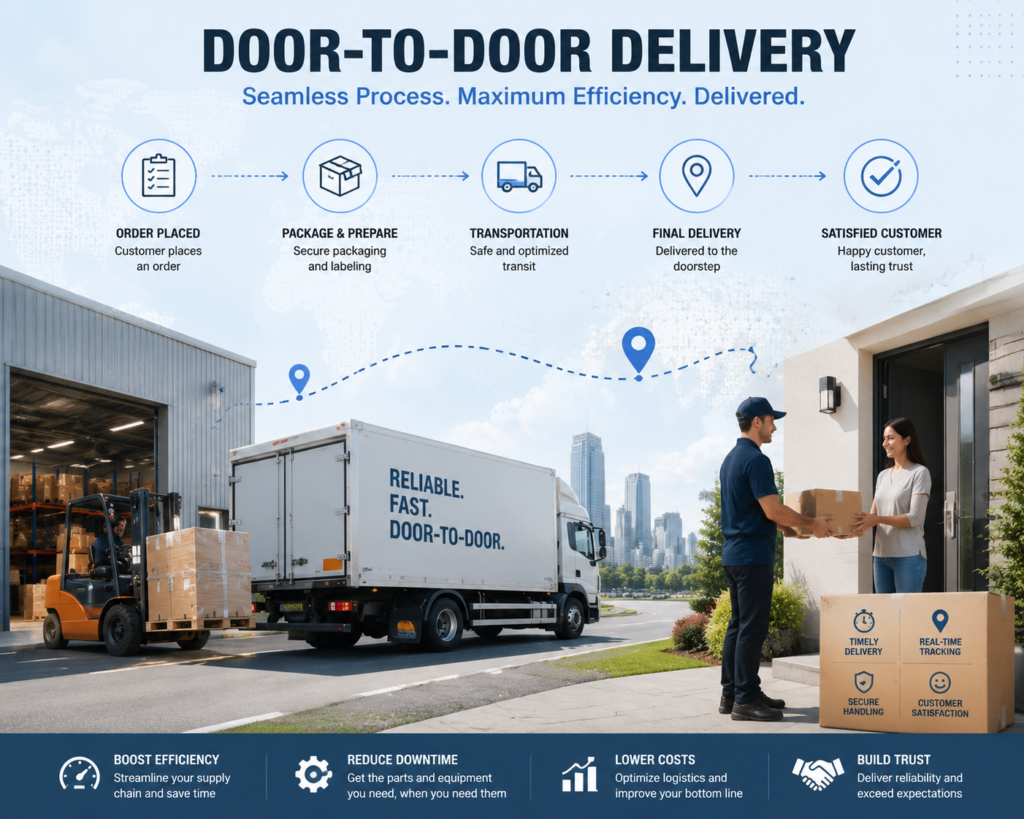
- Introduction to Door-to-Door Delivery When we talk about door-to-door delivery, we’re not just talking about some FedEx truck dropping off a package; we’re looking at a meticulously orchestrated ballet of logistics, a service where goods literally travel from the supplier’s front door to the recipient’s threshold with minimal friction, almost like a well-placed dink shot in pickleball that lands perfectly in the kitchen. In today’s high-octane supply chain environment, door-to-door delivery has emerged as a linchpin, a mechanism that keeps the cogs of commerce turning without those frustrating lags that can halt operations or production lines. This service isn’t niche; it’s embraced across a diverse spectrum of industries—from manufacturing plants that rely on timely machine parts, to the booming e-commerce sector where consumer expectations for speed and reliability are sky-high, and even specialized sectors like pharmaceuticals where precision and accountability aren’t optional—they’re life-critical.
- History and Evolution of Door-to-Door Delivery You’ve got to appreciate the roots before you can fully grasp the modern marvels of logistics. Early door-to-door delivery was anything but sleek: horse-drawn carts, handwritten invoices, and a lot of “hope this arrives in one piece” energy. As railways crisscrossed nations and automobiles began to replace horsepower in both literal and figurative terms, the concept gained traction, transforming from a local convenience into a global enterprise. Fast forward to today, where technological advancements—from IoT sensors to blockchain tracking—have reshaped the delivery landscape. The transition has been seismic: what was once a labor-intensive, slow, and error-prone operation has evolved into a streamlined, automated, and highly data-driven ecosystem, where even minor deviations are spotted before they snowball into costly errors.
- Key Benefits of Door-to-Door Delivery Let’s talk about why everyone’s hopping on this bandwagon. First, transit times have been dramatically slashed, akin to taking the fast lane on the logistics highway instead of meandering through every side street—faster shipments mean less downtime, more operational fluidity, and a competitive edge that’s palpable. Second, the risk of human error and product damage is minimized because the fewer hands that touch a package, the lower the probability of mishaps, making quality assurance almost a built-in feature. And third, it’s all about trust: clients, partners, and stakeholders see a reliable delivery system and associate that reliability with your brand’s reputation—a tangible boost in customer satisfaction that’s almost as satisfying as nailing a perfect cross-court shot in a tense pickleball rally.
- Types of Door-to-Door Delivery Services Delivery services aren’t one-size-fits-all, which is a good thing because your shipping strategy should be as adaptable as your favorite pickleball strategy. Standard versus express delivery is the first distinction: some shipments can afford to take the scenic route, while others demand lightning-fast execution. Then there’s international versus domestic: crossing borders adds layers of regulatory complexity, documentation, and transit time, while domestic shipments are comparatively streamlined but still require precision. Finally, specialized delivery exists for heavy-duty machinery and industrial components; this isn’t your everyday package. Handling oversized, delicate, or high-value equipment demands bespoke planning, specialized carriers, and a high degree of coordination—think of it like designing a play that scores under pressure against a top-tier opponent.
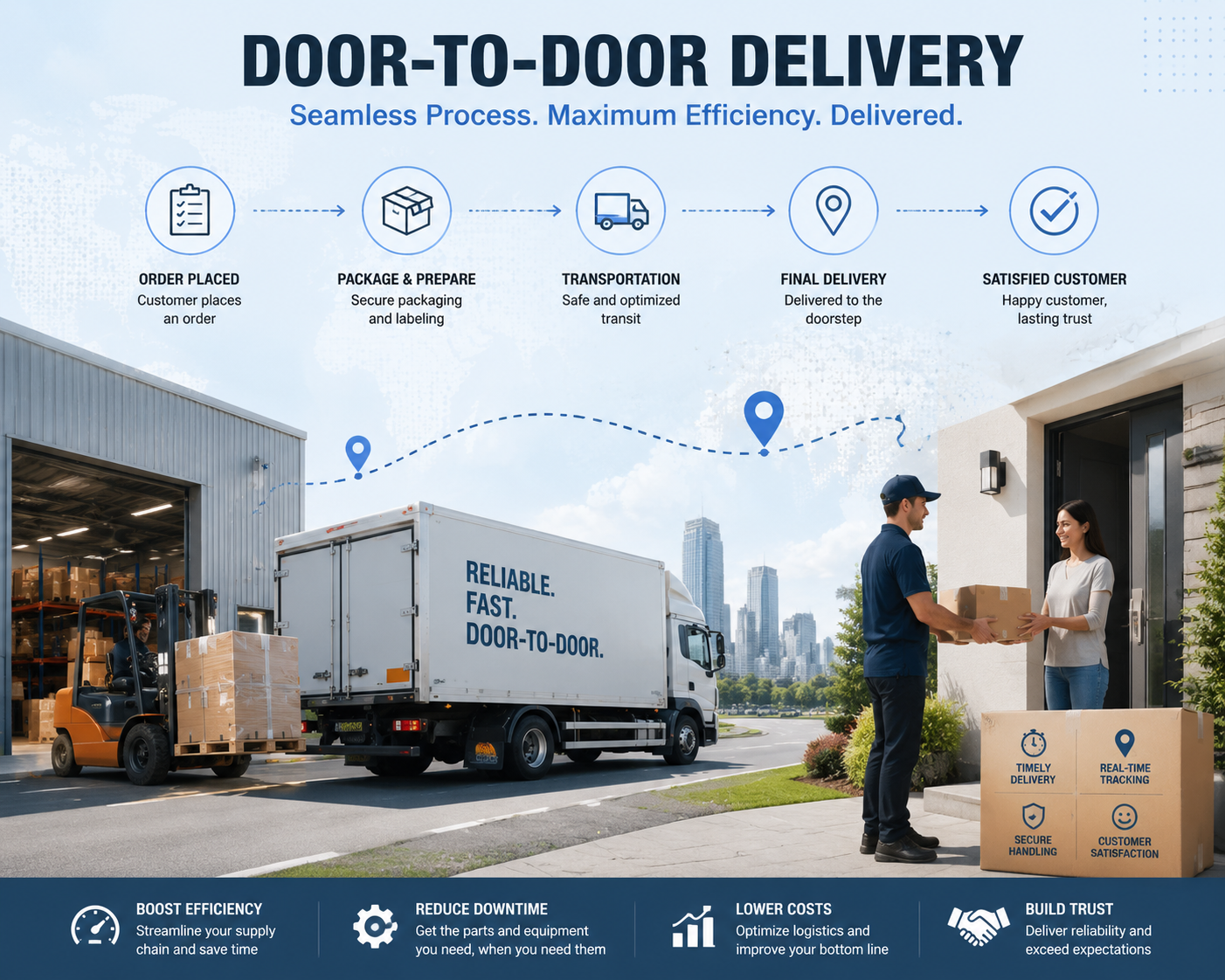
- The Complete Door-to-Door Delivery Process Let’s break down the dance from start to finish. First comes order placement and confirmation, the initial handshake in the transaction where clarity and accuracy set the tone for the entire journey. Next, packaging, labeling, and preparation are where attention to detail counts: incorrect labeling or substandard packaging can turn a smooth delivery into a logistical nightmare. And finally, the transportation phase, culminating in the final handoff at the destination, is the crescendo, where route optimization, vehicle management, and last-mile logistics converge to ensure that the right product lands at the right time, undamaged, and ready for immediate use—almost like delivering a perfectly executed backhand slice right on the opponent’s baseline.
- Critical Logistics Components in Door-to-Door Delivery Fleet management and route optimization are the brain of the operation—without a precise understanding of vehicle capacities, fuel efficiency, and traffic patterns, the system is flying blind. Warehouse and inventory integration forms the backbone, ensuring that goods are staged, accounted for, and ready to deploy in a manner that complements production schedules and minimizes downtime. Tracking and real-time shipment monitoring are the nervous system, feeding data continuously so that managers can make informed decisions, preemptively address delays, and communicate accurate ETAs, all while maintaining a level of transparency that clients demand and appreciate.
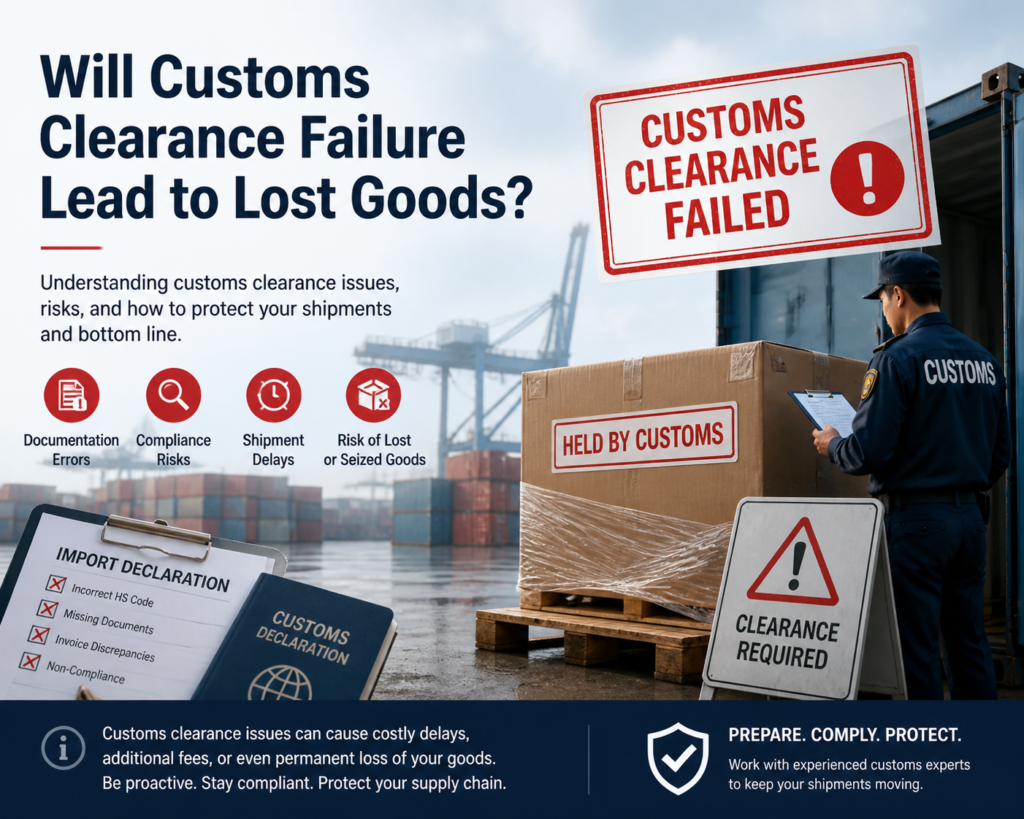
- Challenges in Door-to-Door Delivery Of course, no system is without its curveballs. Customs and regulatory hurdles can throw even the most meticulously planned shipment into a holding pattern, adding days or even weeks to transit. Damage or loss, though reduced with door-to-door services, still lurks as a risk, particularly for sensitive or high-value equipment. And when shipment volumes soar, managing capacity, routing, and human resources becomes a high-wire act—balancing efficiency with reliability without letting anything drop through the cracks.
- Technology and Automation in Delivery Efficiency Technology isn’t just a sidekick; it’s the MVP. GPS tracking and route planning software help orchestrate fleets like a conductor leading a symphony, ensuring that every shipment follows an optimized path. Automated warehouses and smart sorting systems reduce the dependency on human labor while simultaneously increasing throughput, accuracy, and speed—think of it as having robotic assistants that never tire or take a coffee break. Data analytics then turns the entire process into a predictive science, identifying potential bottlenecks, anticipating demand surges, and providing actionable insights that can shave hours, if not days, off delivery cycles.
- Optimizing Machine Efficiency Through Door-to-Door Delivery Timely delivery of machine parts is like the difference between a smooth rally and a netted lob—one keeps operations humming, the other causes frustrating stoppages. By ensuring that critical components arrive precisely when needed, downtime is drastically reduced, boosting productivity and cutting avoidable costs. Synchronizing the supply chain maintains production continuity, preventing the domino effect of delays that can cascade through multiple departments. And for maintenance scheduling, an efficient delivery system ensures spare parts are on hand before a repair is needed, keeping machines and operations in a state of perpetual readiness.