Global trade relies heavily on the efficiency of ocean freight. If you are a business owner or supply chain manager sourcing products from the world’s largest manufacturing hub, understanding exactly how to ship containers overseas is critical to your bottom line. Navigating international logistics, customs clearance, and long-distance ocean transit can seem daunting, but it doesn’t have to be.
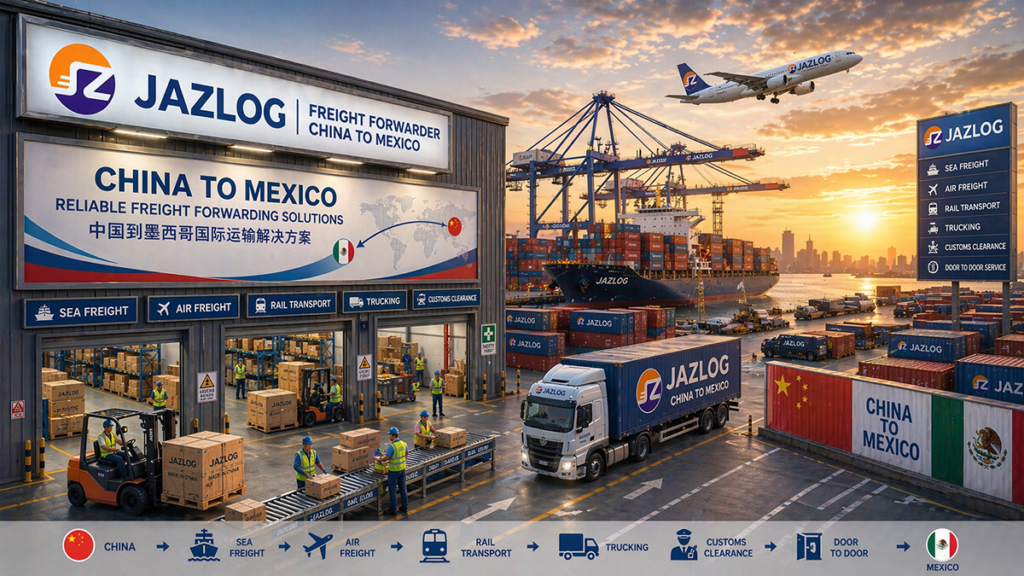
At Jazlog, we are a premier China freight forwarder dedicated to bridging the gap between Chinese manufacturers and global markets. Whether you are shipping to the USA, Canada, Australia, the UK, Europe, or Africa, this comprehensive guide will walk you through the essential steps to ensure your cargo arrives safely, on time, and within budget.
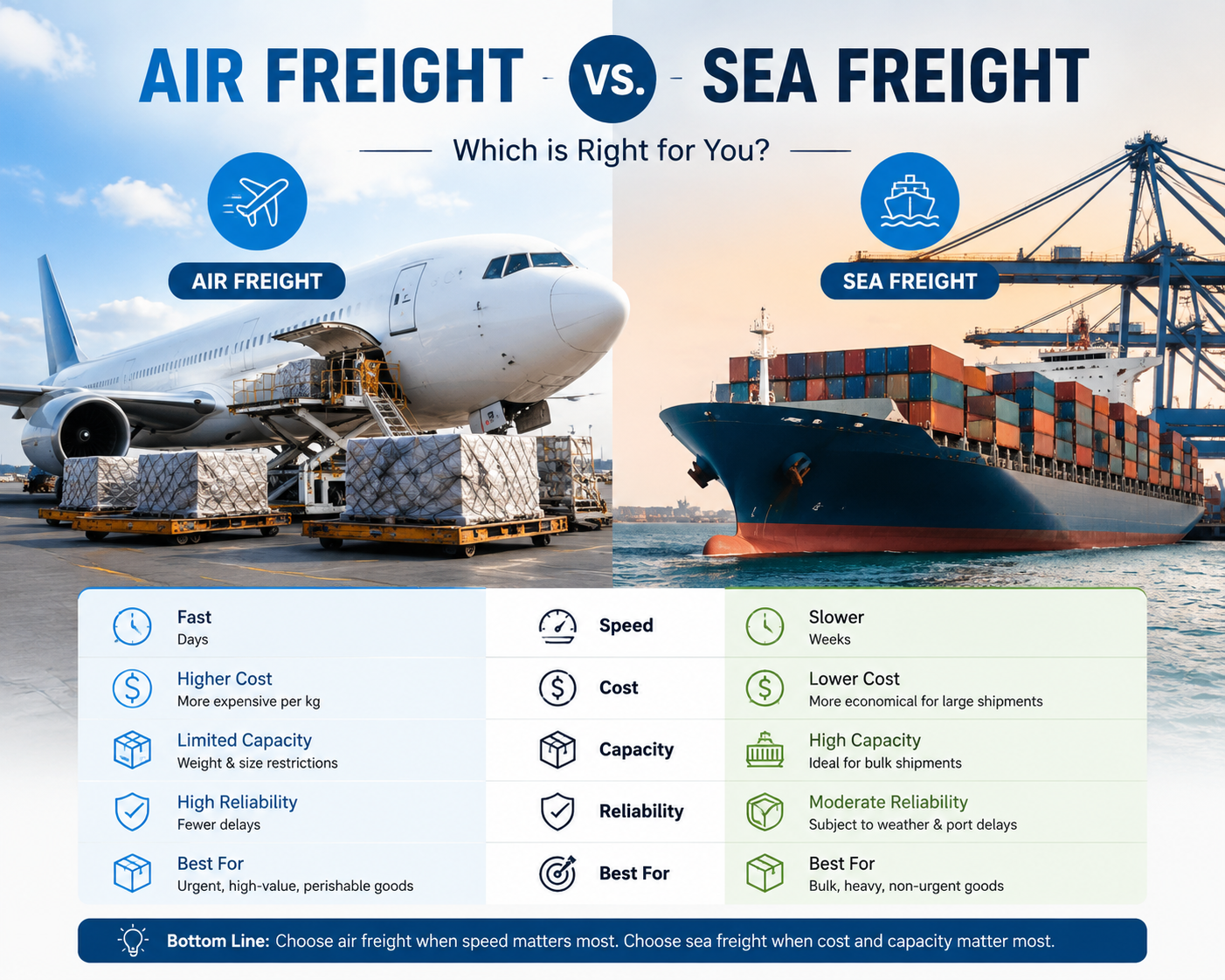
Air Freight vs. Sea Freight: Which is Right for You?
1. Introduction: Understanding Freight Options
1.1 Importance of Choosing the Right Freight Method
In the high-stakes arena of industrial supply chains, selecting the appropriate freight method is no trivial matter. The ramifications ripple through project timelines, cash flow, and operational efficiency. A single misjudgment can cascade into delayed production, idle machines, and unhappy clients. Choosing wisely ensures not just timely delivery but also optimization of working capital and resource allocation.
1.2 Overview of Air Freight and Sea Freight
Air vs sea freight represent the twin pillars of global logistics, each catering to distinct operational needs. Air freight leverages rapid aerial transport, excelling in urgency-sensitive shipments, while sea freight harnesses the gargantuan capacity of cargo vessels, perfect for voluminous, heavy consignments. Understanding their fundamental characteristics is key to aligning transport strategy with business imperatives.
1.3 How Freight Choice Impacts Cost, Speed, and Reliability
The freight decision directly influences the trifecta of cost, speed, and reliability. Opting for air can expedite lead times but at a premium, whereas sea freight conserves budget but entails prolonged transit durations. Reliability varies depending on seasonal disruptions, port congestion, and airline scheduling. These factors are the scaffolding upon which supply chain resilience is constructed.
2. What is Air Freight?
2.1 Definition and Core Characteristics
Air freight refers to the transportation of goods via aircraft, typically encompassing small to medium-sized consignments requiring speed over volume. Core characteristics include rapid transit times, strict weight and dimensional limitations, and enhanced security protocols. Cargo is often palletized or containerized in Unit Load Devices (ULDs) to maximize efficiency and minimize damage.
2.2 Typical Industries and Cargo Types Using Air Freight
Industries like electronics, aerospace, pharmaceuticals, and automotive parts frequently utilize air freight. High-value, perishable, or time-sensitive items—think semiconductor chips or specialized machinery components—demand rapid delivery schedules that only air transport can provide without compromising operational continuity.
2.3 Key Advantages of Air Freight
The principal advantages of air freight include unparalleled speed, heightened security, and minimized inventory dwell times. These benefits translate into lower risk exposure for critical components and accelerated production cycles, making it indispensable for lean manufacturing setups and just-in-time (JIT) inventory strategies.
3. What is Sea Freight?
3.1 Definition and Core Characteristics
Sea freight entails the movement of cargo aboard merchant vessels across international waters. Its hallmark features include high payload capacity, cost efficiency for bulk shipments, and versatility in accommodating oversized or non-standard cargo. Containerization remains the standard for facilitating smooth loading, unloading, and handling.
3.2 Common Industries and Cargo Types Using Sea Freight
Industries like chemicals, construction materials, automotive manufacturing, and heavy machinery favor sea freight. Typical cargo includes raw materials, bulk commodities, and large assemblies, where the volume-to-value ratio justifies longer transit times in exchange for reduced per-unit shipping costs.
3.3 Key Advantages of Sea Freight
Sea freight offers substantial cost savings for large shipments, exceptional capacity for oversize cargo, and fewer weight restrictions compared to air. Additionally, environmental efficiency per ton-kilometer is significantly higher, which appeals to organizations pursuing sustainability benchmarks without sacrificing logistical reliability.
4. Cost Comparison: Air vs. Sea
4.1 Factors Influencing Air Freight Costs
Air freight costs hinge on factors such as cargo weight, volumetric density, fuel surcharges, airport fees, and carrier tariffs. Seasonality and geopolitical events can further exacerbate cost volatility, requiring procurement engineers to anticipate fluctuations and integrate contingency buffers in the budgeting process.
4.2 Factors Influencing Sea Freight Costs
Sea freight expenses are influenced by container types, port handling charges, bunker fuel costs, canal fees, and seasonal demand surges. Bulk discounts, carrier contracts, and backhaul optimization can mitigate expenses, making sea transport highly economical for continuous high-volume shipments.
4.3 Examples of Cost Differences for Typical Shipments
For example, shipping 1,000 kg of precision components from Shenzhen to Hamburg could cost five to six times more by air than by sea. Yet, the faster air transit may justify the premium if production downtime or missed market deadlines would otherwise incur substantial losses.
5. Speed and Transit Time
5.1 Average Transit Times for Air Freight
Air freight offers remarkable transit times, with intercontinental deliveries typically ranging from 24 to 72 hours, depending on routing and customs processing. Express services can compress this window further, supporting urgent replacement parts or prototype shipments.
5.2 Average Transit Times for Sea Freight
Sea freight is inherently slower, with transit durations spanning two to six weeks for common international routes. Delays may arise from port congestion, weather disruptions, or customs clearance bottlenecks, necessitating strategic inventory planning.
5.3 When Speed Can Justify Higher Shipping Costs
High-speed delivery is justified when product scarcity, production halts, or market timing could lead to outsized financial losses. In such scenarios, paying a premium for air freight is not a luxury but a calculated investment in operational continuity.
6. Reliability and Predictability
6.1 Flight Schedules vs Shipping Schedules
Air transport benefits from fixed flight schedules and more frequent departures, whereas maritime schedules may be less predictable due to weather, port congestion, or rerouting. Supply chain engineers must weigh these factors against project-critical deadlines.
6.2 Impact of Delays on Supply Chains
Delays in freight, whether by air or sea, propagate through the supply chain, affecting production sequencing, labor allocation, and customer satisfaction. Contingency planning, such as safety stock and buffer lead times, becomes essential in mitigating downstream disruptions.
6.3 Insurance Considerations for Each Mode
Air freight typically attracts higher insurance premiums due to the high value per unit weight, while sea freight, though cheaper per ton, carries risks of water damage, piracy, and cargo shifts. Proper risk assessment and insurance selection safeguard both tangible assets and operational reputation.
7. Cargo Capacity and Limitations
7.1 Weight and Volume Restrictions for Air Freight
Aircraft impose strict limitations on cargo weight and volumetric dimensions, necessitating careful packaging and load planning. Unit Load Devices (ULDs) optimize space utilization, but oversized or excessively heavy items may simply not be air-eligible.
7.2 Container Sizes and Limits for Sea Freight
Sea freight leverages standardized containers—20ft, 40ft, and high-cube variants—allowing flexibility for diverse cargo types. Unlike air, weight constraints are more lenient, though port handling and vessel stability must be considered.
7.3 Handling Oversized or Heavy Cargo
Specialized shipping solutions like flat racks, open-top containers, or heavy-lift vessels enable the transport of machinery, industrial presses, and turbines, often impossible to accommodate in conventional air freight.
8. Environmental Impact
8.1 Carbon Footprint of Air Freight
Air freight generates significant CO₂ emissions per ton-kilometer, making it the least eco-friendly option for heavy shipments. Emissions regulations and carbon pricing are increasingly factoring into logistics decisions.
8.2 Carbon Footprint of Sea Freight
Sea freight, while slower, is far more energy-efficient per unit of cargo, providing a greener alternative for bulk goods. Fuel-efficient vessels and slow-steaming practices further reduce environmental impact.
8.3 Sustainable Shipping Alternatives
Emerging solutions include hybrid propulsion systems, biofuel-powered vessels, and carbon offset programs. Companies pursuing sustainability must integrate these alternatives while balancing operational and financial imperatives.
9. Risk Management
9.1 Common Risks in Air Freight
Air freight risks include mechanical failures, weather diversions, cargo misplacement, and theft. Stringent documentation and secure handling protocols mitigate these vulnerabilities.
9.2 Common Risks in Sea Freight
Sea freight faces piracy, storms, container damage, port strikes, and geopolitical instability. Contingency strategies and insurance coverage remain indispensable for protecting high-value consignments.
9.3 Mitigation Strategies for Both Methods
Diversified carrier contracts, dual-route planning, cargo tracking, and robust insurance coverage collectively reduce exposure, ensuring both air and sea shipments maintain operational reliability.
10. Global Trade Considerations
10.1 Popular Air Freight Routes
Key air corridors include Asia–North America, Europe–Asia, and intra-continental networks supporting high-value manufacturing sectors. Cargo hubs like Hong Kong, Frankfurt, and Chicago dominate the network topology.
10.2 Popular Sea Freight Routes
High-traffic sea lanes include the Asia–Europe route via the Suez Canal, trans-Pacific crossings, and intra-Asia shipping. Canal fees, port congestion, and geopolitical tensions shape routing decisions.
10.3 How Trade Agreements Affect Freight Choice
Trade treaties, tariffs, and customs regulations can tilt the cost-benefit balance. Free trade agreements can reduce sea freight costs, while air freight remains advantageous for countries with stringent lead-time requirements.
11. Customs and Documentation
11.1 Required Documents for Air Freight
Airway bills, commercial invoices, packing lists, and export licenses are mandatory. Accurate documentation accelerates clearance and reduces demurrage fees.
11.2 Required Documents for Sea Freight
Bills of lading, letters of credit, inspection certificates, and container manifests ensure legal compliance and smooth port operations. Missing documentation can trigger costly delays.
11.3 Tips to Avoid Customs Delays
Proper harmonized system codes, pre-clearance submission, and collaboration with experienced customs brokers mitigate risk, preventing hold-ups that disrupt production schedules.
12. Freight Tracking and Technology
12.1 Tracking Options for Air Freight
Real-time flight tracking,
ULD monitoring, and integration with warehouse management systems provide visibility and operational control over air cargo.
12.2 Tracking Options for Sea Freight
GPS-enabled container tracking, vessel monitoring, and port ETA notifications allow engineers to anticipate arrivals and plan inventory allocation accurately.
12.3 Modern Logistics Software for Visibility
Platforms integrating predictive analytics, AI-based routing, and automated alerts provide end-to-end transparency, empowering procurement teams to optimize both air and sea shipments.
13. Inventory and Supply Chain Planning
13.1 How Air Freight Impacts Inventory Levels
Faster transit reduces the need for high buffer stock, freeing capital for other operational investments and minimizing warehousing overhead.
13.2 How Sea Freight Impacts Inventory Levels
Longer sea transit necessitates higher safety stock, requiring careful forecasting and production scheduling to avoid shortages and maintain continuous operations.
13.3 Balancing Cost, Speed, and Stock Availability
Engineers must strike a calculated balance, leveraging air for urgent needs and sea for planned bulk shipments, optimizing inventory turns while controlling costs.
14. Special Cargo Considerations
14.1 Perishable Goods and Air Freight
Fresh produce, pharmaceuticals, and temperature-sensitive components demand the rapidity of air freight to prevent spoilage or functional degradation.
14.2 Bulk Shipments and Sea Freight
Raw materials, metals, and heavy machinery benefit from sea freight’s volume economy, enabling large-scale transport without exorbitant costs.
14.3 Handling Hazardous or Sensitive Materials
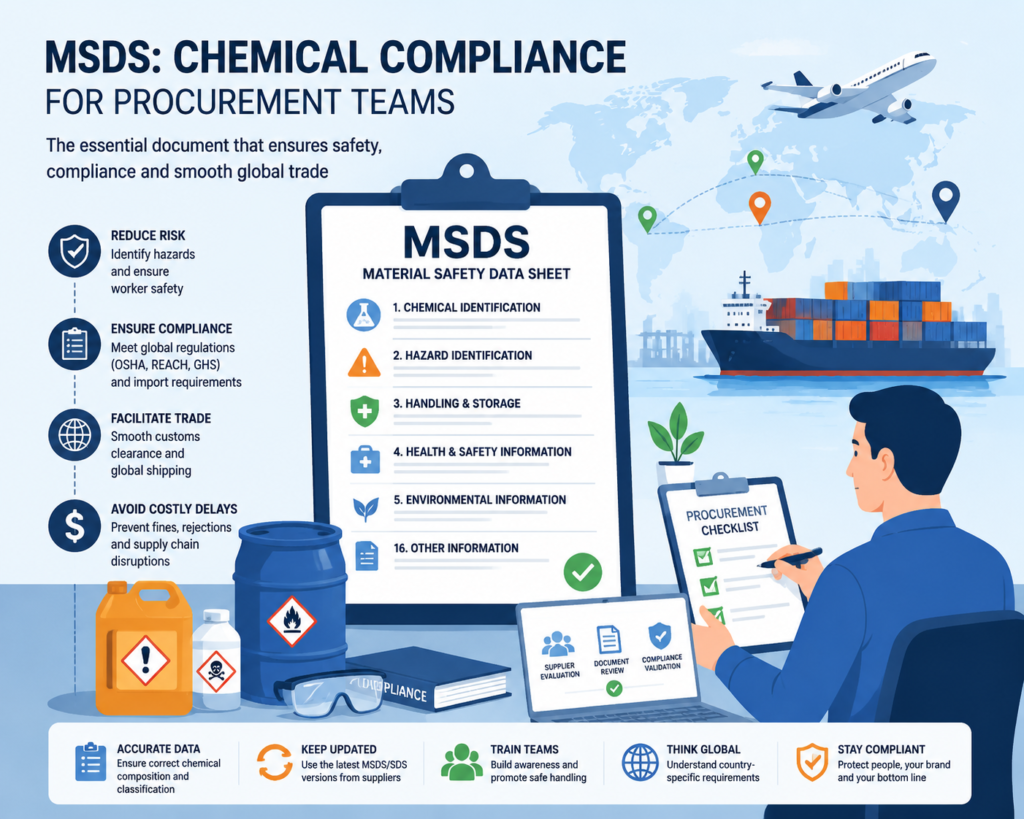
Compliance with IATA and IMDG regulations is critical for both air and sea transport, ensuring safety and legal adherence during shipment of flammable, toxic, or fragile cargo.
15. Choosing the Right Freight Method
15.1 Decision-Making Based on Cost, Speed, and Volume
Procurement engineers must evaluate cargo value, urgency, weight, and volume against budget constraints to determine the optimal transport mode.
15.2 Hybrid Approaches: Combining Air and Sea Freight
Strategic hybrid models, such as air-sea transshipment, combine the speed of air for critical components with the cost efficiency of sea for bulk goods, achieving an operational sweet spot.
15.3 Industry-Specific Recommendations
Automotive and electronics sectors often prioritize air for high-value components, while construction and heavy machinery industries favor sea freight to leverage volume economies.
16. Case Studies and Real-World Examples
16.1 Successful Air Freight Case Studies
Rapid deployment of replacement aerospace components reduced downtime by 80%, demonstrating air freight’s critical role in mission-critical supply chains.
16.2 Successful Sea Freight Case Studies
Bulk shipment of steel coils via sea enabled cost savings of over 60% compared to air, maintaining production continuity for a large automotive OEM.
16.3 Lessons Learned from Shipping Challenges
Balancing shipment speed with cost and risk management is crucial; improper planning can amplify delays, increase expenses, and disrupt production cycles.
17. Future Trends in Freight
17.1 Emerging Technologies in Air and Sea Shipping
Autonomous vessels, drone-assisted air freight, AI-driven route optimization, and advanced cargo monitoring systems promise to reshape logistics with unprecedented efficiency.
17.2 Impact of E-Commerce Growth on Freight Choice
Rapid e-commerce expansion fuels demand for air freight, particularly for small, high-value parcels requiring same-week delivery, while traditional bulk sea shipments continue to support industrial supply chains.
17.3 Predictions for the Next Decade
Hybrid transport models, sustainability mandates, and smart logistics networks will redefine cost, speed, and operational flexibility, challenging engineers to adapt proactively.
18. Conclusion
18.1 Summary of Air vs Sea Freight Benefits
Air freight offers unmatched speed and reliability for high-value, time-sensitive cargo, while sea freight excels in cost efficiency, capacity, and environmental sustainability.
18.2 Key Considerations for Businesses
Factors such as cargo type, transit urgency, budget, and regulatory compliance dictate freight choice, demanding meticulous planning and cross-functional collaboration.
18.3 Final Recommendations for Freight Planning
A deliberate, data-driven approach that blends cost, speed, and operational risk considerations ensures optimal freight decisions, safeguarding supply chain resilience and supporting long-term business objectives.
Ready to Ship Your Containers Overseas?
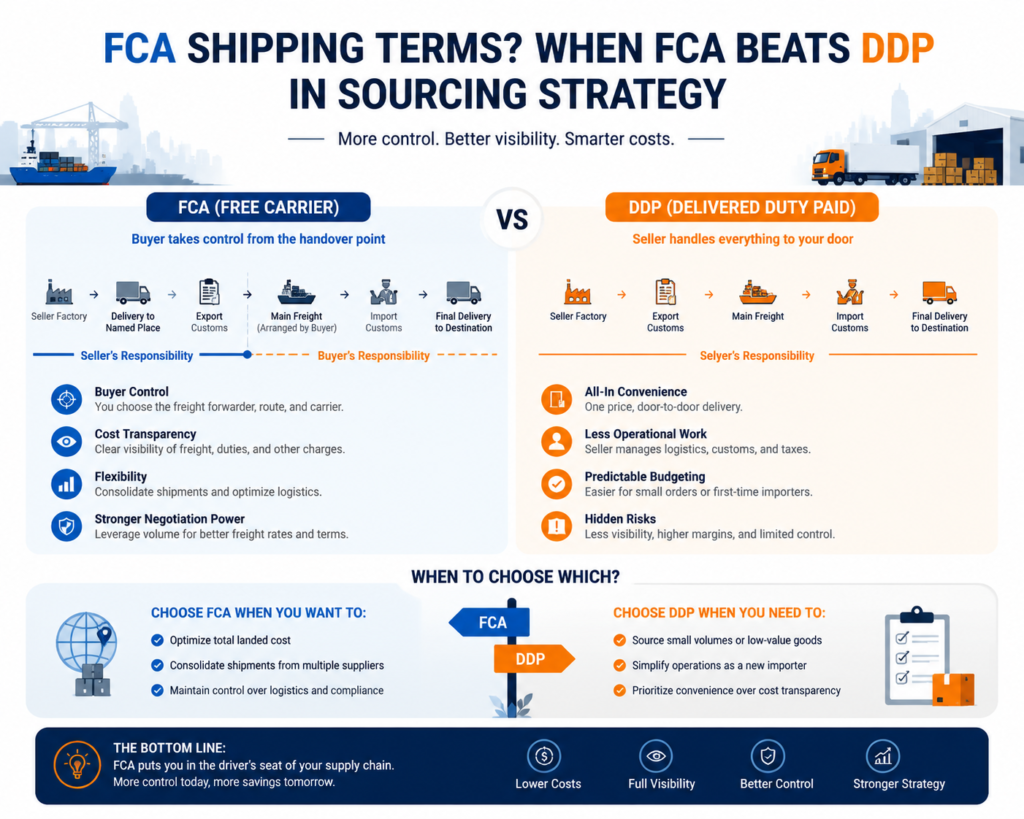
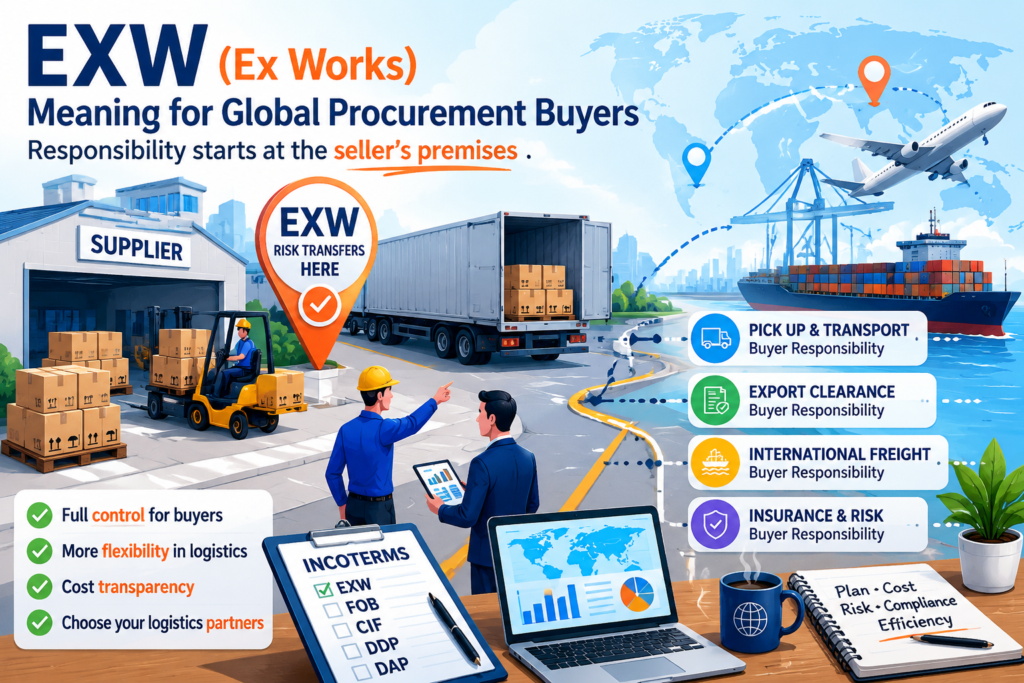
Figuring out how to ship containers overseas doesn’t have to be a barrier to your business growth. By understanding your cargo needs, choosing the right Incoterms, and partnering with an experienced logistics provider, you can streamline your entire supply chain.
At Jazlog, we are more than just a vendor; we are your strategic logistics partner in China. Whether you need standard FCL/LCL shipping, complex dangerous goods handling, or a completely hands-off DDP solution, our team is ready to deliver.