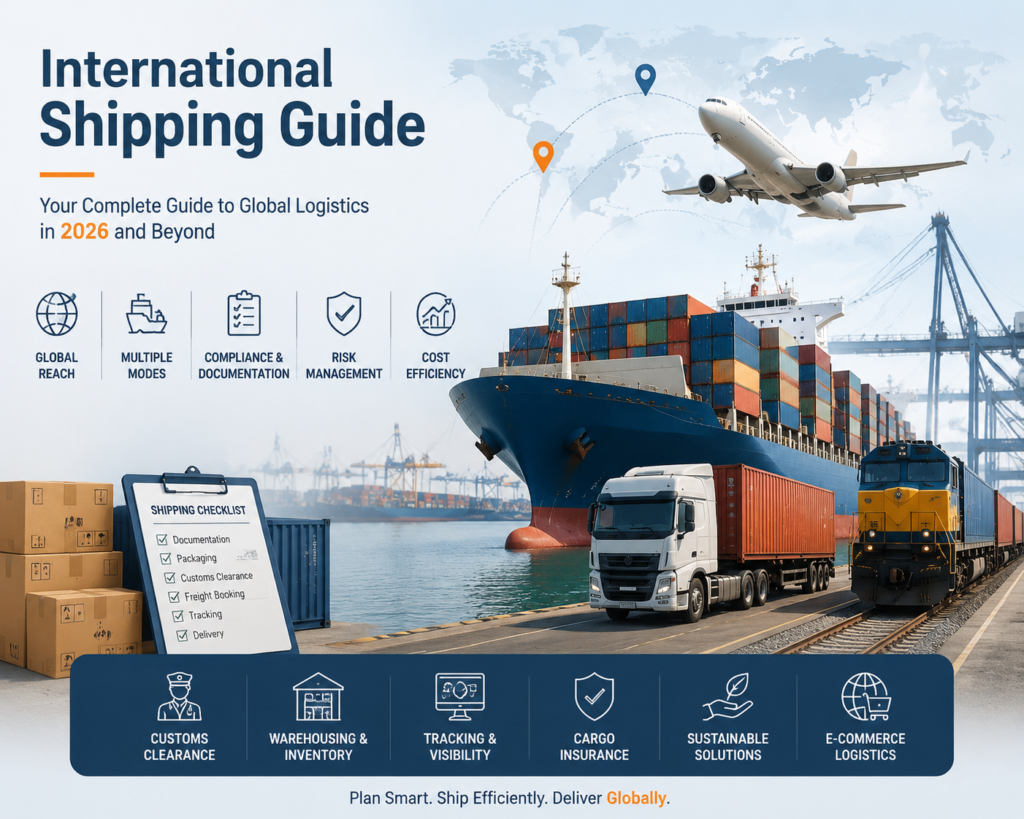
Global trade relies heavily on the efficiency of ocean freight. If you are a business owner or supply chain manager sourcing products from the world’s largest manufacturing hub, understanding exactly how to ship containers overseas is critical to your bottom line. Navigating international logistics, customs clearance, and long-distance ocean transit can seem daunting, but it doesn’t have to be.
At Jazlog, we are a premier China freight forwarder dedicated to bridging the gap between Chinese manufacturers and global markets. Whether you are shipping to the USA, Canada, Australia, the UK, Europe, or Africa, this comprehensive guide will walk you through the essential steps to ensure your cargo arrives safely, on time, and within budget.
A Comprehensive Guide to the US Import Customs Clearance Process
1. Introduction to US Customs Clearance
1.1 What US Customs Clearance Means for Importers
For importers navigating the labyrinthine world of global commerce, US customs clearance is far more than a bureaucratic checkpoint. It is the procedural mechanism through which imported cargo is legally authorized to enter the United States market while satisfying regulatory, fiscal, and security obligations. In practical engineering and procurement environments, customs clearance often determines whether a production line keeps moving or suddenly grinds to a halt like a gearbox starved of lubricant.
From industrial machinery and transmission components to electronic assemblies and raw materials, every shipment entering the United States must undergo scrutiny by customs authorities. Documentation accuracy, tariff classifications, valuation declarations, and compliance certifications all converge into one critical process. Miss one bolt in the assembly, and the whole operation can wobble.
For purchasing engineers and supply chain managers, understanding US customs clearance is not optional anymore. It directly affects lead times, landed costs, inventory turnover, and customer commitments. In today’s hyper-competitive manufacturing ecosystem, a delayed shipment can snowball into production downtime, contractual penalties, and frustrated clients saying, “Where’s the cargo? It should’ve landed days ago.”
1.2 Why Customs Compliance Matters in International Trade
Customs compliance serves as the infrastructural backbone of international trade integrity. Governments utilize customs regulations to ensure safety standards, collect duties, prevent illicit trade, and maintain fair market competition. For importers, however, compliance is primarily about mitigating operational risk and avoiding costly disruptions.
Non-compliance can trigger inspections, cargo holds, liquidated damages, monetary penalties, and even shipment confiscation. In industrial sectors where precision scheduling governs procurement cycles, even a minor documentation discrepancy can create cascading delays throughout the supply chain. It’s the classic domino effect—one missing HS code and suddenly everyone’s scrambling.
Moreover, compliance establishes credibility with customs authorities. Companies demonstrating consistent adherence to import regulations often experience smoother clearance procedures and reduced inspection frequency. Over time, this reliability becomes a strategic asset.
In sectors involving mechanical equipment, automotive parts, aerospace assemblies, or industrial gears, compliance also intersects with technical certifications and safety standards. Procurement departments therefore need both logistical acumen and engineering literacy to ensure imported products satisfy U.S. regulatory benchmarks.
1.3 Overview of the U.S. Import Entry Process
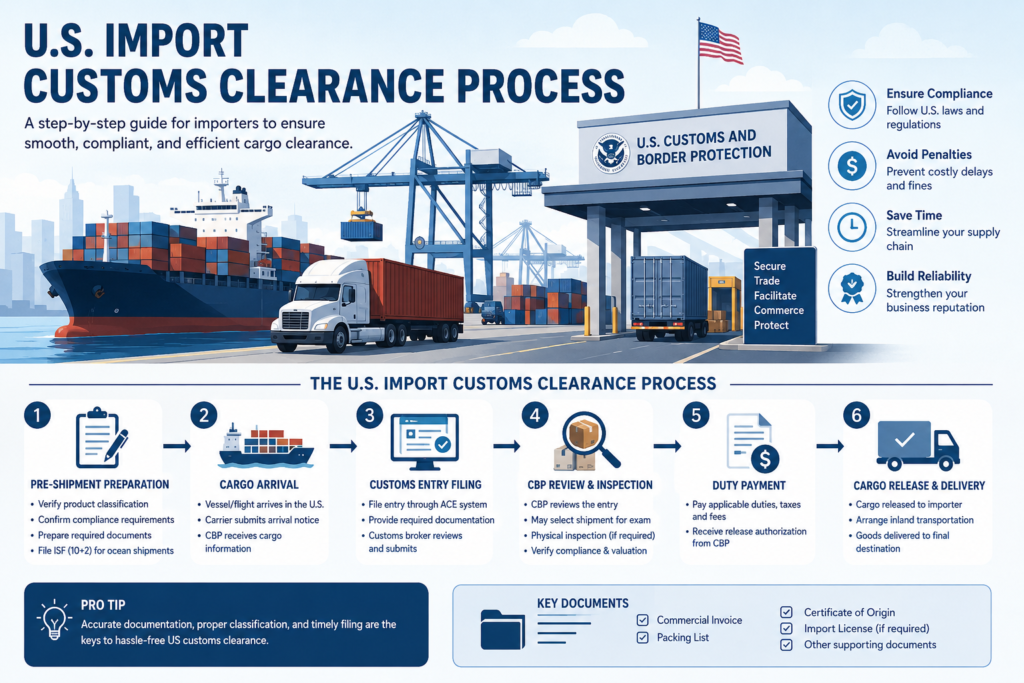
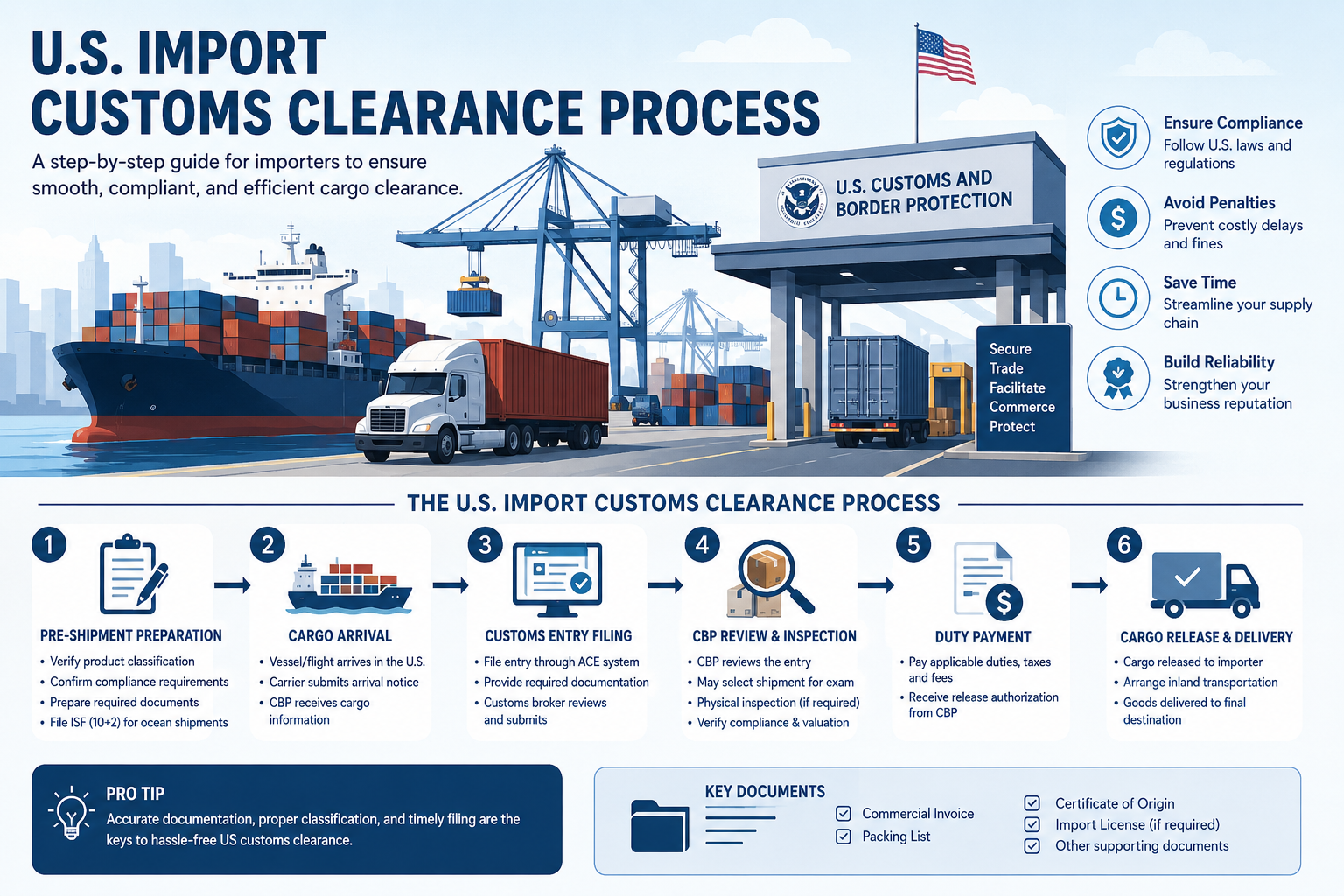
The U.S. import entry process begins well before cargo physically arrives at an American port. Importers must coordinate commercial invoices, shipping documents, tariff classifications, customs bonds, and Importer Security Filings in advance to facilitate seamless processing.
Once cargo reaches a U.S. port of entry, Customs and Border Protection evaluates submitted documentation to verify product legitimacy, declared values, country of origin, and applicable duties. Depending on cargo type and risk assessment parameters, shipments may be released immediately or selected for inspection.
Following duty payment and clearance authorization, cargo is released for inland transportation and final delivery. While the process sounds linear on paper, seasoned purchasing managers know that real-world logistics can get messy pretty quickly. Port congestion, classification disputes, random exams, and supplier paperwork errors can turn a straightforward shipment into a week-long headache.
Efficient US customs clearance therefore demands synchronized coordination between suppliers, freight forwarders, customs brokers, and procurement teams.
2. Understanding the Role of U.S. Customs Authorities
2.1 The Responsibilities of CBP (Customs and Border Protection)
U.S. Customs and Border Protection, commonly known as CBP, functions as the principal enforcement agency overseeing imports entering the United States. Its responsibilities encompass cargo inspection, duty collection, trade enforcement, anti-smuggling operations, and regulatory compliance verification.
CBP officers evaluate shipments using advanced risk assessment algorithms, trade databases, and inspection protocols. High-risk shipments may undergo intensive examination involving X-ray scans, physical inspections, or laboratory analysis.
For industrial importers, CBP acts as both gatekeeper and regulator. Proper communication and accurate declarations significantly reduce the likelihood of delays. Veteran logistics managers often say, “Customs likes predictability,” and honestly, they’re not wrong.
2.2 How Government Agencies Regulate Imported Goods
Beyond CBP, multiple federal agencies regulate specific product categories entering the United States. The FDA oversees food, pharmaceuticals, and medical devices, while the FCC regulates electronic communication equipment. The EPA controls environmentally sensitive products, and the USDA monitors agricultural imports.
Mechanical and industrial goods may also require compliance with safety standards, energy regulations, or hazardous material protocols depending on their application. Importers frequently underestimate the complexity of overlapping jurisdictional requirements.
This regulatory mosaic necessitates meticulous documentation management and technical due diligence. Procurement engineers must therefore understand not only product specifications but also regulatory applicability across multiple agencies.
2.3 The Importance of Border Security and Trade Enforcement
Border security and trade enforcement protect domestic markets from unsafe products, counterfeit goods, intellectual property violations, and unfair trade practices. Anti-dumping regulations, sanctions enforcement, and supply chain security initiatives all fall under this umbrella.
Trade enforcement also ensures equitable market competition. Without these controls, substandard products could undercut compliant manufacturers, destabilizing industrial sectors and compromising safety standards.
From a procurement perspective, robust enforcement means importers must prioritize supplier verification and traceability. Buying from unreliable vendors may seem cheaper upfront, but sooner or later, that shortcut usually comes back to bite.
3. Key Terminology in US Customs Clearance
3.1 Customs Bond Explained
A customs bond acts as a financial guarantee ensuring importers fulfill duty payments and regulatory obligations. CBP requires bonds for many commercial shipments entering the United States.
Single-entry bonds apply to one shipment, while continuous bonds cover multiple shipments throughout the year. Companies importing frequently often choose continuous bonds because they streamline operations and reduce administrative friction.
Think of it as insurance for compliance. Without the bond, customs essentially says, “No dice.”
3.2 Harmonized Tariff Schedule (HTS) Codes
HTS codes classify imported products according to internationally standardized nomenclature systems. These codes determine applicable duty rates, trade restrictions, and reporting requirements.
For industrial machinery and engineered products, classification can become remarkably intricate due to technical specifications, material composition, and intended use. Misclassification frequently results in penalties or overpayment of duties.
Procurement teams should collaborate closely with customs specialists to ensure classification precision. One wrong digit in an HTS code can dramatically alter landed costs.
3.3 Duties, Taxes, and Merchandise Processing Fees
Import duties are calculated based on product classification and declared customs value. Additional charges may include harbor maintenance fees, merchandise processing fees, and anti-dumping duties.
For B2B buyers managing procurement budgets, understanding these costs is essential for accurate landed cost calculations. Freight charges alone never tell the full story.
Many newcomers focus solely on unit price while ignoring downstream customs expenses. That’s like pricing a gearbox without considering lubrication, maintenance, or installation—technically incomplete and financially risky.
4. Types of Imports Entering the United States
4.1 Commercial Imports vs. Personal Shipments
Commercial imports involve goods intended for resale, manufacturing, or business use, whereas personal shipments are designed for individual consumption.
Commercial imports face stricter compliance standards, detailed documentation requirements, and higher regulatory scrutiny. Industrial equipment shipments, for example, often require precise technical declarations and certifications.
4.2 Temporary Imports and Bonded Shipments
Temporary imports enter the U.S. for limited purposes such as exhibitions, repairs, or testing before re-exportation. Bonded shipments remain under customs control until duties are paid or exportation occurs.
Manufacturers frequently use temporary import mechanisms for trade shows or prototype testing. Proper bond utilization can significantly reduce duty exposure.
4.3 Restricted and Regulated Products
Certain products require special permits, certifications, or agency approvals before importation. Examples include pharmaceuticals, chemicals, electronics, and defense-related components.
Failure to comply with restricted product regulations can trigger severe penalties and cargo seizure. Importers dealing with industrial machinery containing hazardous materials or electronic control systems should conduct comprehensive regulatory reviews beforehand.
5. Preparing Before Shipping Goods to the USA
5.1 Supplier Documentation Requirements
Accurate supplier documentation forms the foundation of efficient US customs clearance. Commercial invoices, certificates of origin, packing declarations, and technical specifications must align perfectly.
Even minor inconsistencies between documents can raise red flags during customs review. Procurement engineers should establish standardized documentation protocols with overseas suppliers.
5.2 Verifying Product Compliance Standards
Before shipment departure, importers must verify product compliance with applicable U.S. standards and regulations. This includes labeling requirements, safety certifications, and technical conformity assessments.
Skipping pre-shipment verification is basically rolling the dice. Sometimes cargo clears smoothly. Other times, it sits at port collecting storage fees while everyone scrambles for missing paperwork.
5.3 Choosing the Right Shipping Terms (Incoterms)
Incoterms define responsibilities between buyers and sellers regarding transportation, insurance, duties, and risk transfer.
Terms such as FOB, CIF, and DDP dramatically influence customs obligations and landed costs. Purchasing departments should select Incoterms strategically based on logistical capabilities and risk tolerance.
6. Essential Documents Required for US Customs Clearance
6.1 Commercial Invoice Requirements
The commercial invoice serves as the cornerstone document for customs processing. It includes product descriptions, declared values, country of origin, quantities, and buyer-seller information.
Vague descriptions such as “machine parts” often trigger customs scrutiny. Detailed technical terminology improves transparency and reduces clearance complications.
6.2 Packing List and Bill of Lading
Packing lists outline cargo contents and packaging configurations, while bills of lading establish transportation contracts between shippers and carriers.
Accurate documentation ensures efficient cargo identification during inspections and warehouse handling procedures.
6.3 Arrival Notice and Importer Security Filing
Arrival notices inform importers about incoming shipments, while Importer Security Filings provide advance cargo data to CBP.
ISF compliance is particularly critical for ocean freight shipments. Late or inaccurate filings can generate substantial penalties.
7. Understanding HTS Codes and Product Classification
7.1 How HTS Codes Affect Import Duties
HTS classifications directly determine duty rates and trade measures applied to imported products.
Industrial gears, transmission systems, and precision machined components may each carry different classifications despite appearing similar operationally.
7.2 Common Classification Mistakes
Importers often misclassify products due to incomplete technical analysis or supplier misinformation.
Errors typically involve incorrect material identification, product function assumptions, or misunderstanding assembly status.
7.3 Tips for Accurate Product Categorization
Accurate classification requires detailed engineering documentation, material specifications, and functional descriptions.
Maintaining classification databases and consulting licensed customs brokers helps minimize costly errors.
8. Duties, Taxes, and Import Fees
8.1 Calculating Import Duties
Duty calculations depend on customs value, HTS classification, and country of origin.
Importers should incorporate duties into procurement forecasting models to avoid budget overruns.
8.2 Anti-Dumping and Countervailing Duties
Anti-dumping duties protect domestic industries from unfairly priced imports, while countervailing duties address foreign government subsidies.
These additional charges can dramatically increase landed costs for certain industrial products.
8.3 Additional Fees Importers Should Expect
Beyond standard duties, importers may encounter port fees, examination charges, demurrage, detention, and brokerage costs.
Seasoned logistics managers know those “little extra fees” can pile up faster than expected.
9. Customs Bonds and Why They Matter
9.1 Single Entry Bond vs. Continuous Bond
Single-entry bonds suit infrequent importers, while continuous bonds support ongoing commercial operations.
Frequent importers generally benefit from continuous bonds due to operational efficiency and cost optimization.
9.2 When a Customs Bond Is Required
CBP mandates customs bonds for many commercial imports exceeding specific value thresholds.
Certain regulated commodities also require mandatory bonding regardless of shipment value.
9.3 How Bond Costs Are Calculated
Bond premiums depend on shipment value, duty exposure, importer history, and transaction frequency.
Riskier import profiles often result in higher bond costs.
10. Step-by-Step US Customs Clearance Process
10.1 Cargo Arrival and Customs Notification
Upon arrival, carriers submit cargo manifests to customs authorities for preliminary review.
Importers receive notifications regarding shipment status and pending clearance procedures.
10.2 Customs Entry Filing Procedures
Customs brokers or importers file entry documentation electronically through CBP systems.
Accurate filing expedites release procedures and minimizes inspection risks.
10.3 Cargo Release and Final Delivery
Once duties are paid and compliance verified, cargo receives release authorization for domestic transportation.
Efficient coordination between warehouses, carriers, and procurement teams ensures timely delivery.
11. The Role of Customs Brokers in Import Clearance
11.1 What Customs Brokers Actually Do
Customs brokers manage documentation, tariff classification, duty calculation, and communication with customs authorities.
They essentially act as navigators through the procedural maze of international trade compliance.
11.2 Benefits of Hiring a Licensed Broker
Experienced brokers reduce clearance delays, improve compliance accuracy, and optimize duty management strategies.
For engineering firms importing complex industrial equipment, broker expertise becomes particularly valuable.
11.3 How to Choose the Right Customs Broker
Importers should evaluate brokers based on industry specialization, licensing credentials, response speed, and technical competency.
A good broker doesn’t just process paperwork—they solve problems before they escalate.
12. Importer Security Filing (ISF) Requirements
12.1 What Is ISF 10+2
ISF 10+2 requires importers to submit cargo information before ocean shipments depart foreign ports.
The system enhances supply chain visibility and national security monitoring.
12.2 Filing Deadlines and Compliance Rules
ISF filings must generally occur at least 24 hours before vessel loading.
Timeliness is critical because late filings can trigger penalties and inspections.
12.3 Penalties for Incorrect ISF Submission
Incorrect or incomplete ISF filings may result in substantial fines and shipment delays.
Consistent filing accuracy therefore becomes a key operational discipline.
13. Customs Exams and Inspections
13.1 Types of Customs Inspections
Inspections range from document reviews to intensive physical examinations involving container unloading.
Selection criteria often involve risk assessment algorithms and compliance history.
13.2 Reasons Shipments Get Flagged
Common triggers include inconsistent declarations, suspicious valuation patterns, incomplete paperwork, and high-risk origins.
Sometimes cargo is simply selected randomly. Customs can be unpredictable like that.
13.3 How Inspections Impact Delivery Timelines
Examinations can delay cargo release by several days or even weeks depending on inspection complexity.
Storage fees and production disruptions often accompany prolonged holds.
14. Common US Customs Clearance Delays
14.1 Missing or Incorrect Documentation
Incomplete invoices, inaccurate HTS codes, and mismatched shipment details frequently delay clearance.
Documentation precision remains one of the most controllable variables in international logistics.
14.2 Product Labeling and Compliance Problems
Improper labeling or missing certifications can trigger regulatory reviews and shipment detention.
Industrial electronics and consumer products are especially vulnerable to compliance scrutiny.
14.3 Payment and Duty-Related Issues
Delayed duty payments or insufficient bond coverage may halt cargo release procedures.
Efficient financial coordination helps prevent avoidable disruptions.
15. Special Regulations for Certain Imported Goods
15.1 FDA-Regulated Products
Medical devices, food products, pharmaceuticals, and cosmetics require FDA compliance verification.
Importers should confirm facility registrations and labeling standards before shipment.
15.2 Electronics and FCC Compliance
Electronic equipment entering the U.S. often requires FCC certification demonstrating electromagnetic compliance.
Failure to satisfy FCC standards can result in import refusal.
15.3 Agricultural and Food Product Restrictions
Agricultural imports face stringent inspections to prevent pest contamination and disease transmission.
Proper phytosanitary documentation is essential.
16. Import Compliance and Recordkeeping Requirements
16.1 Required Import Documentation Retention Periods
CBP requires importers to maintain records for several years following entry.
Organized document retention simplifies audits and dispute resolution.
16.2 Maintaining Audit-Ready Import Records
Digital archiving systems improve accessibility and compliance management efficiency.
Modern procurement operations increasingly rely on centralized compliance databases.
16.3 Avoiding Customs Compliance Violations
Regular audits, staff training, and supplier oversight reduce non-compliance risks.
Proactive compliance management always costs less than corrective action.
17. Technology and Automation in Customs Clearance
17.1 Automated Commercial Environment (ACE) System
ACE serves as the primary electronic platform for customs data submission and trade processing.
The system streamlines communication between importers and government agencies.
17.2 Digital Documentation Management
Digital workflows reduce paperwork redundancy and improve operational visibility.
Automation also minimizes manual entry errors.
17.3 AI and Automation Trends in Global Trade
Artificial intelligence increasingly supports classification analysis, risk assessment, and predictive logistics planning.
Supply chains are becoming smarter, leaner, and considerably more data-driven.
18. Cost-Saving Strategies for Importers
18.1 Reducing Duty Exposure Legally
Duty optimization strategies may involve tariff engineering, valuation planning, and trade agreement utilization.
Legal optimization requires careful compliance oversight.
18.2 Using Free Trade Agreements Effectively
Free trade agreements can significantly reduce import duties when qualification requirements are met.
Proper origin documentation remains crucial.
18.3 Improving Supply Chain Efficiency
Streamlined logistics coordination reduces storage costs, delays, and operational inefficiencies.
A smooth supply chain runs like a well-aligned gearbox—quiet, efficient, and dependable.
19. Common Mistakes Importers Should Avoid
19.1 Incorrect Product Valuation
Undervaluation or inaccurate cost declarations may trigger audits and penalties.
Transparency is essential during customs declarations.
19.2 Misclassification of Goods
Improper HTS coding remains one of the most frequent customs violations.
Technical review processes help reduce classification errors.
19.3 Failing to Understand Import Regulations
Importers who neglect regulatory research often encounter unexpected delays and financial losses.
In international trade, assumptions are expensive.
20. Best Practices for Smooth US Customs Clearance
20.1 Building Strong Supplier Communication
Clear communication with overseas suppliers improves documentation accuracy and shipment reliability.
Consistent coordination prevents last-minute surprises.
20.2 Working Closely With Freight Forwarders and Brokers
Integrated collaboration between logistics partners enhances operational efficiency.
Experienced partners often identify issues before they become costly problems.
20.3 Creating a Reliable Import Compliance Checklist
Structured compliance checklists standardize import procedures and reduce oversight risks.
Well-documented processes support scalability and operational consistency.
21. Future Trends in US Customs Clearance
21.1 Evolving Trade Policies and Tariffs
Trade regulations continue evolving due to geopolitical shifts and economic policy changes.
Importers must remain agile and informed.
21.2 Sustainability and Supply Chain Transparency
Environmental accountability and ethical sourcing are becoming increasingly important in global trade.
Transparency initiatives are reshaping procurement expectations.
21.3 The Growing Impact of E-Commerce Imports
Cross-border e-commerce continues accelerating shipment volumes and customs processing complexity.
Customs authorities are adapting rapidly to this expanding trade model.
22. Conclusion
22.1 Key Takeaways for Importers
Successful US customs clearance depends on preparation, compliance accuracy, and operational coordination.
Importers who understand the process gain significant competitive advantages.
22.2 How Proper Planning Reduces Customs Risks
Strategic planning minimizes delays, reduces costs, and strengthens supply chain resilience.
Prepared importers handle disruptions far more effectively.
22.3 Final Thoughts on Efficient US Customs Clearance
In modern industrial procurement and manufacturing environments, efficient US customs clearance is no longer merely an administrative necessity—it is a strategic competency influencing profitability, customer satisfaction, and operational continuity.
Companies that invest in compliance expertise, technological integration, and supplier coordination position themselves for long-term success in the increasingly intricate world of global commerce.
Ready to Ship Your Containers Overseas?
Figuring out how to ship containers overseas doesn’t have to be a barrier to your business growth. By understanding your cargo needs, choosing the right Incoterms, and partnering with an experienced logistics provider, you can streamline your entire supply chain.
At Jazlog, we are more than just a vendor; we are your strategic logistics partner in China. Whether you need standard FCL/LCL shipping, complex dangerous goods handling, or a completely hands-off DDP solution, our team is ready to deliver.