The Critical Role of Customs Clearance in International Shipping
In global trade, customs clearance is a crucial step in ensuring that goods are legally imported or exported between countries.
However, failing to navigate this process properly can result in severe delays, fines, or even lost goods. This is especially true for businesses engaged in international B2B transactions,
where the smooth flow of goods is essential for maintaining production schedules and meeting customer demands.
For companies relying on international logistics, understanding customs clearance issues and their potential consequences is paramount. In this article,
we will explore the possible outcomes of customs clearance failures, including how they could lead to lost goods, and provide practical advice for avoiding these risks.
What is Customs Clearance?
Customs clearance is the process through which goods are inspected and authorized for entry into or exit from a country.
This process ensures that all necessary import/export duties, taxes, and regulations are met according to the laws of both the origin and destination countries.
A shipment must go through customs clearance to ensure it complies with local regulations regarding product standards, tariffs, and documentation requirements.
Without this process, the goods can be delayed, returned, or, in some cases, seized by authorities.
Common Customs Clearance Issues That Can Lead to Lost Goods
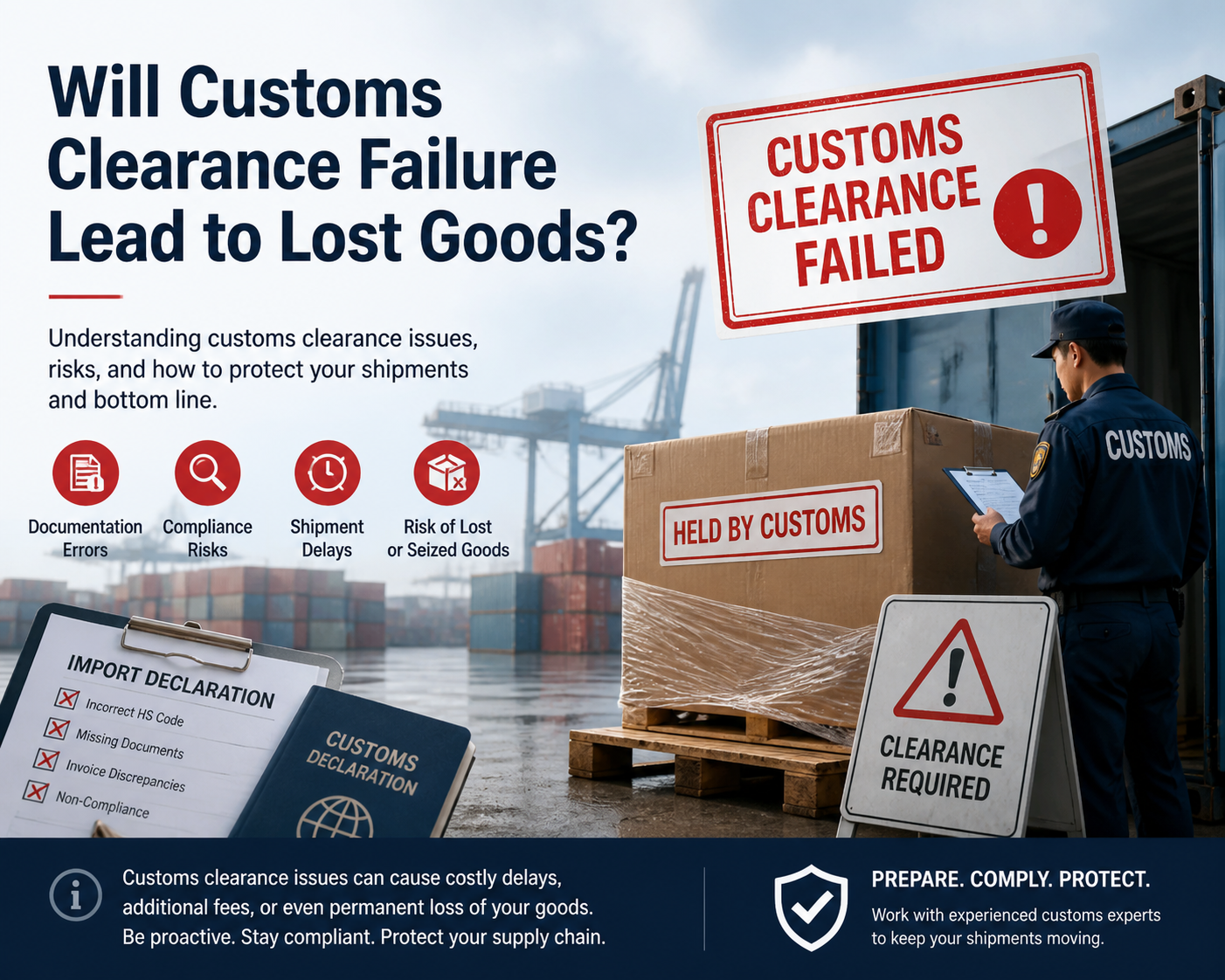
While customs clearance is generally a routine procedure, there are various issues that can disrupt the process,
leading to significant challenges, including the potential loss of goods:
1. Incomplete or Incorrect Documentation
Failure to provide complete, accurate, or compliant documentation is one of the leading causes of customs delays. Missing invoices, incorrect product descriptions, or missing certificates of origin can all result in a shipment being held at customs or delayed. If these issues are not resolved promptly, goods could be returned to the sender or, in some cases, abandoned and deemed “lost.”
2. Failure to Pay Duties and Taxes
Customs duties and taxes are mandatory payments required to import goods into a country. If the importing business fails to pay these fees in a timely manner, the goods may be held by customs authorities until payment is made. In cases of non-payment or disputes regarding the duties, goods may be seized or eventually destroyed, resulting in financial losses and potential legal ramifications.
3. Non-Compliance with Local Regulations
Each country has its own set of rules and regulations concerning the import and export of goods. Non-compliance with these regulations, such as importing banned items or failing to meet safety or quality standards, can lead to goods being rejected, delayed, or confiscated. In extreme cases, goods could be forfeited or destroyed, leaving them effectively lost to the business.
4. Customs Broker Errors
Customs brokers are often employed to handle the clearance process, but human errors, such as incorrect tariff codes or misinterpretation of regulations, can delay clearance. In some cases, goods may be held for extended periods as customs authorities work to resolve discrepancies.
5. Unforeseen Inspection Delays
Customs inspections are often random but can be extended if there are concerns about the contents of the shipment. Prolonged inspections, especially those involving large or complex shipments, can delay clearance and create a backlog in the customs facility. In worst-case scenarios, the goods could be mistakenly misplaced or lost during the inspection process.
Will Customs Clearance Failure Result in Lost Goods?
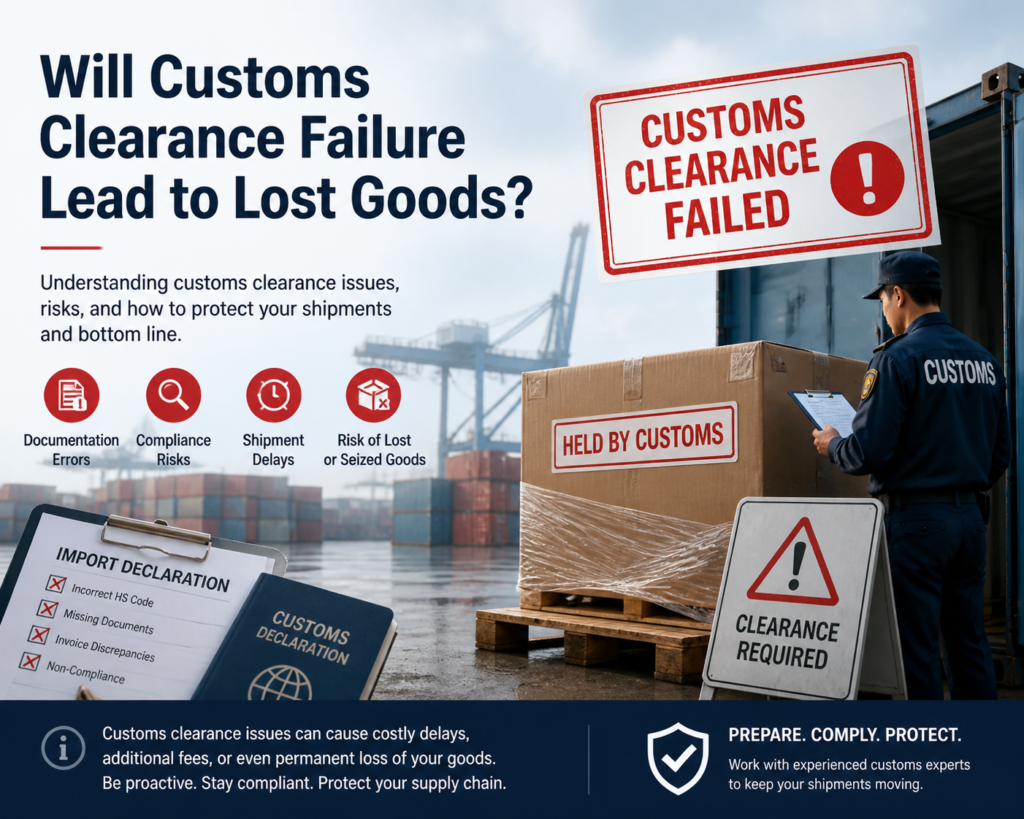
While the likelihood of goods being permanently lost due to customs clearance failure is relatively low, the consequences of clearance issues can still be severe. If proper procedures are not followed, goods can be delayed for weeks or months, and in the most extreme cases, they could be lost through damage, seizure, or abandonment.
In most cases, the worst outcome involves significant delays, which can disrupt business operations. However, it’s important to note that lost goods are generally the result of a combination of factors, including prolonged detention, failure to pay customs fees, and insufficient communication with customs authorities.
Preventing Customs Clearance Issues: Best Practices for B2B Buyers
Preventing customs clearance failure requires attention to detail and careful planning. Here are some best practices to help minimize the risk of customs clearance issues:
1. Ensure Complete and Accurate Documentation
Always double-check that all required documents, including invoices, packing lists, certificates of origin, and compliance certificates, are complete and accurate. Work with your suppliers and logistics partners to ensure that all paperwork is in order.
2. Understand Duty and Tax Requirements
Before shipping, make sure you fully understand the duty and tax requirements of the destination country. This includes tariffs, import quotas, and any other specific charges. Keeping track of these payments and making sure they are paid on time can help avoid delays.
3. Work with Experienced Customs Brokers
Experienced customs brokers can guide you through the complexities of the clearance process. They can ensure that the appropriate tariff codes are used, documentation is filed correctly, and any regulatory compliance issues are handled before goods reach customs.
4. Stay Up-to-Date on Local Regulations
Regulations can change frequently, so it’s essential to stay informed about the rules in both the origin and destination countries. Consider working with trade associations or legal advisors who can provide up-to-date information on regulatory changes that may affect your shipments.
5. Plan for Potential Delays
While most customs issues can be avoided with proper planning, there are always unforeseen delays. Be prepared for the possibility that shipments might take longer to clear customs than initially expected. Have contingency plans in place to minimize the impact of delays on your business.
Conclusion: Mitigating the Risk of Lost Goods
Customs clearance is an essential step in international shipping, but it can be fraught with challenges. While customs clearance issues are unlikely to result in lost goods, they can cause significant delays, legal complications, and financial losses if not properly addressed.
By ensuring accurate documentation, understanding regulatory requirements, and working with experienced professionals, you can significantly reduce the risk of customs-related issues and keep your shipments on track. With the right precautions in place, businesses can avoid costly delays and ensure the safe, timely delivery of their goods.
Call to Action:
Stay ahead of potential customs clearance issues by partnering with experienced logistics providers. If you’re facing difficulties with your international shipments, reach out to a reliable customs broker to guide you through the process and protect your investments.