Table of Contents
EXW? Meaning for Global Procurement Buyers
1. EXW? Definition in Global Trade Context
What EXW Means in Incoterms
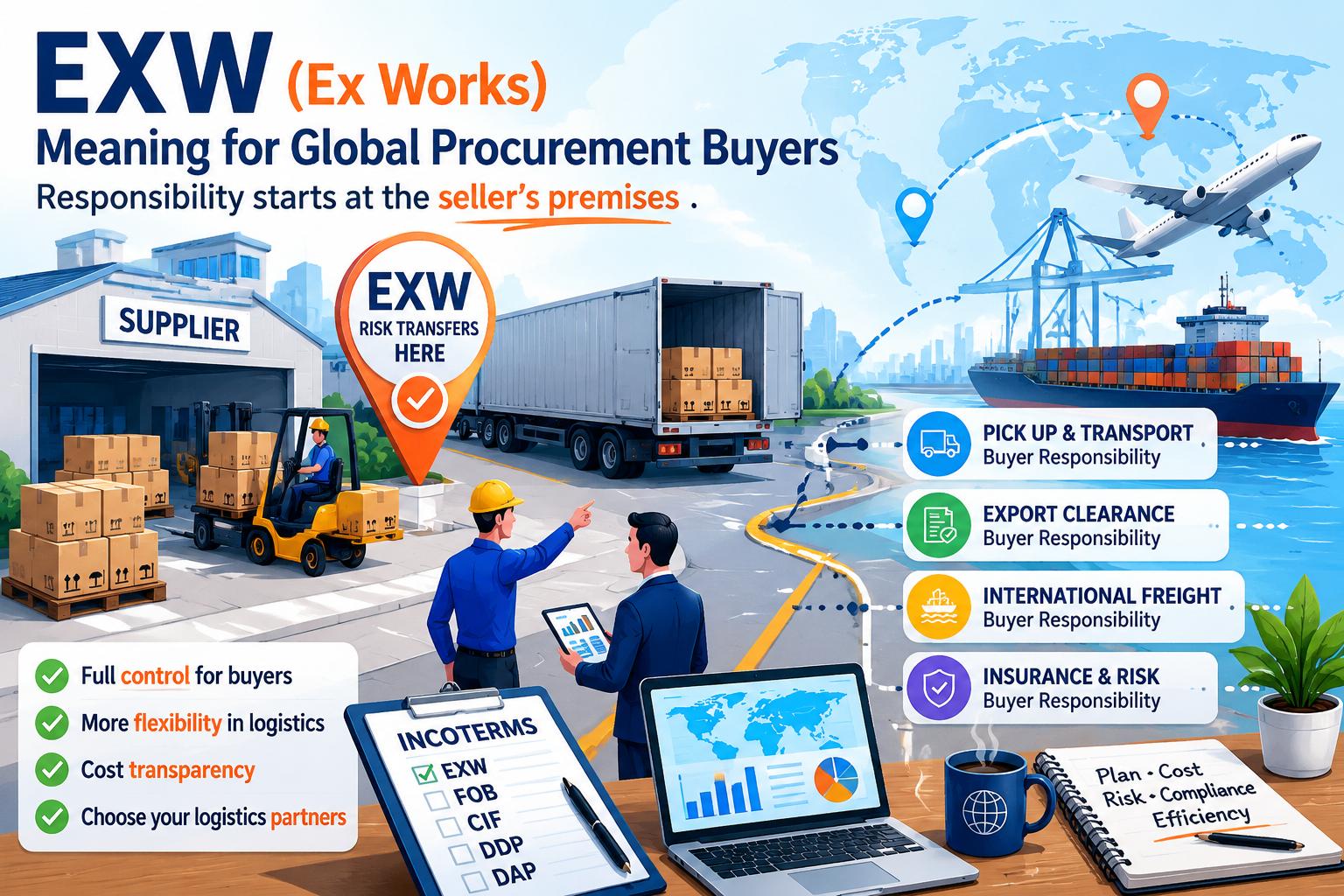
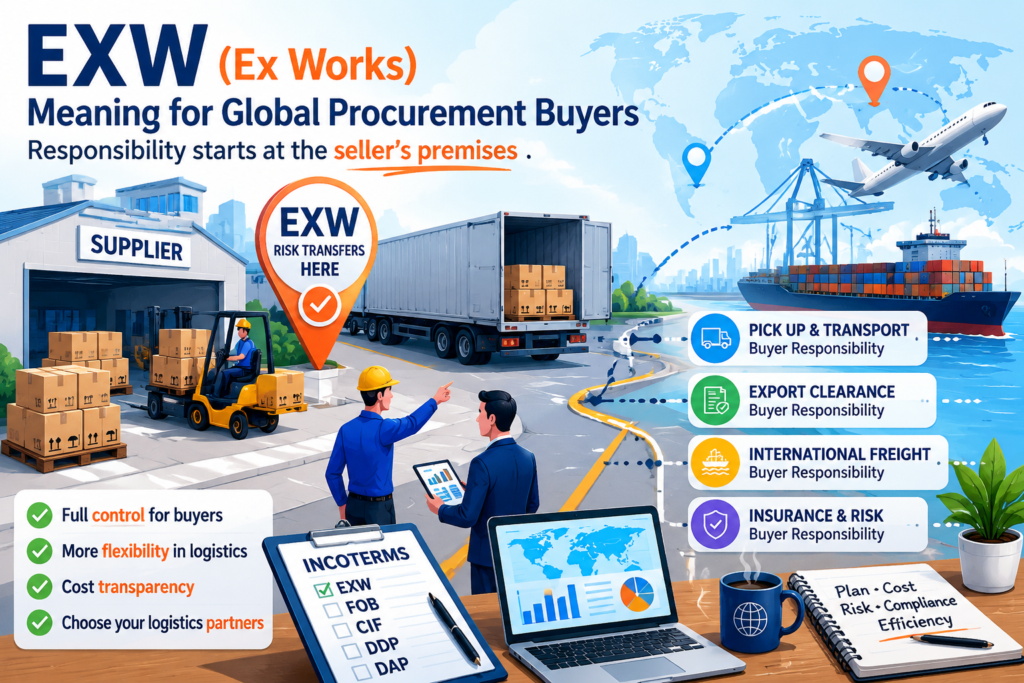
EXW, or Ex Works, is one of those Incoterms that looks deceptively simple on paper but turns into a full-blown operational puzzle in real procurement execution. In essence, it places the seller at the bare minimum obligation level—goods are made available at their premises, and that is where their responsibility ends, full stop. From a procurement engineer’s lens, this is essentially a “you pick it up, you own it” arrangement, where control shifts downstream faster than most cost models initially anticipate.
Basic Contract Structure of EXW
The contract structure under EXW is stripped down to its skeletal form: product readiness, pickup location, and agreed availability date. Everything beyond the factory gate becomes the buyer’s operational battlefield, including transport orchestration, export formalities, and international logistics choreography. In real-world sourcing, this creates a structure where the buyer is effectively acting as the de facto logistics integrator, whether they planned for it or not.
Why EXW Is Common in International Purchasing
EXW is widely used because suppliers love its simplicity and low liability footprint, especially in manufacturing hubs where logistics capabilities vary widely. It allows suppliers to quote aggressive unit prices without bundling complex logistics overhead, which makes their offers look sharper in sourcing comparisons. For global procurement teams, EXW often appears attractive at first glance, but the real landed cost story only unfolds once downstream logistics are fully mapped.
📖 Wikipedia – Incoterms (overview of EXW and other terms)
2. EXW? How It Works in Real Procurement Practice
Seller Responsibilities Under EXW
Under EXW, the seller’s responsibilities are intentionally minimalistic, usually limited to packaging, labeling, and making the goods available at their facility. There is no obligation to load goods onto transport vehicles unless explicitly negotiated, which is where many procurement teams get caught off guard. In practice, sellers operate in a “ready on the shelf” mode, and anything beyond that becomes an added service rather than a contractual duty.
Buyer Responsibilities Step by Step
The buyer essentially steps into the role of logistics commander from the very first mile, arranging pickup from the supplier’s warehouse and coordinating inland trucking. After that, export clearance, freight booking, insurance, and multimodal transitions all sit on the buyer’s shoulders. It is a full-stack responsibility model where procurement teams often realize, a bit late, that EXW is not just a pricing term—it is an operational commitment.
Typical EXW Transaction Flow
A typical EXW flow begins with purchase order confirmation and ends with the buyer orchestrating a chain of logistics events that stretch from factory gate to final destination. First comes pickup coordination, then customs documentation handling, followed by export terminal delivery and international shipping execution. From a supply chain standpoint, EXW behaves like a relay race where the baton is handed over immediately at the starting line, and the buyer runs the rest of the marathon.
3. EXW? Key Responsibilities of Buyers
Arranging Pickup From Supplier Factory
Arranging pickup under EXW is rarely as straightforward as booking a taxi for cargo, especially in industrial zones where access constraints and loading requirements vary. Buyers must coordinate trucking schedules, equipment availability, and sometimes even on-site labor support. In many cases, this becomes a “logistics within logistics” scenario, where micro-level planning determines macro-level cost efficiency.
Export Clearance Responsibility Explained
Export clearance under EXW typically sits with the buyer, which introduces an additional layer of regulatory navigation across Chinese customs systems or other origin countries. This requires documentation precision, HS code alignment, and often collaboration with licensed customs brokers. Miss one detail, and the shipment can sit in limbo like a stalled assembly line, bleeding both time and money.
Full Logistics Control After Pickup
Once goods are picked up, the buyer holds full operational control over the shipment, which sounds empowering but comes with serious accountability. Every delay, misrouting, or documentation mismatch becomes part of the buyer’s risk portfolio. From a procurement engineering standpoint, this is both a blessing and a pressure cooker situation—maximum flexibility, maximum responsibility.
4. EXW? What Sellers Are NOT Responsible For
No Loading Obligation in Most Cases
One of the most misunderstood aspects of EXW is that sellers are generally not required to load goods onto trucks. This means buyers must either arrange labor or negotiate loading as an add-on service. In practice, this creates friction at the factory gate if expectations are not crystal clear upfront.
No Export Customs Handling
Sellers typically do not handle export customs clearance under EXW, which shifts regulatory complexity entirely to the buyer side. This can become particularly tricky in jurisdictions where exporters must be locally registered or licensed. The result is often an unexpected need for intermediaries or freight forwarder involvement just to unlock basic shipment movement.
No International Freight Responsibility
International freight responsibility is completely outside the seller’s scope, meaning ocean, air, or rail transport is entirely buyer-managed. Sellers will not engage with carriers, negotiate rates, or manage transit risks. This separation is clean on paper but operationally heavy in execution, especially for teams new to global sourcing.
5. EXW? Why Suppliers Prefer EXW Terms
Minimum Operational Burden for Sellers
Suppliers prefer EXW because it removes logistical complexity from their production-centric workflow. They can focus purely on manufacturing efficiency without diverting attention to shipping coordination. In high-volume factories, this keeps operations lean and avoids logistical bottlenecks that could disrupt production lines.
Reduced Legal and Logistics Liability
By using EXW, suppliers significantly reduce exposure to shipping-related disputes, damage claims, or customs complications. Their liability essentially stops at the warehouse door, which is a clean legal boundary. For many manufacturers, this clarity is worth more than marginal pricing competitiveness.
Cost Efficiency for Manufacturers
EXW allows manufacturers to present stripped-down pricing that excludes logistics overhead, making their quotations appear more competitive in global tenders. It avoids embedding volatile freight costs into product pricing. In procurement auctions, this often creates a psychological pricing advantage, even if total landed cost may later tell a different story.
🌐 ICC – Official Incoterms rules (EXW, FOB, DDP etc.)
6. EXW? Why Global Procurement Teams Use It
Better Supplier Price Transparency
Procurement teams often use EXW to isolate true manufacturing costs from logistics variables. This helps in benchmarking suppliers on a like-for-like production basis. It is a classic “strip it down and see the real cost engine” approach used in strategic sourcing.
More Control Over Freight Partners
EXW gives buyers the freedom to choose freight forwarders, carriers, and consolidation strategies without supplier interference. This can lead to better negotiated shipping rates if the buyer has scale or strong logistics partnerships. It is essentially procurement autonomy extended into logistics execution.
Flexible Logistics Strategy Options
With EXW, procurement teams can design multi-layered logistics strategies including consolidation hubs, bonded warehousing, and cross-docking. This flexibility allows optimization across multiple suppliers and destinations. However, it also requires a mature logistics capability to avoid chaos creeping into the system.
7. EXW? Hidden Costs Buyers Often Miss
Factory Loading and Handling Charges
Even though EXW does not obligate sellers to load goods, in reality loading is rarely free, and charges often surface later. These costs may be informal or negotiated on a case-by-case basis. Procurement teams sometimes underestimate how quickly these “small” fees accumulate across shipments.
Export Documentation and Agent Fees
Export documentation often requires local agents or customs intermediaries, especially in complex regulatory environments. These services come with fees that are not visible in the EXW unit price. Over time, these hidden layers can distort total landed cost calculations significantly.
Local Transport to Export Hub
Moving goods from factory to port or airport is another cost layer that sits entirely with the buyer. Distance, fuel surcharges, and congestion fees can vary dramatically depending on region. In many cases, this inland leg becomes one of the most underestimated cost drivers in EXW procurement models.
8. EXW? Risk Transfer Point Explained
When Risk Moves From Seller to Buyer
Risk transfer under EXW occurs at the moment goods are made available at the seller’s premises. From that point onward, any damage or loss becomes the buyer’s responsibility. This early risk shift is one of the most critical but often overlooked aspects of EXW agreements.
Warehouse Pickup Risk Scenarios
During pickup, risks such as loading damage, miscounting, or vehicle delays can occur before the shipment even leaves the origin site. Without proper supervision, disputes can arise regarding responsibility. Procurement teams often learn the hard way that documentation and inspection discipline are non-negotiable here.
Insurance Responsibility Shift
Insurance under EXW is typically arranged by the buyer from the point of pickup onward. If coverage is not activated early, there is a vulnerability gap between factory release and insurance start. In logistics terms, this is the “silent risk window” where exposure is highest.
9. EXW? Common Procurement Mistakes
Underestimating Inland Transport Costs
One of the most frequent mistakes is treating EXW pricing as close to final cost, ignoring inland logistics entirely. This leads to budget distortions once real transport quotes arrive. Procurement teams often describe this as “cheap at the source, expensive on the road.”
Ignoring Export Compliance Complexity
Many buyers underestimate the complexity of export documentation and customs requirements in the origin country. Without proper compliance handling, shipments can face delays or penalties. This is where EXW turns from simple pricing into a regulatory maze.
Choosing Wrong Freight Forwarder
Selecting an inexperienced or mismatched freight forwarder can disrupt the entire EXW chain. Coordination gaps between pickup, clearance, and shipping create cascading delays. In procurement reality, logistics partners become as critical as suppliers themselves.
10. EXW? Comparison With FOB Terms
Key Differences in Responsibility
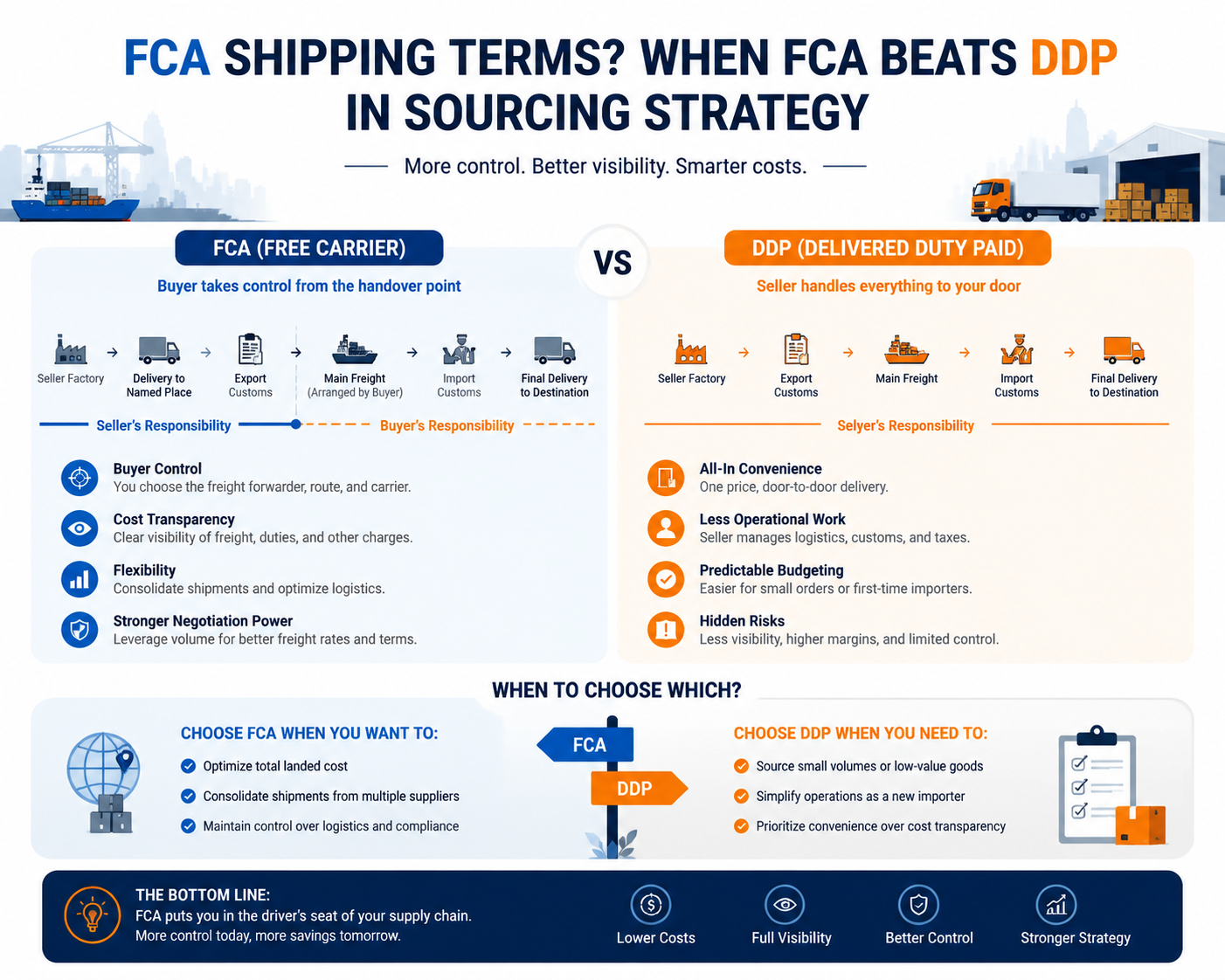
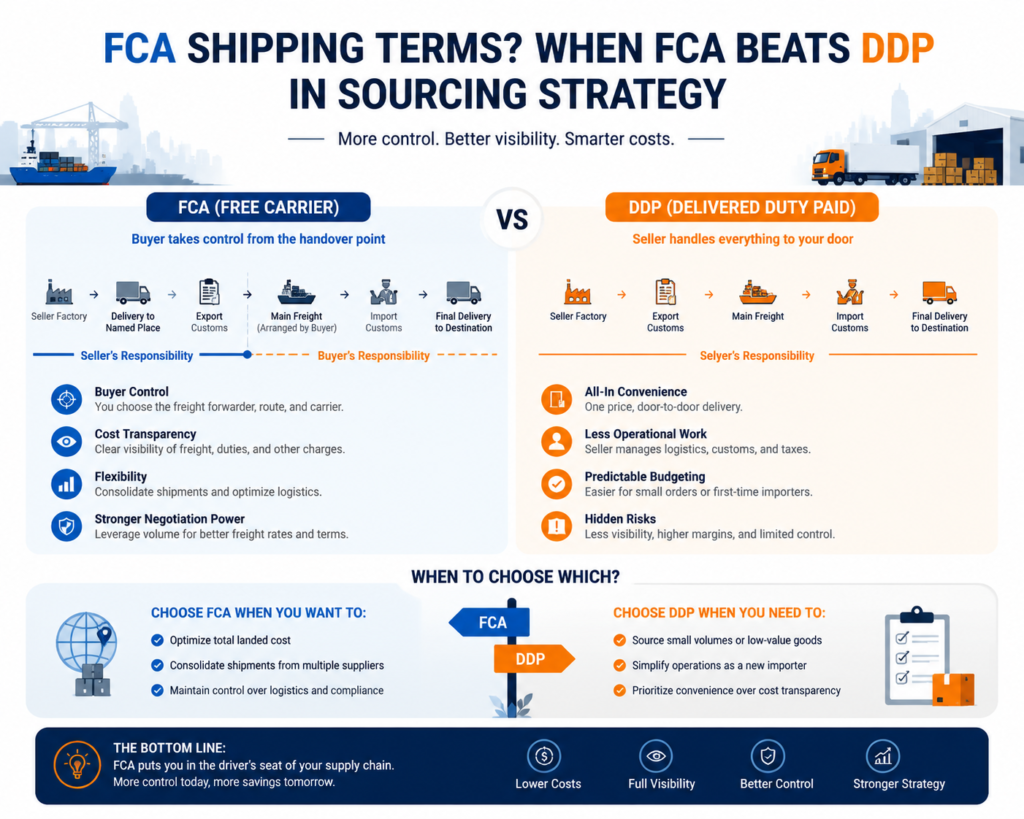
EXW shifts responsibility at the factory gate, while FOB extends seller responsibility up to the port loading stage. This difference fundamentally changes operational workload distribution. Procurement teams often prefer FOB when they want reduced early-stage logistics burden.
Cost Structure Comparison
EXW appears cheaper upfront, but FOB often bundles early logistics into the supplier’s cost structure. This makes FOB pricing more “complete” but less transparent in breakdown. The choice depends on whether procurement values clarity or convenience more.
Which Is Better for Buyers
EXW is better for experienced procurement teams with strong logistics infrastructure, while FOB suits buyers seeking simplified operations. There is no universal winner; it depends on operational maturity. In real sourcing strategy, both terms serve different procurement philosophies.
11. EXW? Comparison With DDP Terms
Full Control vs Full Service Model
EXW represents maximum buyer control, while DDP represents maximum supplier responsibility including delivery to destination. These are opposite ends of the logistics spectrum. Procurement teams choose based on internal capability and risk appetite.
Cost Visibility Differences
EXW provides raw cost transparency at the source, whereas DDP offers bundled pricing with fewer breakdown details. This affects how procurement teams analyze supplier competitiveness. It is essentially a trade-off between visibility and convenience.
Risk Allocation Contrast
Under EXW, risk sits heavily on the buyer, while DDP pushes most risks to the seller until final delivery. This difference dramatically impacts insurance, compliance, and operational workload. Choosing between them is more strategic than tactical.
🎓 U.S. Department of Commerce – Incoterms 2020 guide
12. EXW? Impact on Total Supply Chain Cost
Hidden Cost Accumulation Factors
EXW often triggers layered costs that accumulate across transport, handling, documentation, and compliance. These may not be visible in initial quotations. Over time, they reshape the true cost baseline of procurement decisions.
Impact on Landed Cost Calculation
Landed cost modeling under EXW requires integrating multiple cost components across different service providers. This increases complexity in financial forecasting. Without accurate modeling, procurement margins can become distorted.
Budget Planning Challenges
Budgeting under EXW requires strong data discipline and logistics forecasting capability. Variability in freight rates and inland transport makes cost prediction less stable. Procurement teams often need contingency buffers to manage volatility.
13. EXW? Customs Clearance Challenges for Buyers
Export Documentation Requirements
Export documentation under EXW includes invoices, packing lists, and regulatory filings that must align precisely with customs rules. Errors can lead to shipment delays or rejection. Precision is not optional—it is operational survival.
Country-Specific Compliance Issues
Different origin countries impose varying export compliance requirements, adding complexity to EXW execution. Some goods require licenses or inspections before export. Procurement teams must navigate these rules carefully to avoid bottlenecks.
Role of Customs Brokers
Customs brokers become essential intermediaries in EXW logistics, bridging regulatory gaps and ensuring compliance accuracy. Their expertise often determines shipment speed. In practice, they act as the silent engine behind smooth cross-border movement.
14. EXW? Best Practices for Procurement Teams
Selecting Reliable Freight Forwarders
Choosing experienced freight forwarders is critical for EXW success, especially those familiar with origin-country export processes. Their network determines efficiency. A strong forwarder often compensates for EXW complexity.
Negotiating Clear Pickup Terms
Clear definition of pickup responsibilities, loading obligations, and timing is essential to avoid disputes. Ambiguity at this stage leads to operational friction. Procurement contracts should eliminate grey zones wherever possible.
Structuring Transparent Contracts
Contracts should explicitly define cost responsibilities, risk transfer points, and service boundaries. This reduces misinterpretation between suppliers and buyers. Transparency here is not bureaucracy—it is risk engineering.
📘 Supply Chain Dive – EXW procurement insights (industry blog)
15. EXW? When Buyers Should Avoid EXW
High-Risk or Complex Product Categories
For sensitive or regulated goods, EXW can introduce unnecessary compliance burden on buyers. The operational complexity may outweigh cost benefits. In such cases, more structured Incoterms are preferable.
New Supplier Relationships
When dealing with new suppliers, EXW increases exposure due to lack of operational familiarity. Misalignment in expectations can quickly escalate. FOB or DDP often provides safer onboarding structures.
Time-Sensitive Shipments
For urgent shipments, EXW can slow down execution due to fragmented responsibility chains. Coordination delays become more likely. In fast-moving supply chains, simplicity often beats control.
16. EXW? How Freight Forwarders Add Value
Consolidation and Pickup Services
Freight forwarders streamline EXW by consolidating pickups across multiple suppliers and optimizing transport efficiency. This reduces per-unit logistics costs. It is where scale creates real savings.
Export Clearance Support Solutions
Forwarders handle documentation, customs clearance, and regulatory coordination on behalf of buyers. This reduces operational burden significantly. They effectively bridge the gap between procurement intent and customs reality.
Cost Optimization Across Routes
Experienced forwarders optimize routing, carrier selection, and scheduling to reduce total logistics cost. They leverage volume and network intelligence. In EXW environments, they often become the invisible backbone of supply chain efficiency.
🚢 National Customs Brokers & Forwarders Association – EXW best practices (.org)
📌 Summary: EXW (Ex Works) is a powerful Incoterm for procurement teams that want full control and transparency, but it demands mature logistics capabilities, tight risk management, and strong forwarder partnerships. Understanding the hidden costs, responsibilities, and risk transfer point is essential for making EXW work in global sourcing.