Table of Contents
The Complete Process of Import Customs Clearance in Argentina
Importing goods into Argentina involves far more than arranging transportation and paying a customs invoice. For mechanical engineers, procurement managers, industrial equipment buyers, and international purchasing teams, successful customs clearance depends on accurate tariff classification, defensible customs valuation, product-specific regulatory compliance, complete documentation, and close coordination among suppliers, customs brokers, freight forwarders, and local authorities.
Argentina's import environment also requires careful attention to changing regulations, tax treatment, foreign-trade procedures, and the operational requirements associated with different product categories. A shipment of standard mechanical components, for example, may follow a different compliance path from industrial machinery, electrical control systems, chemical products, or equipment incorporating wireless technology.
The most effective approach is to treat customs clearance as an integrated supply-chain process rather than a task that begins only when cargo reaches an Argentine port. By establishing compliance requirements before issuing a purchase order, buyers can reduce avoidable delays, improve landed-cost forecasting, and protect production schedules from unexpected logistical disruptions.
This guide explains the complete import customs clearance process in Argentina, from importer registration and product classification to customs release, final delivery, and post-clearance compliance.
1. Understanding Argentina’s Import Customs Clearance System
1.1 The Role of ARCA and the Argentine Customs Authority
Argentina's customs framework is administered through the country's national tax and customs administration, the Agencia de Recaudación y Control Aduanero (ARCA), which succeeded the former Administración Federal de Ingresos Públicos (AFIP) in 2024. Customs operations form part of a broader regulatory environment involving tax administration, foreign trade, tariff collection, product safety, and border controls.
For an importer, ARCA is central to the formal declaration and clearance of merchandise entering Argentina. Its customs functions include processing import declarations, administering customs duties and other applicable charges, conducting risk-based controls, verifying compliance with customs legislation, and overseeing the release of goods in accordance with the applicable procedures.
From an engineering procurement perspective, customs administration should be viewed as a technical compliance checkpoint. The authority needs sufficient information to establish what the goods are, how they should be classified, what they are worth for customs purposes, where they originate, and whether they satisfy any applicable import restrictions.
Consider a purchasing department sourcing industrial gearboxes from China. A commercial invoice describing the shipment merely as "mechanical parts" may be inadequate for establishing the precise tariff classification, particularly if the shipment contains complete gearboxes, replacement gears, bearings, motors, and accessories under different tariff headings. More detailed descriptions, model numbers, product specifications, and supporting technical documentation can help the customs broker prepare a defensible declaration.
Importers should also distinguish between customs administration and the agencies responsible for particular product regulations. Depending on the merchandise, additional requirements may involve authorities responsible for health, food safety, telecommunications, technical standards, environmental protection, or other regulated activities.
The practical lesson is straightforward: customs clearance is not simply a matter of paying a duty bill. It is a structured verification process in which product identity, declared value, regulatory eligibility, and documentary consistency all matter. Official information is available through Argentina's official customs and foreign-trade services.
1.2 Overview of the General Import Regime and Special Import Procedures
Argentina's general import regime provides the framework for bringing foreign merchandise into the country's customs territory. Under an ordinary import-for-consumption procedure, goods are declared, applicable duties and taxes are addressed, required controls are completed, and the merchandise is released for domestic use, subject to the conditions governing the transaction.
However, not every shipment follows exactly the same procedural path. The appropriate treatment depends on the type of goods, their intended use, the importer's status, the customs destination, the applicable trade measures, and any specific authorization or exemption available under current legislation.
For example, an industrial manufacturer importing a new CNC machine for permanent installation in a production facility will generally need to consider the requirements applicable to an ordinary commercial import. By contrast, equipment entering Argentina temporarily for an exhibition, testing program, repair, or another qualifying purpose may require a different customs procedure, with specific conditions governing its use and subsequent re-export or regularization.
Other transactions may involve bonded storage, temporary admission, samples, courier shipments, capital goods, or special customs destinations. Each route has its own eligibility conditions, documentation requirements, deadlines, and financial implications. A procedure that is convenient for a small parcel should not automatically be assumed suitable for a pallet of industrial components or a full container of machinery.
Procurement teams should establish the intended customs destination before shipment dispatch. If equipment is needed for a short-term demonstration, for instance, declaring it as an ordinary permanent import without considering an eligible temporary procedure could create unnecessary tax exposure. Conversely, attempting to use temporary admission when the goods are actually intended for permanent domestic use may result in compliance problems.
Special procedures must be verified against the rules in force at the time of importation. Eligibility should never be inferred solely from a supplier's experience in another country or from a freight forwarder's general description of the service.
1.3 Key Stakeholders: Importers, Customs Brokers, Freight Forwarders, and Government Agencies
A successful Argentine import typically involves several stakeholders, each responsible for a different part of the process. Understanding the boundaries between these responsibilities helps prevent the classic supply-chain problem in which everyone assumes another party is handling a critical requirement.
The importer is responsible for the commercial transaction and must ensure that the import is lawful, the information supplied is accurate, and the relevant obligations are fulfilled. Depending on the transaction, this includes providing product information, arranging payment, securing required authorizations, and retaining records.
The customs broker, or despachante de aduana, provides professional assistance with customs formalities within the scope of the broker's legal authorization and appointment. The broker helps determine the appropriate declaration treatment, reviews tariff classification and valuation information, submits declarations, coordinates customs requirements, and assists in resolving discrepancies.
The freight forwarder coordinates transportation and associated logistics. Depending on the agreed service, this may include booking space, arranging export handling, issuing or coordinating transport documents, tracking cargo, transmitting arrival information, and communicating with the destination customs broker. A freight forwarder does not automatically assume the importer's statutory obligations simply because it manages the shipment.
The overseas supplier or manufacturer provides commercial and technical documentation. For industrial goods, this may include detailed invoices, packing lists, product specifications, model numbers, country-of-origin information, certificates, and other supporting materials.
Government and regulatory agencies perform customs, tax, safety, and product-specific oversight according to their respective mandates. Their involvement varies according to the imported merchandise and the applicable regulatory framework.
The buyer should establish a clear responsibility matrix before shipment. For example, the supplier may prepare the certificate of origin, the forwarder may arrange transportation, the broker may prepare the customs declaration, and the importer may provide the required authorizations and fund applicable taxes. When those assignments are explicit, missing documents are more likely to be identified before they become costly delays.
2. Determining Importer Eligibility and Registration Requirements
2.1 Importer Registration, CUIT, and Tax Identification Requirements
Before importing commercial merchandise, an Argentine business must establish that it is legally and administratively eligible to conduct the intended transaction. A central identifier in this process is the Clave Única de Identificación Tributaria (CUIT), the country's tax identification number used for a range of tax and commercial-administration purposes.
The exact registration requirements depend on the legal status of the importer, its tax situation, the nature of the transaction, and the current customs framework. Businesses should confirm that their tax registration, legal identity, authorized representatives, and relevant foreign-trade registrations or permissions are in order before committing to a shipment.
For a foreign manufacturer selling equipment to an Argentine distributor, this means verifying that the local buyer can lawfully act as the importer for the proposed transaction. The existence of a purchase order, a signed sales contract, or a valid tax number alone should not be treated as proof that every customs prerequisite has been satisfied.
Procurement managers should request confirmation of importer eligibility during supplier onboarding or contract negotiation. This is particularly important when sourcing expensive production equipment, specialized machinery, or components required for a scheduled plant shutdown or installation.
Where the buyer is a newly established company, an entity operating under a special legal structure, or a business unfamiliar with international trade, additional checks may be needed to confirm its ability to complete the proposed import. Depending on the circumstances, the importer may also need to review tax compliance, electronic authorization arrangements, and the legal authority of the person acting on its behalf.
The commercial objective is to establish import readiness before goods leave the origin country. Sorting out registration problems after a container arrives can expose the buyer to storage charges, delivery delays, and potential contractual disputes with the supplier.
2.2 Customs Registration and Access to Argentina’s Electronic Customs Systems
Argentina relies on electronic systems and digital procedures for customs declarations, tax administration, and related foreign-trade formalities. Importers and their authorized representatives must use the applicable systems and authorization mechanisms required for their particular transactions.
Access arrangements can involve tax credentials, electronic permissions, representation mandates, and registrations relevant to the customs procedure being used. The specific system, module, and authorization required should be confirmed against current ARCA guidance and the importer's circumstances rather than assumed from older instructions.
In practice, an importer should verify three elements before dispatch: whether the business is properly registered, whether the appointed customs broker has the necessary authority to act, and whether the information needed for the declaration can be submitted through the appropriate electronic channel.
This is not merely an administrative formality. Electronic authorization problems can prevent a broker from completing a declaration even when the commercial documents and cargo are otherwise ready. The resulting delay can affect customs processing, terminal release, inland transportation, and production planning.
For purchasing teams, the best practice is to make customs-system readiness part of the supplier and shipment approval workflow. A checklist should identify the responsible importer, broker, authorized signatories, relevant digital credentials, and any permissions that must be active before the declaration is filed.
Credentials should be managed securely, and authorization should be granted through the legally prescribed mechanism rather than by casually sharing account passwords. Where multiple business units or external service providers are involved, the company should maintain a clear record of who is authorized to submit, approve, or amend import-related information.
Because electronic procedures can change, current official guidance should take precedence over screenshots, informal tutorials, or instructions circulated several years earlier.
2.3 Importer Responsibilities, Legal Obligations, and Compliance Risks
Engaging a customs broker or freight forwarder does not eliminate the importer's responsibility to provide accurate information and ensure that the transaction complies with applicable law. Professional service providers can reduce operational complexity, but they cannot make inaccurate product descriptions, unsupported values, or missing permits acceptable simply by submitting the paperwork.
An importer should be able to substantiate the declared nature, classification, value, origin, quantity, and intended customs treatment of its goods. It should also establish whether the shipment is subject to licensing, certification, product-safety rules, prohibitions, quotas, trade remedies, or other conditions.
For mechanical and industrial equipment, the information supplied to customs should be consistent with the actual merchandise. A declaration for a complete industrial drive system, for example, should not casually describe the shipment as miscellaneous spare parts if the package contains an assembled machine with its own classification implications.
Compliance risks can arise from inaccurate invoices, understated values, incorrect tariff codes, false origin declarations, missing permits, unauthorized import procedures, or inconsistencies between the declaration and the physical cargo. Depending on the circumstances, consequences may include delays, additional assessments, penalties, seizure, forfeiture, or other legal proceedings.
The procurement department can help prevent these problems by maintaining an auditable file for each purchase. That file should include the purchase order, supplier quotation, commercial invoice, technical specification, applicable permits, origin evidence, transport documents, customs declaration, and payment records.
A strong internal control system also separates commercial approval from customs verification. The purchasing team confirms what was ordered, the technical team verifies what the product actually is, the finance team reviews the transaction value, and the customs broker applies the relevant customs requirements. This cross-functional approach is especially valuable when a single shipment contains numerous components, optional accessories, tooling, or replacement assemblies.
In short, compliance works best when it is built into the purchasing process instead of being treated as a last-minute customs problem.
3. Identifying Import Regulations and Product-Specific Requirements
3.1 Checking Import Restrictions, Prohibited Goods, and Conditional Imports
Before placing an international order, importers must establish whether the intended goods can enter Argentina under the proposed conditions. Some products may be prohibited, while others may be subject to permits, technical requirements, registration, inspection, or other restrictions that must be satisfied before customs release.
The assessment should begin with a precise product description, including its intended use, composition, technical characteristics, model number, and country of origin. Generic commercial descriptions are often insufficient to determine whether a product falls within a restricted category.
For example, an industrial buyer importing hydraulic equipment should distinguish between a standard hydraulic pump, a pressure vessel, a complete hydraulic power unit, and a component incorporating specialized electrical controls. Although these products may be purchased for the same production line, their regulatory implications can differ.
Procurement teams should also examine whether the goods are new, used, refurbished, repaired, or imported for temporary use. Certain product categories may have additional conditions depending on their condition or intended destination. Used machinery, for instance, should not be assumed to follow the same regulatory path as equivalent new equipment.
A practical compliance review should identify:
- Whether the product is eligible for import.
- Whether a permit or prior authorization is required.
- Whether technical certification or testing applies.
- Whether the product is subject to environmental, health, or safety controls.
- Whether special conditions apply to used, refurbished, or temporary imports.
The review must be conducted against the rules applicable to the planned import date. Import policies can change, and a supplier's previous shipment experience does not guarantee that an identical transaction remains eligible under current requirements.
For procurement professionals, this is where due diligence pays off. Confirming admissibility before paying a substantial deposit can prevent a situation in which machinery is manufactured, shipped, and delivered to the destination port only to encounter a regulatory obstacle that could have been identified earlier.
3.2 Identifying Mandatory Permits, Certificates, and Regulatory Approvals
Certain imported goods require documentation or approval from the government agency responsible for the relevant product category. The precise requirements depend on the tariff classification, technical characteristics, intended use, and applicable Argentine regulations.
Depending on the goods, the compliance review may involve product registration, import authorization, conformity assessment, safety certification, health documentation, environmental approvals, or other supporting records. Not every product requires every type of approval, so importers should avoid relying on generic checklists that fail to distinguish between product categories.
For industrial equipment, the documentation may include manufacturer specifications, electrical ratings, declarations of conformity, testing reports, safety instructions, and evidence of compliance with applicable technical standards. For food-related equipment, medical devices, chemicals, or telecommunications products, additional requirements may apply because of the risks associated with their use.
The importer should identify the responsible authority and determine whether approval must be obtained before shipment, before declaration, or before release. The distinction is important: a certificate that can be supplied after dispatch may not satisfy a requirement for prior authorization.
A useful method is to create a product-specific compliance register containing the document name, issuing authority, responsible party, application lead time, validity period, and status. Each requirement should be linked to the relevant product model or tariff classification so that a certificate for one item is not mistakenly applied to a different product.
For example, a purchasing engineer ordering several electrical control panels should verify whether the particular products fall within an applicable Argentine conformity or safety regime. A general statement from the manufacturer that the panels meet international standards should not be treated as proof that every local import requirement has been fulfilled.
Regulatory approvals should also be checked for consistency with the invoice, model number, manufacturer, and actual goods. Small discrepancies can become substantial operational problems when the cargo is already waiting for release.
3.3 Understanding Special Requirements for Food, Chemicals, Electronics, Machinery, and Textiles
Product-specific controls can materially influence the time, cost, and documentation required for customs clearance. Importers should therefore categorize their goods according to their technical and regulatory characteristics rather than treating every shipment as a standard commercial consignment.
Food and agricultural products may require sanitary or phytosanitary documentation, product registration, health certificates, or inspection by the relevant Argentine authorities. Requirements depend on the commodity, processing status, country of origin, and intended use.
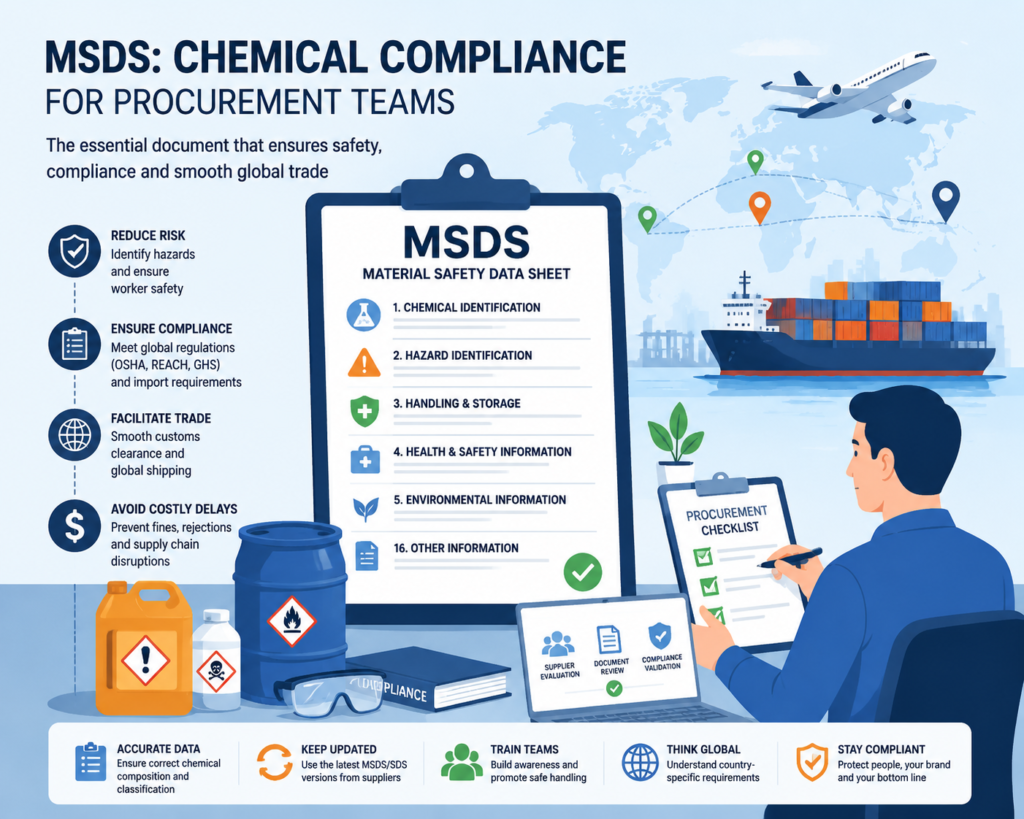
Chemicals and industrial substances may require safety data sheets, chemical identification, transport classifications, labeling information, or other documentation depending on their composition and regulatory status. Certain substances may also be subject to specific restrictions or authorizations.
Electronics and electrical equipment may trigger technical conformity, electrical safety, telecommunications, radio-frequency, or energy-efficiency requirements. The presence of wireless communication modules, batteries, power supplies, or specialized components can affect the compliance assessment.
Industrial machinery should be assessed for its function, operating specifications, safety characteristics, condition, and intended application. Large machines may also involve installation planning, specialized unloading, oversize transportation, and coordination between customs release and the receiving facility.
Textiles and apparel may be subject to product labeling, composition, origin, and other applicable trade or regulatory requirements. The rules can differ between raw materials, finished garments, industrial fabrics, and specialized protective textiles.
For a procurement department purchasing a production line, the challenge is often that one shipment contains multiple regulatory categories. A container might include mechanical assemblies, electrical control units, lubricants, and replacement parts. Even if these items arrive together, their classification and compliance requirements may differ.
The safest approach is to conduct a line-by-line review of the commercial invoice and packing list, identify potentially regulated products, and obtain confirmation from the customs broker or relevant authority before the supplier completes packing.
4. Classifying Imported Goods Under the Correct HS Code
4.1 Understanding the Harmonized System and Mercosur Common Nomenclature
Tariff classification is one of the most important steps in Argentine import customs clearance because it determines the tariff heading under which goods are declared and helps establish the applicable duty rate, regulatory controls, and statistical treatment.
International trade generally uses the Harmonized Commodity Description and Coding System, commonly known as the HS, maintained by the World Customs Organization. Argentina applies the Mercosur Common Nomenclature, or NCM, which is based on the HS and includes additional regional subdivisions.
The international HS structure and the regional NCM structure should not be confused with the complete national declaration requirements. Importers must determine the appropriate code and associated details under the tariff nomenclature and declaration rules applicable in Argentina at the time of importation. The World Customs Organization's Harmonized System guidance explains the international classification framework.
For mechanical engineers and purchasing specialists, classification should be based on the product's actual characteristics rather than its marketing name. Relevant factors can include function, construction, material, working principle, degree of assembly, and whether the item is a complete machine, a part, or an accessory.
Consider a shipment containing spur gears, planetary gearboxes, electric motors, and gear racks. Although all four products may be used in industrial transmission systems, they do not necessarily share the same tariff classification. Treating them as a single category of "gear components" could produce an inaccurate declaration.
The purchasing team should provide the customs broker with detailed product information, including drawings, technical data sheets, catalog descriptions, photographs, and model numbers where appropriate. This material allows the broker to evaluate the product's essential characteristics and apply the relevant classification rules.
Classification should be established early enough to inform landed-cost calculations, import eligibility checks, and contract pricing. Waiting until the shipment reaches Argentina can leave little time to correct an incorrect assumption.
4.2 Determining Applicable Tariff Rates and Product-Specific Duties
Once the appropriate tariff classification has been identified, the importer can determine the customs duty and other tariff-related measures applicable to the goods.
The applicable rate may depend on the NCM code, customs valuation, country of origin, preferential trade arrangements, trade remedies, exemptions, and measures in force on the relevant date. Consequently, a tariff rate quoted for a similar product or a different country should not automatically be used for a new transaction.
Argentina participates in the Southern Common Market, known as Mercosur, whose common external tariff framework is relevant to many imports from outside the bloc. However, the applicable treatment must be verified for the specific tariff line, including any exceptions, modifications, or other measures that apply.
For an industrial buyer, even a small difference in the applicable rate can have a significant effect on total acquisition cost when importing high-value equipment or large quantities of components. This makes tariff verification an important part of procurement cost modeling.
A useful landed-cost worksheet should record the proposed NCM code, customs value, estimated duty rate, applicable tax treatment, any relevant trade measures, and the source and date of the rate verification. The calculation should be reviewed again before shipment if the order is delayed or regulations change.
Importers should also distinguish customs duty from other charges. A low customs duty rate does not necessarily mean the shipment has a low tax burden, because VAT, additional levies, port handling, and other costs may still be payable.
Where preferential treatment is available, the buyer should confirm both eligibility and documentary requirements. A supplier's location alone does not establish preferential origin, and a product shipped from a preferential trading partner may still fail to qualify if its actual origin does not meet the applicable rules.
4.3 Managing Classification Disputes, Misclassification Penalties, and Advance Guidance
Tariff classification can become contentious when a product has several functions, incorporates multiple technologies, or is sold as part of a larger assembly. Disputes may also arise when a manufacturer uses a commercial description that does not align with the language of the customs nomenclature.
For example, a machine component described as a "drive unit" might be a complete speed reducer, a transmission assembly, or a component designed specifically for a larger machine. The correct classification depends on its objective characteristics and the relevant legal notes and classification rules.
If the customs authority questions a declaration, the importer may need to provide technical documentation supporting the chosen code. Useful evidence can include engineering drawings, a bill of materials, product specifications, photographs, operating principles, manufacturer catalogs, and a written explanation of the product's function.
Misclassification may lead to additional duty assessments, delayed release, penalties, or other consequences depending on the facts and applicable law. It can also affect import permits and product controls if the correct classification triggers a requirement that was not previously identified.
When classification is uncertain and the financial or regulatory consequences are material, the importer should ask its customs broker whether a formal consultation or advance classification mechanism is available under the current Argentine framework. The availability, eligibility, and legal effect of any such procedure should be confirmed before relying on it.
For procurement managers, the most important control is to prevent an unresolved classification question from becoming a shipping emergency. A disputed tariff code should be investigated before the purchase order is finalized, especially for new products, custom-built machinery, multifunction equipment, or high-value shipments.
5. Preparing the Required Import Documentation
5.1 Commercial Invoice: Product Description, Quantity, Value, and Currency
The commercial invoice is one of the principal documents used to establish the commercial details of an international shipment. It records the seller, buyer, goods, quantities, prices, currency, and other transaction information needed to support customs valuation and declaration preparation.
A strong invoice describes the goods with enough specificity to distinguish them from other products. For industrial equipment, useful details may include the manufacturer, model number, product function, material, power rating, capacity, and whether the goods are complete assemblies or replacement parts.
An invoice stating "machine parts, 500 pieces" provides limited information for a broker assessing classification and import requirements. An itemized invoice identifying gear shafts, bearings, motor assemblies, and control units is far more useful when those products have different technical characteristics or tariff treatments.
The invoice should also accurately reflect the agreed transaction value and commercial terms. Discounts, tooling charges, design fees, royalties, commissions, assists, and other arrangements may require additional review to determine whether they affect customs value.
The declared currency and payment terms should be consistent with the commercial agreement and supporting financial records. If the invoice contains a discrepancy between the purchase order and the final amount, the importer should resolve it before declaration rather than expecting customs to interpret the difference.
Procurement teams should pay particular attention to free-of-charge items, warranty replacements, samples, and bundled equipment. Goods supplied without a separate invoice price do not automatically have zero customs value. Their customs treatment should be assessed under the applicable valuation rules.
Before dispatch, the buyer should review the invoice against the purchase order, packing list, and actual goods. That simple reconciliation can prevent avoidable questions about product identity, quantities, declared value, and the relationship between the shipment and the underlying transaction.
5.2 Packing List, Bill of Lading, Air Waybill, and Other Transport Documents
Transport documents establish how the cargo is packed, identified, carried, and delivered. They complement the commercial invoice and are essential to the coordination of cargo arrival, customs processing, terminal release, and final delivery.
The packing list generally describes the number of packages, contents, quantities, net and gross weights, dimensions, and packaging configuration. For industrial equipment, it may also identify crates, pallets, machine modules, and separate accessory packages.
The bill of lading is commonly used for sea freight, while the air waybill serves a corresponding transport-document function for air cargo. Other documents may be required for road freight, rail movements, multimodal transportation, or particular customs procedures.
The information across these documents should be consistent. If the invoice identifies 20 gearboxes but the packing list shows 22 units, the difference needs to be explained. Likewise, inconsistent package counts, weights, consignee details, or product descriptions can complicate cargo identification and customs review.
Large industrial shipments require additional logistical precision. A machine may be packed in several crates, with the main unit, electrical cabinet, installation accessories, and spare components listed separately. If the packing list is vague, the receiving team may struggle to verify delivery even after customs release.
Buyers should also confirm the consignee and notify-party details, transport-document instructions, shipment references, and destination arrangements before the cargo is loaded. Corrections to shipping documents can be time-consuming and may incur carrier or agent fees.
For containerized shipments, the buyer should verify the container number, seal information where applicable, package count, and weight data. For air cargo, dimensions and chargeable weight should be checked because they influence freight cost as well as handling arrangements.
A coordinated document review before departure is much easier than trying to reconcile inconsistencies after the cargo has reached an Argentine terminal.
5.3 Certificate of Origin, Import Permits, Insurance Documents, and Supporting Records
Additional documentation may be required to establish preferential origin, satisfy product regulations, support customs valuation, or meet contractual and insurance requirements.
A certificate of origin or other accepted origin evidence can be important when the importer seeks preferential tariff treatment or when origin-specific trade measures apply. However, origin documentation must reflect the applicable rules of origin, not merely the country from which the goods were dispatched.
For example, machinery manufactured in one country and shipped through a distribution center in another does not automatically acquire the distribution country's origin. The importer must establish the legally relevant origin under the applicable rules.
Import permits and regulatory approvals should be collected according to the requirements for the particular product. Where a permit identifies a model, quantity, manufacturer, or importer, the buyer should confirm that those details match the goods and transaction.
Insurance documentation can also support commercial risk management. Although the policy itself does not automatically determine the customs value, its terms may help establish the insurance cost included in a customs valuation calculation when applicable.
Other supporting records can include purchase orders, contracts, payment records, technical specifications, product catalogs, safety data sheets, test reports, packing photographs, and correspondence explaining unusual transaction terms.
For complex industrial shipments, it is helpful to organize documents by item or tariff line instead of keeping a single undifferentiated folder. A document matrix can link each product to its invoice line, proposed NCM code, origin evidence, permit, and technical file.
This method creates a traceable chain between the commercial purchase and the customs declaration. It also helps the importer respond more quickly if the customs authority requests clarification or conducts a subsequent review.
6. Calculating Customs Value and Assessable Import Costs
6.1 Understanding Customs Valuation Rules and the CIF Value
Customs valuation establishes the value used to calculate import duties and, where relevant, other charges. It is therefore one of the most important variables in the landed-cost calculation.
For many commercial imports, the transaction value is the starting point, subject to the applicable customs valuation rules and any required adjustments. The amount paid or payable for the goods must be assessed in the context of the actual transaction, rather than assumed to be acceptable simply because it appears on an invoice.
CIF, meaning cost, insurance, and freight, is commonly used to describe a price basis that includes the cost of the goods, insurance, and freight to the named destination. However, CIF as a commercial Incoterm and customs value as a legal valuation concept are not interchangeable in every respect. The precise customs valuation rules and adjustments applicable to the shipment must be confirmed.
For a simplified illustration, suppose a buyer imports industrial components with a merchandise price of US$20,000, international freight of US$2,000, and insurance of US$200. If these amounts are all relevant to the applicable customs valuation basis and no further adjustments are required, the illustrative value would be US$22,200.
This is only a simplified example, not a universal formula for every import. Actual treatment depends on the transaction terms, valuation rules, relevant destination, and applicable adjustments.
The distinction matters because the customs value can differ from the amount the buyer ultimately pays after adding local handling, inland transportation, terminal charges, brokerage fees, and domestic delivery. Those downstream expenses belong in the landed-cost budget, but they should not automatically be added to customs value without considering the governing rules.
Procurement teams should therefore maintain separate fields for the supplier's commercial price, customs value, assessed duties and taxes, and post-arrival logistics costs. Separating these figures produces a more transparent cost model and makes discrepancies easier to identify.
6.2 Adjustments for Freight, Insurance, Royalties, Assists, and Related-Party Transactions
The invoice price may not, by itself, contain all the information required to determine customs value. Depending on the transaction, customs valuation rules may require adjustments for certain costs, payments, or benefits associated with the imported merchandise.
Freight and insurance are important elements of many customs valuation calculations. Their treatment depends on the applicable valuation basis and the terms of the transaction. Procurement teams should therefore record these costs separately rather than combining them into an unexplained total.
Other potential adjustments can include certain commissions, packing costs, assists supplied by the buyer, royalties or license fees related to the imported goods, and proceeds that must be included under the applicable valuation rules.
An assist might involve a buyer supplying molds, tooling, engineering work, or materials to an overseas manufacturer without charging the supplier their full value. If the relevant legal conditions are met, some of that value may need to be allocated to the imported merchandise for customs valuation purposes.
Related-party transactions require particular care. A parent company purchasing machinery from an overseas subsidiary, for example, may use a transfer price influenced by the wider corporate relationship. The existence of that relationship does not automatically invalidate the declared value, but the importer must assess whether the relationship affected the price under the applicable rules.
Royalties can also be complicated. A payment made under a license agreement may or may not require inclusion in customs value depending on its nature, relationship to the imported goods, and the relevant legal conditions. It should not be added or excluded automatically without a transaction-specific analysis.
For industrial buyers, the best control is to disclose the complete commercial arrangement to the customs broker. This includes side agreements, tooling arrangements, engineering charges, licensing payments, and any free-of-charge inputs supplied to the manufacturer.
Transparent disclosure helps establish a defensible valuation methodology and reduces the risk of discovering an overlooked adjustment after customs clearance.
6.3 Preventing Customs Valuation Disputes and Supporting Declared Values
Customs valuation disputes often arise when the declared value cannot be reconciled with the commercial documents or when the authority has questions about the transaction's economic circumstances.
Unusually low prices, inconsistent invoices, unexplained discounts, related-party arrangements, and missing payment evidence can prompt additional scrutiny. None of these circumstances necessarily proves wrongdoing, but each can make the declared value harder to substantiate.
A defensible valuation file should include the purchase order, sales contract, supplier invoice, payment records, freight invoice, insurance evidence, relevant license agreements, and documentation supporting any adjustments. Where a price is commercially unusual, the buyer should preserve a clear explanation supported by evidence.
For example, a manufacturer may offer a discounted price for a large-volume order or provide replacement parts under a warranty arrangement. The importer should retain the agreement or correspondence explaining the discount or warranty basis rather than relying on a verbal explanation after the goods arrive.
Similarly, where machinery is sold with installation services, software, training, or engineering support, the contract should identify the components of the transaction as clearly as possible. Their treatment for customs valuation purposes must then be assessed under the applicable rules.
Procurement and finance teams should also reconcile the declared value with accounts payable. Differences between the invoice, bank payment, credit note, and customs declaration should be documented and explained.
If customs questions the valuation, the importer should respond through the appropriate channels with relevant evidence and a coherent explanation of the methodology. Unsupported assertions that the supplier's invoice is correct are less persuasive than a documented chain of commercial and financial records.
The goal is not simply to avoid a customs query. It is to ensure that the declared value can be explained, reproduced, and defended throughout the relevant record-retention period.
7. Calculating Import Duties, Taxes, and Additional Charges
7.1 Import Duty Rates, Preferential Tariffs, and Trade Agreement Benefits
Import duty is a major component of the cost of bringing foreign merchandise into Argentina. The amount payable depends on the applicable tariff classification, customs value, country of origin, and measures in force for the particular transaction.
For many imports originating outside Mercosur, the common external tariff framework is a key starting point. However, the actual rate must be checked against the current tariff line, including any applicable exceptions, special measures, or changes introduced under the relevant legal framework.
Preferential tariffs may be available when goods satisfy the origin requirements of an applicable trade agreement. Such treatment is not determined solely by the country of shipment or the nationality of the seller. The goods must meet the relevant origin rules, and the importer must provide the required evidence.
Consider an Argentine machinery distributor sourcing equipment from a manufacturer in a country with a potentially applicable preferential arrangement. Before incorporating a reduced tariff into its quotation, the purchasing team should verify the product's origin, the agreement's coverage, the applicable tariff line, and the documentary requirements.
Tariff analysis should also distinguish between the duty rate and the total fiscal burden. Even where a preferential duty rate is available, VAT, other applicable levies, customs processing costs, and domestic logistics expenses may remain payable.
A practical approach is to create a tariff reference sheet for each major product family. For example, a mechanical equipment importer could maintain separate records for gearboxes, electric motors, bearings, industrial pumps, and complete production machines. Each record should include the proposed NCM code, origin, applicable duty treatment, supporting evidence, and date of verification.
Where a shipment contains numerous product lines, duty calculations should be performed at the appropriate line-item level rather than applying one assumed rate to the entire invoice.
Procurement managers should also consider the implications of tariff changes when negotiating long-lead-time orders. If a purchase order is placed months before shipment, the final treatment may depend on the rules applicable at the legally relevant point in the import process. The applicable timing should be confirmed with the customs broker rather than assumed.
7.2 VAT, Additional VAT, Income Tax Withholding, and Other Applicable Levies
Import costs in Argentina may include VAT and other tax-related payments in addition to customs duty. Depending on the goods, importer status, transaction, and applicable rules, these may include additional VAT, income tax withholding, and other levies or advance payments.
The distinction between a final tax expense and a tax prepayment is particularly important for financial planning. Some amounts collected at importation may be creditable or recoverable under the relevant tax rules, while others may constitute a definitive cost. Their treatment depends on the taxpayer's circumstances and the governing legislation.
For example, an Argentine company importing industrial equipment for use in its taxable business activities should not automatically treat every VAT-related payment as an irrecoverable expense. Its ability to claim credits or otherwise recover amounts depends on the applicable tax rules, documentation, and its own tax position.
However, a potential tax credit does not eliminate the immediate cash requirement. The company may still need to fund substantial import-related payments before the goods can be released, which can affect working capital and project cash flow.
This is why procurement and finance teams should model two separate figures: the total cash required to clear the goods and the estimated net economic cost after any legally available credits or recoveries.
The calculation should identify the applicable tax base, rate, collection mechanism, payment timing, and supporting documentation. Importers should also verify whether any special tax treatment applies to the particular goods, such as qualifying capital equipment or a transaction covered by a specific regime.
Because tax measures and collection arrangements can change, historical rates should not be copied into a current import budget without verification. The importer should obtain a current assessment from its customs broker or tax adviser using the product's classification and the company's relevant tax information.
For high-value machinery, the difference between gross cash outlay and net tax cost can be significant. A well-prepared budget makes that distinction visible before the purchase order is approved.
7.3 Statistical Taxes, Excise Taxes, Antidumping Duties, and Other Potential Charges
In addition to ordinary customs duty and VAT, certain imports may be subject to other charges or trade measures. Their applicability depends on the product, origin, customs regime, current legislation, and any relevant exemption.
Potential measures can include statistical taxes where applicable, excise taxes for qualifying products, antidumping duties, countervailing measures, safeguard measures, or other additional charges imposed under the relevant legal framework.
Antidumping measures deserve particular attention because they may apply to specific goods from specified origins and can materially change the landed cost. A product's ordinary tariff rate alone may therefore provide an incomplete picture of its actual import duty exposure.
For example, an industrial buyer comparing steel products from multiple countries should not assume that identical physical specifications necessarily produce identical customs costs. Depending on the applicable trade measures and origin rules, the fiscal treatment may differ.
The importer should also distinguish a government-imposed charge from commercial and operational fees. Port handling, terminal storage, customs broker fees, document amendments, container detention, and inland transportation may all affect the final cost, but they are not necessarily taxes.
A comprehensive cost model should therefore use separate categories for:
- Customs duties and trade remedies.
- VAT and other tax-related payments.
- Government or regulatory fees, where applicable.
- Customs broker and documentation charges.
- Port, airport, terminal, and handling costs.
- Storage, demurrage, detention, and inland transportation.
These categories make it easier to compare suppliers, shipping routes, and Incoterms on an equivalent basis.
Before dispatch, the buyer should ask the customs broker to confirm whether any additional trade measures or product-specific charges apply to the proposed tariff code and origin. The check should be documented, especially where the transaction involves a large purchase value or a product category known to be subject to trade policy changes.
8. Selecting the Appropriate Shipping Method and Incoterms
8.1 Sea Freight, Air Freight, Courier Services, and Multimodal Transportation
The choice of transportation method affects more than transit time. It influences freight cost, handling requirements, shipment documentation, cargo security, delivery reliability, and the timing of customs clearance.
Sea freight is often suitable for heavy machinery, large-volume components, industrial equipment, and shipments where transportation cost is more important than speed. Full container load (FCL) and less-than-container load (LCL) services offer different cost and handling structures. FCL may provide greater control over a dedicated container, while LCL allows smaller consignments to share container space, although consolidation and deconsolidation can add handling time.
Air freight is generally appropriate for urgent replacement parts, high-value components, prototypes, and goods required to avoid costly production interruptions. Its higher transportation cost may be justified when the cost of downtime exceeds the additional freight expense.
Courier services can be convenient for eligible small parcels, samples, documents, and certain low-volume shipments. However, the courier channel has its own eligibility criteria and restrictions. It should not be assumed that every commercial import can be cleared through an express parcel procedure.
Multimodal transportation combines different modes, such as sea and road or air and road. It can be useful when the destination is inland or when the best overall route requires more than one transport segment.
For industrial procurement, the decision should be based on total supply-chain cost rather than freight price alone. A low-cost sea shipment may become expensive if it misses an installation deadline, while an air shipment may be economical if it prevents several days of factory downtime.
The purchasing team should compare transit time, handling charges, shipment size, insurance, customs preparation time, and delivery requirements. It should also allow for possible inspection, documentation correction, terminal congestion, and inland transportation constraints.
When importing large machinery, the receiving facility must be ready to unload and install the cargo. Crane capacity, loading-bay dimensions, road restrictions, and storage arrangements should be reviewed before the shipping method is finalized.
The best transportation method is the one that meets the project's technical, financial, and scheduling requirements while remaining compatible with the applicable customs procedure.
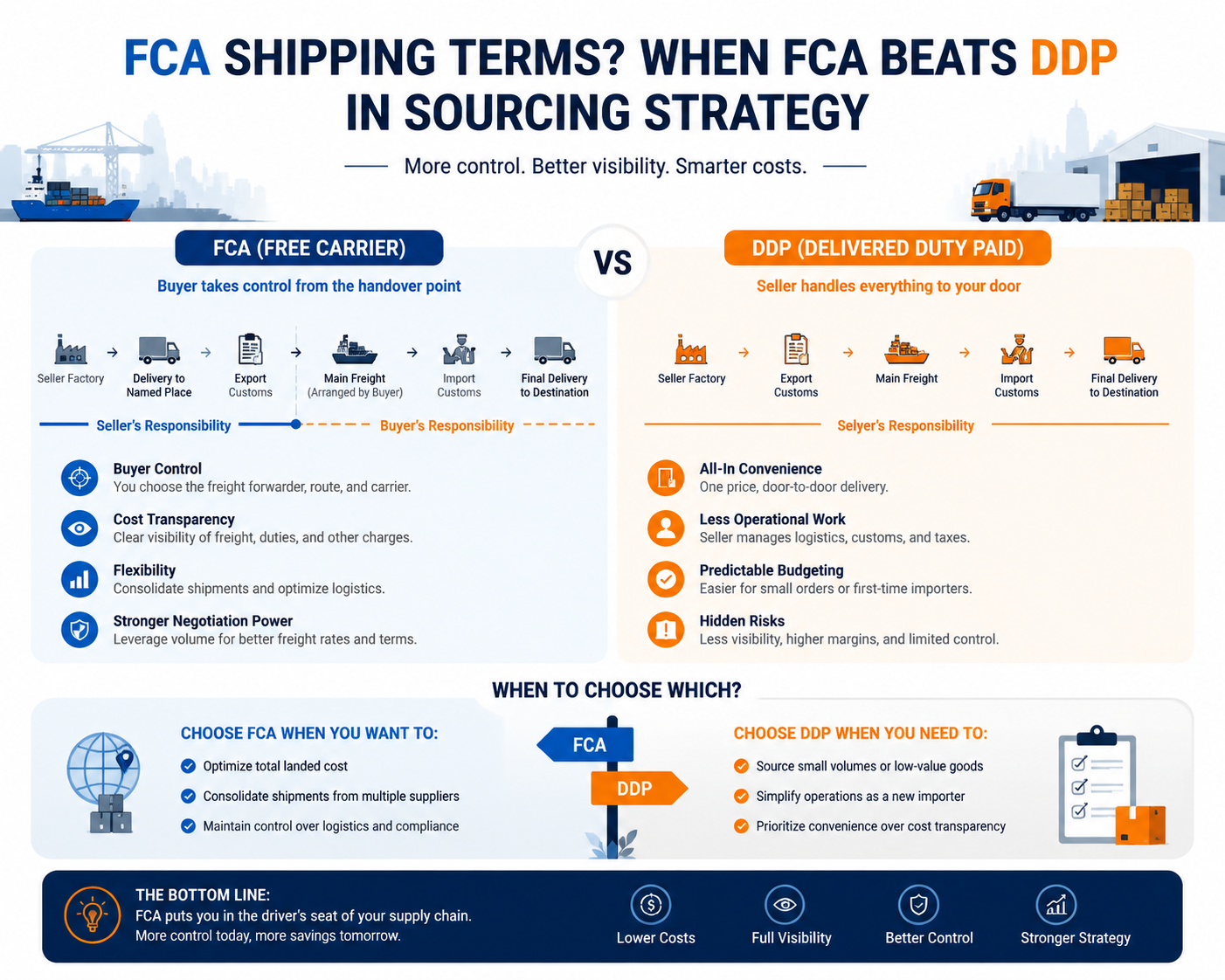
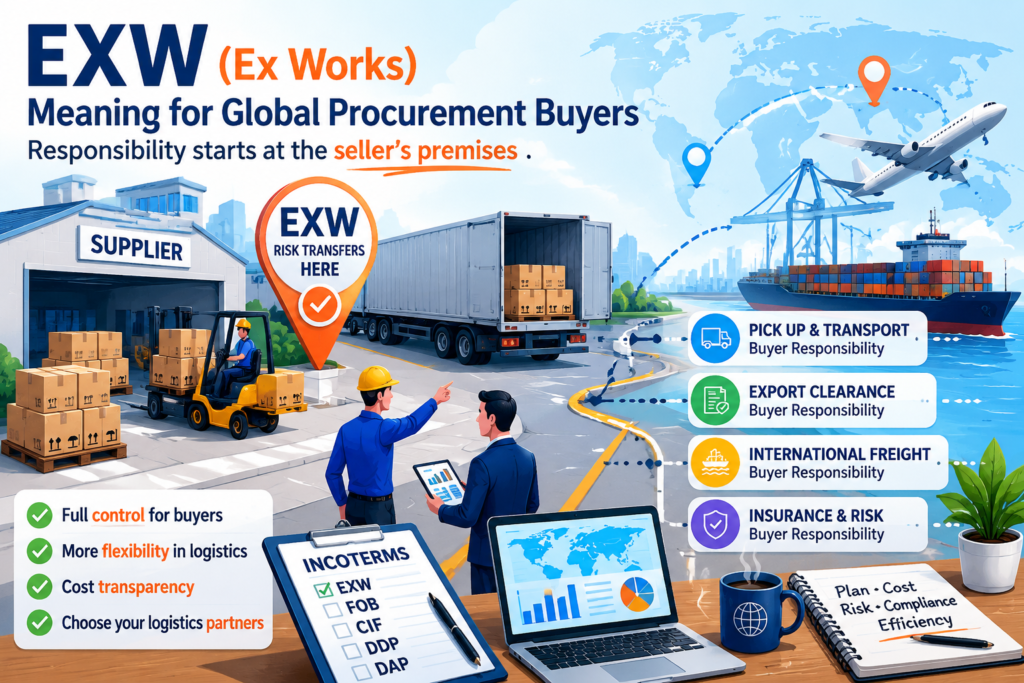
8.2 Comparing EXW, FOB, CIF, DAP, and DDP Responsibilities
Incoterms define important aspects of the commercial relationship between seller and buyer, including delivery obligations, allocation of certain costs, and the point at which transport risk transfers under the selected rule.
They do not, by themselves, determine every customs obligation, the final tax treatment, or whether a party is legally eligible to act as the importer. Those questions must be considered separately under the applicable law. The International Chamber of Commerce's official Incoterms guidance provides further information about these trade terms.
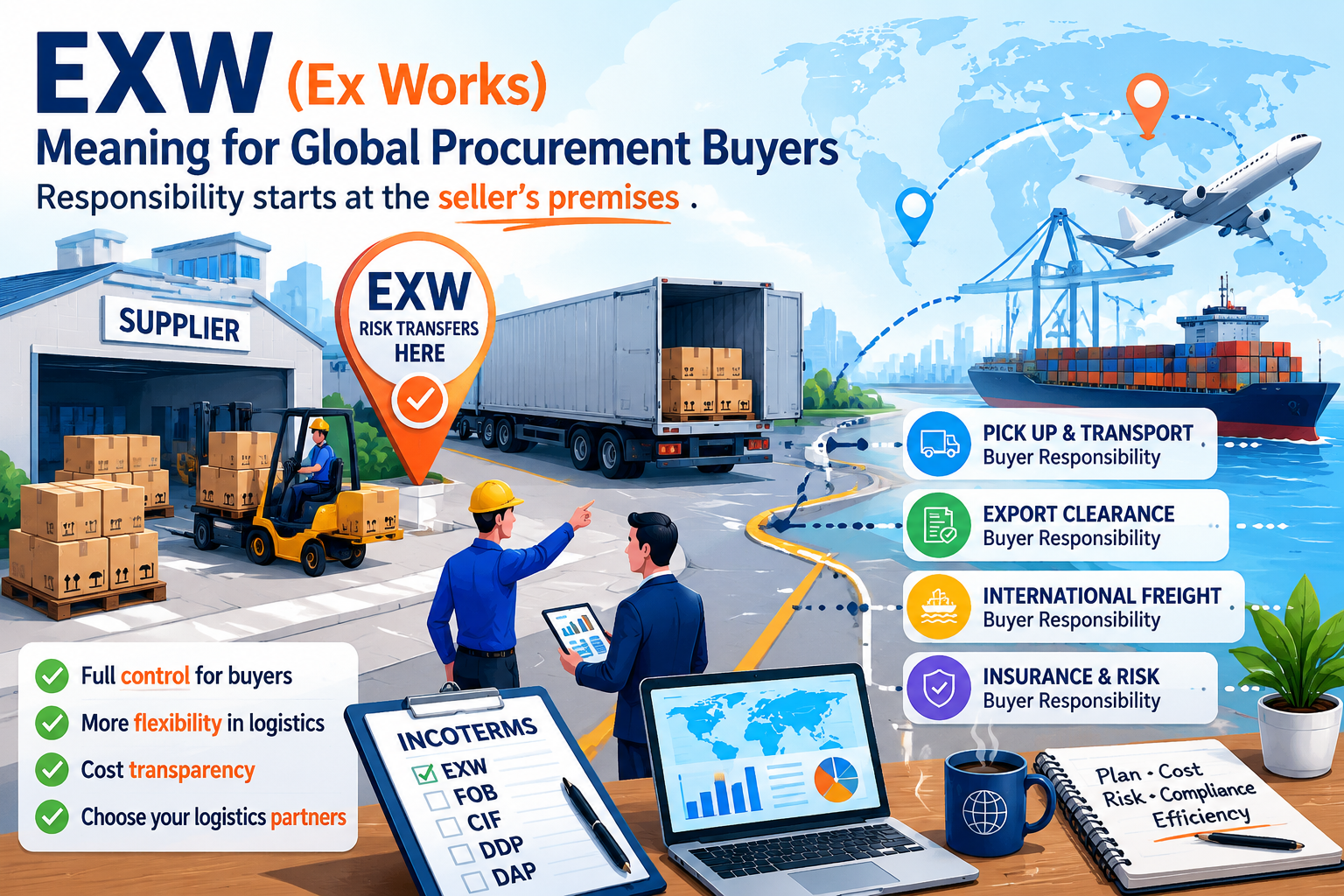
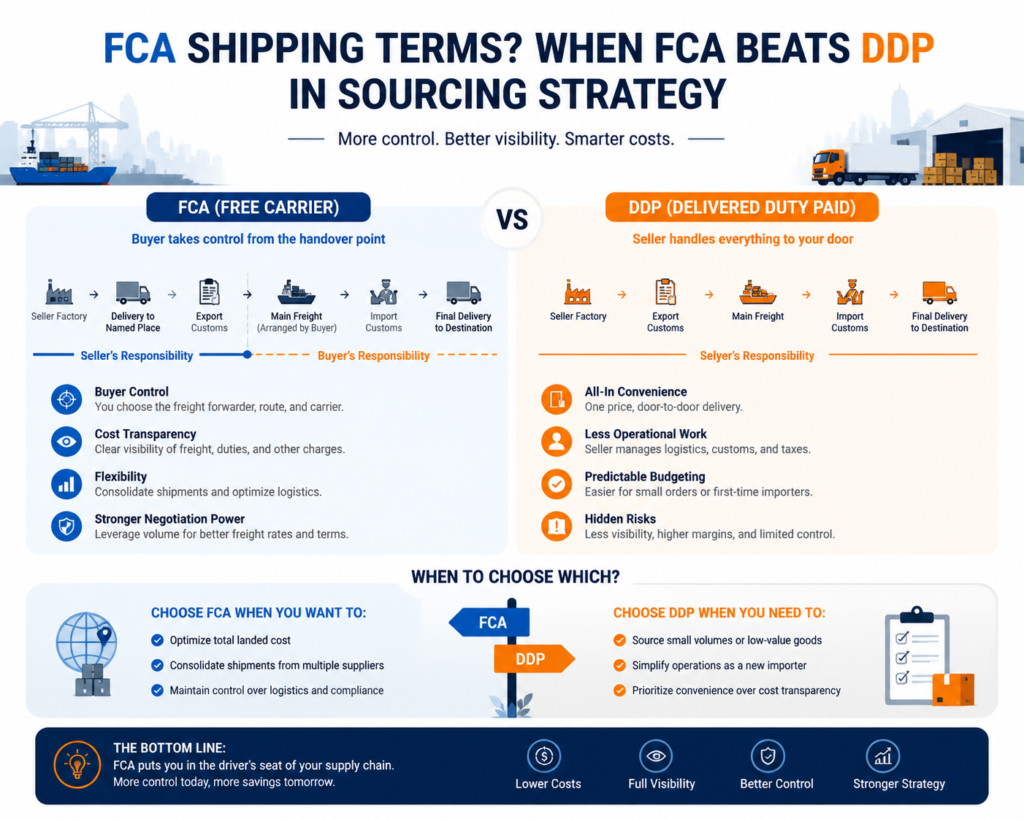
EXW (Ex Works) places relatively extensive collection and transport responsibilities on the buyer. The buyer generally arranges collection at the named place, but export clearance under EXW can create practical complications in cross-border transactions, particularly where the buyer cannot readily complete origin-country formalities.
FOB (Free on Board) is intended for sea or inland waterway transport. Under this rule, the seller's delivery obligation is fulfilled when the goods are loaded on board the vessel at the named port of shipment, with risk transferring according to the rule.
CIF (Cost, Insurance and Freight) is also intended for sea or inland waterway transport. The seller pays the specified freight and insurance to the named destination port, but the risk-transfer point remains at the port of shipment when the goods are loaded on board.
DAP (Delivered at Place) generally requires the seller to arrange transport to the named destination, with delivery occurring when the goods are placed at the buyer's disposal on the arriving means of transport, ready for unloading. The buyer normally handles import clearance and applicable import duties and taxes.
DDP (Delivered Duty Paid) places extensive delivery obligations on the seller, including import clearance and applicable import duties and taxes under the Incoterms rule. However, whether a foreign seller can practically and legally fulfill those import obligations in Argentina must be verified. The rule does not override local registration, tax, or customs requirements.
The selected Incoterm should be stated with a precise named place or port and the applicable Incoterms edition. A contract that simply says "CIF Argentina" or "DDP warehouse" may leave important operational details unclear.
For a purchasing engineer importing a machine from China, DAP may provide a useful arrangement in which the supplier organizes transportation to the factory while the Argentine buyer controls import clearance. DDP may be attractive where the seller can lawfully and reliably manage the complete process, but the buyer should confirm the importer's identity, tax treatment, supporting documentation, and responsibility for customs compliance.
The key principle is to compare the actual obligations and total cost of each option, not just the headline supplier quotation.
8.3 Coordinating Shipment Documents, Cargo Insurance, and Customs Clearance Responsibilities
A transportation booking is only one element of a successful import. The shipment plan must also establish who prepares the documents, who checks regulatory requirements, who appoints the customs broker, who pays import-related charges, and who manages exceptions.
Before dispatch, the buyer, supplier, and logistics providers should agree on the required documentation and submission deadlines. The supplier should know when the commercial invoice and packing list must be finalized, while the forwarder should confirm the transport-document instructions and expected departure and arrival milestones.
Cargo insurance should be assessed against the shipment's value and risk profile. High-value machinery may require coverage that addresses handling, loading, unloading, transshipment, and other exposures relevant to the route. The buyer should review exclusions, deductibles, insured value, and the procedure for notifying a claim.
Insurance coverage and customs valuation must remain conceptually separate. The existence of a cargo insurance policy does not automatically establish the customs value, and the insurance amount should not be confused with the insured cargo's declared commercial price.
The parties should also establish a clear escalation procedure for discrepancies. If the supplier issues an invoice with an incorrect model number, the purchasing team should know who can authorize a correction and how the revised document will reach the customs broker before the declaration is finalized.
A shipment-control sheet can record the booking reference, container or airway bill details, expected departure and arrival dates, documentation status, customs broker contact, permit status, and outstanding actions.
This simple control is especially valuable when purchasing teams manage multiple suppliers across different time zones. It replaces scattered email conversations with a single view of the shipment's readiness.
Good coordination prevents a common and expensive problem: the cargo moves according to schedule, but the paperwork does not.
9. Arranging Pre-Shipment Compliance and Export Documentation
9.1 Verifying Import Eligibility and Regulatory Requirements Before Dispatch
Pre-shipment compliance is the stage at which many customs problems can be prevented at relatively low cost. Once goods have departed the origin country, correcting a classification issue, obtaining a missing authorization, or changing a shipping document can become significantly more difficult.
The importer should begin with an admissibility review that links the intended goods to the relevant tariff classification and product regulations. This review should identify the permits, certificates, technical evidence, and other requirements that must be met before dispatch or before the goods reach a specified customs milestone.
For industrial equipment, the review should cover the machine's function, power supply, safety features, components, condition, and intended application. If the shipment includes software, wireless modules, batteries, pressure-related components, or chemical substances, those elements should be assessed where they may affect regulatory treatment.
The timing of each requirement is critical. Some documentation may be prepared by the supplier after production, while other approvals may need to be obtained by the importer before the goods are shipped. A permit that is required in advance cannot necessarily be substituted with a promise to submit it later.
Procurement teams should therefore introduce a formal shipment-release checkpoint. The supplier should not be authorized to dispatch the cargo until the responsible parties confirm that the applicable import requirements have been reviewed and that any mandatory pre-shipment approvals are in place.
For example, if a factory purchases a specialized production machine with a planned installation date, dispatch approval should depend on both manufacturing readiness and import compliance readiness. The machine being finished on time is not enough if the necessary documentation remains unresolved.
This process should also include a review of used equipment, restricted products, preferential-origin claims, and any relevant trade measures. The earlier these issues are identified, the more options the buyer has to adjust the transaction or shipping plan.
9.2 Reviewing Supplier Invoices, Product Specifications, and Certificates Before Shipping
The pre-shipment document review should be treated as a technical verification task, not merely a clerical exercise. Procurement, engineering, finance, and logistics personnel each possess information needed to establish whether the documents accurately represent the cargo.
The purchasing department should confirm that the invoice matches the purchase order, including product descriptions, model numbers, quantities, unit prices, discounts, and payment terms.
The engineering department should verify that the technical descriptions match the actual products. This is particularly important for custom-built machinery, industrial assemblies, electrical equipment, and components that may have similar commercial names but different technical functions.
The finance team should reconcile the invoice with the contractual value and any related payments. Where tooling, design work, license fees, or other nonstandard arrangements exist, those details should be disclosed for customs valuation review.
The logistics team should confirm that the packing list, package dimensions, gross weights, shipping instructions, and transport-document details are consistent with the shipment plan.
Certificates and permits should be checked for validity, product coverage, manufacturer identity, origin, quantity, and any other required particulars. A valid certificate for the wrong model or an approval issued to a different entity may not satisfy the relevant requirement.
A practical review can use a three-way reconciliation:
- Purchase order: What was commercially agreed?
- Technical and packing records: What is actually being shipped?
- Customs documentation: How will the goods be declared and supported?
Any discrepancy should be investigated before the supplier releases the shipment.
For recurring imports, companies can standardize this review through templates and supplier instructions. Once the required format is established, suppliers can prepare documents consistently, reducing the time spent correcting avoidable mistakes.
9.3 Coordinating Export Customs Clearance in the Origin Country and Cargo Dispatch
Import clearance in Argentina is closely connected to export procedures in the country of origin, even though the two processes are administered under different legal systems.
The overseas supplier or its export agent typically prepares the documents required for export clearance. Depending on the country and commodity, these may include export declarations, commercial invoices, packing lists, licenses, certificates of origin, and other supporting records.
The freight forwarder coordinates transportation and confirms that the cargo can be accepted by the carrier. It may also arrange origin handling, consolidation, container loading, cargo measurements, and the transmission of shipment information to the destination agent.
Before dispatch, the parties should ensure that the export declaration and transport documents reflect the same essential shipment details as the commercial records. Differences in the shipper, consignee, package count, or product description can complicate downstream documentation and customs processing.
For machinery shipments, the loading plan deserves particular attention. Large or fragile components may require special packaging, lifting points, moisture protection, or shock-sensitive handling. These requirements should be reflected in the packing and handling instructions.
The exporter should also communicate the estimated departure, transport-document issuance, and arrival dates to the importer and destination broker. Early transmission of draft documents allows the destination team to identify errors while the supplier can still correct them conveniently.
For sea freight, the importer should confirm the relevant bill-of-lading arrangements and any requirements for document release. For air cargo, the airway bill details should be shared promptly. For multimodal shipments, the team should establish which document governs each transport segment and how the shipment will be identified throughout the route.
Dispatch should be considered complete only when the cargo has been handed over to the carrier, the required origin formalities have been addressed, and the destination team has the information needed to prepare for arrival.
10. Arranging Cargo Arrival and Import Declaration Preparation
10.1 Cargo Arrival Notices, Manifest Registration, and Arrival Documentation
As the shipment approaches Argentina, the process moves from origin-side preparation to destination-side coordination. The carrier or its agent provides relevant arrival information, while the customs broker and importer prepare for the applicable declaration and release procedures.
Arrival notices commonly identify the shipment, expected arrival date, transport reference, destination facility, and the party responsible for further arrangements. The exact information and notification process vary by transport mode and carrier.
The importer should compare the arrival information against the original booking, invoice, packing list, and transport document. The consignee, package count, weight, and shipment references should be checked for consistency before they are used in customs-related processes.
Carriers and their agents also submit the transport and cargo information required under the applicable manifest procedures. The relationship between the manifest and the import declaration is important because customs authorities need to identify the cargo and connect it to the appropriate declaration and release process.
An importer should not assume that the arrival notice itself constitutes customs clearance or that cargo can be collected immediately after the vessel or aircraft arrives. Customs procedures, regulatory controls, payment obligations, carrier release requirements, and terminal formalities may still need to be completed.
For a container arriving at a port, the buyer should establish who will monitor the arrival date, who will obtain the necessary release information, and who will arrange collection after the relevant conditions are met.
The same principle applies to air cargo, where terminal storage and handling charges may accumulate if documents or payments are delayed.
Arrival planning should therefore include a documented timeline covering estimated arrival, document availability, declaration preparation, possible inspection, payment, release, and final collection. That timeline should be updated as new information becomes available.
10.2 Appointing a Licensed Customs Broker and Authorizing Customs Representation
A qualified customs broker can help the importer navigate Argentine customs procedures, interpret tariff requirements, prepare declarations, and coordinate responses to customs queries.
The importer should select a broker with experience relevant to the product category and shipment profile. A broker accustomed to routine consumer goods may not necessarily have the same experience with oversized machinery, complex industrial assemblies, chemicals, or goods subject to specialized regulatory controls.
Before appointment, the importer should establish the broker's authorization status, service scope, communication procedures, fee structure, and responsibility for document review. The parties should also agree on how potential discrepancies, inspections, and additional assessments will be escalated.
The broker will need sufficient information to prepare the declaration. Depending on the transaction, this can include the invoice, packing list, transport documents, proposed classification, customs valuation information, origin evidence, permits, and technical records.
Authorization should be provided through the applicable legal and electronic mechanisms. The importer should not assume that simply sending documents to a broker automatically creates valid authority to represent the company.
For high-value or technically complex shipments, it is sensible to conduct a pre-arrival review meeting. The importer, broker, and forwarder can verify that the goods are correctly described, the proposed classification is defensible, required approvals are available, and the declaration can be prepared without unresolved issues.
The importer should also establish a single point of contact for commercial and technical questions. If the broker asks whether a shipment contains a complete machine or separate parts, the purchasing team should be able to obtain a definitive answer from engineering rather than allowing the question to circulate among multiple departments.
Clear appointment terms and timely access to accurate information improve the quality of customs declarations and reduce the risk of delays caused by incomplete instructions.
10.3 Preparing the Import Declaration Through Argentina’s Applicable Electronic Customs Systems
The import declaration is the formal submission of information required for the applicable customs procedure. It identifies the merchandise, its classification, value, origin, quantity, and other particulars required under the relevant declaration rules.
The precise electronic system, declaration type, and supporting requirements depend on the current Argentine customs framework and the particular transaction. Importers should rely on current official procedures and their authorized broker's guidance rather than assume that an older electronic workflow remains unchanged.
Before submitting the declaration, the broker generally needs to reconcile the commercial invoice, transport information, packing details, tariff classification, customs valuation, and any required permits or certificates.
For industrial goods, the technical description should be sufficiently precise to distinguish between complete equipment, components, accessories, and replacement parts. Where a shipment contains multiple tariff lines, each item must be associated with the correct description, quantity, value, and classification.
The declaration should also reflect the relevant origin and any supporting preferential treatment or special customs destination, where applicable. If an import procedure involves temporary admission or another nonstandard regime, the declaration and supporting records must align with the conditions of that regime.
The importer should review material commercial and technical information before authorizing submission. Although the customs broker prepares the declaration, the importer is best placed to confirm the actual goods purchased, the contractual price, and the intended use.
Once the declaration is submitted or officially registered through the applicable procedure, it becomes part of the formal customs record. Subsequent changes may require specific correction or amendment procedures, and some errors can be difficult to rectify after later processing milestones.
A pre-submission checklist should therefore verify the consignee, tariff code, declared value, origin, quantity, customs procedure, regulatory approvals, and supporting documents.
The objective is to submit a declaration that accurately represents the shipment from the outset, minimizing the need for corrective action once the customs process is underway.
11. Submitting the Import Declaration and Registering the Shipment
11.1 Entering Shipment Details, HS Codes, Customs Values, and Country of Origin
The quality of an import declaration depends on the accuracy and consistency of the information entered into the applicable customs system. Even when the shipment is commercially straightforward, errors in tariff classification, value, origin, quantity, or product description can trigger additional review.
The customs broker should work from the final commercial documents and the technical information supplied by the importer. The declaration must identify the goods under the appropriate Argentine tariff nomenclature and reflect the valuation method and customs treatment applicable to the transaction.
Country of origin requires particular care because it is not necessarily the same as the country of shipment, the seller's registered location, or the port from which the cargo departed. The applicable origin rules determine how origin should be established and declared.
For example, a Chinese manufacturer may ship industrial gearboxes through a distribution center in a third country. The transshipment or distribution arrangement does not automatically change the origin of the gearboxes. The importer should retain the evidence needed to substantiate the declared origin.
Quantities and units of measurement must also be consistent with the relevant declaration requirements. An invoice may express a purchase in sets, while the tariff line requires a different unit for declaration or statistical purposes. The broker should determine how the merchandise must be reported under the applicable nomenclature.
For complex shipments, the importer should provide an itemized data sheet connecting each invoice line to the corresponding product model, technical description, NCM code, country of origin, quantity, and customs value.
This is particularly important when a container contains complete machinery alongside accessories and spare parts. The fact that all items were purchased from one supplier or shipped under one transport document does not mean that every item should be declared identically.
A disciplined data-entry review makes the declaration easier to defend and provides a reliable foundation for subsequent duty calculations, inspections, and recordkeeping.
11.2 Officializing the Import Declaration and Reviewing the Assigned Reference Number
After the required information has been prepared and the applicable checks completed, the customs broker proceeds with the relevant declaration formalities. In Argentine customs practice, the term oficialización is commonly associated with the formal registration or officialization of a customs declaration through the applicable system.
The legal and procedural effect of officialization depends on the type of declaration and the rules in force. Importers should confirm the relevant milestone with their broker rather than treating every electronic status as equivalent to final customs release.
Once the declaration has been registered, its reference information should be recorded in the company's shipment file. This reference helps the importer, broker, and other authorized parties track the declaration, reconcile payments, and connect the customs record to the corresponding commercial shipment.
The importer should request confirmation that the declaration has been registered and obtain the relevant status information. The broker should also identify any outstanding requirements, such as payment obligations, regulatory interventions, supporting documents, or inspection instructions.
The declaration reference should be linked to the purchase order, invoice, transport document, and internal shipment number. This makes it easier to retrieve the correct records if the company manages several imports simultaneously.
For industrial procurement departments, status tracking is especially important when the imported goods support a time-sensitive installation. A declaration that has been prepared but not formally registered should not be treated as equivalent to one that has reached the appropriate official milestone.
Likewise, declaration registration should not be confused with authorization to collect the cargo. The shipment may still require additional customs processing, tax payments, physical release, or terminal formalities.
A milestone-based tracking sheet should therefore distinguish among document preparation, declaration submission, officialization, customs processing, payment completion, release authorization, and final cargo collection.
This avoids ambiguity and helps management understand the actual status of the shipment instead of relying on informal statements such as "customs is almost finished."
11.3 Checking Declaration Accuracy, Supporting Documents, and Regulatory Interventions
After the declaration is prepared or registered, the importer should verify that its information remains consistent with the supporting documents and the actual goods. This review is particularly important where the shipment contains multiple tariff lines or is subject to product-specific controls.
The review should cover the declared importer, supplier, product descriptions, quantities, tariff codes, customs values, origin, and applicable customs procedure. It should also confirm that the required permits and certificates are available and correctly associated with the relevant goods.
Regulatory interventions may apply when a product requires approval, inspection, or confirmation from an authority other than customs administration itself. The nature of the intervention depends on the goods and the applicable rules.
For example, a shipment of industrial electrical equipment may require verification of a relevant technical compliance condition if the product falls within an applicable regulated category. The importer should confirm whether that requirement has been satisfied rather than assuming that a completed customs declaration resolves every regulatory issue.
If a discrepancy is discovered, the importer should notify the broker immediately. The appropriate correction or amendment procedure depends on the type of error and the declaration's procedural status. Changes should be made through the authorized process, not by silently altering documents while leaving inconsistent information elsewhere in the shipment file.
The importer should also preserve evidence of regulatory approvals and communications. This is useful not only for immediate clearance but also for post-clearance verification and future repeat shipments.
A strong final review asks three questions: Does the declaration accurately describe the goods? Can every material declaration field be supported by evidence? Have all applicable regulatory requirements been addressed?
If the answer to any of these questions is uncertain, the issue should be resolved before the shipment advances to the next critical customs milestone whenever the procedure permits.
12. Completing Customs Inspection and Risk Assessment
12.1 Understanding Customs Selectivity Channels and Risk-Based Inspection Procedures
Customs authorities use risk assessment and selectivity procedures to determine the nature and intensity of controls applied to individual shipments. The precise channels, terminology, and operational consequences depend on the current customs framework.
Some shipments may proceed with limited intervention, while others may be subject to documentary review, physical examination, sampling, or additional verification. Selection for inspection does not necessarily mean that the importer has done anything wrong; it may reflect the characteristics of the goods, transaction, origin, documentation, or risk profile.
For procurement teams, the key point is that the time required for customs clearance is not always predictable from transit time alone. Even a shipment with complete documentation may need additional processing if it is selected for a more detailed examination.
A container of standardized industrial fasteners may present a different inspection profile from a shipment of complex machinery with multiple components, specialized technical characteristics, or a regulatory history requiring closer scrutiny.
Importers should avoid making financial commitments based on an assumption that every shipment will follow the shortest possible clearance path. Instead, the logistics plan should include contingency time for documentary queries, inspection arrangements, and the release of cargo after any required controls.
The broker should communicate the applicable customs status and explain what action, if any, is required from the importer. The forwarder may need to coordinate terminal access, cargo positioning, handling equipment, or other operational arrangements depending on the inspection.
Risk assessment also reinforces the value of consistent documentation. Clear descriptions, defensible classification, credible valuation, and complete supporting records help the importer respond efficiently if customs requests additional information.
The objective is not to predict or influence a selectivity outcome. It is to ensure that the shipment is ready to satisfy the controls that may lawfully be applied.
12.2 Preparing for Documentary Reviews, Physical Inspections, and Sampling
A documentary review typically focuses on whether the declaration and supporting records accurately represent the transaction and comply with applicable requirements. Depending on the circumstances, customs may request invoices, contracts, origin evidence, permits, technical specifications, payment records, or explanations of particular declaration fields.
A physical inspection involves examination of the cargo itself. The scope may range from checking package identification and quantities to inspecting product characteristics or taking samples where authorized and appropriate.
The importer should coordinate with the customs broker and logistics provider to determine which documents or operational arrangements are needed. Cargo may need to be moved to an inspection area, made accessible, unpacked, or handled using suitable equipment.
For large machinery, inspection planning requires particular care. Components may be secured inside heavy crates, protected against moisture, or arranged in a specific loading sequence. Opening a crate without an appropriate handling plan could damage the goods or create safety risks.
The packing list should identify the location of each item and the contents of each package. Photographs taken during packing can also help the importer explain how the goods were assembled and where particular components are located.
Where samples are requested, the importer should understand the scope of the sampling procedure, the relevant chain of custody, and any implications for the condition or quantity of the goods. Sampling requirements and any associated restrictions should be confirmed with the responsible authority or broker.
The importer should avoid sending informal or contradictory explanations to different parties. Instead, one designated contact should coordinate technical responses, drawing on engineering and supplier expertise where necessary.
If the customs authority requests clarification of a machine's function, for instance, the response should describe the actual operating principle and intended use rather than rely on vague marketing language.
Efficient inspection handling depends on preparation, accurate records, safe cargo access, and prompt communication. These measures cannot eliminate all delays, but they can prevent avoidable complications during an otherwise routine control.
12.3 Resolving Discrepancies in Quantity, Classification, Origin, and Declared Value
Customs inspection may reveal differences between the declared information and the physical cargo. The correct response is to investigate the discrepancy, establish the facts, and follow the applicable procedure for clarification or correction.
Quantity discrepancies can arise when packages are mislabeled, the supplier changes the packing configuration, or the invoice and packing list are not updated consistently. Classification disputes may occur when the physical characteristics of the product differ from the description used in the declaration.
Origin questions can arise where the documentation does not establish the relevant origin under the applicable rules. Valuation discrepancies may involve unexplained price differences, undeclared adjustments, inconsistent invoices, or questions about related-party transactions.
For example, if a shipment declared as containing replacement gears is found to include complete gearbox assemblies, the importer should not attempt to resolve the matter through an informal explanation alone. The broker must determine the appropriate classification and declaration treatment, including whether any formal correction is permitted or required.
The importer should gather evidence relevant to the specific issue. For quantity differences, this may include packing records, warehouse reports, photographs, and supplier confirmation. For classification, it may include drawings, product specifications, and explanations of function. For valuation, it may include contracts, invoices, payment records, and details of the commercial arrangement.
The response should be factual, consistent, and supported by records. If the discrepancy requires a formal amendment, additional payment, or another legal procedure, the importer should follow the applicable process.
Companies should also investigate the underlying cause after the immediate issue is resolved. A repeated discrepancy may indicate that supplier document controls, internal product data, or packing verification procedures need improvement.
The long-term goal is to transform customs exceptions into useful operational feedback. When the root cause is corrected, subsequent shipments can move with fewer errors and a more predictable clearance process.
13. Paying Import Duties, Taxes, and Customs-Related Fees
13.1 Confirming the Final Customs Assessment and Applicable Payment Obligations
Once the relevant declaration information has been established, the importer must determine the amounts payable under the applicable customs and tax procedures. The assessment depends on the declared customs value, tariff classification, applicable rates, tax treatment, and any relevant trade measures or special conditions.
The customs broker should provide a clear breakdown of the expected obligations, distinguishing customs duties from VAT-related amounts, other applicable levies, and service or logistics charges.
This distinction is essential for cost control. A single combined figure may be convenient for cash planning, but it does not reveal which amounts are government-imposed charges, which are potentially recoverable tax payments, and which are commercial fees.
The importer should compare the assessment with the original landed-cost estimate. If the final amount differs materially, the broker should explain whether the difference results from a changed classification, customs valuation adjustment, updated rate, additional measure, or another factor.
For example, an industrial equipment buyer may discover that a product's classification attracts a different duty rate from the preliminary estimate. The correct response is to verify the classification and calculation rather than assume the difference is simply an administrative fee.
The importer should also check whether any applicable exemption, preferential tariff, or special regime has been correctly reflected. Such treatment should be supported by the required evidence and legal eligibility.
Before authorizing payment, finance personnel should reconcile the assessment with the declaration and retain the relevant calculation. This provides an audit trail and helps the company identify discrepancies before they affect the release schedule.
The final assessment should be treated as a controlled financial milestone. The buyer needs to know not only how much is payable, but also when payment must be made and how it relates to the remaining customs and cargo-release procedures.
13.2 Processing Customs Payments and Meeting Relevant Financial Requirements
Customs-related payments must be made through the applicable authorized procedures, using the payment arrangements available to the importer for the transaction. The exact process depends on the type of charge, current system requirements, the importer's circumstances, and any applicable financial regulations.
The importer should confirm payment instructions with its customs broker and verify that the amounts, references, beneficiary details, and deadlines are correct before transferring funds.
For companies importing from overseas, financial planning is particularly important because international supplier payments and Argentine import-related payments may occur at different stages of the transaction. The business must have sufficient liquidity to meet the obligations that arise before the cargo can be released.
Finance teams should distinguish between the commercial payment schedule agreed with the supplier and the cash required for customs clearance. A shipment may already have been paid for in full while substantial duties, taxes, terminal charges, and inland transportation costs remain outstanding.
Payment reconciliation should also be part of the internal control process. The company should retain the relevant payment confirmations and link them to the customs declaration, shipment reference, and accounting records.
Where an authorized customs broker handles payment coordination, the importer should establish a transparent process for receiving assessments, approving disbursements, and confirming completed payments. This reduces the risk of duplicate payments, misunderstandings about advances, or delays caused by missing funds.
For high-value shipments, the buyer should identify the person responsible for payment authorization and arrange contingency procedures for weekends, holidays, or urgent release requirements where relevant.
Payment timing should be included in the shipment schedule, not left until the cargo is waiting at the terminal. Even when the customs declaration and supporting documents are correct, an avoidable funding delay can prevent the shipment from progressing to release.
13.3 Managing Payment Delays, Additional Assessments, Guarantees, and Refund Claims
Importers may encounter payment-related complications when the customs assessment changes, funds are unavailable, a transaction requires additional verification, or a dispute arises over the amount payable.
The first step is to establish the reason for the issue. A payment may be delayed because the declaration is incomplete, the payment reference is incorrect, the importer has insufficient funds, or the applicable system requires further action. Each situation requires a different response.
If customs identifies an additional amount due, the importer should obtain a clear explanation of the legal and computational basis. The broker should review the tariff classification, customs value, applicable rate, and any other relevant factor before the company decides how to proceed.
Where a dispute concerns the assessment, the importer should determine whether the applicable framework provides a formal challenge, review, or appeal mechanism and whether payment, a guarantee, or another action is required while the dispute is pending.
Customs guarantees may be relevant in specific procedures or circumstances, but their availability and effect should never be assumed. The importer should confirm the legal conditions, permitted guarantee forms, required amounts, and deadlines with its broker or legal adviser.
Refund or repayment claims may also arise where a payment was duplicated, an assessment was corrected, or the applicable rules provide a basis for recovery. The importer should preserve the original declaration, payment records, assessment details, and evidence supporting the claim.
For example, if an importer identifies a calculation error after payment, it should not simply deduct the disputed amount from a future transaction. Any recovery must follow the relevant formal process.
A good internal procedure records the issue, assigns an owner, establishes deadlines, and tracks the outcome. This makes payment exceptions manageable and helps prevent the same administrative problem from recurring.
14. Obtaining Customs Release and Arranging Cargo Delivery
14.1 Understanding Customs Release Authorization and Cargo Clearance Status
Customs release is a critical milestone because it determines whether the goods may proceed under the applicable customs procedure. However, customs release should not be confused with the completion of every carrier, terminal, regulatory, or delivery requirement.
The importer should obtain confirmation of the actual customs status from its broker or the applicable official system. The status must be interpreted in the context of the declaration and the procedure being used.
Depending on the shipment, release may require that the declaration has reached the appropriate stage, applicable payments have been completed or otherwise addressed, required controls have been satisfied, and any outstanding conditions have been resolved.
A declaration that has been submitted, registered, or paid is not necessarily equivalent to final authorization to collect the goods. Similarly, a carrier's arrival notice does not establish that customs has released the cargo.
For industrial procurement, the difference matters because the receiving facility may schedule labor, cranes, installation technicians, and production-line commissioning around an expected delivery date.
The logistics team should confirm the release status before dispatching vehicles or committing to a time-sensitive unloading appointment. If the cargo remains subject to inspection or another hold, the delivery plan may need to be revised.
The importer should also retain evidence of the customs status and link it to the shipment's internal records. This supports subsequent reconciliation and provides a reference if a question arises about the date on which the goods were authorized to move.
A milestone-based process helps distinguish three separate events: customs clearance, release by the carrier or terminal, and physical delivery to the buyer.
Treating these as separate checkpoints gives procurement teams a more accurate picture of where the shipment stands and what must happen next.
14.2 Coordinating Port, Airport, Terminal, Warehouse, and Container Release Procedures
After the applicable customs requirements have been satisfied, the cargo may still need to complete operational release procedures at the port, airport, terminal, or warehouse.
These procedures vary by location and transport mode. They can involve carrier documentation, delivery orders, handling charges, terminal payments, appointment arrangements, container-release instructions, and other requirements imposed by the relevant service providers.
For sea freight, the importer or its agent may need to coordinate the carrier's release process, terminal formalities, container collection, and any required return arrangements. For air freight, the process may involve cargo-terminal handling, warehouse release, and coordination with the designated collection agent.
The forwarder should confirm the outstanding requirements and provide a realistic collection plan. Before sending a truck, the logistics team should establish that the cargo is available, the necessary release instructions have been issued, and any relevant charges have been addressed.
Large machinery may require specialized vehicles, cranes, forklifts, or other handling equipment. The buyer should verify the cargo's weight, dimensions, lifting points, and packaging configuration before arranging collection.
Containerized cargo also requires attention to equipment-related deadlines. If a container is subject to free-time limits, delayed collection or return may generate additional charges. The applicable deadlines and contractual terms should be confirmed with the carrier or terminal rather than assumed.
Where the shipment is held in a bonded or customs-controlled facility, the importer should verify the conditions governing movement out of that facility.
The delivery plan should identify who obtains release confirmation, who pays outstanding charges, who books the vehicle, and who verifies the cargo at collection.
A well-coordinated handover prevents a situation in which customs has completed its work but the goods remain at the terminal because the commercial release or transport arrangements are unfinished.
14.3 Arranging Inland Transportation, Final Delivery, and Proof of Receipt
The final transportation stage moves the cargo from the port, airport, or other release point to the importer's warehouse, factory, or designated delivery location.
The transportation plan should reflect the cargo's physical characteristics and the receiving facility's operational capacity. Standard palletized goods may be delivered by ordinary freight vehicles, whereas heavy machinery may require low-bed trailers, cranes, permits, route planning, or specialized unloading services.
For industrial equipment, the receiving team should confirm the delivery address, access restrictions, unloading arrangements, floor-load capacity where relevant, and available storage space. A shipment should not be dispatched to a facility that cannot safely receive it.
The buyer should also verify whether the goods must remain in their packaging until installation or inspection. Some components require moisture protection, controlled storage, or careful handling to preserve their condition and calibration.
At delivery, the receiving team should reconcile the physical cargo against the packing list and purchase order. Package counts, visible damage, missing accessories, and discrepancies should be recorded promptly.
Photographs of damaged packaging or equipment can be useful evidence for a carrier or insurance claim. The recipient should follow the relevant contractual and insurance procedures, including any requirements for noting damage on delivery records or notifying the responsible party within a specified period.
Proof of delivery should record the date, location, receiving party, and any relevant exceptions. For high-value machinery, the receiving report may also include serial numbers, crate identifiers, and confirmation that all listed components have arrived.
Finally, the purchasing department should close the shipment file by reconciling transportation invoices, customs payments, broker charges, terminal fees, and the actual delivery outcome.
This final reconciliation allows the company to compare the original landed-cost estimate with the actual acquisition cost and improve the accuracy of future import budgets.
15. Managing Customs Delays, Penalties, and Post-Clearance Compliance
15.1 Common Causes of Clearance Delays, Storage Charges, and Demurrage
Customs clearance delays can arise from documentation errors, incomplete regulatory approvals, classification disputes, valuation questions, physical inspections, payment problems, or operational bottlenecks at the port or airport. Some delays are attributable to the importer or supplier, while others arise from circumstances beyond their direct control.
For procurement professionals, the commercial consequences can extend well beyond the customs process itself. A delayed shipment of replacement bearings may interrupt a maintenance schedule, while a container containing critical production machinery may postpone commissioning and delay the start of manufacturing operations.
One of the most common causes of avoidable delay is incomplete or inconsistent documentation. An invoice that describes goods differently from the packing list, a missing certificate, or an incorrect consignee detail can require additional communication and document amendments.
Regulatory issues can create longer delays, particularly where a product requires an approval that was not obtained before dispatch. Customs inspections can also affect the timeline, especially when cargo must be repositioned, unpacked, sampled, or examined by the relevant authority.
Storage charges, demurrage, and detention should be distinguished because they may arise under different contractual arrangements.
- Storage charges generally relate to keeping cargo or containers in a terminal or warehouse beyond the applicable free period.
- Demurrage commonly refers to charges for keeping a shipping container within the terminal beyond the permitted period, subject to the carrier's tariff and contract.
- Detention commonly refers to charges for retaining a carrier's container outside the terminal beyond the allowed period.
Exact definitions, free-time periods, and charging conditions depend on the carrier, terminal, contract, and applicable local arrangements. Importers should verify the relevant terms for each shipment.
To reduce exposure, the buyer should request the expected free-time allowance, monitor arrival notices, prepare documents before cargo arrival, and coordinate payment and collection promptly.
A useful delay-control system records the planned clearance date, actual declaration status, outstanding documents, inspection requirements, free-time deadlines, and responsible party. If a milestone is missed, the team should immediately identify the cause and establish a corrective action.
For high-value shipments, the budget should also include a reasonable contingency for unexpected storage and handling expenses. Although contingency costs should not replace good planning, they provide a more realistic view of total import exposure.
15.2 Handling Customs Disputes, Fines, Seizures, Appeals, and Abandoned Cargo
When a customs authority identifies a potential violation or disputes information in an import declaration, the importer must respond through the appropriate legal and administrative procedures. The seriousness of the issue depends on the nature of the discrepancy, the applicable law, the evidence available, and the procedural stage.
A customs dispute may concern tariff classification, declared value, country of origin, import eligibility, supporting documents, or compliance with a particular customs regime. Some issues can be resolved through clarification or an authorized correction, while others may require a formal administrative response or legal proceedings.
The importer should first obtain a clear statement of the issue from its customs broker or legal adviser. The response should identify the disputed facts, the applicable legal basis, the relevant declaration, and the evidence supporting the importer's position.
For a technical classification dispute involving industrial equipment, for example, engineering drawings and manufacturer specifications may be more useful than a general sales brochure. For a valuation dispute, purchase agreements, payment records, discount explanations, and relevant contractual arrangements may be central to the response.
Penalties and seizures should be treated seriously. Depending on the circumstances, customs authorities may impose additional assessments, administrative sanctions, or other measures. Importers should not assume that every discrepancy is a minor clerical error or that payment of additional charges automatically resolves every legal issue.
Where a formal appeal or review mechanism is available, the importer should identify the applicable deadline and procedural requirements. Missing a deadline can materially affect the company's options.
Abandoned cargo creates a separate set of risks. If a shipment remains uncollected because of unresolved compliance issues, excessive costs, or commercial disputes, the importer may face additional storage expenses and consequences under the applicable customs and contractual rules.
Before deciding to abandon or dispose of goods, the importer should obtain professional advice regarding the legal, financial, and operational consequences. The decision may affect the buyer's obligations to the carrier, terminal, supplier, and relevant authorities.
The company should also preserve all related correspondence, declarations, assessments, invoices, and inspection records. A complete file enables the broker or legal adviser to reconstruct the transaction and formulate an evidence-based response.
15.3 Maintaining Import Records, Responding to Customs Audits, and Correcting Declaration Errors
Customs compliance does not necessarily end when goods are released. Importers may remain subject to post-clearance verification, document requests, tax reviews, or customs audits under the applicable legal framework.
These reviews may examine whether the goods were correctly classified, the declared value was properly established, origin claims were supported, and all relevant import conditions were satisfied.
A company should maintain a structured record for each shipment. The file should include the purchase order, commercial contract, invoice, packing list, transport documents, origin evidence, applicable permits, technical specifications, customs declaration, payment records, release confirmation, and relevant correspondence.
For complex transactions, supporting records may also include tooling agreements, license arrangements, related-party pricing information, valuation calculations, inspection reports, and documents explaining unusual commercial terms.
Record-retention periods and permitted storage methods should be confirmed under the applicable Argentine requirements. Companies should not assume that a general corporate record-retention policy automatically satisfies every customs and tax obligation.
A centralized electronic archive can improve document retrieval, provided it preserves the integrity of the records and complies with applicable legal requirements. Documents should be searchable by shipment reference, supplier, invoice number, NCM code, and declaration identifier.
If an error is discovered after clearance, the importer should consult its customs broker or legal adviser promptly. The appropriate procedure depends on the nature of the error, the applicable rules, and the procedural status of the declaration. Some errors may require a formal correction, additional payment, or another prescribed action.
The company should not simply overwrite an original record or alter a declaration without following the authorized procedure. It should preserve the original information, document the discovery, and retain evidence of any subsequent correction.
Post-clearance reviews can also reveal recurring operational weaknesses. If several shipments contain incorrect product descriptions, the supplier onboarding process may need improvement. If valuation discrepancies recur, the company may need a more robust review of purchase agreements and related charges.
Treating customs records as a permanent component of the procurement file creates a defensible audit trail and improves the efficiency of future imports.
16. Optimizing Argentina Import Customs Clearance for Cost and Efficiency
16.1 Building a Realistic Customs Clearance Timeline and Landed-Cost Budget
An effective import plan combines a realistic timeline with a complete landed-cost estimate. Both should be established before the purchase order is approved and updated when material details of the shipment change.
The timeline should distinguish production lead time, origin export formalities, international transit, destination arrival procedures, customs declaration preparation, regulatory review, potential inspection, payment, cargo release, and inland delivery.
These stages do not always occur in a strictly sequential manner. Some documentation and compliance checks can be completed while the goods are being manufactured or transported, whereas other steps depend on arrival or formal registration. The plan should identify which activities can run in parallel and which represent critical dependencies.
For budgeting purposes, the landed cost should extend beyond the supplier's quoted price. It may include:
- Merchandise purchase price.
- International freight and cargo insurance.
- Customs duties and applicable trade measures.
- VAT and other import-related tax payments.
- Customs broker and documentation fees.
- Port, airport, terminal, and handling charges.
- Storage, demurrage, detention, and inspection-related expenses where applicable.
- Inland transportation, unloading, and final delivery.
- Installation, commissioning, or other project-related expenses outside customs clearance.
These categories should be assessed according to the transaction rather than automatically applied to every shipment.
A useful financial model separates immediate cash requirements from the estimated net economic cost. This distinction is important when some tax payments may be creditable or recoverable, subject to the company's tax position and applicable law.
The budget should also include scenario analysis. A baseline scenario can assume routine processing, while an alternative scenario can account for a documentary query, additional inspection, or several days of unexpected storage.
For a production-critical machine, the financial impact of a delay may exceed the additional logistics charges. Lost production capacity, idle labor, delayed customer deliveries, and rescheduled installation work should therefore be considered when comparing shipping options.
A procurement dashboard can track estimated versus actual freight costs, duty and tax calculations, clearance time, document errors, storage expenses, and delivery performance. Over multiple shipments, this information helps identify the suppliers, routes, and product categories that require additional controls.
The objective is to create a landed-cost model that is sufficiently detailed to support purchasing decisions without pretending that every customs outcome can be predicted with absolute certainty.
16.2 Reducing Clearance Risks Through Supplier Coordination and Professional Logistics Partners
The most effective way to reduce customs risk is to coordinate the transaction before the goods leave the supplier's facility. Customs brokers and freight forwarders play important roles, but their effectiveness depends on receiving accurate information early enough to act on it.
Supplier coordination should begin during quotation and purchase-order preparation. The buyer should provide clear instructions concerning product descriptions, invoice requirements, packing-list details, origin documentation, technical specifications, and the timing of document submission.
For industrial products, technical data should be treated as part of the shipping documentation package. A supplier that consistently provides accurate model numbers, functional descriptions, drawings, and packing details makes classification and regulatory verification substantially easier.
The buyer should also establish a formal division of responsibilities. The supplier prepares the required commercial and technical records, the forwarder coordinates transportation, the customs broker handles the relevant customs formalities, and the importer provides accurate transaction information and fulfills its legal obligations.
A service agreement with the logistics provider should define the scope of work, communication frequency, escalation procedure, document deadlines, and responsibility for identifying potential issues. The agreement should also clarify which services are included in the quotation and which may generate additional charges.
For repeat shipments, the company can develop a standardized import playbook. This may contain approved document templates, product classification records, supplier instructions, regulatory checklists, broker contacts, and lessons learned from previous imports.
However, standardized procedures should not become an excuse for assuming that every shipment is identical. Changes in product design, supplier, origin, customs regime, tariff classification, or regulation may require a fresh review.
Technology can improve coordination through shipment-tracking systems, shared document repositories, automated deadline alerts, and centralized landed-cost reporting. These tools are most useful when they support clear responsibilities and reliable source data rather than simply generating more notifications.
For a purchasing engineer managing several international suppliers, the ultimate goal is to establish a repeatable process that makes import readiness visible before dispatch and makes exceptions easy to identify.
Strong coordination does not guarantee that every shipment will clear without delay, but it substantially improves the company's ability to anticipate problems, respond quickly, and protect production schedules.
16.3 Creating a Practical Pre-Shipment and Post-Clearance Compliance Checklist
A practical checklist translates the customs process into specific actions that can be assigned, verified, and documented. It should be adapted to the product category, customs procedure, transport method, and requirements in force for the shipment.
The following checklist provides a general framework for commercial imports into Argentina. It is not a substitute for verifying product-specific requirements or current official procedures.
Pre-shipment checklist
- Confirm that the Argentine importer is eligible and properly registered for the intended transaction.
- Appoint an appropriately authorized customs broker and establish valid representation arrangements.
- Identify the correct NCM classification for each relevant product line.
- Verify import eligibility, restrictions, permits, certifications, and applicable regulatory interventions.
- Review the country of origin and confirm whether preferential tariff treatment may be available.
- Confirm the customs valuation methodology and identify any relevant adjustments.
- Estimate applicable duties, taxes, trade measures, and other import-related charges.
- Check the commercial invoice against the purchase order and contractual payment terms.
- Verify the packing list, product descriptions, quantities, weights, dimensions, and package references.
- Confirm the required transport documents and the consignee and delivery information.
- Review the selected Incoterm, named destination, cargo insurance, and allocation of responsibilities.
- Ensure that required pre-shipment authorizations are in place before dispatch.
- Provide draft documentation to the customs broker for review where appropriate.
- Confirm the transportation booking, expected arrival date, and destination handling arrangements.
Arrival and customs clearance checklist
- Confirm cargo arrival information and the relevant transport references.
- Verify that the shipment's manifest and supporting information are consistent.
- Ensure that the customs broker has the documents and authority required to proceed.
- Review the declaration details, including classification, origin, value, quantity, and customs procedure.
- Confirm that the applicable declaration formalities have been completed.
- Monitor customs status and respond promptly to documentary requests.
- Coordinate any required inspection, sampling, or regulatory verification.
- Reconcile the assessed duties and taxes with the landed-cost estimate.
- Arrange payment through the applicable authorized procedures.
- Confirm customs release separately from carrier and terminal release.
- Verify outstanding terminal charges, collection requirements, and free-time deadlines.
- Book suitable inland transportation and unloading arrangements.
Post-clearance checklist
- Obtain the final customs and delivery records.
- Reconcile the delivered goods against the invoice and packing list.
- Record any shortages, damage, or discrepancies and notify the relevant parties.
- Retain customs declarations, payment evidence, permits, origin records, and supporting documents.
- Reconcile actual landed costs against the approved budget.
- Record clearance time, unexpected charges, and any inspection or documentation issues.
- Investigate recurring discrepancies and implement corrective actions.
- Confirm the applicable record-retention requirements.
- Update the supplier's performance record and the company's import procedures.
The checklist should have a designated owner for each action, a completion deadline, and an evidence field showing how the requirement was verified. For high-value or regulated shipments, an explicit approval step should prevent dispatch while a critical compliance requirement remains unresolved.
Final recommendation: The most reliable way to manage import customs clearance in Argentina is to integrate customs planning with procurement, engineering, finance, and logistics from the beginning of the transaction. Accurate product classification, complete documentation, defensible customs valuation, verified regulatory eligibility, and disciplined shipment coordination are the foundations of predictable clearance.
For importers purchasing industrial machinery and mechanical components, this integrated approach can improve cost visibility, reduce avoidable administrative delays, and help ensure that critical equipment reaches the receiving facility in time to support production and project commitments.
```