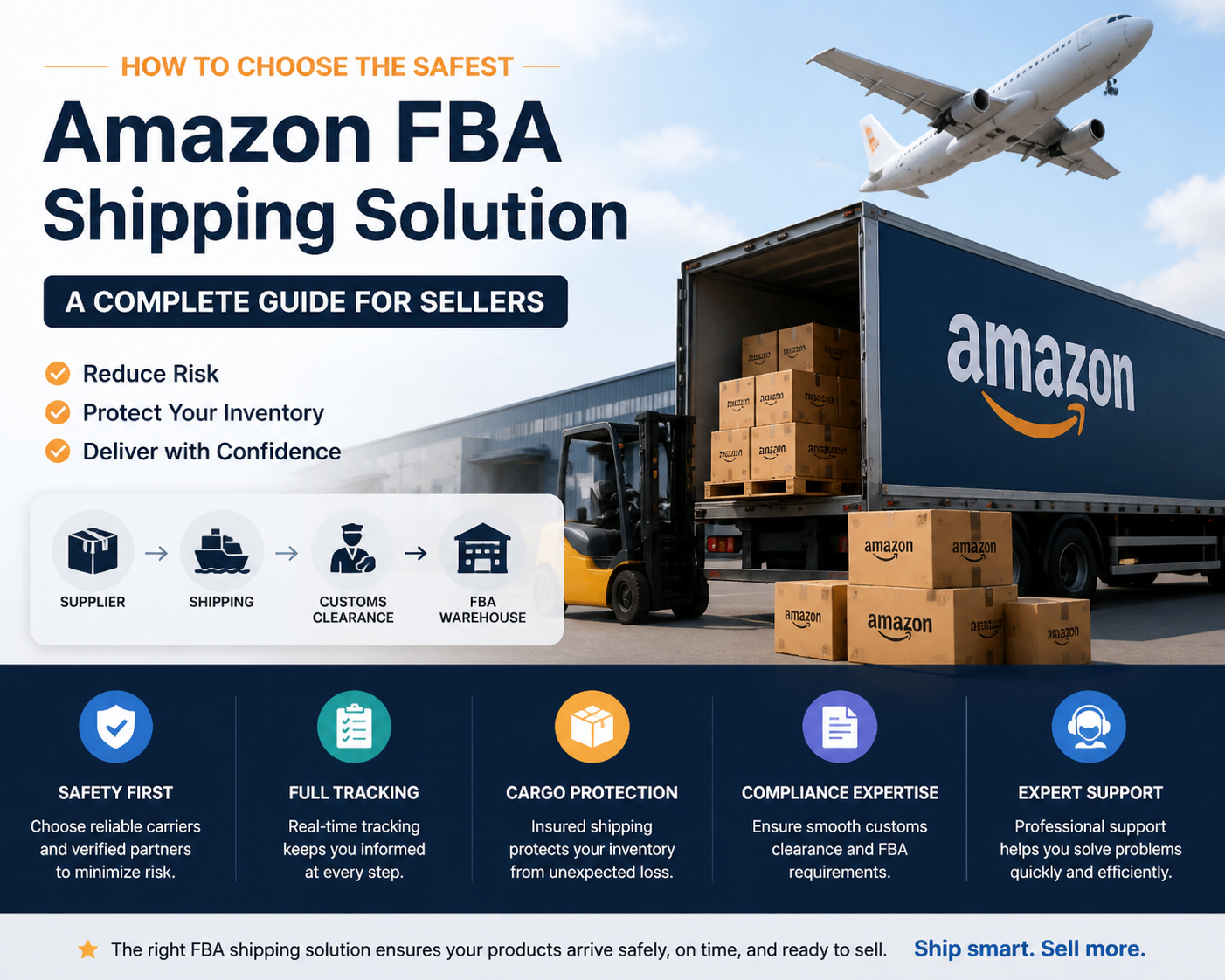
For businesses selling on Amazon, choosing the right FBA shipping solution is critical. FBA (Fulfillment by Amazon) allows sellers to store products in Amazon’s warehouses,
while Amazon handles storage, packing, and shipping. However, the safety of your products and the efficiency of your logistics process heavily depends on your shipping method.
Selecting the safest and most reliable FBA shipping solution can reduce risks, protect your brand, and improve customer satisfaction.
1. Understand Your Options for FBA Shipping
When it comes to FBA logistics, sellers have multiple shipping options:
- Air Freight: Fastest delivery time, ideal for small, high-value items. Air freight is generally safer due to strict handling procedures, but it is more expensive.
- Sea Freight: Economical for bulk shipments. Sea freight may have longer transit times and slightly higher risks of product damage due to handling, but with proper packaging and insurance, it is a reliable choice.
- Express Couriers (DHL, FedEx, UPS): Best for urgent shipments or small quantities. Couriers provide tracking and higher safety standards but at a higher cost per unit.
- Rail Freight: Suitable for shipments between Asia and Europe. Rail freight combines cost-effectiveness with moderate transit times and safety.
2. Key Factors to Consider for Safe FBA Shipping
To select the safest shipping solution, consider the following factors:
a. Product Type and Value
- Fragile items (glass, electronics) require specialized packaging and handling.
- High-value products should use secure shipping channels with insurance.
b. Packaging Standards
- Amazon has strict packaging guidelines. Using FBA-compliant packaging ensures fewer damages during transit.
- Bubble wrap, double-boxing, and protective inserts can significantly reduce product breakage.
c. Transit Time
- Faster shipping reduces the risk of product loss or theft.
- For seasonal products, choosing reliable air freight or express couriers ensures your inventory reaches Amazon in time.
d. Customs Clearance
- Clear documentation minimizes the risk of customs delays.
- Using experienced freight forwarders familiar with Amazon FBA requirements helps prevent fines or shipment rejection.
e. Insurance
- Consider cargo insurance, especially for sea freight.
- Insurance protects against damage, loss, or theft during international shipping.
3. Choosing the Right Freight Forwarder (FBA freight forwarder)
A professional freight forwarder is a critical partner in FBA logistics. They can:
- Optimize shipping routes for speed and cost
- Handle customs documentation
- Recommend proper packaging methods
- Provide tracking and monitoring throughout the journey
Look for forwarders with experience in Amazon FBA shipments. Verify their track record, client reviews, and safety protocols before signing a contract.
4. Packaging and Labeling for Maximum Safety
Amazon requires sellers to follow specific labeling rules. Failing to comply can result in rejected shipments. To ensure safety:
- Use Amazon FNSKU labels for all products
- Ensure barcodes are scannable and securely attached
- Use sturdy boxes that withstand stacking and transit
- Wrap individual items to prevent scratches and breakage
5. Tips for Minimizing Risk During Shipping
- Plan Ahead: Schedule shipments early to avoid rush fees and expedite handling errors.
- Use Tracking: Always choose a shipping solution that provides real-time tracking.
- Monitor Shipment: Communicate with your freight forwarder to detect potential issues early.
- Invest in Insurance: Even low-value shipments can benefit from insurance for peace of mind.
6. Cost vs. Safety: Finding the Right Balance
While the safest options are often more expensive, they can save money in the long term by preventing lost or damaged products. Consider these trade-offs:
| Shipping Method | Safety Level | Cost | Transit Time |
|---|---|---|---|
| Air Freight | High | High | 3–7 days |
| Sea Freight | Moderate | Low | 20–40 days |
| Express Couriers | High | High | 2–5 days |
| Rail Freight | Moderate | Moderate | 15–25 days |
Balancing cost with safety is key. Evaluate your product type, business scale, and shipping frequency before deciding.
7. Conclusion
Selecting the safest FBA Shipping Solution requires careful planning, proper packaging, and choosing experienced logistics partners.
By considering product type, shipping methods, insurance, and forwarder reliability, sellers can minimize risk, reduce costs related to damaged goods, and maintain Amazon compliance.
Safe and reliable FBA logistics not only protects your products but also strengthens customer trust and enhances your business reputation.