Table of Contents
Logistics from China to UK: End Port Hold Ups
1. Understanding the Root Causes of Port Hold Ups
Analyzing seasonal congestion peaks at major UK hubs like Felixstowe and London Gateway
Let’s be real—every procurement engineer worth their salt knows that Q3 and Q4 turn Felixstowe and London Gateway into absolute zoos, a veritable mosh pit of containers where the usual just-in-time fantasy gets pulverized by the sheer tonnage of Christmas stock and Black Friday madness. You see, the thing about these tidal-locked ports is that their berthing windows are narrower than a supply chain director’s patience when the factory is already two weeks late, and when you combine the post-summer surge with the inevitable autumn gales scrubbing vessel schedules, you end up with a queue of box ships that looks like a traffic jam on the M25—only wetter and infinitely more expensive. Logistics from China to UK becomes a high-stakes guessing game of which week your forty-footers actually hit the quay, because the port operators publish berthing slots with the same reliability as a broken weather vane, and the ripple effect of one missed tide can cascade into ten days of yard storage fees that nobody budgeted for.
Identifying documentation errors that trigger customs holds
Nothing kills your velocity faster than a customs officer raising an eyebrow at a mismatch between the commercial invoice and the packing list—it’s the procurement equivalent of tripping over your own shoelaces right before the finish line, and yet I’ve seen seasoned buyers wave through supplier paperwork like they’re handing out candy. The devil, as they say, is in the alphanumerics: a single transposed digit in the HS code for a pneumatic actuator versus its rubber sealing ring can land your entire consignment in the red channel, where every carton gets the white-glove treatment from HMRC examiners who have zero sense of humor about tariff classification. Let’s not forget the notorious box count discrepancy, where the packing list says 1,200 units but the bill of lading whispers 1,210, and suddenly your Logistics from China to UK pipeline grinds to a screeching halt while someone in a fluorescent vest decides whether you’re a smuggler or just sloppy.
How carrier overbooking leads to unexpected container rollovers
You’d think booking a container slot was like reserving a seat on a plane, but the ocean carriers play a game of musical chairs where they routinely oversell capacity by 15 to 20 percent, assuming someone’s cargo won’t show up—and when everyone’s cargo does show up, guess whose boxes get rolled to the next vessel? The poor sap who submitted his shipping instructions at 4:59 PM on a Friday, that’s who, and the carrier’s allocation algorithm doesn’t give a hoot about your factory closure or your customer’s drop-dead date. This practice, euphemistically called “yield management,” means your fully paid container can sit on the apron for an extra fortnight while the line prioritizes higher-margin spot freight, turning your carefully planned Logistics from China to UK into a dice roll where the house always wins. For deeper background on carrier practices, see this overview of containerization on Wikipedia.
2. Pre-Departure Checks to Minimize UK Port Delays
Verifying HS code accuracy for UK tariff classification
A lot of procurement folks treat HS codes like a boring formality, but let me tell you, the difference between 8481.80 (valves) and 8481.90 (valve parts) is the difference between a 2.7 percent duty rate and a full-blown anti-dumping investigation that ties your goods up for six months. You need to run every code through the UK Trade Tariff tool with the same obsessive attention you’d give a torque spec on a critical fastener, because the binding tariff information from HMRC is the only gospel that matters once your container hits the port. I’ve made it a rule to get a third-party classification audit for any new SKU, because the factory’s interpretation of what constitutes a “mechanical appliance” is often laughably optimistic, and the cost of that audit is peanuts compared to demurrage at Felixstowe.
Ensuring commercial invoice matches packing list and bill of lading
The unholy trinity of shipping documents—invoice, packing list, and bill of lading—must agree with the kind of boring, perfect consistency that makes accountants weep with joy, because any divergence is an engraved invitation for a customs hold. I’m talking line by line: the same item descriptions, the same unit quantities, the same net and gross weights down to the decimal, because the scanner at the port doesn’t have a sense of nuance or a “close enough” setting. When you’re managing Logistics from China to UK, one trick I’ve picked up is to build a pre-shipment audit checklist that requires the supplier to send photographic evidence of each pallet label matched against the packing list, and believe me, that extra hour of Chinese factory overtime saves three weeks of port purgatory.
Confirming UKCA or CE marking compliance before shipment leaves China
Brexit wasn’t just a political headache; it gave us the UKCA mark, which looks suspiciously like the CE mark but isn’t, and the number of procurement engineers who’ve had entire containers rejected at the border because they assumed “CE is fine for now” is frankly embarrassing. The rule is simple: if your product lands after January 1st of the relevant transition extension, you’d better have the UKCA mark physically affixed to the goods and the declaration of conformity sitting in a waterproof pouch on the outside of the container, because the port examiners will not accept a PDF you email them from your phone while standing in the rain at Dover. For Logistics from China to UK, I’ve started building compliance verification into the factory’s final inspection report, with close-up photos of the marking and a signed affidavit from the quality manager—overkill? Maybe, but my containers don’t sit. Refer to the official UK government guidance on the UKCA mark (.gov) for current requirements.
3. Selecting the Right Incoterm to Avoid Port Disputes
Why CIF shifts risk control away from procurement teams
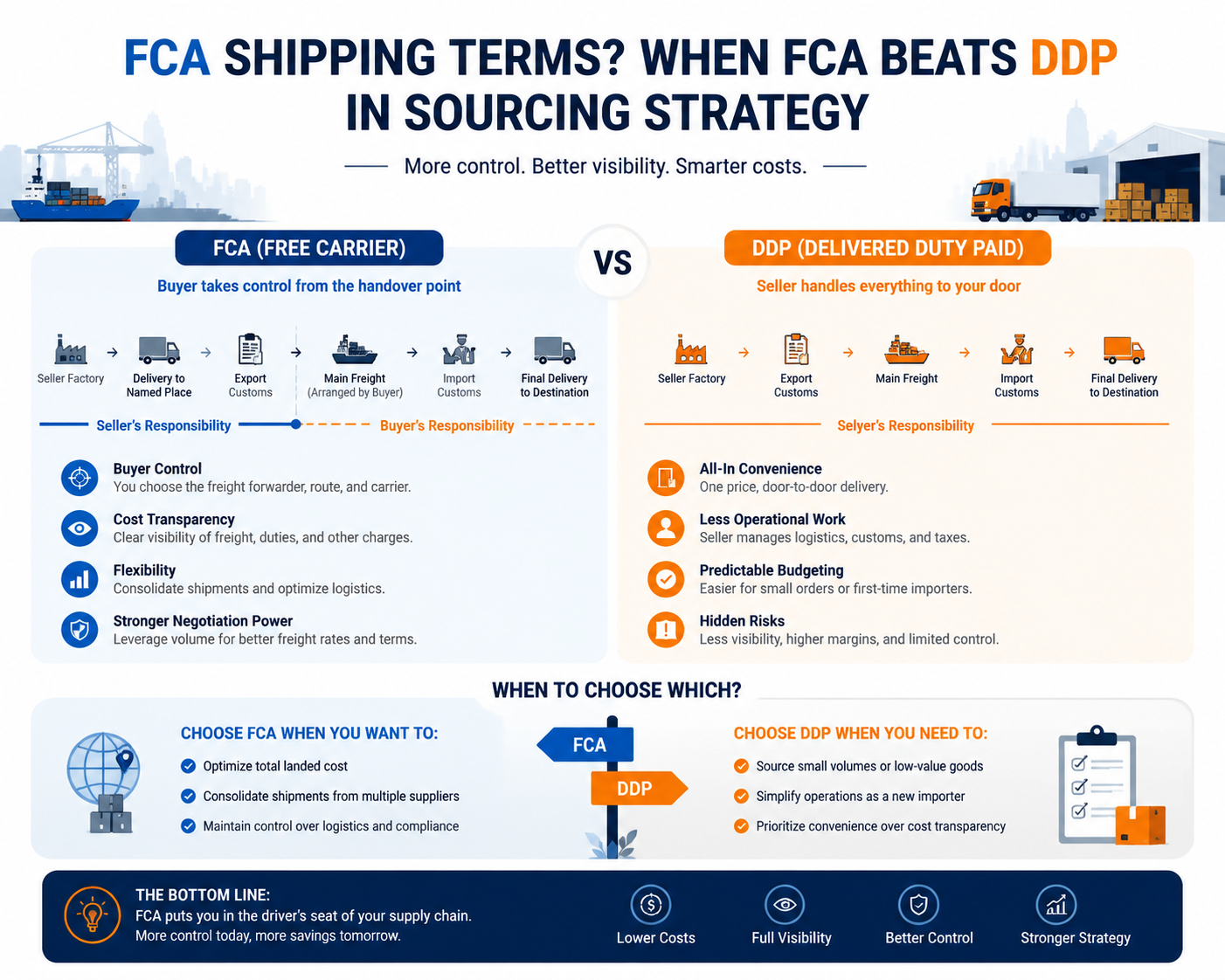
Cost, Insurance, and Freight sounds wonderfully turnkey—you pay one price, and the supplier handles everything until the goods float past the ship’s rail at the port of destination—but the dirty secret is that under CIF, the supplier controls the carrier, the routing, and the insurance claim process, which means you’re basically handing the keys to your supply chain to a factory logistics manager in Ningbo who booked the cheapest possible slot. When that vessel gets delayed or that container gets rolled, guess who has zero contractual leverage to demand priority rebooking? You, the buyer, that’s who, because the freight contract isn’t even in your name. For any serious Logistics from China to UK operation, CIF is a rookie move that abdicates control at the exact moment you need it most. Learn more about Incoterms on Wikipedia's Incoterms page.
How EXW creates unexpected demurrage liability at UK ports
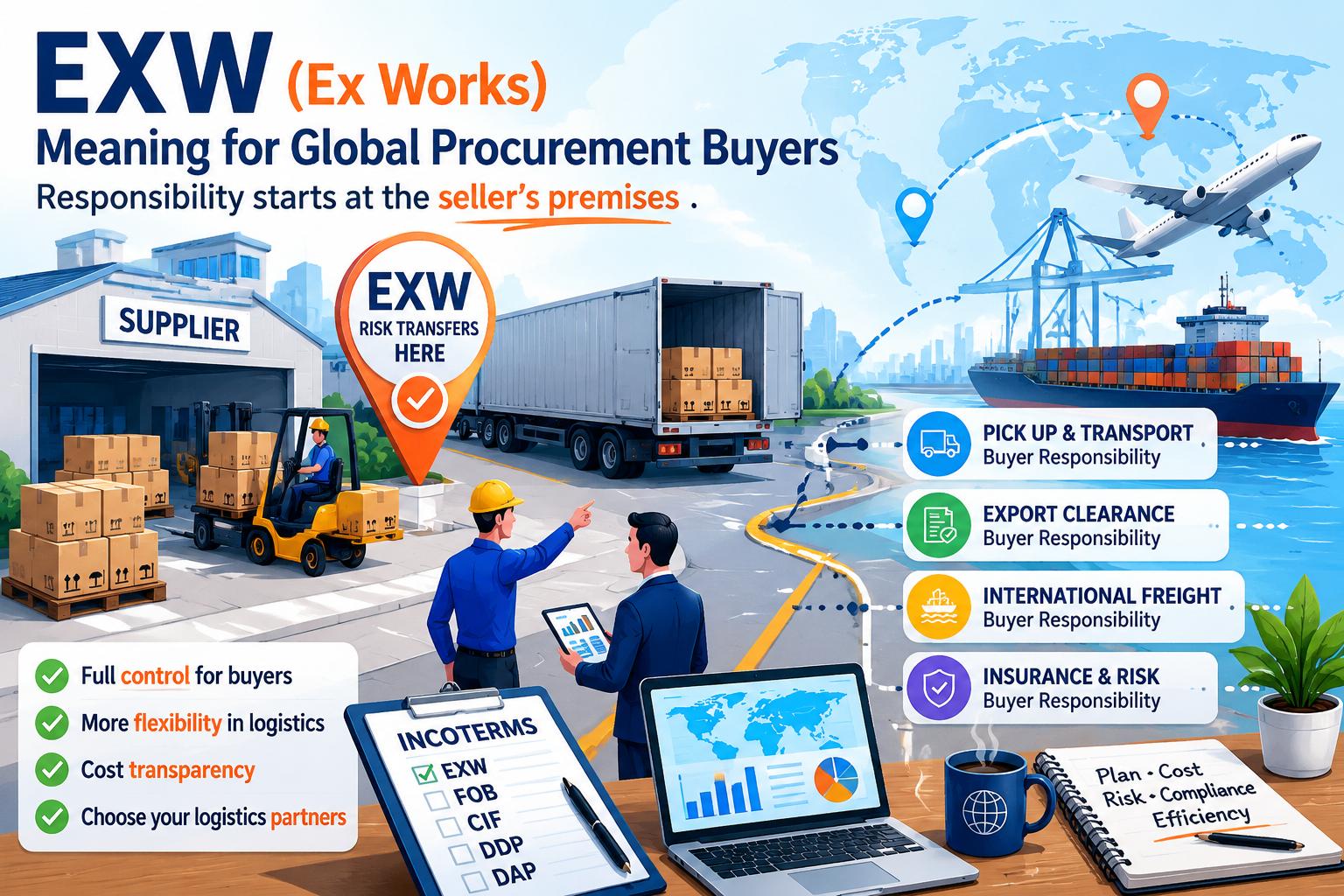
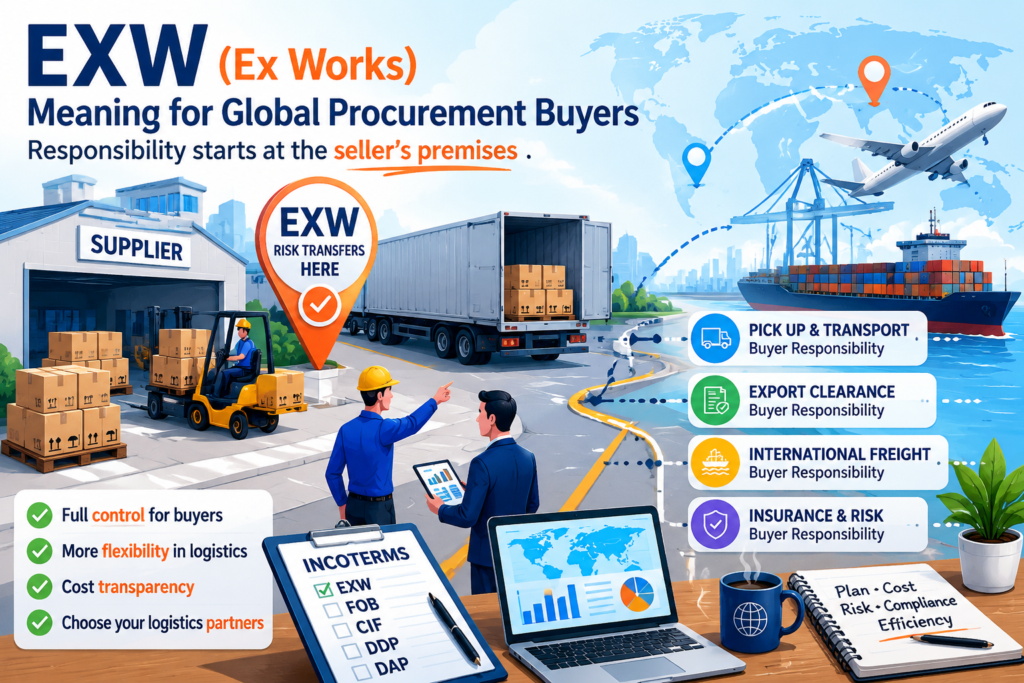
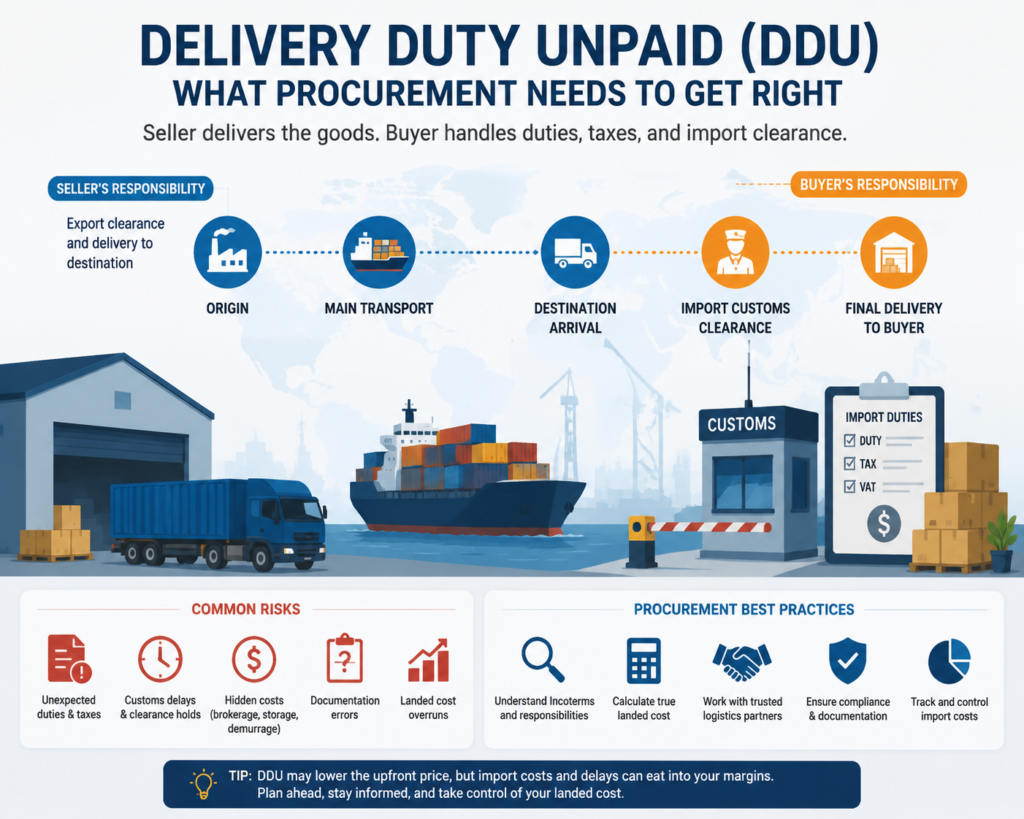
Ex Works puts the entire circus on your shoulders from the factory gate onward, which sounds like control until you realize that you’re now legally responsible for every minute of delay at the UK port, including the ones caused by the carrier you never even met. I’ve seen buyers get hit with five-figure demurrage bills because their forwarder’s local agent in Felixstowe dropped the ball on customs clearance, and since EXW transferred risk at the supplier’s dock in Shenzhen, the procurement team ate every penny of that storage fee. The colloquialism around my office is that EXW stands for “Expensive Wait,” and when you’re running Logistics from China to UK on tight margins, that’s not a joke—it’s a budget line item from hell.
The advantage of DAP for holding freight forwarders accountable until delivery
Delivered at Place is the procurement engineer’s best friend because it flips the script: the seller (or more accurately, their forwarder) owns every link in the chain until that container is sitting in your nominated UK warehouse, which means port hold ups become their problem, not your invoice. Under DAP, you don’t pay demurrage, you don’t chase customs brokers, and you don’t argue about whose fault the rail strike was—you simply refuse to sign the delivery receipt until the goods are physically inside your four walls. I’ve structured all my critical-path Logistics from China to UK contracts with DAP terms and a liquidated damages clause for any port delay exceeding 72 hours, and let me tell you, nothing sharpens a forwarder’s focus like knowing they’ll be paying your storage fees out of their margin.
4. Cargo Insurance Strategies During Port Congestion
What port hold up clauses are missing in standard marine policies
Most off-the-shelf marine cargo policies cover physical loss or damage—theft, water ingress, collision—but they conspicuously ignore the financial hemorrhage of a container stuck for weeks in a congested port, where the goods are perfectly fine but your retail window is closing fast. I’ve read policies so full of exclusions that they wouldn’t pay out if a crane dropped your box directly onto the customs officer’s desk; the magic phrase you need is “delay cover” or “loss of market,” and nine times out of ten, it’s not included unless you specifically request it as a bought-in endorsement. When you’re deep in Logistics from China to UK, you need a policy that defines a “port hold up” as a named peril, with a clear trigger—say, five consecutive days without movement—and a per-day indemnity that actually covers your warehousing and air-freight substitution costs.
How to claim for storage fees during extended customs exams
Here’s a scenario that keeps me up at night: HMRC decides to do a full physical inspection of your container, which takes three weeks because the port’s examination shed is backlogged to the rafters, and the terminal operator charges you £150 per day for “storage during exam.” Standard marine insurance will wave its hands and say “that’s a customs risk, not an insured peril,” unless you have a tailored clause that explicitly extends coverage to examination-induced detention. My workaround has been to request an “additional charges extension” from the underwriter, naming specific fees—terminal storage, chassis rental, and administrative exam fees—and capping my out-of-pocket exposure at £500 per day. Without that, your Logistics from China to UK budget becomes a black hole where port fees disappear without a trace.
Why delay cover requires explicit negotiation with underwriters
The underwriter’s default position is that delay is uninsurable because it’s too predictable and too easy to fake, which is exactly why you need to walk into that negotiation with hard numbers: your average landed cost per day, your contractual penalty for late delivery to the customer, and your historical port hold-up frequency. I’ve found that a “time element” endorsement—essentially business interruption for cargo—is available if you’re moving at least 50 containers per year, and the premium uplift is usually 15 to 20 percent of the base rate. For high-stakes Logistics from China to UK in peak season, that uplift is cheap money compared to the alternative of explaining to your CFO why the Easter promotion arrived in time for Halloween.
5. Digital Tracking Tools That Predict Port Disruptions
Using terminal live dashboards to see real-time vessel queues
Gone are the days of refreshing a carrier’s tracking page like a nervous gambler; the smart procurement engineer now feeds directly into port community systems like Portcentric or Inttra, which give you live vessel position data, estimated berthing windows, and current queue lengths at specific terminals. Felixstowe’s “Vessel Arrival” dashboard, for example, shows you not just the ETA but the number of vessels ahead of yours and the average waiting time over the last 72 hours, which lets you make proactive decisions about diverting to a secondary port before your container even leaves Shanghai. Integrating these feeds into your Logistics from China to UK visibility platform means you stop reacting to delays and start anticipating them.
Setting automated alerts for berthing delays at Southampton
Why check manually when you can configure threshold alerts that ping your team the moment a vessel’s estimated berthing time slips by more than six hours? Tools like MarineTraffic and VesselFinder allow custom geofencing around the Nab Tower approach channel, so you receive an SMS the second your ship misses its pilot boarding window. I’ve set up a rule that any delay exceeding 24 hours automatically triggers a cross-functional call with my forwarder and the UK warehouse team, because in Logistics from China to UK, the cost of silence is exponential—every hour of uncertainty means you’re booking trucking slots you might cancel and paying overtime you might have avoided.
Integrating forwarder tracking into internal procurement systems
The biggest mistake I see is treating forwarder tracking as a separate silo, when in reality you need to pipe that data directly into your ERP or procurement dashboard alongside PO statuses and inventory projections. Using API connections from forwarders like Kuehne+Nagel or DSV, you can automatically flag any container that hasn’t had a “discharged” event within 48 hours of berthing, which is often the first sign of a port hold up that no one is reporting. When your Logistics from China to UK operates on a unified visibility layer, the exception management becomes almost boringly routine—and boring is exactly what you want from a supply chain.
6. Customs Broker Selection Criteria for UK Ports
Verifying CHIEF to CDS migration readiness of local agents
The old CHIEF system (Customs Handling of Import and Export Freight) is dead and buried, and any broker still sentimental about it is a walking liability, because the new Customs Declaration Service (CDS) has different data fields, different validation rules, and a much less forgiving approach to errors. I ask every prospective broker for their CDS error rate and their average “first pass acceptance” percentage, and if they can’t tell me within two decimal points, they’re off the list. For Logistics from China to UK in the post-Brexit era, CDS readiness isn’t a nice-to-have—it’s the minimum ticket to entry, because a broker still learning the system will cost you days of clearance delays while they figure out why the “country of origin” field keeps rejecting.
How bonded warehouse access reduces hold up impact
A bonded warehouse is essentially a customs limbo where your goods can sit without paying duty until you’re ready to clear them, which is a lifesaver when a port hold up means your container is stuck but you don’t want to own the VAT yet. The trick is finding a broker who has direct access to a bonded facility within the port perimeter, so they can literally drag your container from the quay into the warehouse in one move, stopping the demurrage clock and giving you weeks of breathing room. In my Logistics from China to UK playbook, bonded warehouse access is non-negotiable for any shipment over £50,000 in value, because the ability to decouple physical arrival from fiscal clearance is pure strategic gold.
Language and time zone alignment with Chinese suppliers
You wouldn’t believe how many port delays trace back to a UK customs broker trying to clarify a packing list discrepancy with a Chinese factory at 3 AM GMT, only to get an auto-reply about the Mid-Autumn Festival. I now insist that my UK broker either has Mandarin-speaking staff or a formal liaison agreement with a Chinese logistics partner who can chase documentation in the Shenzhen time zone during normal business hours. When you’re managing Logistics from China to UK, the handshake between the broker and the supplier’s documentation team needs to be seamless enough that a misdeclared weight gets corrected in hours, not days—and that only happens when everyone speaks the same language, literally and figuratively.
7. Container Type Choices That Speed UK Unloading
Why oversized pallets cause forklift bottlenecks at depots
A pallet that exceeds 1.2 meters by 1.0 meters might still fit inside a standard forty-foot container, but it won’t fit through the door of the average UK depot’s reach truck aisle, and suddenly your entire unload turns into a hand-stacking nightmare that takes six hours instead of 45 minutes. I’ve seen procurement specs call for “custom pallets” that save 3 percent on internal cube utilization, only to cost 30 percent in extended port handling fees because the depot’s equipment wasn’t designed for non-standard footprints. For efficient Logistics from China to UK, stick to ISO-spec pallets and let the cubic meter optimization happen inside the container, not by reinventing the base.
The cost trade off of airfreight containers via multimodal solutions
Here’s a counterintuitive fact: a lightweight, high-value shipment might actually save you money by shipping in an airfreight-compatible container (an LD3 or AKE) via a sea-air hub like Dubai, where it comes off the vessel in a format that can be loaded directly onto a cargo plane without repalletizing. The sea leg gets you most of the way at ocean rates, and the final air leg buys you speed through the UK port because air cargo has its own dedicated customs channel with virtually no queues. In the chaos of Logistics from China to UK during peak port congestion, this multimodal hybrid has saved my neck more than once, with total transit of 12 to 14 days versus 40-plus days for all-water.
Reefer container pitfalls during temperature inspections at Dover
Refrigerated containers are a special kind of headache because Dover’s Border Control Post loves to pull them for temperature integrity checks, which involve plugging the reefer into a shore-side power monitor and leaving it for 24 hours while the data logger records every temperature fluctuation from the voyage. If your setpoint was -18°C and the data shows any excursion above -15°C, congratulations—you’ve just bought yourself a full inspection, product sampling, and potentially a destruction order if the ice cream or pharmaceuticals are compromised. My rule for Logistics from China to UK with reefers is to build in an extra 72 hours of buffer and to send a backup USB drive with the temperature log inside the driver’s cab, because waiting for the port to extract the data from the unit’s own memory is a guaranteed multi-day slog.
8. Managing Demurrage and Detention Charges Effectively
Negotiating free time extensions before vessel arrival
The standard free time at UK ports is typically five to seven calendar days, after which demurrage kicks in at rates that escalate from £50 to £150 per day depending on the terminal and how badly they want to punish you. But here’s the move: you can negotiate an extension to 14 days before the vessel even arrives, simply by asking your forwarder to request a “pre-arrival free time concession” from the terminal operator, especially if you’re a repeat customer moving consistent volume. In my Logistics from China to UK contracts, I now write in a required free time of 10 days minimum, and I’ve found that operators like London Gateway will agree just to lock in your business, because empty space on the quay doesn’t pay their bills.
Splitting cost responsibility with suppliers using proforma invoices
Demurrage charges are often a proxy war between buyer and supplier, with each side claiming the delay was the other’s fault—so I’ve started using a proforma invoice that explicitly allocates demurrage responsibility based on who controlled the root cause. If the delay stems from a shipping instruction error made by the supplier’s forwarder, the supplier pays; if it’s a customs issue caused by incomplete buyer-provided data, the buyer pays. Getting this signed before the container departs turns what could be a month-long dispute into a simple accounting entry, and it forces both parties to take Logistics from China to UK seriously because there’s real money on the line.
Appealing unfair charges from port terminal operators
Terminal operators count on you not bothering to appeal a demurrage invoice under £500, because the administrative hassle of contesting it feels worse than just paying and moving on, but that’s a sucker’s game. The UK’s Port Terminal Regulations give you the right to a formal dispute process, and I’ve successfully overturned charges by providing vessel GPS data showing that my container was available for pickup but the terminal’s own straddle carrier shortage made retrieval impossible. The key is to document everything—screenshots of the appointment system, email timestamps, photos of the queue—and to submit your appeal within 14 days. When Logistics from China to UK throws you a bad hand, sometimes a well-written dispute letter is the only tool you need. For a detailed overview of UK port governance, see the British Ports Association (.org) industry resource.
9. Port Hold Up Communication Protocols
Who to contact first when a container misses a booking slot
The instinct is to call the freight forwarder, but the forwarder’s first action will be to call the terminal’s customer service line anyway, so you save time by calling the terminal directly yourself—yes, you, the procurement engineer. Every major UK port has a dedicated “berth operations” phone number and a named duty manager for each shift, and building a relationship with that person before you have a problem is the single highest-ROI activity in logistics. When a hold up hits your Logistics from China to UK, I pick up the phone to the terminal manager first, then text my forwarder with the update, because the person who controls the crane queue has more useful information than anyone in a remote customer service center.
Creating an escalation matrix for customs vs. terminal issues
Not all hold ups are created equal, and your response needs to be surgical: if the issue is customs-related, you escalate to your broker’s compliance director and HMRC’s trader support team; if it’s terminal congestion, you escalate to the port’s commercial director and your forwarder’s regional vice president. I keep a laminated escalation matrix on my office wall that lists each potential failure mode, the primary contact, the secondary contact, and the required response time, and I review it with my team every quarter. The difference between a two-day delay and a two-week delay in Logistics from China to UK is often just knowing which neck to squeeze and how hard.
Weekly reporting templates for freight forwarder performance
You can’t manage what you don’t measure, so I’ve standardized a weekly forwarder scorecard that tracks five metrics: on-time berthing percentage, demurrage incidents, customs hold frequency, communication response time, and cost variance. Each forwarder gets the same template every Friday, and I require a root-cause analysis for any metric that falls below 95 percent. This turns Logistics from China to UK from an art into a science, and it gives you the data to have an honest conversation about whether the problem is the port, the carrier, or the forwarder’s own operations.
10. Alternative UK Entry Points to Bypass Congestion
Comparing transit times via Immingham vs. Felixstowe
Felixstowe handles about 40 percent of UK container volume, which makes it the obvious first choice but also the most congested, while Immingham on the Humber Estuary processes a fraction of that volume but adds a rail leg to most inland destinations. I’ve run the numbers: a container bound for Manchester takes 14 days via Felixstowe plus a two-day truck, but 12 days via Immingham plus a three-day rail, so the total transit is roughly a wash—except Immingham’s berthing delay averages 0.8 days versus Felixstowe’s 4.2 days during peak season. In Logistics from China to UK, sometimes the scenic route through a secondary port is actually the express lane.
Using Bristol for southwest distribution during southeast gridlock
When the southeast ports turn into a parking lot, Bristol Port’s deep-water berths and uncongested road links to the M4 and M5 become a procurement engineer’s secret weapon, especially for goods destined for Cornwall, Devon, or South Wales. The catch is that Bristol has limited direct services from China, so you usually need to transship through Rotterdam or Antwerp first, adding about 48 hours of sea time but potentially saving two weeks of Felixstowe queueing. For my Logistics from China to UK network, I’ve pre-qualified Bristol as a diversion port for any shipment with a value-to-weight ratio above £20 per kilogram, because the math on avoiding demurrage and late penalties works out every time.
Rail freight from Felixstowe to Birmingham inland terminal
Here’s a trick that too few buyers use: instead of trucking out of Felixstowe directly, you book a rail slot to the Birmingham Intermodal Freight Terminal, which moves your container from the port’s quayside to a rail siding in about 90 minutes, bypassing the truck gate queues entirely. The rail terminal has its own customs clearance facility and lower storage rates than the port, so even if your container sits in Birmingham for a few days, you’re paying half the demurrage. Integrating rail into your Logistics from China to UK strategy turns a congested port into just a fast-transfer point rather than a long-term parking lot.
11. Post-Brexit Regulatory Traps at UK Borders
Why rules of origin declarations now require supplier audits
Brexit severed the UK from the EU’s preferential origin system, which means your Chinese supplier’s declaration of “EU origin” is now worthless, and you need a UK-specific statement of origin that traces every component back to its country of manufacture. I’ve had entire containers held because the supplier used a generic “originating in China” statement when the steel came from South Korea and the electronics from Taiwan, triggering a full rules-of-origin verification that took six weeks. For any serious Logistics from China to UK, you need to audit your top 20 suppliers’ bill of materials and build a country-of-origin database that HMRC can verify in hours, not months.
How GVMS (Goods Vehicle Movement Service) affects roll-on roll-off ports
GVMS is the UK’s digital check-in system for roll-on roll-off ports like Dover and Eurotunnel, and it requires a goods movement reference number to be linked to the vehicle before it even enters the port perimeter. If your haulier forgets to generate that reference, or if there’s a mismatch between the reference and the customs declaration, the system simply rejects the truck at the barrier, sending it to the back of a queue that can stretch for miles. I’ve built a mandatory GVMS checklist into every Logistics from China to UK shipment that uses a RoRo port, and I require a screenshot of the confirmed check-in before the truck leaves the forwarder’s depot. Read the official GVMS guidance on GOV.UK (.gov) for full technical details.
The risk of double VAT assessment during clearance holds
Here’s a nightmare: your container is held at the port for a routine inspection, and while it’s sitting there, HMRC issues a VAT assessment based on the declared value, which you pay to get the release. Then, when the inspection finally happens, HMRC decides the value should be higher, issues a second VAT assessment, and refuses to refund the first until you go through a formal appeal process that takes nine months. The workaround is to request a “post-clearance deferment account” that lets you pay VAT on a monthly statement rather than per shipment, so you’re not floating double assessments. In Logistics from China to UK, managing cash flow is as important as managing transit time, and double VAT is a cash flow killer.
12. Supplier Collaboration to Reduce Port Risk
Setting cutoff times for late data submission
The single biggest preventable cause of port holds is the supplier sending the final packing list 48 hours after the vessel sails, so I’ve contractually mandated a cutoff: all shipping documents must be uploaded to our shared portal no later than 24 hours before the container gates into the port of loading. If the supplier misses the cutoff, they pay a penalty equal to 50 percent of estimated demurrage at the destination, and I’ve found that nothing motivates a factory logistics manager like hitting their own pocketbook. For Logistics from China to UK, data timeliness is a non-negotiable performance metric, right up there with product quality and on-time delivery.
Auditing Chinese factory packing practices for UK port safety rules
UK port safety rules require that any container with mixed goods has a loading plan diagram showing exactly which carton sits where, because the terminal’s scanner needs to reconcile the x-ray image with the declared manifest. I’ve seen suppliers toss things in randomly, then produce a fake packing list that bears no resemblance to reality, leading to a failed scan and a manual unpack that costs three days. My audit checklist now includes a requirement that the factory photograph every layer of the container during loading, and that those photos match the sequence on the packing list. When Logistics from China to UK depends on trust, verify with pictures.
Contractual penalties for incorrect shipping marks
Shipping marks—those seemingly trivial combinations of PO number, carton count, and destination code—are actually the key that unlocks automated scanning at UK ports, and an incorrect mark can send your container to the manual inspection shed faster than you can say “demurrage.” I’ve added a liquidated damages clause that charges the supplier £100 per carton for any shipping mark error found at the destination, which has reduced our error rate from 12 percent to under 1 percent in two quarters. It sounds draconian, but in the high-stakes world of Logistics from China to UK, procurement engineers need suppliers who sweat the small stuff.
13. Cost Forecasting During Extended Port Delays
Calculating daily storage rates at different UK terminals
You can’t forecast what you can’t quantify, so I’ve built a simple spreadsheet that pulls current storage tariffs from each major UK terminal—Felixstowe, Southampton, London Gateway, Liverpool, Immingham, Bristol—and calculates the daily bleed for a forty-foot container at each facility. The rates vary wildly: Southampton’s peak-season storage is £165 per day after free time, while Liverpool charges only £85, so the cost of a one-week delay ranges from £595 to £1,155 depending on where you’re stuck. For any Logistics from China to UK budget, that variance matters, and knowing it lets you make rational decisions about diverting versus waiting.
How fuel surcharges escalate when vessels idle off ports
When a vessel is stuck in a queue outside Felixstowe, it doesn’t turn off its engines—it drifts, using auxiliary power to run refrigeration, lighting, and navigation, all of which burns marine gas oil that the carrier will pass back to you as a “port congestion fuel surcharge.” I’ve seen surcharges add 8 percent to the base freight rate for a ship that waited seven days, and because the surcharge is calculated as a percentage of the freight, it disproportionately hits higher-value shipments. In your Logistics from China to UK cost model, always build in a “congestion contingency” line item equal to 15 percent of the ocean freight, because that’s roughly what you’ll pay if the port turns into a parking lot.
Budgeting for chassis shortages after a hold up ends
Here’s a hidden cost that gets everyone: the port hold up finally ends, you rush to arrange pickup, and there are no chassis (the wheeled frames that carry containers) available because every other impatient buyer had the same idea. The terminal then charges you a “chassis split fee” to lift the container off its stack and onto a waiting truck bed, which can run £200 to £400 per move. I now include a “chassis availability buffer” of 48 hours in my Logistics from China to UK schedule, and I’ve negotiated a fixed chassis split rate with my primary haulier so I’m not at the mercy of spot pricing.
14. Legal Recourse for Freight Forwarder Negligence
What proof is needed to claim for misdeclared transit times
When a forwarder quotes 35 days and it takes 55, you need more than a disappointed email—you need a contemporaneous log of daily updates, screenshots of the carrier’s tracking system, and a timeline showing when you first notified the forwarder of potential delay. I use a standard “transit deviation report” that I update every 48 hours during any hold up, and I send it to the forwarder’s legal notice address, creating a paper trail that any small claims court will accept as evidence. For Logistics from China to UK, the forwarder’s standard terms will try to cap liability at the freight charges, but misrepresentation of transit time can be argued as a breach of contract that voids that cap.
Small claims court limits for cross-border logistics disputes
The UK’s small claims track goes up to £10,000, and the process is surprisingly straightforward even for international disputes, because you can file online using Money Claim Online (MCOL) and serve the forwarder at their UK registered office. I’ve successfully recovered £4,800 in demurrage from a forwarder who claimed “port congestion” but whose own emails showed they forgot to submit the customs entry for five days. The key is to keep your claim below the £10,000 limit and to attach a simple chronology of events, because the judge won’t read a 50-page exhibit. In Logistics from China to UK, the threat of a small claims filing is often enough to make a forwarder settle, because defending it costs them more than paying you.
Using BIFA (British International Freight Association) arbitration clauses
Most reputable UK forwarders are BIFA members, and BIFA’s standard trading conditions include an arbitration clause that is faster and cheaper than court—typically 90 days from filing to award, with costs capped at £5,000. I’ve started inserting a clause in my forwarder appointment letters that explicitly adopts BIFA arbitration for any dispute under £25,000, and I’ve found that forwarders agree because they also want to avoid court. When Logistics from China to UK goes sideways, arbitration gives you a binding decision without the circus of a trial, and the BIFA panel is made up of industry veterans who actually understand what a port hold up means. Learn about BIFA’s role at BIFA’s official website (.org).
15. Emergency Cargo Recovery Plans After Port Holds
Splitting shipments into smaller LCL (Less than Container Load) batches
When a forty-foot container is stuck indefinitely, one recovery tactic is to ask the forwarder to “break bulk” at the port—open the container, pull out the most urgent pallets, and ship them via LCL or even air freight while the rest waits. The port will charge a “strip and repack” fee of about £300, and the LCL onward move might be £500, but that’s cheap compared to losing a customer order worth £20,000. For Logistics from China to UK, I’ve pre-approved this “partial recovery” protocol for any shipment where the landed value exceeds £50,000, because sometimes cutting your losses on the slow boat is the fastest way to keep your production line moving.
Air-sea solutions via Dubai or Doha during rail strikes
During the 2023 rail strikes that paralyzed Felixstowe’s inland connections, I rerouted a critical container through Dubai: it came by ocean from Shanghai to Jebel Ali (18 days), then flew as air cargo on a 777 freighter from Dubai to East Midlands Airport (24 hours), completely bypassing the UK’s congested ports and striking rail network. The air-sea hybrid cost 3 times all-water but was still 40 percent cheaper than direct air freight, and the total transit was 22 days versus an indefinite wait at Felixstowe. In your Logistics from China to UK playbook, always keep a list of multimodal hubs like DXB and DOH that can act as pressure relief valves when the UK port system seizes up.
Temporary warehousing near port of arrival for partial releases
Instead of letting a held container sit on the port’s expensive storage pad, you can arrange for a “customs supervised transfer” to a nearby temporary warehouse, where the goods can be inspected and partially released while the investigation continues. The warehouse charges a daily rate that’s usually half of the port’s demurrage, and they often have on-site customs officers who can clear the non-disputed portion of the shipment within hours. I’ve built relationships with three warehouses within five miles of Felixstowe specifically for this purpose, and they’ve turned what could have been month-long holds into week-long inconveniences in my Logistics from China to UK operations.
16. Long-Term Procurement Strategy to Avoid Port Holds
Building dual-port redundancy into supplier routing guides
No single port should ever be your only option, so I’ve rewritten my supplier routing guides to require that every shipment designate a primary UK port and a secondary port, with carrier bookings made for both and the final call decided 48 hours before arrival based on real-time congestion data. This adds about 2 percent to freight costs because you’re holding two provisional bookings, but it has reduced our average port hold duration from 9 days to 2 days over the last 18 months. For Logistics from China to UK, redundancy isn’t waste—it’s insurance, and the premium is laughably cheap compared to the alternative.
Quarterly reviews of UK port operator performance data
I treat port operators like any other supplier, which means a quarterly business review where we look at their berthing reliability, container move per hour rates, and demurrage claim frequency. The data is publicly available through the UK Major Ports Group’s performance dashboard, and I’ve found that naming specific terminals in our reviews— “Felixstowe’s berthing reliability fell to 72 percent last quarter, while Southampton held at 88 percent”—creates a healthy competitive tension. When Logistics from China to UK becomes a data-driven function, you stop guessing and start directing volume toward the ports that actually perform. For benchmarking, consult the UK government port freight statistics (.gov).
When to shift to stock buffering in Midlands logistics parks
Sometimes the best way to avoid port holds is to stop needing the port altogether for your critical items, which means building a buffer stock in a Midlands logistics park—say, a 6-8 week supply of your top 20 SKUs sitting in a bonded warehouse near Birmingham or Northampton. The carrying cost is real, typically 15-20 percent of inventory value per year, but it decouples your production schedule from the whims of Felixstowe’s crane operators. In my Logistics from China to UK strategy, I’ve moved 30 percent of our volume to buffer stock, and the reduction in expedited freight and demurrage has more than justified the warehousing expense.