Table of Contents
The Purchase Engineer’s Blueprint for Mastering Logistics from China to Switzerland
A granular deep dive into supply chain control, freight economics, and procurement tactics across one of the world's most demanding corridors.
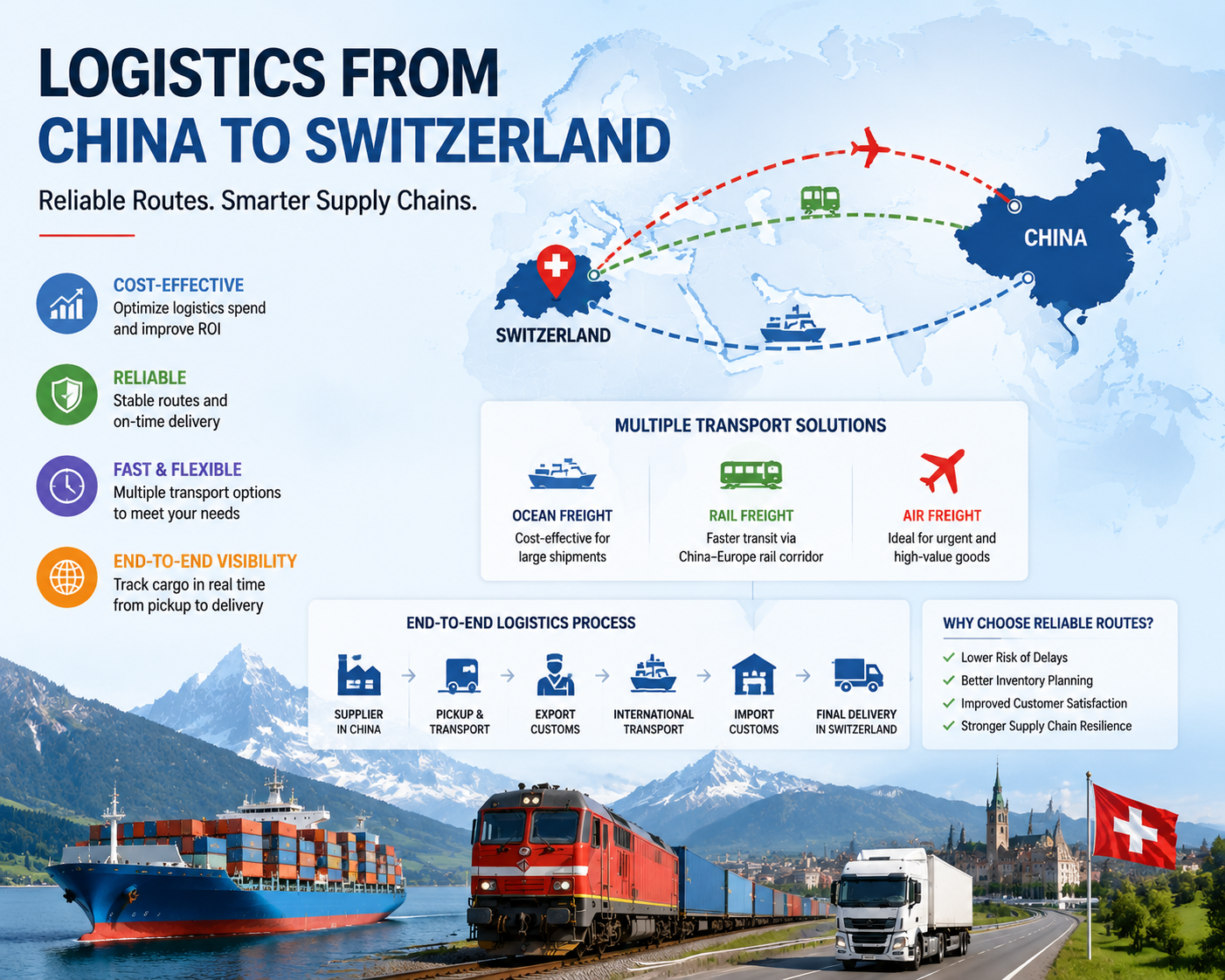
When procurement mandates demand granular oversight of cross-border material flows, few corridors test operational mettle quite like the transcontinental bridge from the Pearl River Delta to the Alpine confederation. For those of us elbows-deep in supply chain control, Logistics from China to Switzerland isn’t merely a line item—it’s the fulcrum upon which inventory turns, production schedules, and stakeholder sanity balance. The strategic importance for global procurement teams cannot be overstated; we’re talking about a lifeline that directly impacts landed cost, risk exposure, and the agility to respond when a Zurich-based assembly line screeches to a halt. Key trade lanes—predominantly Shanghai to Basel via Rotterdam, or Nansha to Geneva through the Med—handle staggering shipping volumes, with over 150,000 TEUs annually moving just in containerized freight, not counting the high-value air cargo that pulses through Zurich Airport. Cost and reliability considerations constantly play tug-of-war: a 40-foot container might set you back $4,500 in slack season but balloon to $12,000 during peak, while reliability hinges on carrier schedule integrity, which has been known to go sideways faster than a Swiss yodeler on a caffeine bender.
1. Overview of Logistics from China to Switzerland Supply Chain Control
1.1 Strategic importance for global procurement teams
For global procurement teams, maintaining control over Logistics from China to Switzerland means directly influencing production continuity across industries like medtech, precision engineering, and pharmaceuticals. With Switzerland ranking among the most competitive industrial nations, any disruption in inbound freight from China creates cascading delays that erode margins and brand reputation. The ability to orchestrate this corridor efficiently separates resilient operations from those that constantly chase expedited air freight at panic prices.
1.2 Key trade lanes and shipping volumes
Primary maritime arteries connect the Chinese mega-ports of Shanghai, Ningbo, and Shenzhen to European gateways like Rotterdam, Hamburg, and the Adriatic hub of Koper. From there, multimodal solutions feed into Basel or Geneva. Over 150,000 TEUs plus substantial rail and air tonnage move annually, underlining the corridor’s criticality. Learn more about global trade metrics at the World Trade Organization (WTO).
1.3 Cost and reliability considerations
Cost volatility remains the purchase engineer’s nemesis. Spot rates for a 40ft container from Shanghai to Rotterdam fluctuated wildly in recent years, while schedule reliability—measured by on-time arrival at Swiss inland terminals—rarely exceeds 65% during peak seasons. Balancing the two demands rigorous contract management and modal diversification.
2. End-to-End Supply Chain Structure
2.1 Supplier coordination in China
Peeling back the onion on the end-to-end supply chain reveals a Rube Goldberg-esque apparatus where friction loves to hide. Supplier coordination in China is the first minefield—you’ve got tier-2 component makers in Zhejiang who speak only Mandarin and operate on guanxi rather than purchase orders, so deploying a local sourcing agent with technical chops is non-negotiable.
2.2 International freight forwarding network
The international freight forwarding network then takes the baton, typically via triad structures: a Chinese origin forwarder handling export customs and warehousing, a European gateway partner managing transshipment at hubs like Hamburg or Antwerp, and a Swiss-based logistics specialist orchestrating final mile.
2.3 Final distribution within Switzerland
Final distribution within Switzerland presents its own peculiarities; the country’s three linguistic regions and cantonal peculiarities mean that a warehouse in Lupfig might serve German-speaking Basel perfectly but leave French-speaking Lausanne high and dry, forcing many procurement teams to maintain dual distribution nodes near Olten and Morges. It’s a whole kettle of fish that demands preemptive coordination.
3. Procurement Challenges in China–Switzerland Logistics
3.1 Fragmented supplier communication
Let’s get real about the procurement challenges that keep us up at night, staring at spreadsheets and cursing under our breath. Fragmented supplier communication is the bane of existence—you might have five vendors in five different Chinese industrial parks, each using their own ERP system (if they’re fancy) or WeChat voice notes (if they’re not), which creates a data silo nightmare when you’re trying to consolidate a full container load.
3.2 Customs complexity and compliance gaps
Customs complexity and compliance gaps are another beast entirely; Switzerland’s status outside the EU customs union means you’re navigating both Chinese export declarations and Swiss import protocols, with potential pitfalls around certificates of origin, preferential duty rates under the China-Switzerland FTA, and the dreaded random inspection that ties up your cargo for a fortnight. For official guidance, consult the Swiss Federal Office for Customs and Border Security.
3.3 Unpredictable transit disruptions
Unpredictable transit disruptions—think Yangtze River fog grounding barges, or the Gotthard Base Tunnel closing for maintenance—have a nasty habit of turning your just-in-time delivery into a just-too-late debacle, forcing procurement engineers to build in lead time buffers that tie up working capital.
4. Incoterms Selection for Supply Chain Control
4.1 DDP vs DAP decision impact
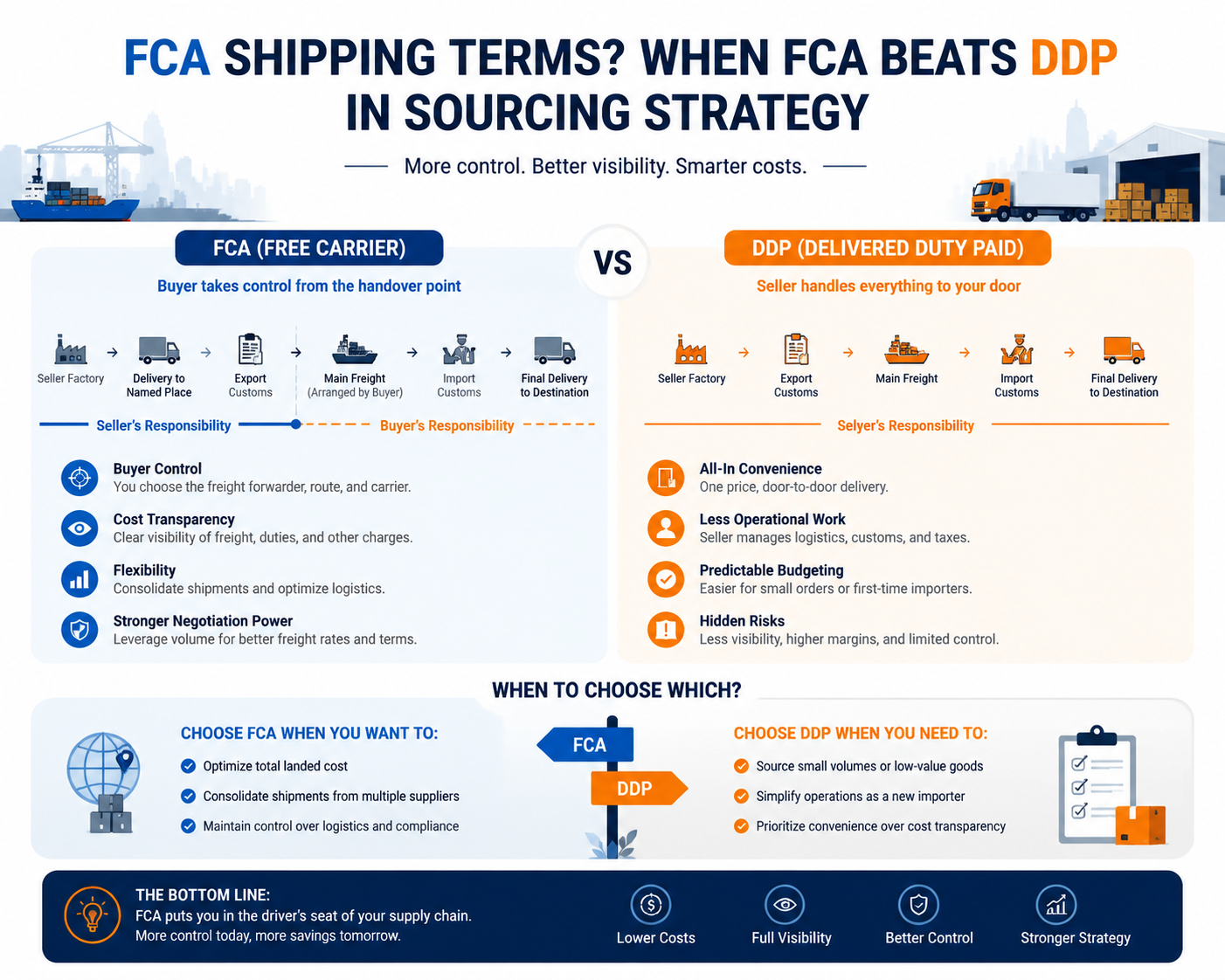
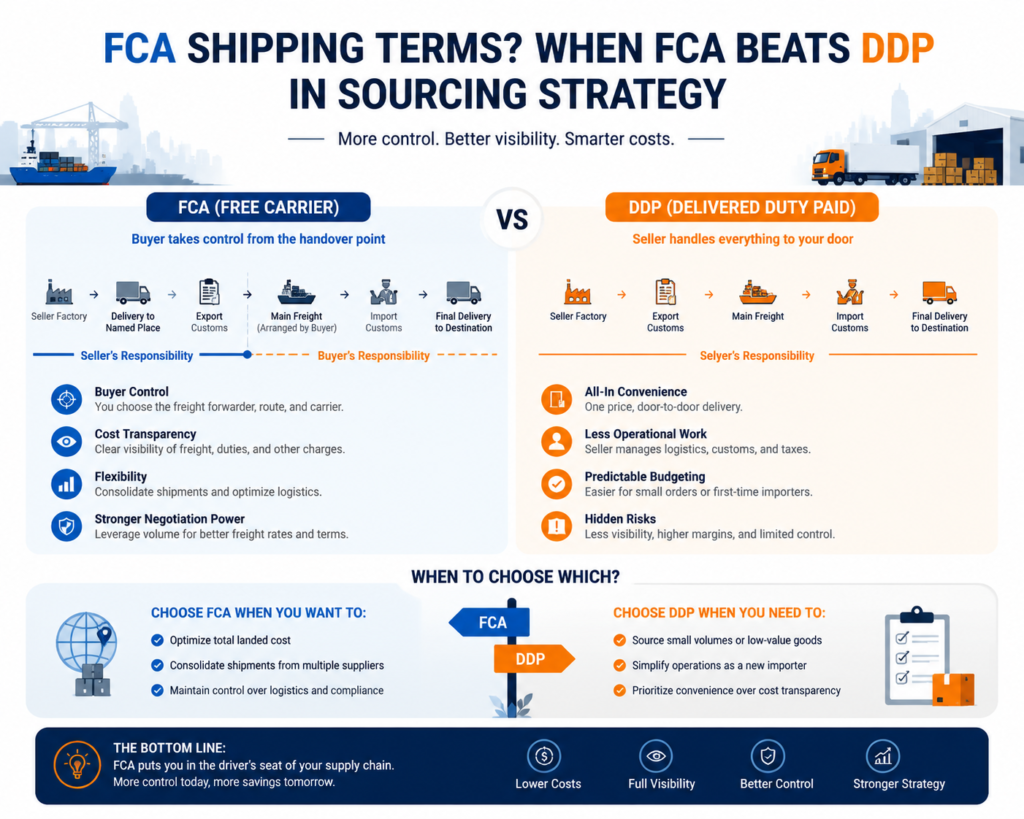
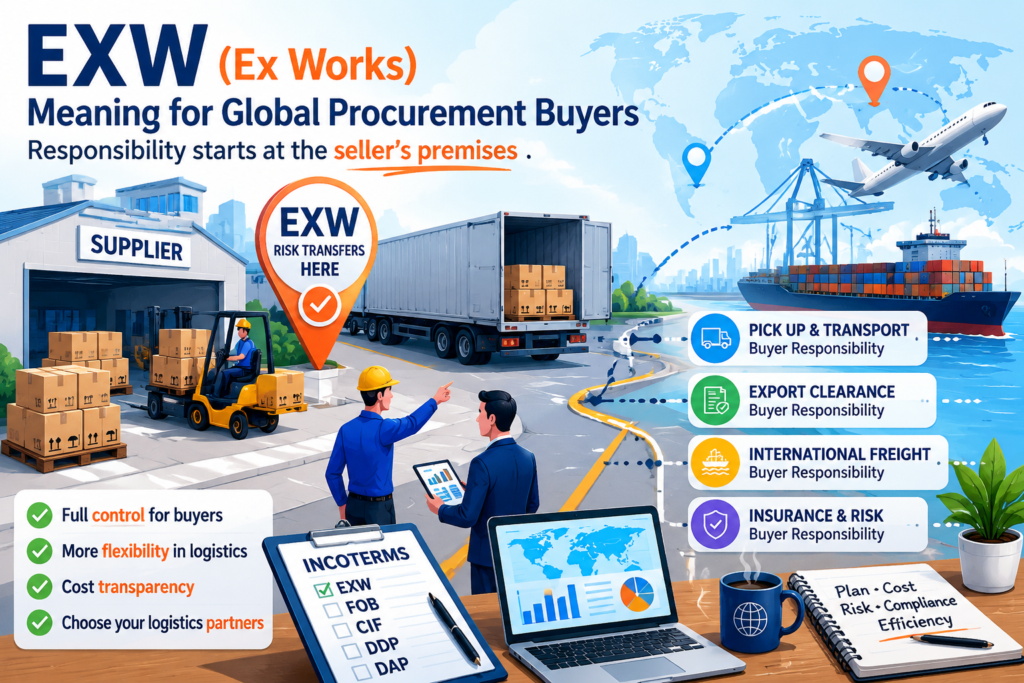
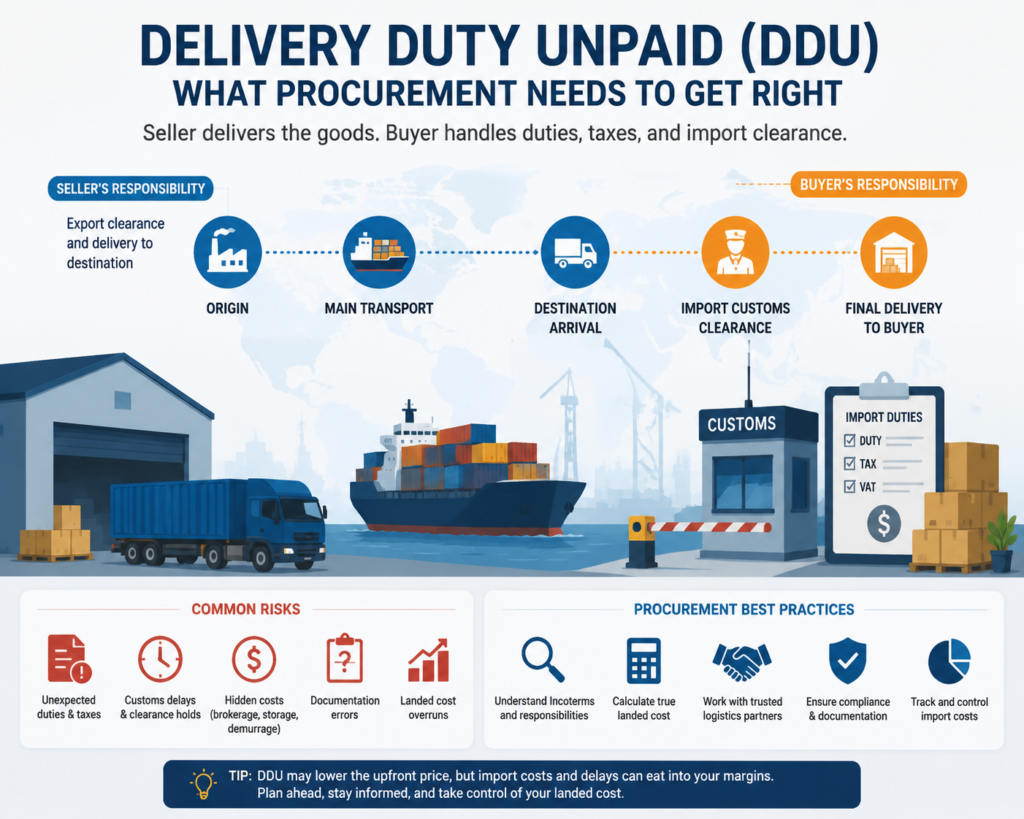
Incoterms selection is where procurement engineers either earn their keep or get shown the door, and the DDP versus DAP decision impacts everything from cash flow to blood pressure. Choosing Delivered Duty Paid (DDP) means your Chinese supplier eats the risk until goods land at your Swiss warehouse—including customs clearance, VAT, and those charming Swiss anti-dumping levies—which is fantastic for predictability but often embeds a 15-20% premium that suppliers bake in for their own risk buffer.
4.2 Risk transfer points in procurement contracts
On the flip side, Delivered at Place (DAP) shifts risk transfer points in procurement contracts to the named destination but excludes import formalities, leaving you to wrangle with Swiss customs yourself; it’s cheaper but requires in-country brokerage expertise that many procurement teams lack.
4.3 Cost visibility under different Incoterms
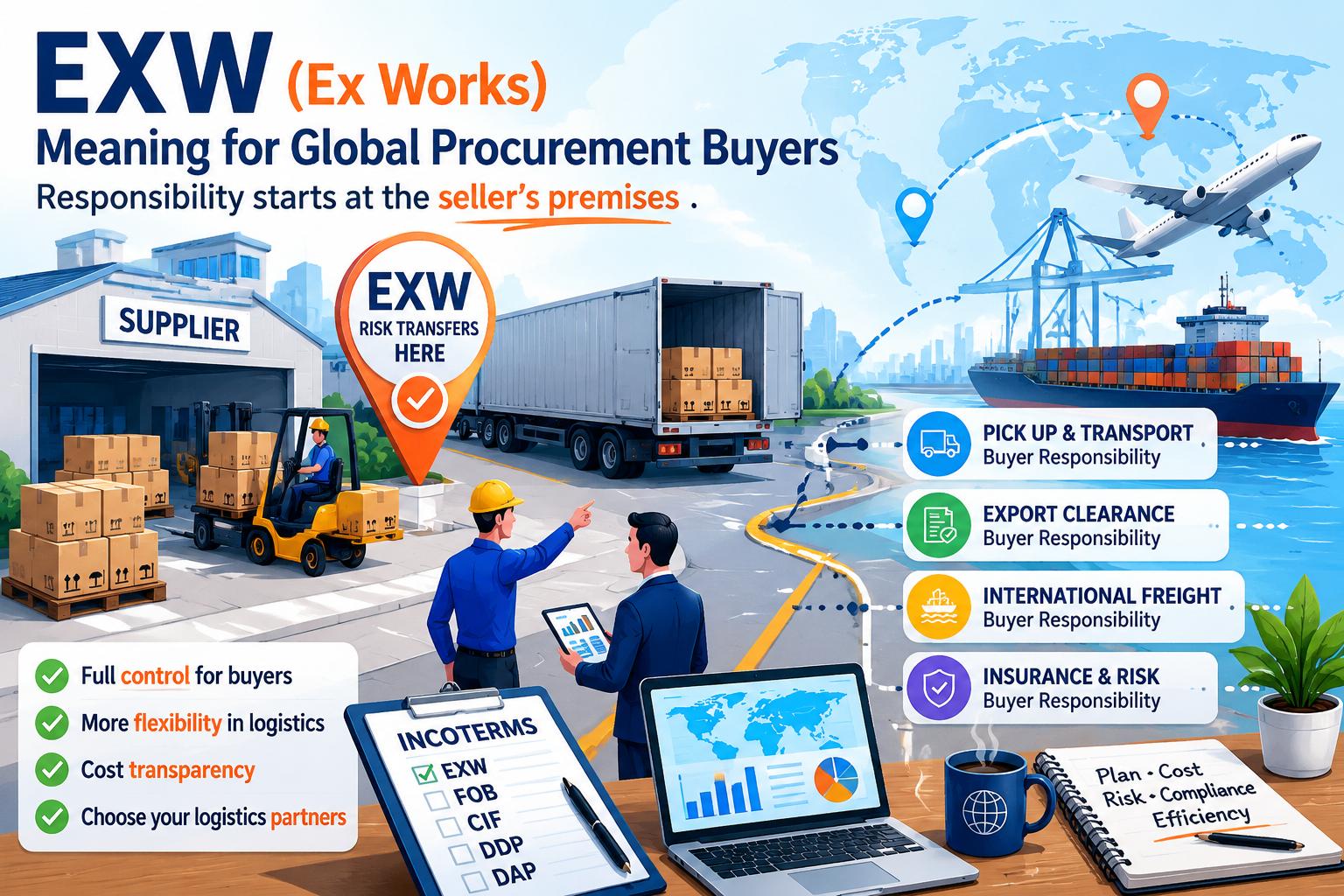
Cost visibility under different Incoterms varies wildly—with Ex-Works you see every single logistics line item but inherit all the hassle, while with DDP you get a clean all-in number but zero transparency into where your money actually went, which is enough to make any purchase engineer break out in hives. Reference the official ICC Incoterms 2020 rules for legal definitions.
5. Ocean Freight Strategy for Switzerland-bound Cargo
5.1 China major port selection
Ocean freight strategy for Switzerland-bound cargo demands the tactical acumen of a chess grandmaster who also happens to be a masochist. China major port selection is your first lever: Shanghai offers the most sailings but chronic congestion; Ningbo provides better reliability but fewer direct options to European hubs; Nansha gives you proximity to Guangdong’s manufacturing heartland but limited carrier choices.
5.2 Transit routes via European hubs
Transit routes via European hubs typically follow two patterns—the northern swing into Rotterdam or Hamburg, followed by barge or rail up the Rhine to Basel, or the southern route via Koper or Trieste with trucking through the Alps.
5.3 Cost optimization for LCL and FCL
Cost optimization for LCL and FCL requires volume forecasting that’s tighter than a drum; less-than-container load might seem attractive for small shipments, but the per-CBM rate is often double that of full container load, and consolidation/deconsolidation fees can nickel-and-dime you into oblivion. Many procurement engineers swear by consolidated LCL programs run by major forwarders like Kuehne+Nagel or DB Schenker, which aggregate multiple buyers’ cargo into FCL volumes at better rates—a classic case of strength in numbers.
6. Air Freight Solutions for High-Value Goods
6.1 Speed vs cost trade-off analysis
When your Swiss client says “I need it yesterday,” air freight solutions for high-value goods become the only game in town, though the speed versus cost trade-off analysis will make your finance director weep openly. A pallet of precision ball bearings air-freighted from PVG to ZRH might cost $5,000 and arrive in 72 hours, whereas ocean freight runs $500 but takes 35 days—so if your carrying cost on a $200,000 shipment is 15% annually, the math actually favors air for lead time-sensitive components.
6.2 Priority handling for sensitive products
Priority handling for sensitive products like medical devices or semiconductor wafers means booking “first on, last off” status and paying for temperature-controlled trucks, which adds another 30% to your air freight bill but prevents the kind of damage claim that takes six months to settle.
6.3 Capacity planning during peak seasons
Capacity planning during peak seasons—think Chinese New Year or Western Q4 retail madness—requires booking space six to eight weeks in advance and maintaining relationships with multiple cargo airlines, because Cathay Pacific might suddenly reroute capacity to higher-yield lanes and leave you holding the bag.
7. Rail Freight via China–Europe Corridor
7.1 Transit time advantages over sea freight
Let’s talk rail freight via the China–Europe corridor, which has become the Goldilocks solution for procurement engineers who find ocean too slow and air too spendy. Transit time advantages over sea freight are undeniable: where ocean takes 35-45 days door-to-door from Chongqing to Basel, rail does it in 18-22 days—a savings of two to three weeks that can transform inventory turns.
7.2 Stability and schedule reliability
Stability and schedule reliability have improved dramatically since the early days of the Belt and Road Initiative, with block trains now running like Swiss timepieces (the irony isn’t lost on us) from Xi’an, Chengdu, and Yiwu to Duisburg or Malaszewicze, then trucked or railed into Switzerland. For more background, see Wikipedia: Eurasian Land Bridge.
7.3 Integration with Swiss inland logistics
Integration with Swiss inland logistics requires careful handshake protocols; the Swiss Federal Railways (SBB) operates an efficient but capacity-constrained network, so your forwarder needs pre-booked slots on the Basel–Chiasso corridor to avoid demurrage charges that can exceed the rail freight savings. One word of warning: rail is fantastic for high-value, time-sensitive goods with moderate density—think electronics or auto parts—but forget about it for hazardous materials or oversized machinery, as border inspections at Kazakhstan and Belarus will drive you around the twist.
8. Customs Clearance in Switzerland
8.1 Import documentation requirements
Customs clearance in Switzerland is neither fish nor fowl—it’s a sui generis system that combines EU-style declaration formats with Swiss-specific preferences, and getting it wrong means your cargo sits in a bonded shed while the clock ticks. Import documentation requirements start with the single administrative document (SAD), the commercial invoice (signed and in triplicate, because someone loves paper), the packing list, and the certificate of origin for FTA preference claims.
8.2 VAT and duty calculation mechanisms
VAT and duty calculation mechanisms follow a cascading logic: most industrial goods face zero or low Most Favored Nation duties (2-5%), but Swiss VAT of 8.1% applies to the CIF value plus duty—and if you’re not reclaiming that VAT through your Swiss fiscal representation, you’re leaving money on the table.
8.3 Risk of inspection delays
Risk of inspection delays can be mitigated by enrolling in the Authorized Economic Operator (AEO) program, which gives you fast-lane treatment; otherwise, Swiss customs has been known to randomly pull 5% of all China-origin shipments for physical inspection, which adds three to seven days and often involves unpacking and repacking fees that sting like a hornet.
9. Supplier Risk Management in China
9.1 Production delay monitoring
Supplier risk management in China is the procurement equivalent of herding cats during a thunderstorm, but disciplined processes can save your bacon. Production delay monitoring requires boots on the ground—we’re talking weekly video calls with factory floor managers, real-time dashboards fed by supplier production systems, and random spot checks by third-party quality inspectors who know how to spot the difference between “we’re on schedule” and “we’re blowing smoke.”
9.2 Quality control checkpoints
Quality control checkpoints should be built into your supply contract like a picket fence: first article inspection, in-process checks at 30% and 70% completion, and a pre-shipment audit where you reject anything with a defect rate above your agreed tolerance (typically 1.5% for critical components, 2.5% for non-critical).
9.3 Contract enforcement strategies
Contract enforcement strategies in China rely less on legal threats (good luck enforcing a foreign judgment in a Chinese court) and more on payment leverage—retain 10-20% until after successful delivery, and structure milestone payments that keep the supplier hungry rather than complacent.
10. Freight Cost Structure Analysis
10.1 Base freight and surcharges breakdown
Freight cost structure analysis separates the purchase engineers from the purchase boy scouts, because understanding the base freight and surcharges breakdown is how you avoid getting taken to the cleaners. Base freight covers the port-to-port ocean or air carriage, but the surcharges are where carriers hide the bodies: bunker adjustment factor (BAF), currency adjustment factor (CAF), terminal handling charges (THC), documentation fees, seal fees, chassis fees—the list goes on longer than a Swiss train timetable.
10.2 Hidden logistics cost drivers
Hidden logistics cost drivers include detention and demurrage charges when your cargo sits too long at the port (often because your Swiss broker fumbled the customs declaration), and container weight discrepancies that trigger re-weighing fees if your shipper’s declared weight is off by more than 3%.
10.3 Cost forecasting models for procurement
Cost forecasting models for procurement should incorporate moving averages of the Shanghai Containerized Freight Index (SCFI) for ocean and the Baltic Air Freight Index for air, plus a risk premium for seasonal volatility—because nothing says “fun” like explaining a 40% freight cost overrun to your CFO.
11. Lead Time Optimization Strategies
11.1 Consolidation of shipments
Lead time optimization strategies are where procurement engineers can look like heroes or zeroes, and consolidation of shipments is often the lowest-hanging fruit. By pooling smaller orders into weekly or bi-weekly consolidated LCL departures, you reduce freight costs and improve schedule reliability, though you’ll need a consolidation partner in China who doesn’t treat your cargo like a game of Tetris gone wrong.
11.2 Buffer stock planning
Buffer stock planning in Switzerland involves a delicate balancing act: keep too much inventory and your carrying costs eat you alive; keep too little and a single disruption turns into a production stoppage. The sweet spot for most industrial buyers is two weeks of buffer at a bonded warehouse near Basel, with automated reorder points triggered by consumption data.
11.3 Multi-route shipping strategies
Multi-route shipping strategies, or what I call the “don’t put all your eggs in one container ship” approach, involve splitting your monthly volume across ocean, rail, and maybe 10% by air—this way, if the Suez Canal gets blocked by a stuck boxship or German rail workers go on strike, you’ve still got some flow moving through alternative conduits.
12. Digital Supply Chain Visibility Tools
12.1 Real-time shipment tracking systems
Digital supply chain visibility tools have moved from nice-to-have to absolute necessity, because flying blind in today’s logistics environment is a fool’s errand. Real-time shipment tracking systems from providers like project44 or FourKites aggregate carrier data into a single pane of glass, showing you exactly where your container is—on the water, on a train, or stuck in customs purgatory—with estimated arrival times that update dynamically as conditions change.
12.2 ERP integration for procurement teams
ERP integration for procurement teams means your SAP or Oracle system automatically receives tracking events and adjusts expected receipt dates, triggering alerts when deviations exceed your configured tolerances (e.g., more than 48 hours late).
12.3 Predictive delay analytics
Predictive delay analytics are the new black; using historical data and machine learning, these tools can forecast with 80% accuracy whether your shipment from Yantian to La Spezia will arrive on time or face a week-long delay at the Port of Piraeus, giving you the lead time to air-freight emergency replacements or adjust production schedules accordingly. See how FourKites industry resources discuss real-world implementations.
13. Risk Control in Cross-Border Logistics
13.1 Cargo insurance coverage planning
Risk control in cross-border logistics is about planning for the worst while hoping for the best, because Murphy’s Law loves a supply chain. Cargo insurance coverage planning goes beyond the carrier’s paltry liability (typically $2 per kilogram for ocean, peanuts compared to your high-value cargo) to all-risk policies that cover theft, damage, and even “mysterious disappearance”—though read the fine print on war and strike exclusions if your route passes through politically squirrelly jurisdictions.
13.2 Disruption response frameworks
Disruption response frameworks should be tabletop-exercised annually, with pre-identified triggers (e.g., port closure, carrier bankruptcy, customs strike) and playbooks that specify who approves expedited air freight, when to invoke force majeure clauses, and how to communicate with internal stakeholders.
13.3 Alternative routing contingencies
Alternative routing contingencies mean having secondary port pairs and carrier agreements already negotiated—so if Shanghai locks down due to a COVID resurgence, you can pivot to Ningbo or Xiamen within 48 hours rather than scrambling for spot quotes at predatory rates.
14. Warehousing and Distribution in Switzerland
14.1 Bonded warehouse utilization
Warehousing and distribution in Switzerland requires understanding the lay of the land, because this ain’t Kansas—or even Germany. Bonded warehouse utilization allows you to defer VAT and duty payments until goods leave for domestic consumption, which is a cash flow godsend for high-value inventory that might sit for weeks before being called off.
14.2 Regional distribution planning
Regional distribution planning must account for Switzerland’s topography and linguistic fragmentation: a single warehouse near Zurich works for the German-speaking north and east, but serving French-speaking Romandy and Italian-speaking Ticino adds transit time and cost, so many procurement teams operate a two-node network with a second warehouse near Morges or Chiasso.
14.3 Last-mile delivery optimization
Last-mile delivery optimization in Swiss cities involves navigating narrow medieval streets, strict noise ordinances (no truck deliveries before 6 AM in residential zones), and a logistics labor market that’s tight as a drum—so partnering with local couriers like Planzer or Notime who know the local quirks is non-negotiable.
15. Sustainability in China–Switzerland Logistics
15.1 Carbon footprint reduction strategies
Sustainability in China–Switzerland logistics has moved from virtue-signaling to a hard procurement metric, driven by both regulatory pressure and customer demand. Carbon footprint reduction strategies start with modal shift—moving freight from air to rail or ocean where lead times permit—because a single air freight shipment from China to Switzerland generates roughly 20x the CO2 per ton-kilometer compared to ocean freight.
15.2 Green shipping alternatives
Green shipping alternatives include booking space on carriers using biofuel blends (e.g., Maersk’s ECO Delivery or Hapag-Lloyd’s Ship Green), which cost 10-15% more but reduce well-to-wake emissions by 80-90%.
15.3 ESG compliance in procurement
ESG compliance in procurement now requires suppliers to provide verified emissions data and science-based targets, and some Swiss buyers are beginning to impose carbon budgets on logistics providers—so if your forwarder can’t report its Scope 3 emissions accurately, you might need to find one that can. Learn about framework standards at Global Reporting Initiative (GRI).
16. Procurement Decision-Making Framework
16.1 Total landed cost evaluation
The procurement decision-making framework for Logistics from China to Switzerland should be as disciplined as a Swiss bank account and as pragmatic as a Chinese factory floor. Total landed cost evaluation must include not just freight and duties, but also inventory carrying cost (typically 15-25% annually), risk mitigation cost (insurance plus buffer stock), and administrative overhead (customs brokerage, tracking tools, supplier management).
16.2 Supplier and forwarder selection criteria
Supplier and forwarder selection criteria should be weighted and scored: for suppliers, prioritize quality consistency (40% weighting), lead time reliability (30%), cost competitiveness (20%), and communication responsiveness (10%); for forwarders, emphasize on-time performance (35%), claims ratio (25%), network coverage (20%), and digital capabilities (20%).
16.3 Long-term contract optimization strategies
Long-term contract optimization strategies involve negotiating volume commitments and rate caps in exchange for exclusivity or minimum spend guarantees—but always include an out clause for persistent underperformance, because the logistics graveyard is full of relationships that started with champagne and ended with recriminations. At the end of the day, mastering this corridor means accepting that perfection is the enemy of good enough, and the smart purchase engineer builds resilience, visibility, and relationships that can weather the inevitable storms. Now go forth and move some freight, you magnificent supply chain warrior.