Table of Contents
Cutting the Cord on Chaos: End-to-End Visibility in China-Europe Battery Logistics
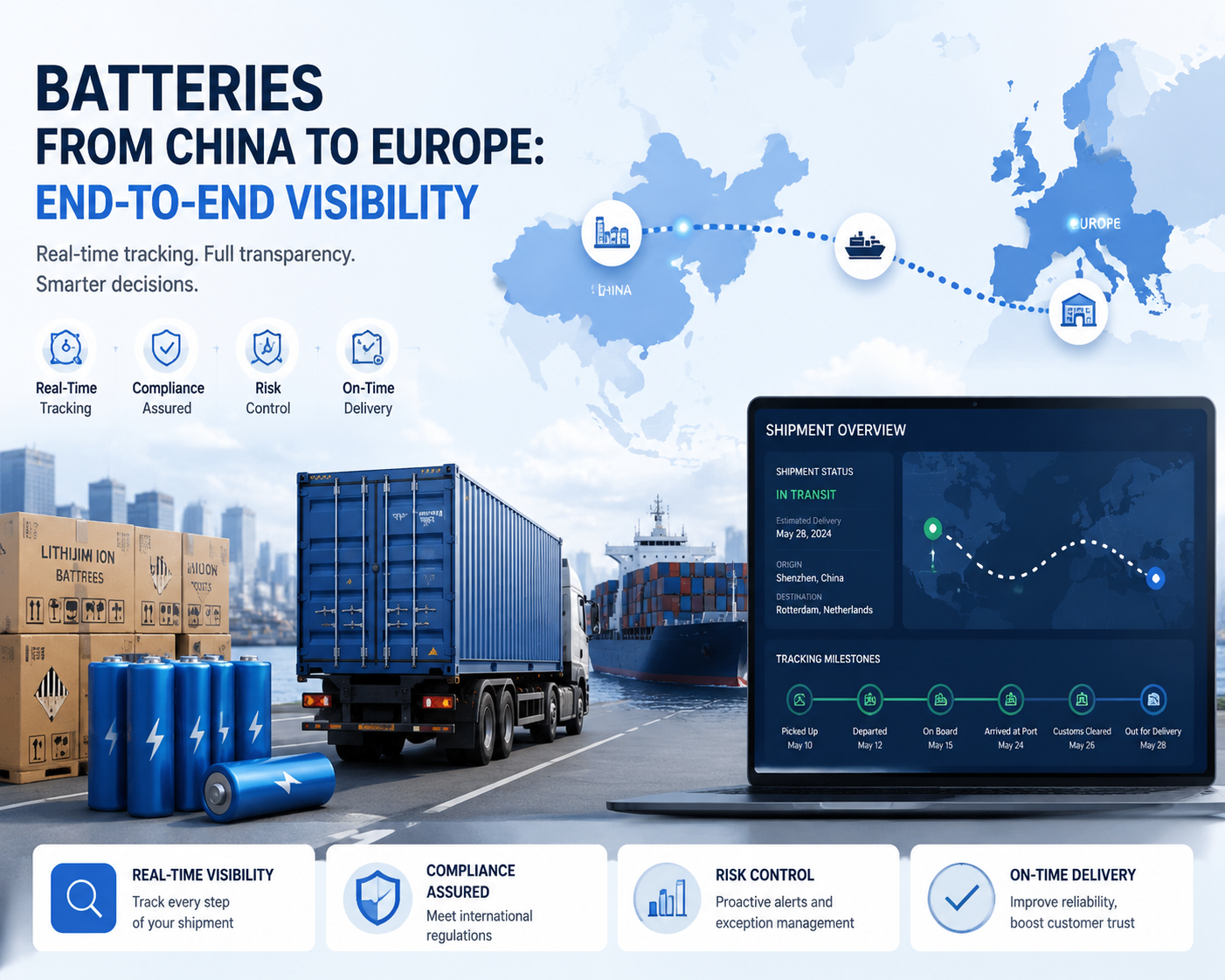
The procurement of lithium-ion batteries from Chinese manufacturing juggernauts to the European market has, in recent years, evolved from a straightforward transaction into a logistical Gordian knot. For the purchase engineer, the primary driver is no longer just unit cost, but the granular end-to-end visibility that mitigates risk, ensures regulatory adherence, and safeguards the bottom line. The landscape is shifting seismically; the old adage of "ship it and forget it" has been replaced by the imperative to "track it, trace it, and validate it." This deep dive explores the multifaceted nature of this visibility, dissecting the complex interplay of regulatory compliance, digital tracking, and supply chain resilience necessary to master the China-to-Europe battery corridor.
1. Introduction: Why End-to-End Visibility Matters in Battery Logistics
1.1 Rising complexity of battery shipments from China to Europe
The supply chain for batteries traversing from China to Europe is a veritable labyrinth of regulatory hurdles and logistical bottlenecks. The market is dominated by Chinese players like CATL and BYD, which control over 67% of the global battery market, making the import pipeline crucial for Europe's automotive and energy storage sectors. However, the tranquillity of this trade route is disturbed by a swathe of new regulations. The EU Battery Regulation (2023/1542) introduces stringent requirements such as the Digital Battery Passport, mandatory carbon footprint declarations, and extended producer responsibility, fundamentally altering the shipping protocols. Concurrently, China has tightened its grip on critical battery materials and manufacturing technology exports, instituting licensing requirements for lithium batteries and other precursor materials. This double-whammy of regulatory shifts has made navigating this trade lane akin to walking a tightrope while juggling.
1.2 Procurement pressure for transparency and predictability
From the procurement engineer's perspective, the name of the game is predictability. The complexity of this environment exerts immense pressure on procurement teams to secure transparent data streams. Gone are the days when a commercial invoice and a bill of lading sufficed. Today, procurement needs to know the provenance of materials, the specifics of the carbon footprint per factory, and the exact state of charge (SoC) of a shipment to ensure carrier acceptance. The financial stakes are colossal; a shipment held up at port due to a missing carbon footprint declaration or a misclassified UN number (e.g., UN 3480 vs. UN 3481) can incur demurrage, detention charges, and missed production deadlines. This procurement pressure for transparency is driving the integration of sophisticated tracking technologies into the logistics ecosystem.
1.3 Impact of visibility gaps on cost and compliance
Visibility gaps in this sector are not just minor inconveniences; they are significant financial and compliance liabilities. A classic example is the "lost tracking event" during transshipment or a data silo between different carriers, leading to a blackout in the logistics chain. This can result in costly delays, especially if a vessel is rerouted due to geopolitical issues in the Red Sea, extending transit times by 7-10 days and throwing buffer stock calculations out the window. Furthermore, a lack of visibility into compliance documentation, such as the UN38.3 test summary or the precise label requirements for batteries mandated from August 18, 2026, can lead to outright rejection at the EU border, forcing the importer to absorb the cost of rerouting or scrapping the cargo.
2. Overview of the China to Europe Battery Supply Chain
2.1 Key manufacturing hubs in China
The battery behemoths of China are concentrated in specific geographic clusters that serve as the primary launchpads for global exports. Provinces like Guangdong, Jiangsu, and Fujian host a significant share of the manufacturing capacity, with major cities such as Shenzhen and Ningbo serving as central logistics nodes. The regulatory environment in China has also started to impact these hubs, particularly regarding the export of sensitive technologies like Lithium Iron Phosphate (LFP) battery production know-how and lithium extraction processes. Logistics partners must have a robust presence in these key ports—Shanghai, Ningbo, Shenzhen, Qingdao, and Guangzhou—to manage the complex pre-shipment compliance processes that are now the norm.
2.2 Main entry points into Europe
Upon arrival in Europe, the primary gateways for battery shipments are the major container ports in Northern Europe, with Hamburg and Bremerhaven in Germany leading the charge, processing the vast majority of cargo from China. The route typically sees vessels traverse the South China Sea, Indian Ocean, and Suez Canal (or the Cape of Good Hope in times of crisis) en route to the North Sea. For importers, this geographical reality creates a critical window of 25 to 35 days for ocean freight, where proactive visibility is paramount for planning production schedules and warehouse capacity.
2.3 Distribution networks across EU markets
Once customs clearance is achieved, typically within a 33 to 45 day door-to-door window, the distribution network sprawls across the European Union. This often involves transshipment to inland hubs via rail or road. The regulatory framework here is multifaceted, with each EU member state potentially having its own nuances regarding Extended Producer Responsibility (EPR) registration, adding another layer of complexity to the tracking requirements. The logistics provider must be adept at navigating these heterogenous national requirements to ensure seamless delivery to the final end-user.
3. Types of Batteries Shipped and Their Risk Profiles
3.1 Lithium-ion batteries for consumer electronics
While often perceived as "low-risk" compared to their industrial counterparts, consumer lithium-ion batteries (e.g., for power banks or laptops) are subject to rigorous UN38.3 testing, correct UN classification (primarily UN 3480 or UN 3481), and specific packaging requirements for dangerous goods (DG). However, the regulatory load is lighter than for other categories; they do not yet require a full Digital Battery Passport or a carbon footprint declaration, though the August 2026 labeling deadline—covering chemistry, weight, capacity, and hazardous substances—applies universally.
3.2 Industrial and EV battery systems
This segment includes Electric Vehicle (EV) batteries, Energy Storage Systems (ESS), and Battery Energy Storage Systems (BESS). These are the heavyweights of the battery shipping world, facing the most stringent regulatory scrutiny. As of early 2026, they require a carbon footprint declaration physically included in the shipment package. Furthermore, from February 2027, these batteries must possess a Digital Battery Passport (accessible via QR code) detailing their entire lifecycle from cradle to gate, which is a significant data-gathering challenge for suppliers.
3.3 Dangerous goods classification differences
The classification of the battery is a foundational element of its risk profile and shipping viability. For standalone lithium-ion batteries, the UN number is typically UN 3480. However, if the batteries are packed with or contained in equipment, they fall under UN 3481. A critical error for e-bike and EV shipments is incorrectly classifying the battery as UN 3481 when it is actually a standalone unit (UN 3480). Meanwhile, batteries installed in a vehicle typically are classified under UN 3171, which affects carrier acceptance and stowage requirements. Each classification dictates specific packaging, labeling, and documentation requirements, and misclassification is a primary reason for cargo being refused at the port of loading.
4. Regulatory Framework for Battery Transportation
4.1 UN38.3 testing requirements
The UN38.3 standard is the foundational safety test for all lithium batteries. It is a series of eight tests designed to simulate the rigors of transport, including altitude simulation, thermal cycling, vibration, shock, external short circuit, impact, overcharge, and forced discharge. A UN38.3 test summary is a mandatory document for every battery shipment—it is the "passport" to get a battery onto a plane or a ship. If the battery design changes, the test must be re-run; a report is valid for the specific model, not the individual unit.
4.2 IMDG and IATA regulations
For sea freight, the International Maritime Dangerous Goods (IMDG) Code is the bible, with key rules including a strict requirement that the State of Charge (SoC) for marine transport not exceed 30%. For air freight, the International Air Transport Association (IATA) Dangerous Goods Regulations (DGR) are significantly more stringent, often prohibiting large EV battery packs entirely on passenger aircraft and imposing strict limits on cargo aircraft. These rules are supplemented by digital compliance; since January 2025, many dangerous goods documents must be submitted in XML format online, adding a layer of technical complexity to the already paperwork-heavy process.
4.3 EU import compliance standards
The EU Batteries Regulation is a colossal regulatory framework that demands lifecycle transparency. For importers, the key deadlines are:
- August 18, 2026: Expanded labeling requirements come into force, requiring detailed information on battery chemistry, weight, capacity, and hazardous substances.
- February 18, 2027: Digital Battery Passports become mandatory for EV batteries, LMT batteries, and industrial batteries above 2 kWh.
- August 18, 2027: Supply chain due diligence obligations take effect.
Additionally, non-EU manufacturers must appoint an EU Authorized Representative (AR) to take legal liability for compliance, a task that falls on the importer if selling under their own brand.
5. Documentation Requirements for Cross-Border Visibility
5.1 Commercial invoice and packing list accuracy
The commercial invoice and packing list are the fundamental documents that anchor the entire shipment's legality and classification. Inaccuracies, such as misstating the weight, dimensions, or watt-hour rating, can lead to misclassification and subsequent customs holds. Given the hazardous nature of batteries, every detail must be scrupulously accurate and aligned with the DG declaration to prevent a documentation error from cascading into a compliance disaster.
5.2 MSDS and battery test reports
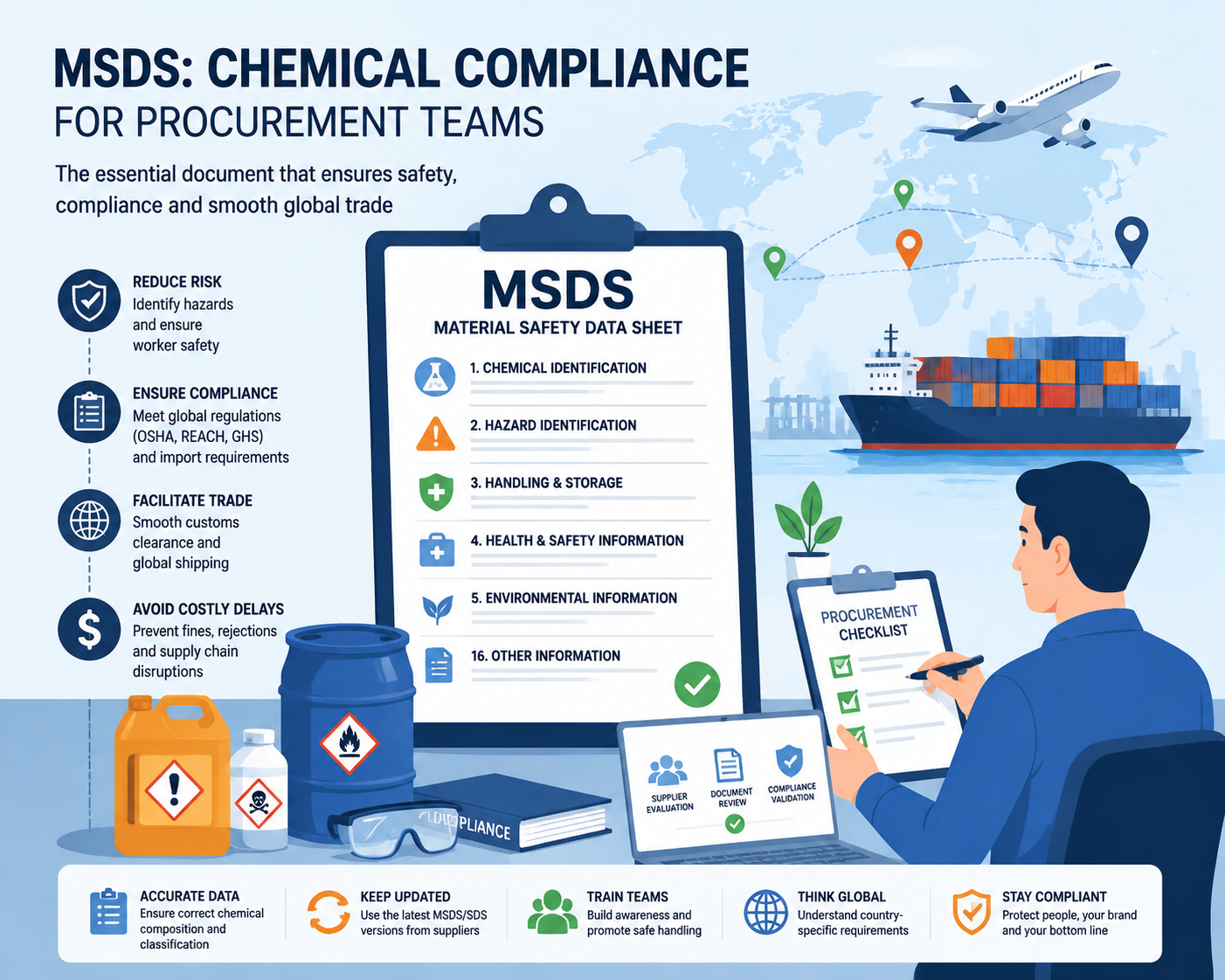
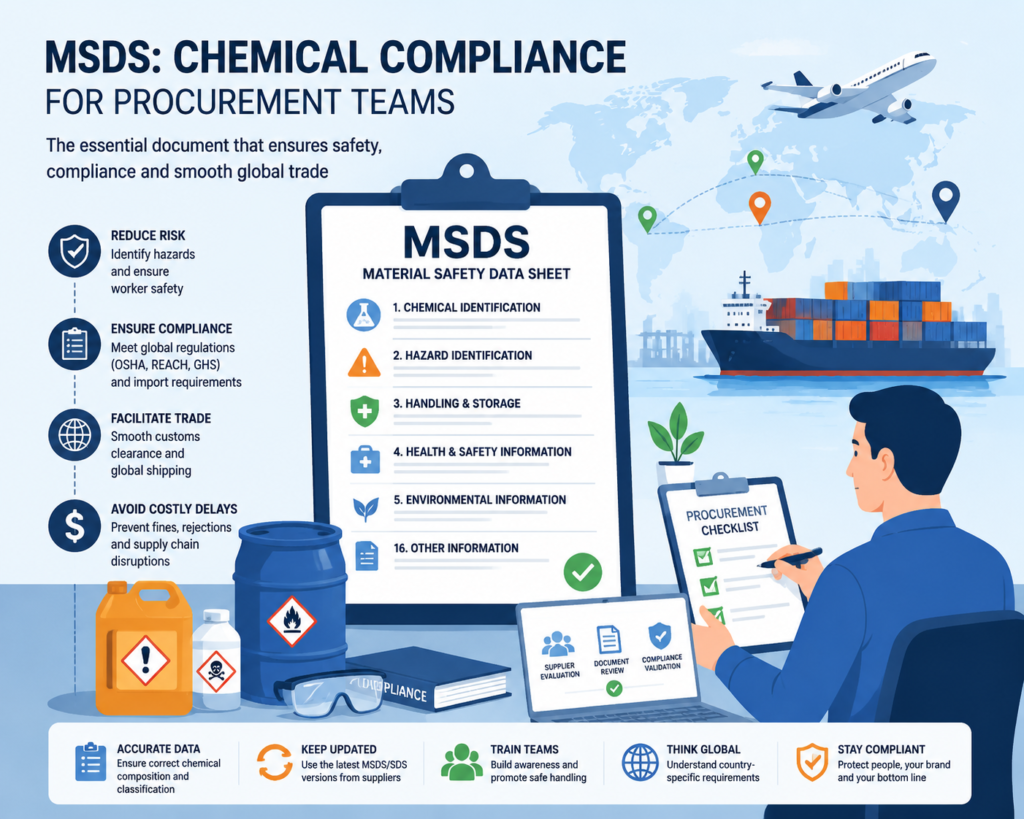
The Material Safety Data Sheet (MSDS) and the UN38.3 test report are the non-negotiable technical documents that prove the battery is safe for transport. The MSDS provides guidance on handling and emergency response, while the UN38.3 test summary validates that the battery has passed the required safety tests. A missing or expired UN38.3 report is a red flag for any carrier and a direct path to cargo refusal.
5.3 Customs declaration alignment
The customs declaration must be a perfect mirror of the physical shipment and its documentation. For battery cargo, this is a high-stakes alignment. The HS code, value, weight, and DG classification (including the UN number) must all be consistent. Harmonizing the customs declaration with the IMDG manifest and the physical labels on the packaging ensures that the shipment is not flagged for physical inspection, which can introduce significant delays and costs.
6. Role of Freight Forwarders in Visibility Management
6.1 Data integration across transport modes
A DG-specialist freight forwarder acts as the central nervous system for data integration. They must weave together data from the factory in China (origin, SoC, packaging), the shipping line (vessel schedule, stowage), and the European customs broker (clearance status). This integration provides a unified view to the procurement team. Specialists like Gerudo Logistics emphasize the importance of "written carrier acceptance before goods move," as carrier acceptance is not automatic for Class 9 cargo and can vary by vessel.
6.2 Coordination between carriers and customs agents
Coordination is key to avoiding what is known in the trade as "customs status blind spots." A freight forwarder ensures that the carriers are informed of the specific DG requirements (e.g., SOC limit, stowage category) while simultaneously arming customs agents with the necessary documentation for a "green lane" clearance. They navigate the pre-shipment document checks and can leverage a carrier's AEO (Authorized Economic Operator) status to reduce inspection rates from 20% to 5%.
6.3 Exception handling and escalation workflows
When something goes wrong—a port strike, a container fire scare, or a missing document—the forwarder's exception handling protocol determines the outcome. They have established escalation workflows to resolve issues quickly, such as by activating a "control tower" logistics platform to re-route cargo or by deploying personnel to resolve a customs query on the ground.
7. Air Freight vs Sea Freight Visibility Differences
7.1 Tracking granularity in air shipments
Air freight offers the highest level of tracking granularity, often down to the individual package level, with regular updates on location and status. It is the premium option for high-value or urgent battery shipments, though regulatory constraints for air travel are the most severe. However, the cost is often prohibitive for large-scale industrial shipments, making air freight a rare exception for the standard China-Europe battery trade lane.
7.2 Container-level visibility in ocean freight
For the vast majority of volume, sea freight is the primary mode. Visibility here is typically at the container level, relying on GPS trackers attached to the container. This tracking gives precise location data but leaves the inside of the container a "black box" unless augmented by IoT sensors. Ocean freight offers a slower but reliable transit time, typically 25-35 days for the sea leg, with door-to-door taking up to 45 days.
7.3 Transit uncertainty and buffer planning
Ocean freight is inherently subject to more significant variability, including port congestion, Suez Canal diversions (adding 7-10 days), and weather. This unpredictability forces procurement teams to maintain larger buffer stocks, which directly impacts working capital. A lack of real-time visibility into these disruptions can cause cascading production delays.
8. Digital Tracking Technologies in Battery Logistics
8.1 IoT sensors for temperature and shock monitoring
The electrochemical sensitivity of lithium batteries to temperature and impact makes IoT sensors a non-negotiable requirement. IoT sensors track temperature, humidity, and shock in real-time, alerting the supply chain manager to any deviations that could damage the battery or indicate a thermal runaway event. For high-value industrial battery shipments, this data is crucial for insurance claims and quality assurance.
8.2 GPS and RFID tracking systems
GPS tracking provides real-time location data for containers, while RFID (Radio Frequency Identification) provides localized tracking, such as in a warehouse or a transshipment hub. The emerging trend is toward "energy-harvesting" trackers that use ambient light (solar) or vibration to power themselves, eliminating the need for battery replacements and providing a perpetual, maintenance-free visibility solution.
8.3 Cloud-based shipment dashboards
All this tracking data—GPS location, IoT sensor readings, documentation status—is aggregated into cloud-based dashboards, often referred to as "Control Tower" platforms. These provide a single pane of glass for procurement and logistics teams, offering a 360-degree view of the shipment's journey, with exception alerts that trigger proactive management.
9. Real-Time Shipment Monitoring Systems
9.1 Control tower logistics platforms
These are the centralized visibility architectures that integrate data from carriers, IoT devices, and customs brokers. They provide a command-and-control view of the entire supply chain, enabling real-time decision-making. A control tower platform allows teams to visualize the journey, identify bottlenecks, and proactively communicate with stakeholders.
9.2 Predictive ETA algorithms
Advanced control tower systems leverage AI and machine learning to analyze historical data, weather patterns, and traffic to provide a predictive Estimated Time of Arrival (ETA). This is a game-changer for procurement, as it moves beyond static schedules to dynamic, probabilistic forecasting, allowing for more precise production planning.
9.3 Exception alerts and notifications
The system's real value lies in its exception management capabilities. If a sensor detects a temperature spike or a GPS tracker reveals a vessel deviating from its route, the platform triggers an immediate alert. This empowers the supply chain team to initiate a corrective action before the exception becomes a crisis.
10. Risk Points in the China to Europe Route
10.1 Port congestion and customs delays
Congestion at major Chinese ports like Shanghai or Ningbo, and European hubs like Hamburg, is a perennial threat. This can cause significant delays, especially if a vessel misses its berth window. Similarly, a random or targeted customs inspection at the EU border can halt the supply chain for days, incurring demurrage fees.
10.2 Documentation errors and inspection holds
The most common risk is a gap in the compliance documentation. A missing carbon footprint declaration for an ESS unit, an incorrect UN number, or a label that doesn't meet the upcoming EU standards can trigger a hold at the port of loading or a "stop" at the destination.
10.3 Hazardous goods misclassification risks
Misclassification is a major risk with significant consequences. An EV battery pack misclassified as a "battery in equipment" (UN 3481) when it is a standalone unit (UN 3480) can be rejected at the Chinese port. This not only causes delays but also incurs costs for reclassification and rerouting, and can damage the importer's reputation with the carrier.
11. Customs Clearance Transparency Challenges
11.1 EU customs inspection procedures
EU customs inspection procedures are rigorous, especially for hazardous goods. They will scrutinize the physical labels, the packaging certification, and the documentation to ensure compliance with the EU Batteries Regulation and other import laws. A lack of visibility into the internal processes of customs creates significant anxiety for importers.
11.2 Duty and VAT calculation visibility
The calculation of duties and VAT is a significant cost factor. The new Carbon Border Adjustment Mechanism (CBAM) and anti-subsidy duties on electric vehicles from China, ranging from ~17% to 35% depending on the manufacturer, add a layer of financial complexity to the customs clearance process.
11.3 Broker coordination inefficiencies
A breakdown in coordination between the importer, freight forwarder, and customs broker is a leading cause of delays. The "digital handshake" between these parties is not always seamless, leading to inefficiencies in document sharing, which in turn slows down the clearance process.
12. Supply Chain Data Integration for Procurement Teams
12.1 ERP and TMS system integration
For true end-to-end visibility, the logistics data must be integrated into the procurement team's core IT systems—their Enterprise Resource Planning (ERP) software and their Transportation Management System (TMS). This integration allows for automated alerts, streamlined documentation, and a unified view of the supply chain status directly within the tools used for decision-making.
12.2 Supplier data standardization
The data provided by Chinese suppliers must be standardized to be usable. This includes ensuring they can produce an EU-compliant carbon footprint declaration and that their data can be integrated into the Digital Battery Passport platform. Disparate data formats from different suppliers create confusion and manual work, which is a key challenge in the sector.
12.3 Real-time procurement dashboards
The culmination of this integration is a real-time procurement dashboard. This is a visual tool that allows a purchase engineer to view all their shipments at a glance, see their projected ETAs, and immediately spot any red flags regarding compliance or logistics performance. It enables them to make data-driven decisions quickly and efficiently.
13. Incoterms Impact on Visibility and Control
13.1 EXW vs FOB visibility differences
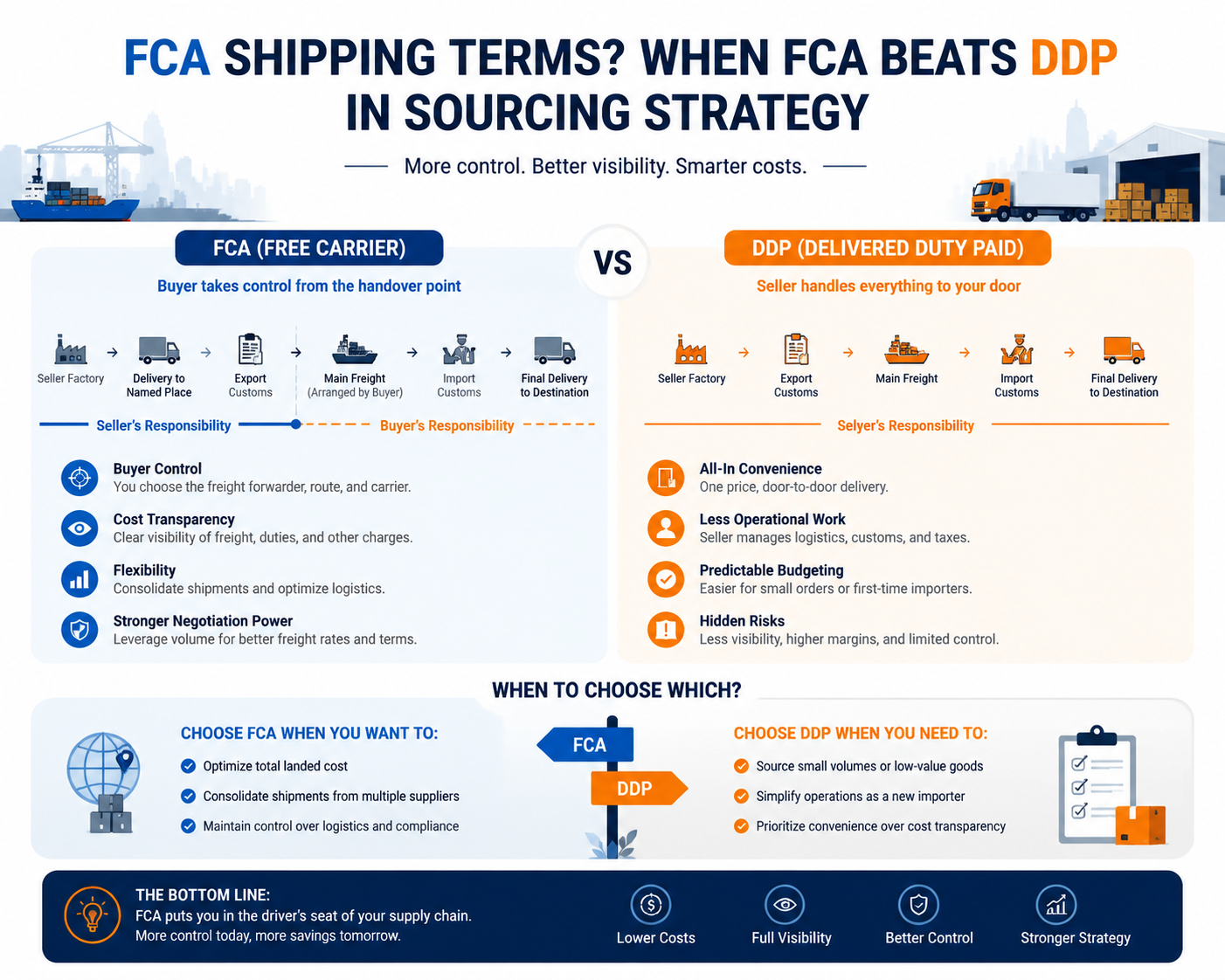
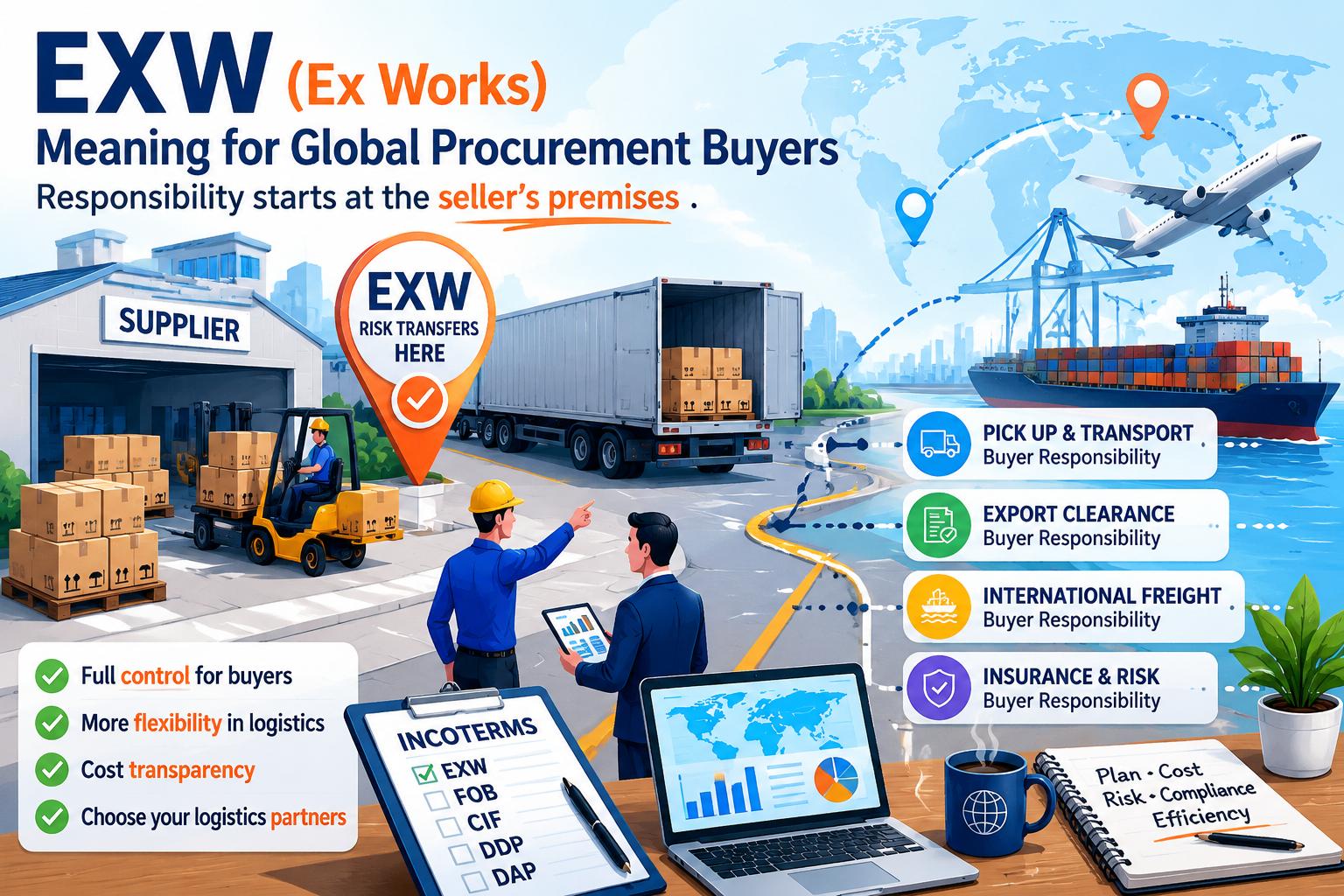
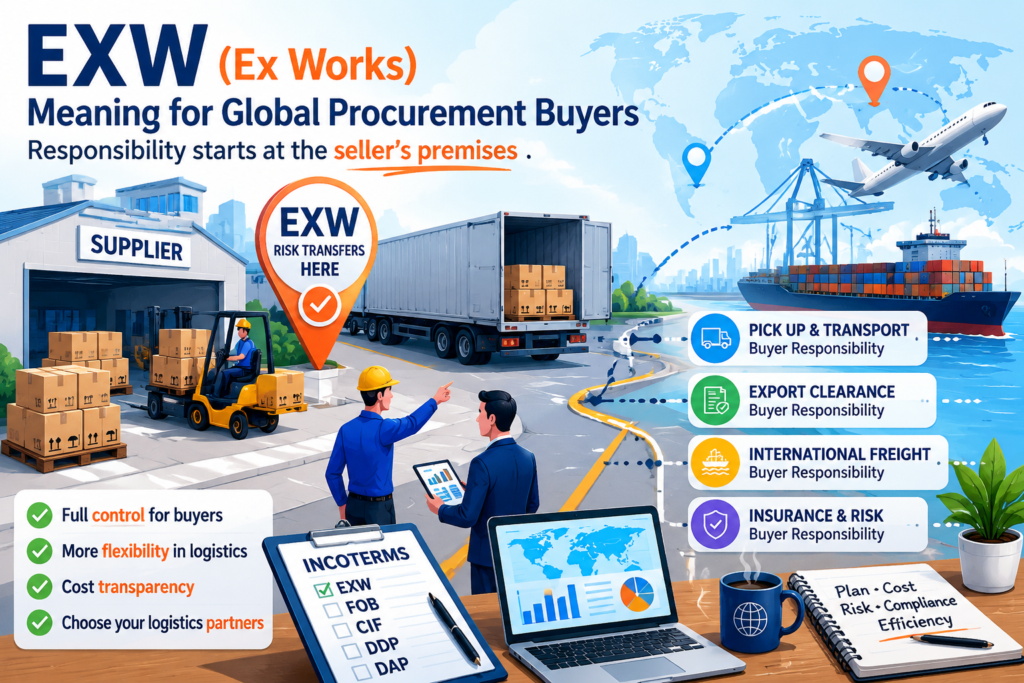
Under EXW (Ex Works), the seller's responsibility ends when the goods are made available at the factory. The buyer has full control but also full responsibility for the entire logistics chain, from arranging pick-up to shipping. This maximizes the buyer's visibility if they use their own tracking systems. Under FOB (Free On Board), the seller is responsible for the goods until they are loaded onto the vessel. This creates a handover point where visibility responsibility shifts from the seller to the buyer, which can be a source of gaps if not carefully managed.
13.2 DDP responsibility mapping
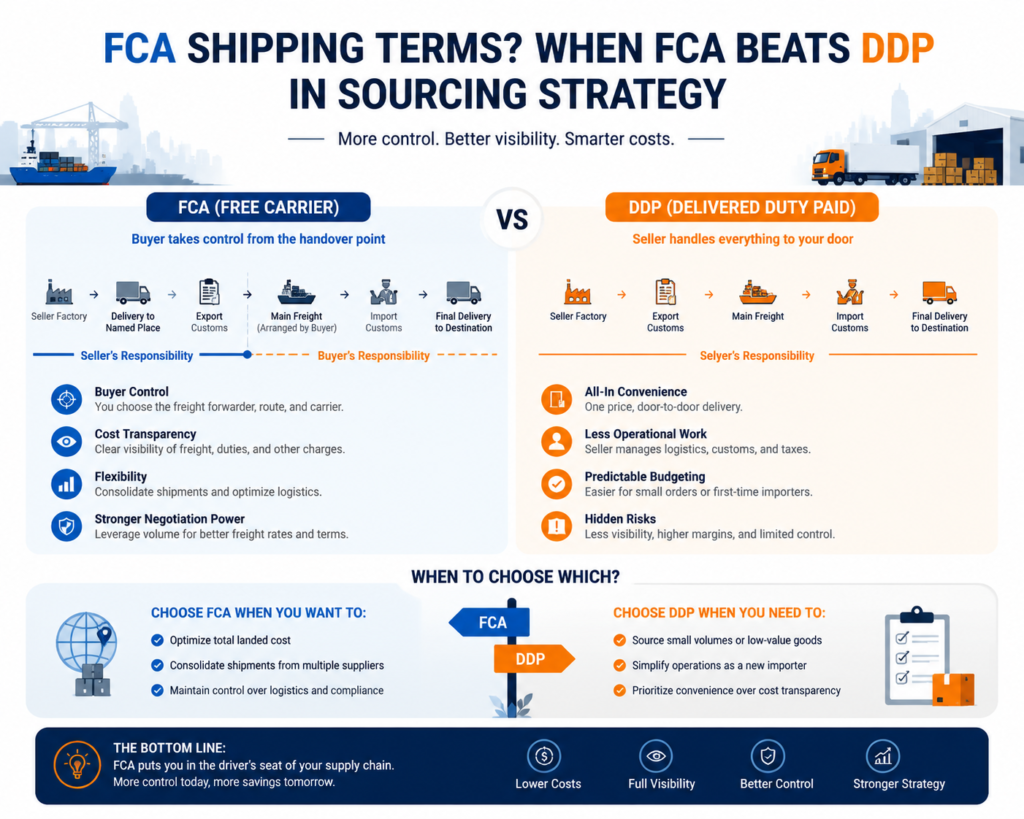
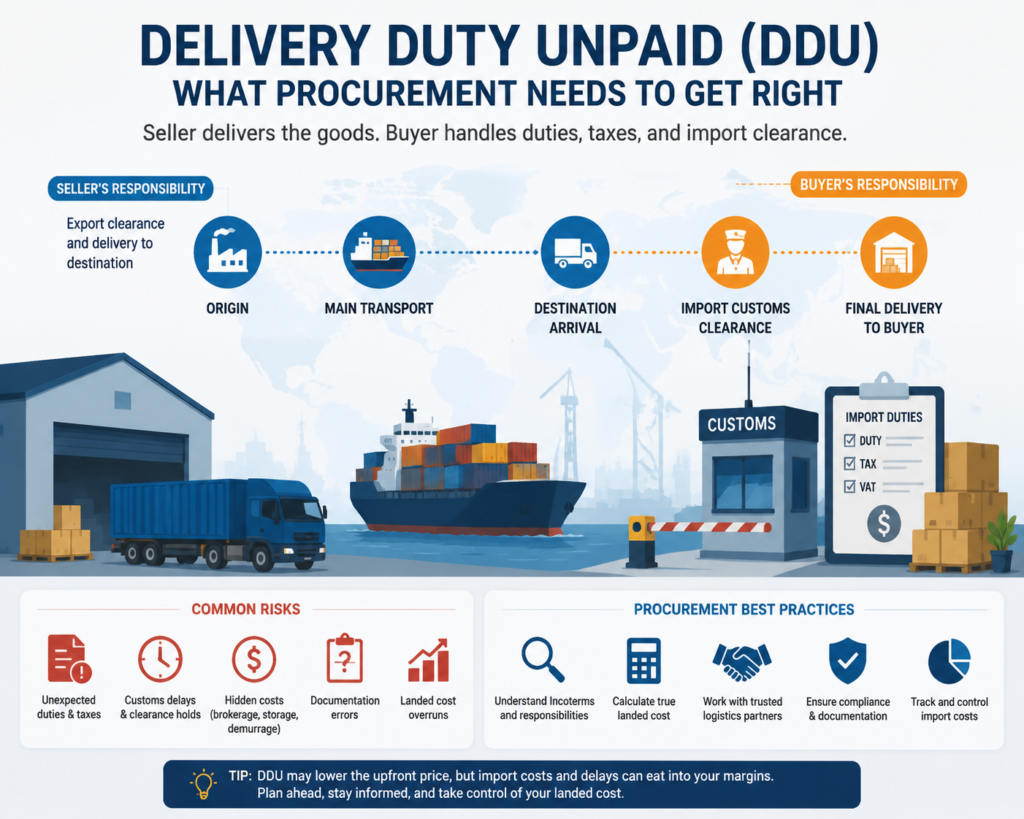
DDP (Delivered Duty Paid) is the highest level of seller responsibility; they are responsible for delivering the goods to the buyer's premises, paying all duties and taxes. For the procurement engineer, this reduces logistics management burden, but it also means they may have less visibility into the specific components of the cost and logistics path, as the seller controls all transport and customs clearance.
13.3 Risk ownership across the supply chain
The Incoterms dictate who owns the risk at each stage. In FOB and EXW, the buyer bears the risk of loss or damage once the goods are loaded onto the transport. In DDP, the seller bears the risk until the final delivery. This risk ownership is intimately tied to the need for visibility; if the buyer bears the risk, they must have strong oversight of the shipment's journey.
14. Battery Handling and Safety Monitoring
14.1 Packaging standards for lithium batteries
Batteries must be packaged in UN-certified packaging designed to prevent short circuits. This often involves insulating terminals and placing batteries in strong, non-combustible packaging. The packaging must be robust enough to withstand a 1.2-meter drop test. Industrial EV batteries often require specialized steel crates or advanced cushioning solutions.
14.2 Temperature and pressure monitoring requirements
Monitoring temperature is critical to prevent thermal runaway. In the event of a temperature spike, the monitoring system provides an early warning. Additionally, maintaining the correct State of Charge (SoC) at ≤30% for sea transport is a safety regulation to limit the energy available in case of a short circuit.
14.3 Emergency response visibility protocols
Visibility isn't just about tracking the box; it's about tracking the risk. A robust visibility protocol includes providing emergency responders with immediate access to the cargo manifest and MSDS for any hazardous material. During a fire or accident, the cargo's exact location and nature must be instantly visible to the emergency crew.
15. Cost Transparency Across the Logistics Chain
15.1 Freight rate breakdown visibility
A clear and transparent breakdown of freight rates is essential for effective procurement. This should include the base ocean freight, the documentation fees, and the dangerous goods surcharges.
15.2 Hidden surcharges and accessorial fees
The logistics industry is notorious for hidden charges. Accessorial fees can include inland haulage charges, chassis fees, port congestion surcharges, and container cleaning fees. A key best practice is to demand a "no-surprises" pricing model from the freight forwarder, where all potential surcharges are pre-quoted.
15.3 Cost forecasting models for procurement
For long-term planning, cost forecasting models are used to predict future freight rates based on fuel prices, supply-demand dynamics, and geopolitical factors. This allows procurement to budget more effectively for the significant cost of shipping hazardous materials.
16. Lead Time Predictability and Planning Accuracy
16.1 Transit time variability factors
Transit time for sea freight is subject to significant variability due to port congestion, weather, and geopolitical events like the Suez Canal diversions. This variability of 7-10 days makes it hard to plan with precision.
16.2 Buffer stock planning strategies
To mitigate transit uncertainty, procurement teams implement buffer stock planning strategies. This involves holding additional inventory to protect against demand surges or supply chain disruptions. The ideal buffer level is determined by the trade-off between the cost of holding stock and the cost of a stock-out.
16.3 Demand forecasting integration
Integrating real-time visibility data into demand forecasting allows for more accurate material requirements planning (MRP). By knowing precisely when a shipment will arrive, you can avoid unnecessary stockpiling while ensuring production lines are never starved.
17. Sustainability Tracking in Battery Logistics
17.1 Carbon footprint monitoring tools
The EU Battery Regulation mandates a carbon footprint declaration for EV and industrial batteries. Tools are now available to calculate the carbon footprint of specific production facilities, tracking the emissions from raw material extraction to the factory gate. This data is collected at the module and cell level to be included in the Digital Battery Passport.
17.2 Green shipping routes in Europe
Sustainability also extends to logistics choices, such as using ships with cleaner fuel or routes that minimize emissions. Some EU countries are implementing green shipping incentives.
17.3 ESG reporting requirements
The Digital Battery Passport and related regulations are fundamentally about Environmental, Social, and Governance (ESG) reporting. They require verification of supply chain ethics, recycled content, and environmental impact. This is a significant data-gathering exercise that requires collaboration with suppliers.
18. Common Visibility Failures and Case Scenarios
18.1 Lost tracking events during transshipment
When a container is transferred from one vessel to another, the tracking data may stop updating if the handoff isn't digitally logged. This creates a "blackout" period where the cargo's location is unknown, causing anxiety and potential disruption.
18.2 Data gaps between carriers
Different carriers use different systems; if the data isn't properly integrated, a gap emerges. The carrier may report a "hold" on a container, but the visibility platform might not reflect this, leaving the team to discover it only when the vessel is at the port.
18.3 Customs status blind spots
Perhaps the most common failure, the customs broker may know there is a query, but the information might not be relayed to the freight forwarder or procurement team. This lack of visibility into the customs process results in delays as teams scramble to locate missing documents.
19. Best Practices for End-to-End Control Tower Setup
19.1 Centralized visibility architecture
The solution to fragmented visibility is a centralized control tower. This is a single, integrated platform that ingests data from all supply chain partners, providing a unified view of the shipment and automating exception alerts.
19.2 KPI design for logistics performance
Key Performance Indicators (KPIs) should be designed to evaluate logistics performance, including:
- On-Time In-Full (OTIF) delivery rate
- Dwell times at various nodes
- Documentation accuracy
- Exception response time
19.3 Cross-functional coordination models
The control tower requires cross-functional coordination between procurement, supply chain, legal, and quality assurance. A clear process for handling compliance queries, such as a DG expert who can be deployed to the port, is a best practice.
20. Future Trends in Battery Supply Chain Visibility
20.1 AI-driven predictive logistics
The future of visibility will be driven by AI that can not only predict ETAs but also anticipate compliance issues and automatically generate the required documentation, significantly reducing human error.
20.2 Blockchain-based shipment verification
To ensure the integrity of the Digital Battery Passport, blockchain technology is being deployed. This creates an immutable, time-stamped record of a battery's lifecycle, preventing fraud and ensuring trust in the data. Companies like Tata Technologies and Circulor are pioneering this space.
20.3 Fully automated customs clearance systems
Leveraging standardized data formats and blockchain, customs clearance is moving towards full automation. The future will see a "green lane" where shipments with validated, complete digital documentation are cleared without manual intervention, making the trade lane significantly more efficient.
Further reading & references: