1. Industry Benchmark: Low Probability, But Not Zero
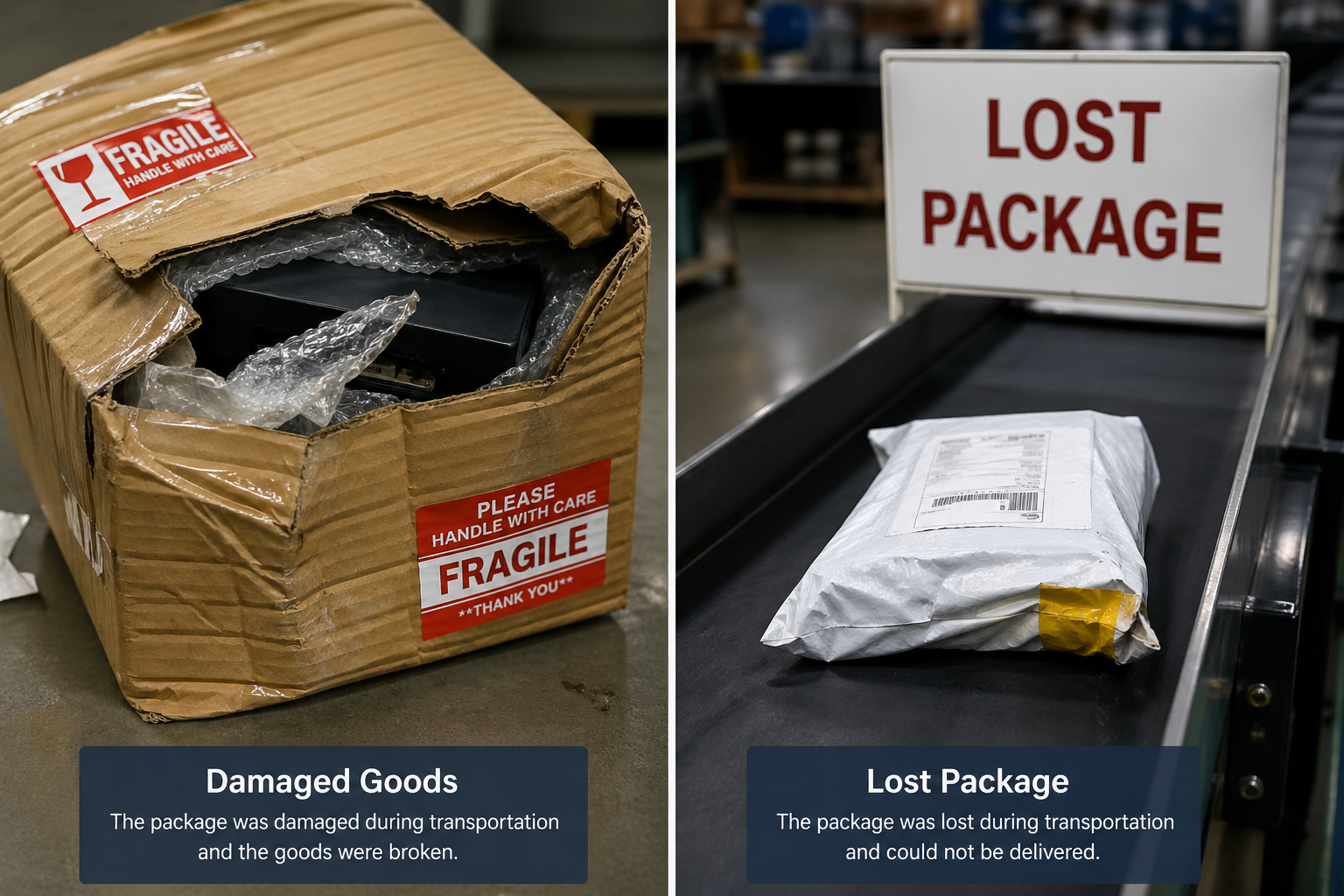
Based on global logistics statistics, the lost package rate in international shipping typically ranges between 0.1% and 1%, depending on the shipping method and region.
- Industry data suggests:
👉 Around 1% of shipments are lost or damaged - From an eCommerce perspective:
👉 1%–5% of orders face delivery issues (including delays, misdelivery, and loss) - Major carriers (e.g., DHL, FedEx, UPS):
👉 Actual “completely lost” rates are usually below 1%
📌 Conclusion:
International shipping is generally reliable, but loss is a systemic probability risk, not an exception.
2. Lost Package Rate by Shipping Method
1️⃣ Express Couriers (DHL / FedEx / UPS)
- Lost rate: 0.1% – 0.5%
- Characteristics:
- End-to-end tracking
- Stable network
- High delivery reliability
👉 Best for: high-value and time-sensitive shipments
2️⃣ Postal Services (Economy Shipping / Small Parcels)
- Lost rate: 0.5% – 2% (or higher)
- In some markets:
- Loss rates may reach 1%–3%
👉 Risk factors:
- Multiple transit points
- Limited tracking visibility
- Unstable customs handling
3️⃣ Dedicated Lines / DDP Shipping
- Lost rate: 0.3% – 1%
- Key variables:
- Customs clearance capability
- Local last-mile delivery quality
- Operational control
👉 Advantage: cost-efficiency with moderate stability
👉 Risk: performance varies by service provider
3. Why Loss Feels “Frequent”
Despite low percentages, many businesses feel that package loss is common. This perception is driven by several operational realities:
1️⃣ Scale Effect
- A 1% loss rate seems low
- But for 10,000 shipments/month:
👉 That equals 100 problem cases
2️⃣ “Pseudo Loss” Is Common
Many reported “lost packages” are actually:
- Delivery delays
- Misdelivery
- Theft after delivery (porch piracy)
- Incorrect address
👉 These are often not counted as official losses but impact customer experience directly.
3️⃣ Peak Season Disruptions
During high-demand periods (e.g., Black Friday, Christmas):
- First-attempt delivery failure rates can exceed 20%
- Causes:
- Network congestion
- Sorting errors
- Delayed scans
4. Key Factors Affecting Lost Package Rate
🔑 1. Packaging Quality
- Damaged or missing labels significantly increase loss risk
- Unreadable barcodes may send parcels to “dead letter” warehouses
🔑 2. Address Accuracy
- Common issues:
- Incorrect postal codes
- Incomplete recipient details
👉 One of the leading causes of delivery failure
🔑 3. Customs Clearance
- Customs delays ≠ lost shipments
- However, long-term holds may result in disposal or loss
🔑 4. Last-Mile Delivery
- The highest real loss risk occurs at the final stage
- “Delivered but not received” is a major issue globally
5. Logistics Management Perspective
From a supply chain standpoint:
✔ Nature of Loss Risk
- Low probability, high impact
✔ Industry Benchmarks
- <0.5% → उत्कृष्ट performance
- 0.5%–1% → acceptable range
- 1% → requires operational improvement
6. How to Reduce Lost Package Risk
1️⃣ Choose the Right Shipping Method
- High-value goods → Express courier
- Low-cost goods → Dedicated line / DDP
2️⃣ Improve Packaging & Labeling
- Use duplicate labels (inside & outside)
- Waterproof and durable labeling
3️⃣ Use Declared Value or Insurance
- Protect financial exposure
- Transfer risk effectively
4️⃣ Implement Monitoring Systems
Track key KPIs:
- Lost package rate
- Delay rate
- Delivery exception rate
7. Final Takeaway
The lost package rate in international shipping is generally low (<1%), but it is an unavoidable part of global logistics operations.