Table of Contents
1. Introduction to Shipping China to Nigeria DDP
1.1 What DDP Shipping Means
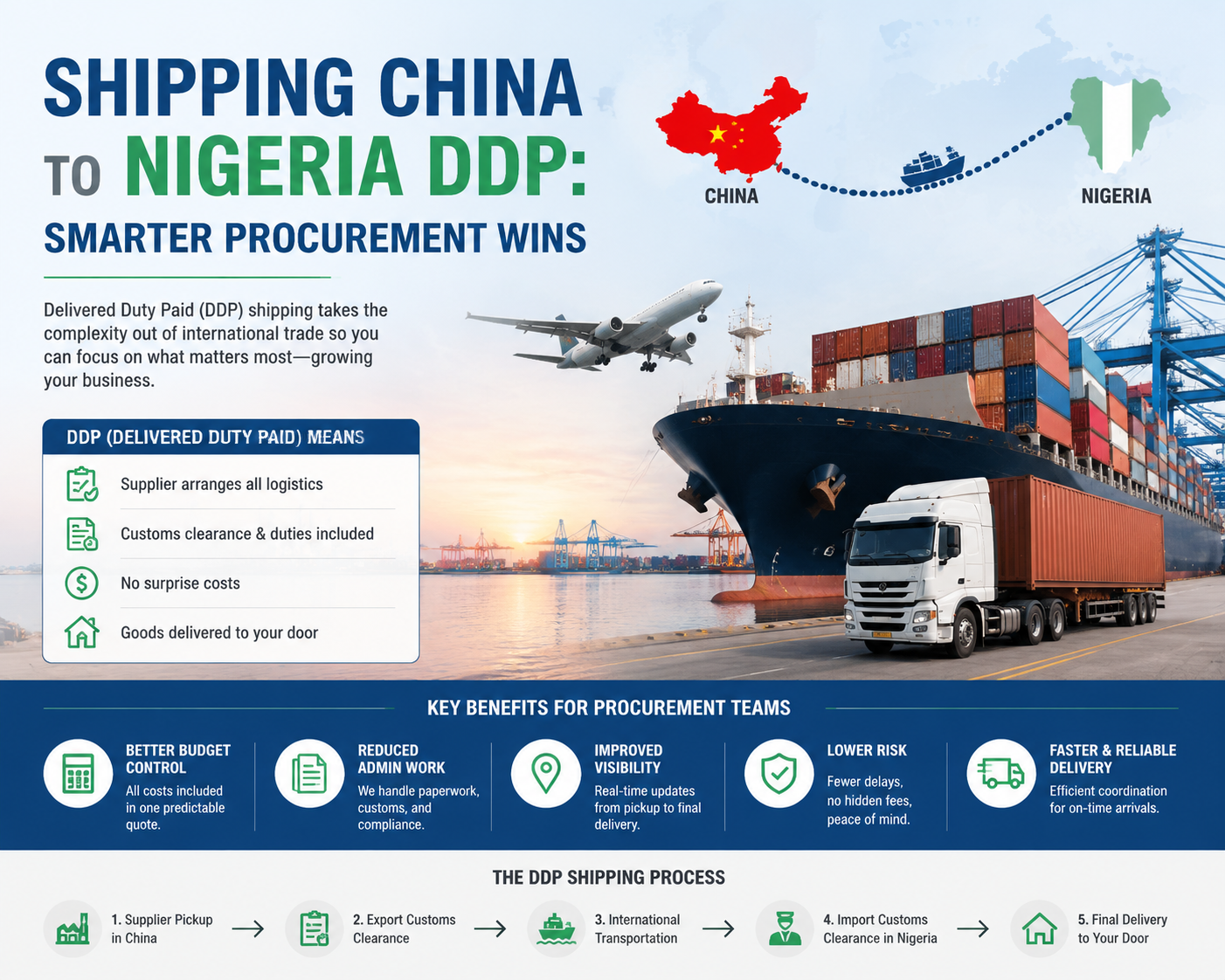
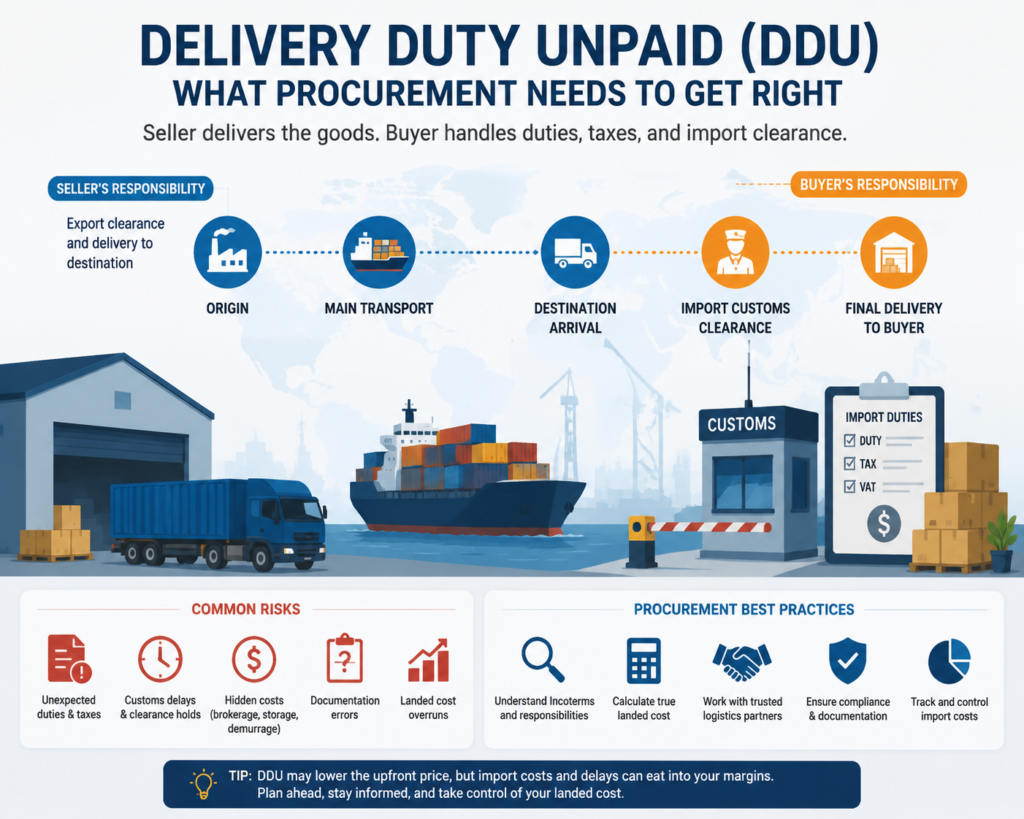
DDP, or Delivered Duty Paid, is an international shipping arrangement where the seller assumes responsibility for transporting goods from the origin in China directly to the buyer's designated location in Nigeria. This includes export clearance, international freight, import customs clearance, duties, taxes, and final delivery.
From a procurement engineering perspective, DDP functions as a turnkey logistics solution. The buyer receives a comprehensive quote covering nearly all transportation-related expenses, allowing procurement teams to focus on supplier management, inventory planning, and production scheduling rather than customs administration.
1.2 Why Nigeria Imports Heavily from China
China remains one of Nigeria's most important trading partners due to its manufacturing capacity, competitive pricing, and diverse product offerings.
- Industrial machinery
- Construction materials
- Consumer electronics
- Automotive components
- Electrical equipment
- Medical devices
- Manufacturing inputs
- Telecommunications equipment
Chinese suppliers benefit from economies of scale that enable lower production costs compared to many global competitors. Nigeria businesses can source complete project requirements from a single geographic region, reducing supplier fragmentation and simplifying procurement management. Learn more about China-Nigeria trade.
1.3 Why Procurement Teams Prefer Predictable Logistics
Production schedules, inventory replenishment cycles, project deadlines, and customer commitments all depend upon accurate delivery timelines and stable logistics costs. Unexpected customs charges, delayed clearances, or hidden transportation expenses can disrupt procurement forecasts and create significant operational challenges.
DDP shipping provides greater visibility into total landed costs, delivery schedules, customs requirements, transportation milestones, and risk allocation.
2. Understanding the DDP Shipping Model
2.1 Definition of Delivered Duty Paid
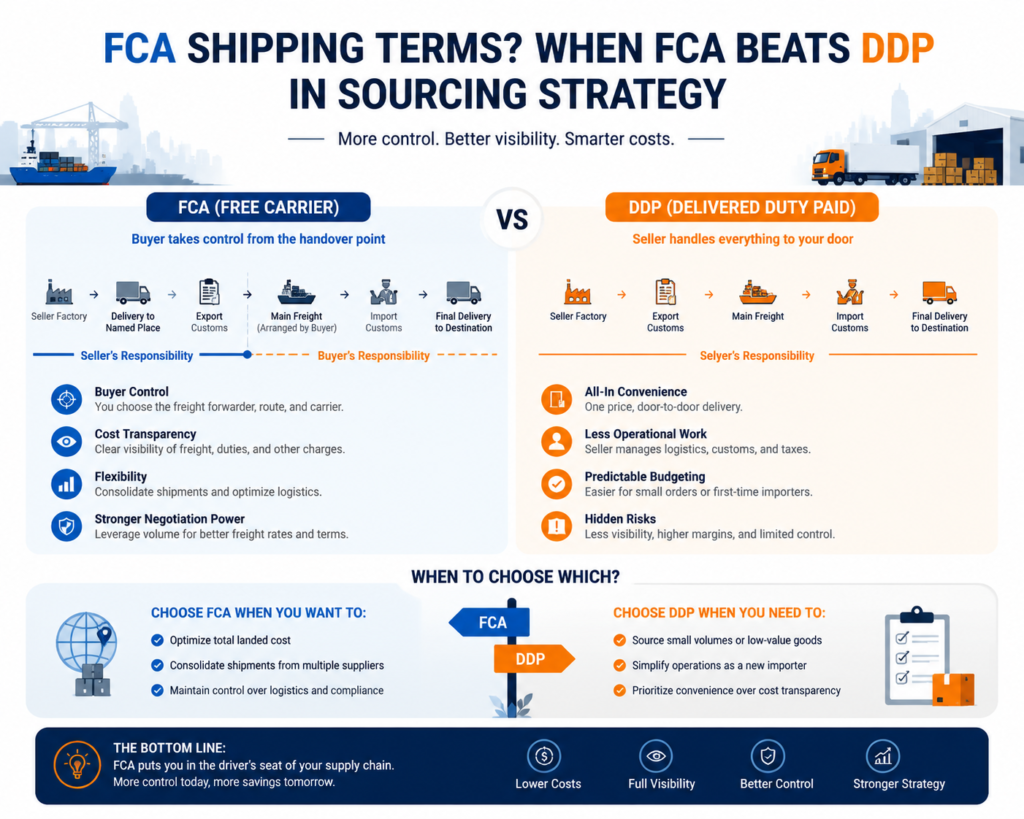
Under the rules established by the International Chamber of Commerce, DDP represents one of the seller's maximum obligation Incoterms. The seller is responsible for export customs clearance, freight transportation, import customs clearance, duty payment, tax payment, and delivery to destination. The buyer's role is primarily limited to receiving the goods.
2.2 Responsibilities of the Supplier and Freight Forwarder
A successful DDP shipment relies on effective collaboration between suppliers and freight forwarders.
The supplier typically manages product manufacturing, packaging, export documentation, and cargo handover. The freight forwarder generally oversees cargo pickup, transportation planning, customs clearance, duty payment, and delivery coordination. Experienced freight forwarders become indispensable partners because they navigate complex regulatory environments and ensure compliance throughout the shipping journey. WTO trade procedures
2.3 How DDP Differs from Other Incoterms
Understanding the distinctions between Incoterms is critical:
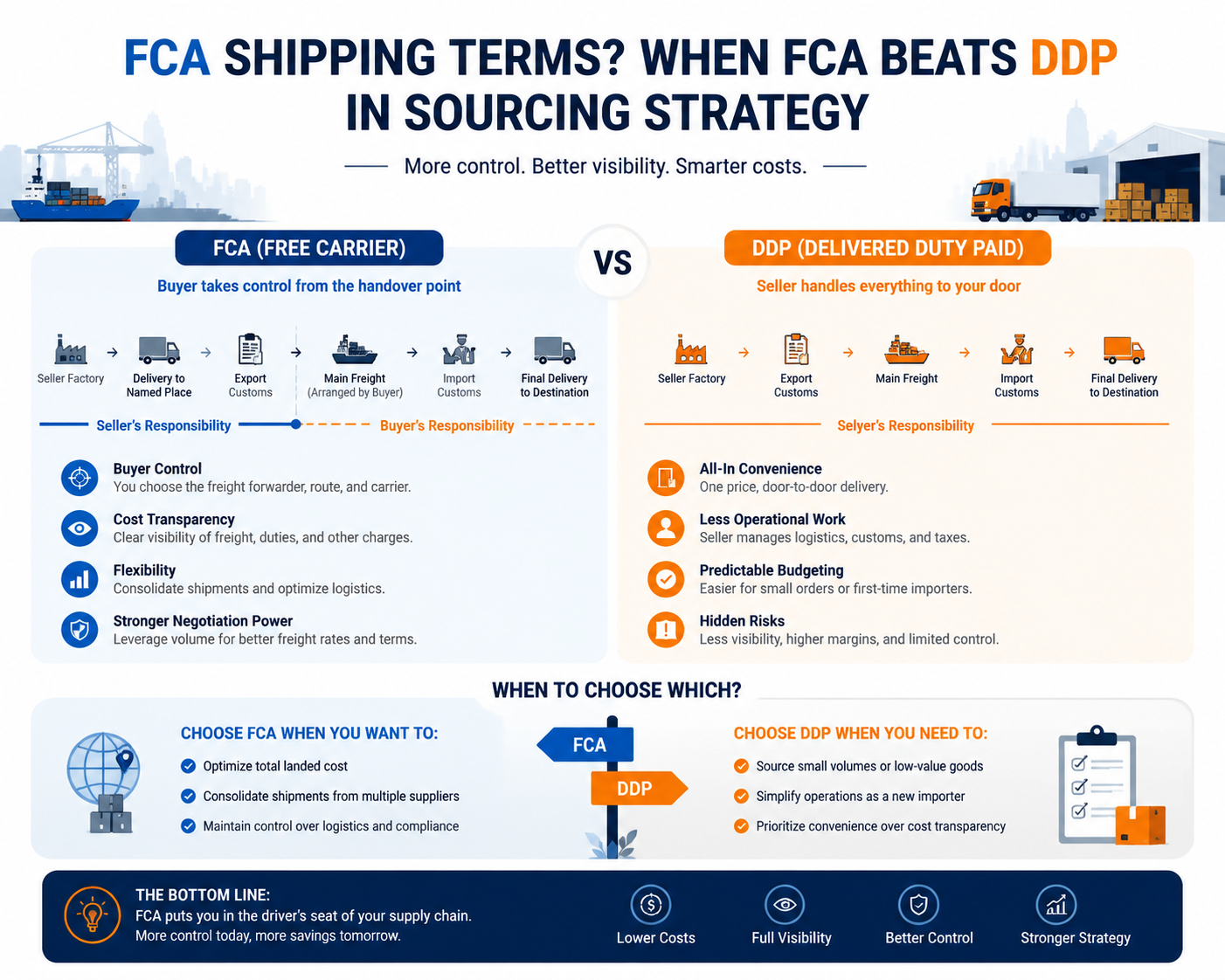
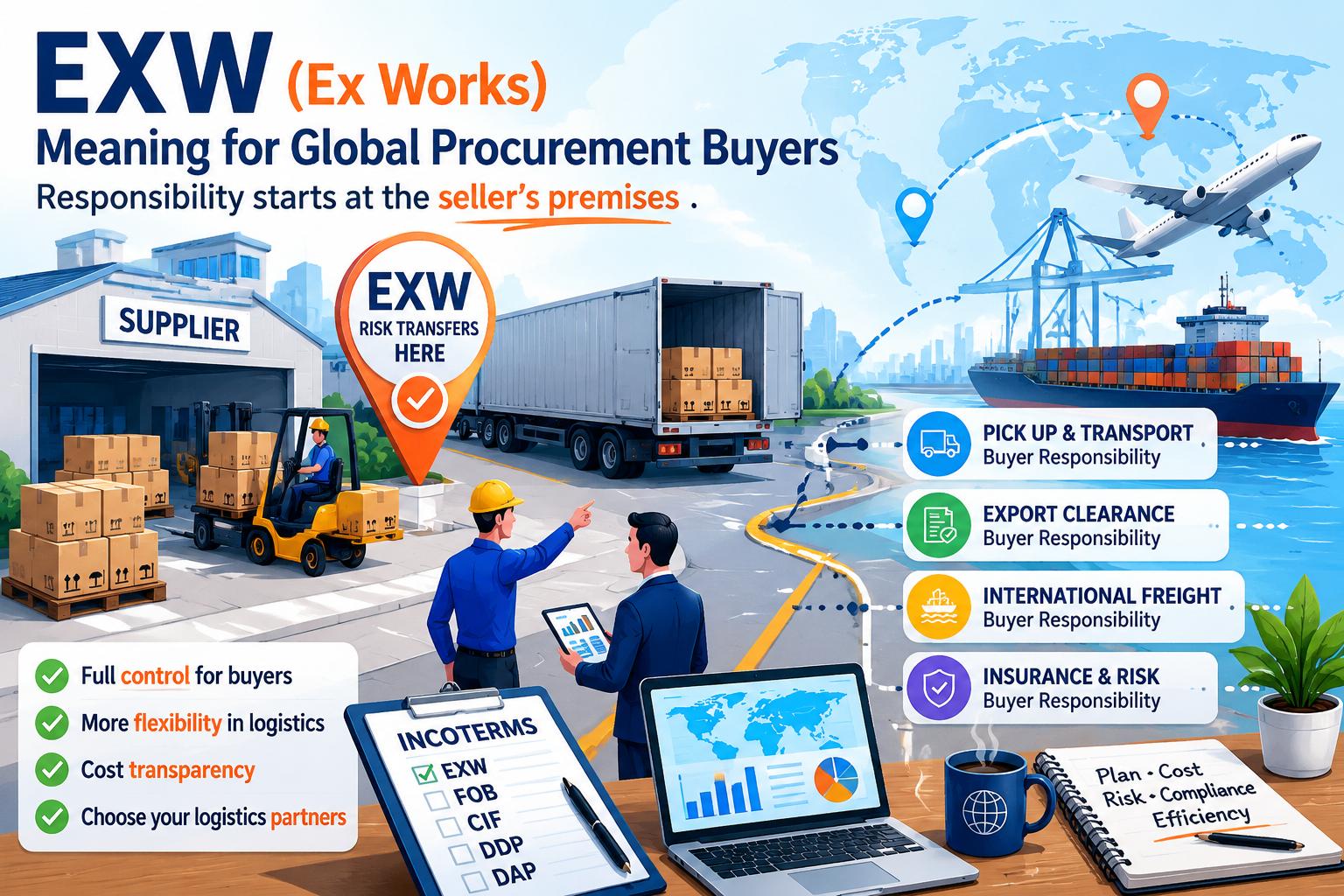
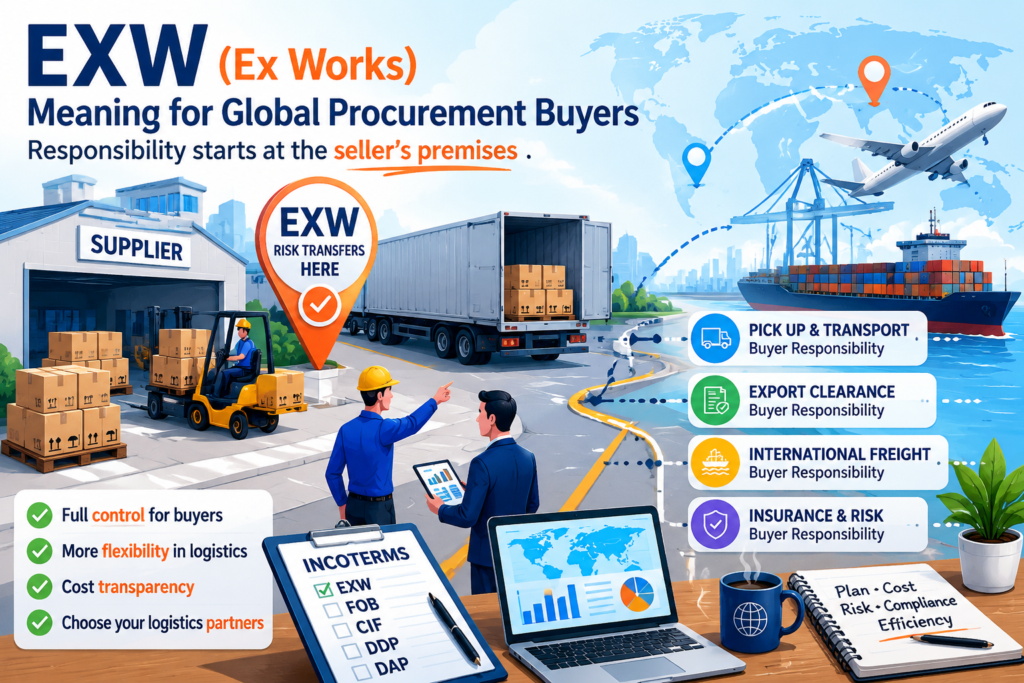
- EXW (Ex Works) – The buyer assumes nearly all transportation responsibilities.
- FOB (Free on Board) – The seller delivers goods to the export port, while the buyer manages international freight and import procedures.
- CIF (Cost, Insurance, and Freight) – The seller pays transportation costs to the destination port, but the buyer handles customs clearance and local delivery.
- DDP (Delivered Duty Paid) – The seller manages almost every stage until final delivery.
3. Why Procurement Professionals Choose DDP Shipping
3.1 Better Budget Control
Procurement managers can evaluate supplier quotations using a more complete cost structure because freight, duties, and taxes are typically incorporated into the overall price. This reduces financial ambiguity and minimizes unexpected budget deviations.
3.2 Reduced Administrative Work
Managing international logistics requires substantial administrative effort, including customs coordination, documentation review, regulatory compliance, tax calculations, and carrier communication. DDP shifts much of this workload away from the importer, allowing procurement teams to focus on strategic sourcing activities.
3.3 Improved Supply Chain Visibility
Modern DDP providers frequently offer shipment tracking and milestone updates, enabling procurement departments to forecast inventory arrivals, plan warehouse operations, coordinate project schedules, and improve stakeholder communication.
4. Key Benefits of Shipping China to Nigeria DDP
4.1 Simplified Customs Clearance
Customs procedures can be complex, particularly for companies unfamiliar with Nigerian import regulations. DDP providers handle documentation submission, duty assessment, customs interactions, and regulatory compliance, reducing procedural bottlenecks and accelerating cargo movement.
4.2 Lower Risk of Unexpected Charges
DDP helps mitigate surprises by consolidating costs into a comprehensive quotation, resulting in fewer budget overruns and improved cost predictability.
4.3 Faster Delivery Coordination
Because a single logistics provider manages the shipment chain, communication becomes more streamlined. Procurement teams typically deal with one primary point of contact, leading to faster issue resolution and smoother cargo movement.
5. Major Shipping Methods Available
5.1 Air Freight DDP
Air freight offers exceptional speed, with typical transit times ranging from 5 to 12 days depending on routing and customs requirements. Ideal for urgent orders, high-value cargo, critical spare parts, and time-sensitive inventory, though it comes at a higher cost.
5.2 Sea Freight DDP
Sea freight is cost-effective for large shipments, offering higher cargo capacity and better economics for bulk procurement. Transit times generally range from 30 to 60 days.
5.3 Rail and Multimodal Alternatives
Multimodal transportation combines truck, rail, ocean, or air freight to optimize cost and efficiency. This approach provides flexibility for specialized supply chain requirements.
6. Comparing Air Freight and Sea Freight DDP
6.1 Cost Considerations
Sea freight is significantly cheaper for heavy or bulky cargo, while air freight may cost several times more but offers substantial time savings. Procurement teams must evaluate total project economics rather than transportation costs alone.
6.2 Transit Time Differences
Air freight provides rapid delivery, while sea freight requires longer lead times. Choosing the wrong transportation mode can create inventory shortages or excessive logistics spending.
6.3 Best Use Cases for Each Method
- Air Freight: Emergency spare parts, prototype components, critical production materials
- Sea Freight: Machinery, industrial equipment, bulk inventory, long-term procurement programs
7. Typical Shipping Process from China to Nigeria
7.1 Supplier Pickup and Cargo Collection
Cargo is collected from the supplier's facility. Forwarders verify packaging quality, cargo dimensions, labeling accuracy, and documentation completeness.
7.2 Export Customs Procedures in China
Chinese customs authorities review export declarations and supporting documentation. Compliance at this stage is crucial to prevent shipment delays.
7.3 Import Clearance and Final Delivery in Nigeria
Upon arrival, Nigerian customs authorities assess the cargo before release. After clearance, goods proceed to the final destination for delivery.
8. Documentation Required for DDP Shipments
8.1 Commercial Invoice
The commercial invoice contains essential transaction details, including product descriptions, unit values, total value, buyer information, and seller information.
8.2 Packing List
Packing lists support customs inspections and warehouse operations, detailing carton counts, dimensions, weights, and packaging structure.
8.3 Import and Customs Supporting Documents
Additional documentation may include certificates of origin, product certifications, inspection reports, and regulatory permits.
9. Understanding Shipping Costs Under DDP
9.1 Freight Charges
Freight costs include inland transportation, export handling, international transportation, and destination delivery. These charges form a substantial portion of the total DDP quotation and vary depending on cargo dimensions, transportation mode, routing, and seasonal market conditions.
Procurement professionals should analyze freight costs carefully because transportation expenses can significantly impact overall landed costs. Understanding freight structures allows buyers to identify cost-saving opportunities while maintaining supply chain reliability.
9.2 Duties and Taxes
Duties and taxes vary according to product category, customs classification, and applicable regulations. Understanding these costs is essential for procurement planning.
Import duties in Nigeria are generally determined based on Harmonized System (HS) classifications and customs valuation methods. Incorrect assumptions regarding duty rates can distort procurement budgets and negatively affect profitability.
Under DDP arrangements, these obligations are usually included in the freight provider's quotation, creating greater transparency and reducing financial uncertainty.
9.3 Local Delivery and Handling Fees
Final delivery costs may involve warehousing, handling, last-mile transportation, and administrative services.
Although these charges are often overlooked during supplier negotiations, they can represent a meaningful component of the total logistics expenditure. A comprehensive DDP quotation should clearly identify all delivery-related services to avoid misunderstandings.
10. Factors That Affect DDP Shipping Rates
10.1 Cargo Volume and Weight
Transportation pricing is heavily influenced by cargo dimensions and weight. Larger shipments often benefit from economies of scale, particularly when utilizing Full Container Load (FCL) ocean freight services.
Air freight pricing typically relies on chargeable weight calculations, which consider both physical weight and volumetric dimensions. Procurement teams should therefore optimize packaging configurations whenever possible.
10.2 Product Category and HS Code
Customs duties depend on accurate HS code classification. Even minor classification differences can significantly affect import costs.
Certain products may also require additional certifications, inspections, or regulatory approvals, all of which can influence overall shipping expenses and clearance timelines.
For detailed information regarding the Harmonized System, refer to World Customs Organization HS System Overview.
10.3 Seasonal Market Conditions
Peak shipping seasons frequently create capacity constraints and price increases.
- Chinese New Year
- Golden Week
- Holiday retail seasons
- Year-end inventory replenishment periods
Strategic procurement planning can help organizations secure better freight rates and avoid congestion-related delays.
11. Customs Clearance Challenges and Solutions
11.1 Common Documentation Errors
Frequent mistakes include incorrect values, missing descriptions, inconsistent quantities, and incomplete paperwork.
Such errors often trigger customs inspections, document reviews, and additional compliance checks that can delay cargo release.
Procurement professionals should establish document verification procedures before shipment departure to reduce risk.
11.2 Delays Caused by Incorrect Classification
Misclassified products frequently face customs scrutiny and may be subject to reassessment or penalties.
Accurate HS coding is therefore critical for efficient customs clearance and cost management.
Collaborating with customs specialists during the sourcing phase can prevent classification disputes later in the import process.
11.3 Working with Experienced Customs Specialists
Seasoned customs professionals understand evolving regulations and can proactively resolve compliance issues before they become costly problems.
Their expertise often results in faster clearance, reduced administrative burden, and improved supply chain continuity.
12. How to Calculate Total Landed Cost
12.1 Components of Landed Cost
Landed cost typically includes:
- Product cost
- Freight cost
- Duties
- Taxes
- Insurance
- Handling fees
- Warehousing expenses
- Compliance-related costs
Understanding each component enables procurement teams to make more informed sourcing decisions.
12.2 Building Accurate Procurement Budgets
Comprehensive landed-cost calculations provide a realistic foundation for procurement planning.
Rather than evaluating suppliers solely on ex-factory pricing, organizations should assess the complete financial impact of importing goods into Nigeria.
This approach supports stronger budgeting accuracy and reduces the likelihood of unpleasant surprises.
12.3 Cost Comparison Across Suppliers
Comparing suppliers based solely on product price can be misleading.
One supplier may offer lower manufacturing costs while generating significantly higher logistics expenses. Another supplier may provide a more competitive total landed cost despite a higher unit price.
Evaluating suppliers through a total-cost-of-ownership lens creates better procurement outcomes.
13. Risk Management Strategies for Importers
13.1 Cargo Insurance Considerations
Insurance protects against damage, theft, loss, and transit disruptions.
International supply chains inevitably face uncertainties ranging from weather disruptions to handling incidents. Cargo insurance serves as a valuable financial safeguard that protects procurement investments.
13.2 Supplier Verification Procedures
Verification should include:
- Factory audits
- Business registration reviews
- Production capability assessments
- Quality evaluations
- Reference checks
Thorough supplier verification reduces operational risks and strengthens long-term sourcing stability.
13.3 Contingency Planning for Delays
Every procurement strategy should incorporate contingency measures to address unforeseen disruptions.
Maintaining safety stock, identifying secondary suppliers, and establishing alternative transportation options can significantly improve supply chain resilience.
As experienced purchasing professionals often say, hope for the best but plan for the unexpected.
14. Choosing the Right Freight Forwarder
14.1 Industry Experience in Nigeria Trade Routes
Experience matters.
Forwarders familiar with China-Nigeria logistics corridors typically possess deeper operational knowledge, stronger carrier relationships, and greater familiarity with local customs procedures.
This expertise frequently translates into smoother shipment execution and fewer disruptions.
14.2 Customs and Regulatory Expertise
Regulatory competence helps avoid costly delays and compliance issues.
Import requirements evolve continuously, making regulatory awareness a critical capability for any logistics partner.
Experienced forwarders provide valuable guidance regarding documentation, classification, and import procedures.
14.3 Service Transparency and Communication
Reliable communication enables procurement teams to react quickly when supply chain conditions change.
Forwarders should provide regular status updates, proactive issue notifications, and transparent pricing structures.
Strong communication minimizes uncertainty and enhances decision-making.
15. Common Mistakes Procurement Teams Should Avoid
15.1 Selecting Suppliers Based Only on Price
The lowest quote is not always the best deal.
Quality deficiencies, production delays, inconsistent performance, and logistics inefficiencies can rapidly eliminate apparent savings.
Procurement decisions should balance cost, quality, delivery performance, and risk exposure.
15.2 Ignoring Hidden Logistics Risks
Failure to evaluate transportation risks may result in schedule disruptions and financial losses.
Potential risks include carrier congestion, customs delays, documentation issues, and infrastructure limitations.
Comprehensive risk assessments support more resilient procurement strategies.
15.3 Failing to Verify DDP Coverage Details
Not all DDP arrangements are identical.
Procurement teams should clearly confirm exactly which costs and services are included within the quoted DDP rate.
Clarification before shipment prevents disputes and ensures expectations remain aligned.
16. Industry-Specific DDP Shipping Considerations
16.1 Consumer Goods and Retail Products
Retail products often require strict inventory timing and rapid replenishment cycles. Delays can lead to stockouts, lost sales opportunities, and dissatisfied customers.
For consumer goods importers, DDP shipping provides valuable predictability because freight costs, duties, and customs procedures are typically incorporated into a single logistics solution. This allows purchasing teams to forecast inventory arrivals with greater confidence.
Products commonly imported from China into Nigeria under DDP terms include:
- Household appliances
- Fashion accessories
- Furniture
- Consumer electronics
- Kitchenware
- Personal care products
Retail procurement departments often benefit significantly from DDP arrangements because simplified logistics management helps maintain optimal inventory turnover and supports accurate demand forecasting.
16.2 Industrial Equipment and Machinery
Machinery shipments demand careful handling, specialized packaging, and precise documentation.
Industrial equipment frequently represents a substantial capital investment. Procurement engineers must ensure that cargo is adequately protected throughout transportation to prevent damage that could delay installation schedules or increase project costs.
Key considerations include:
- Wooden crate specifications
- Heavy-lift handling requirements
- Equipment dimensions
- Import certifications
- Technical documentation
- Installation schedules
DDP shipping can streamline machinery procurement by consolidating transportation, customs clearance, and delivery activities into a coordinated logistics framework.
16.3 Electronics and High-Value Cargo
Electronics frequently require enhanced security measures and regulatory compliance checks.
High-value products such as telecommunications equipment, industrial control systems, semiconductors, and computer hardware often present elevated risk profiles due to their value density.
Procurement teams should prioritize:
- Cargo insurance coverage
- Secure transportation methods
- Real-time shipment tracking
- Compliance verification
- Quality inspection procedures
Proper risk management ensures that sensitive and valuable cargo reaches its destination safely and efficiently.
17. Strategies for Reducing Import Costs
17.1 Consolidating Multiple Shipments
Shipment consolidation remains one of the most effective methods for reducing logistics costs.
By combining multiple purchase orders into a single shipment, importers can improve container utilization and reduce per-unit transportation expenses.
Benefits of consolidation include:
- Lower freight costs
- Reduced customs processing expenses
- Improved cargo handling efficiency
- Enhanced inventory planning
- Fewer shipment management requirements
For procurement organizations sourcing from multiple Chinese suppliers, consolidation programs can generate substantial annual savings.
17.2 Optimizing Packaging and Cargo Space
Efficient packaging lowers dimensional weight and maximizes freight efficiency.
Many importers unknowingly pay excessive transportation costs because of inefficient packaging designs that consume unnecessary cargo space.
Packaging optimization strategies may include:
- Reducing empty carton space
- Improving pallet configurations
- Utilizing stackable packaging
- Minimizing non-essential materials
- Standardizing packaging dimensions
Small packaging improvements often produce meaningful logistics savings over time.
17.3 Planning Purchases Around Peak Seasons
Strategic purchasing schedules can avoid market congestion and reduce transportation premiums.
Freight rates frequently increase during periods of heightened demand, particularly around major holidays and manufacturing peak seasons.
Procurement teams that forecast requirements early can often secure:
- Better freight rates
- Improved carrier availability
- More reliable transit schedules
- Reduced congestion exposure
Good planning is often the simplest and most effective cost-reduction strategy available.
18. Building a Reliable China-to-Nigeria Supply Chain
18.1 Supplier Relationship Management
Strong supplier partnerships frequently lead to improved pricing, better service levels, and enhanced operational cooperation.
Long-term relationships encourage transparency, facilitate issue resolution, and support continuous improvement initiatives.
Procurement professionals should regularly evaluate supplier performance through measurable metrics and structured review processes.
Important evaluation areas include:
- Product quality
- Delivery performance
- Communication responsiveness
- Pricing competitiveness
- Production flexibility
18.2 Logistics Performance Monitoring
Key performance indicators should include:
- On-time delivery
- Transit time consistency
- Cost performance
- Damage rates
- Customs clearance efficiency
- Inventory availability
Regular performance monitoring enables procurement teams to identify inefficiencies and implement corrective actions before problems escalate.
Data-driven logistics management has become increasingly important in modern global supply chains.
18.3 Continuous Procurement Optimization
The most successful procurement organizations continuously refine sourcing strategies, transportation methods, and supplier networks.
Supply chains are dynamic ecosystems rather than static systems. Market conditions, regulations, transportation costs, and supplier capabilities evolve continuously.
Continuous optimization may involve:
- Supplier diversification
- Transportation redesign
- Inventory optimization
- Technology adoption
- Contract renegotiation
- Risk mitigation improvements
Organizations that embrace continuous improvement often achieve superior cost control and operational resilience.
19. Future Trends in China-Nigeria Trade and Logistics
19.1 Digital Freight Management
Digital platforms are transforming shipment visibility and logistics planning through automation and real-time analytics.
Modern freight management systems enable procurement professionals to monitor shipments, analyze performance metrics, and optimize transportation decisions from centralized digital platforms.
Key benefits include:
- Real-time tracking
- Automated reporting
- Enhanced forecasting
- Improved decision-making
- Reduced administrative workload
Digital transformation continues to reshape the logistics industry at an accelerated pace.
19.2 Supply Chain Visibility Technologies
Advanced tracking systems provide unprecedented transparency throughout the transportation process.
Technologies such as IoT sensors, cloud-based logistics platforms, artificial intelligence, and predictive analytics are helping organizations improve supply chain visibility and operational control.
These innovations support proactive management by allowing procurement teams to identify potential disruptions before they affect operations.
For additional information on global trade facilitation and logistics modernization, visit the United Nations Conference on Trade and Development (UNCTAD).
19.3 Growth Opportunities for Nigerian Importers
Expanding trade volumes, infrastructure improvements, and increasing industrialization create substantial opportunities for import-focused businesses.
As Nigeria continues to diversify its economy and invest in industrial development, demand for imported machinery, manufacturing inputs, technology products, and consumer goods is expected to remain robust.
Companies that establish efficient procurement and logistics frameworks today will be better positioned to capitalize on future growth opportunities.
20. Conclusion: Achieving Smarter Procurement Wins with DDP
20.1 Key Takeaways for Procurement Professionals
DDP shipping provides:
- Cost predictability
- Simplified logistics
- Reduced administrative burden
- Improved supply chain visibility
- Enhanced budget control
- Lower operational risk
For procurement professionals tasked with balancing cost, quality, and delivery performance, DDP offers a practical framework for improving supply chain efficiency.
20.2 Checklist for Successful DDP Imports
Before placing an order:
- Verify supplier credibility
- Confirm DDP scope
- Review documentation requirements
- Validate HS classifications
- Assess insurance coverage
- Select experienced logistics partners
- Review delivery schedules
- Evaluate landed costs
- Establish contingency plans
A structured procurement process reduces uncertainty and increases the likelihood of successful import operations.
20.3 Next Steps for Improving Import Efficiency and Profitability
Organizations seeking smarter procurement outcomes should evaluate DDP as part of a broader supply chain optimization strategy.
When executed correctly, shipping China to Nigeria under DDP terms can enhance budgeting accuracy, improve operational efficiency, reduce procurement risks, and strengthen long-term competitiveness.
For procurement engineers and sourcing professionals responsible for managing increasingly complex international supply chains, DDP remains one of the most practical and strategically advantageous logistics solutions available in today's interconnected global marketplace.
To further understand international shipping terminology and responsibilities, consult the Incoterms overview, the International Chamber of Commerce Incoterms Rules, and the U.S. International Trade Administration for trade-related guidance and resources.