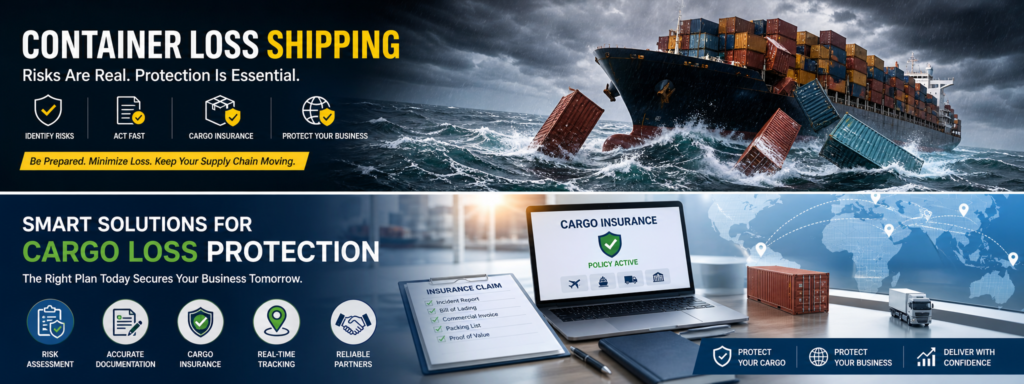
Container loss shipping guide: causes, claim process, carrier liability limits,
and how cargo insurance protects your business from total loss risks.
1. What Is Container Loss in Shipping?
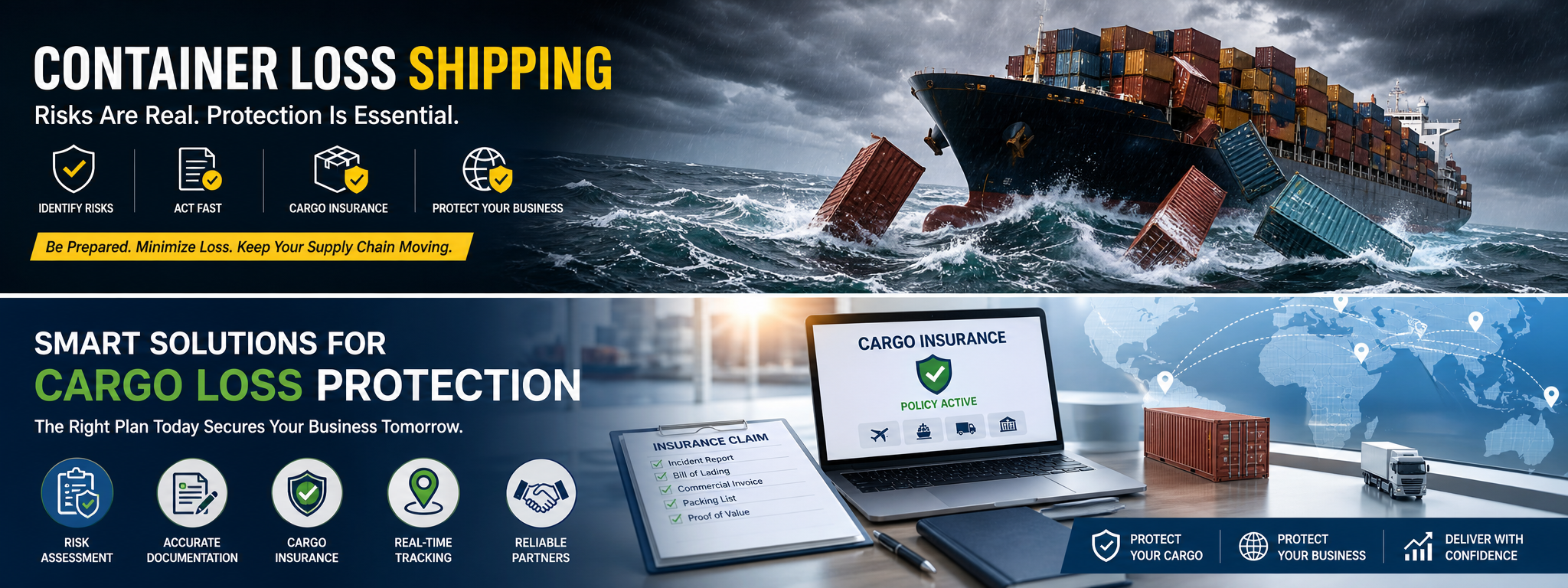
Container loss refers to situations where a full container fails to reach the consignee due to unexpected events, including:
- Vessel accidents (sinking, fire, collision)
- Containers falling overboard during rough seas
- Port handling errors (misloading or misdelivery)
- Theft or unauthorized diversion
- Long-term missing status (deemed “constructive total loss”)
From a legal standpoint, this is categorized as either:
- Total Loss
- Constructive Total Loss
2. Main Causes of Container loss shipping
1. Natural Risks
Severe weather conditions such as typhoons and heavy swells can cause containers to fall into the sea.
2. Operational Errors
Incorrect loading, container misplacement, or terminal mismanagement may result in lost containers.
3. Transit Complexity
Multiple transshipment points increase the risk of misrouting or loss.
4. Security Risks
Certain trade lanes (e.g., parts of Africa or Latin America) have higher risks of cargo theft or hijacking.
3. Standard Procedure After Container Loss
Once container loss is suspected or confirmed, immediate action is critical:
Step 1: Verify the Incident
- Request an official incident report from the carrier or freight forwarder
- Confirm container number, Bill of Lading (B/L), and last known location
Step 2: Submit Claim Notice
- Send a written claim notice to the carrier
- Must typically be filed within 3–15 days (depending on contract terms)
Step 3: Prepare Documentation
Essential documents include:
- Commercial Invoice
- Packing List
- Bill of Lading
- Sales Contract or Proof of Value
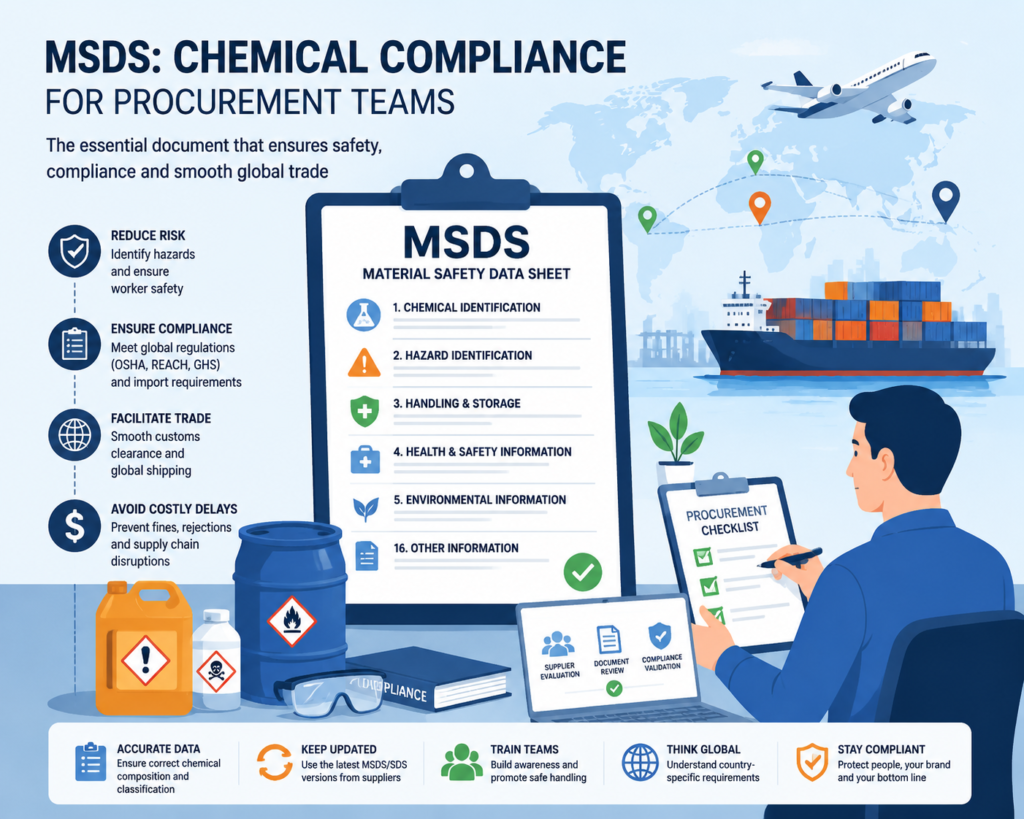
- Insurance Policy (if applicable)
Step 4: Prioritize Insurance Claim
If cargo insurance is in place:
- File claim directly with the insurer
- Insurance company will handle recovery from the carrier (subrogation)
4. Compensation Mechanism Explained
1. Carrier Liability (Shipping Line)
Under international conventions (e.g., Hague-Visby Rules):
- Compensation follows limited liability principle
- Standard limits:
- 666.67 SDR per package OR 2 SDR per kg (whichever is higher)
👉 This means:
Without declared value, compensation is often far below actual cargo value.
2. Cargo Insurance (Recommended Solution)
With proper cargo insurance:
- Compensation is based on actual cargo value
- Coverage includes:
- Loss
- Damage
- General average events
👉 In real-world logistics, most full-loss claims are settled via insurance, not carriers.
5. How to Minimize Container Loss Risk
From a professional logistics management perspective:
1. Purchase Full Insurance
- Choose All Risks coverage
- Avoid relying solely on carrier liability
2. Select Reliable Carriers
- Use major shipping lines with strong safety records
- Reduce unnecessary transshipment routes
3. Strengthen Documentation Accuracy
- Ensure correct Bill of Lading details
- Avoid risks like cargo release without original documents
4. Implement Real-Time Tracking
- Use GPS or IoT tracking devices
- Detect abnormal delays or route deviations early
5. Optimize Contract Terms
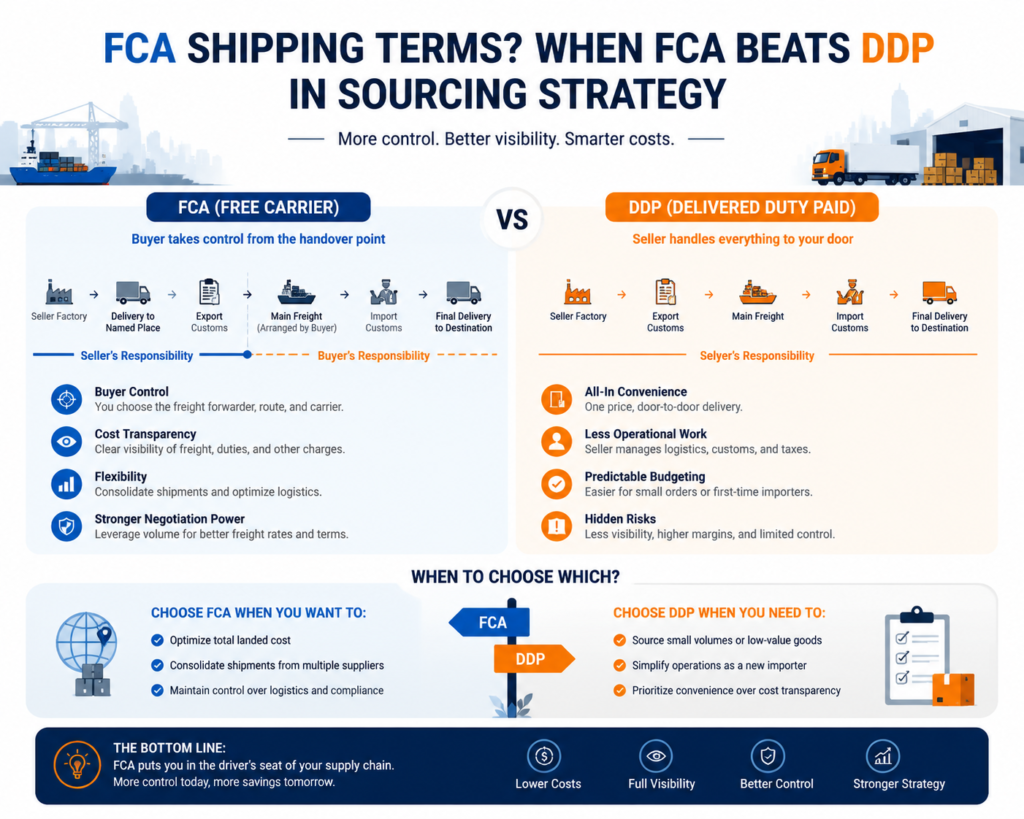
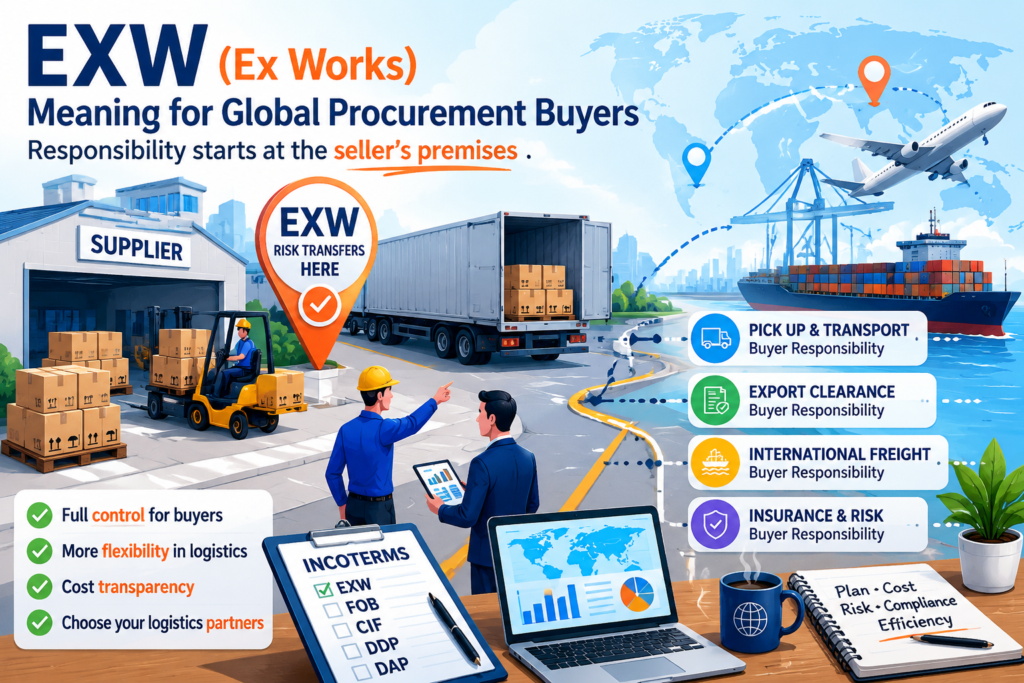
- Clearly define responsibilities under Incoterms (FOB, CIF, DDP)
- Include dispute resolution and liability clauses
6. Key Takeaways
Handling container loss shipping is less about recovering cargo and more about minimizing financial damage efficiently:
- Confirm loss and secure evidence immediately
- Act fast within claim deadlines
- Use insurance as the primary compensation channel
- Continuously improve supply chain risk management
📞 Call To Action