Table of Contents
China to Europe Logistics: Best Routes for On-Time Shipments
1. Introduction to China to Europe Logistics
1.1 Overview of China-Europe trade volume
The trade artery between China and Europe is nothing short of colossal, moving trillions of dollars in goods annually. From high-precision machinery and consumer electronics to textiles and automotive components, this corridor is the lifeblood of global commerce. For a procurement engineer, understanding the sheer scale and complexity is crucial; shipments are not just boxes on a truck—they’re meticulously coordinated operations that impact production schedules, inventory levels, and ultimately, the bottom line. With thousands of containers moving through ports, railways, and air cargo hubs each week, a single delay can ripple across supply chains on both continents.
1.2 Importance of on-time shipments
On-time delivery is the difference between a smooth production cycle and a procurement nightmare. Missed deadlines translate into idle production lines, inflated warehousing costs, and potential contractual penalties. Brand procurement professionals often live by the mantra “time is money,” and in logistics, it’s especially true. Reliable transit ensures that shelves are stocked, factories keep humming, and customer expectations are met without a hitch. In an era where just-in-time manufacturing is the gold standard, lateness simply isn’t an option—it can erode trust and profitability faster than you can say supply chain disruption.
1.3 Challenges in international logistics
International logistics is a labyrinthine beast. From variable customs regulations and unpredictable port congestion to geopolitical tensions and currency fluctuations, there’s no shortage of hurdles. Weather unpredictability, labor strikes, and infrastructural bottlenecks can also wreak havoc. Navigating this terrain demands foresight, agility, and a deep understanding of cross-border protocols.
2. Key Factors Affecting Shipment Timeliness
2.1 Customs clearance procedures
Customs procedures can be a major choke point. Each country enforces unique documentation, tariff classifications, and inspection requirements. Even minor discrepancies in paperwork can hold shipments for days.
2.2 Transportation infrastructure and capacity
Infrastructure quality directly influences transit speed. Ports equipped with automated cranes, rail hubs with modern terminals, and highways capable of handling heavy truck traffic are game-changers.
2.3 Seasonal demand and peak periods
Holiday seasons, Black Friday, and end-of-year inventory surges can drastically alter shipping timelines. High traffic periods often lead to longer transit times and congestion.
3. Understanding Major China to Europe Trade Routes
3.1 Northern route via Russia
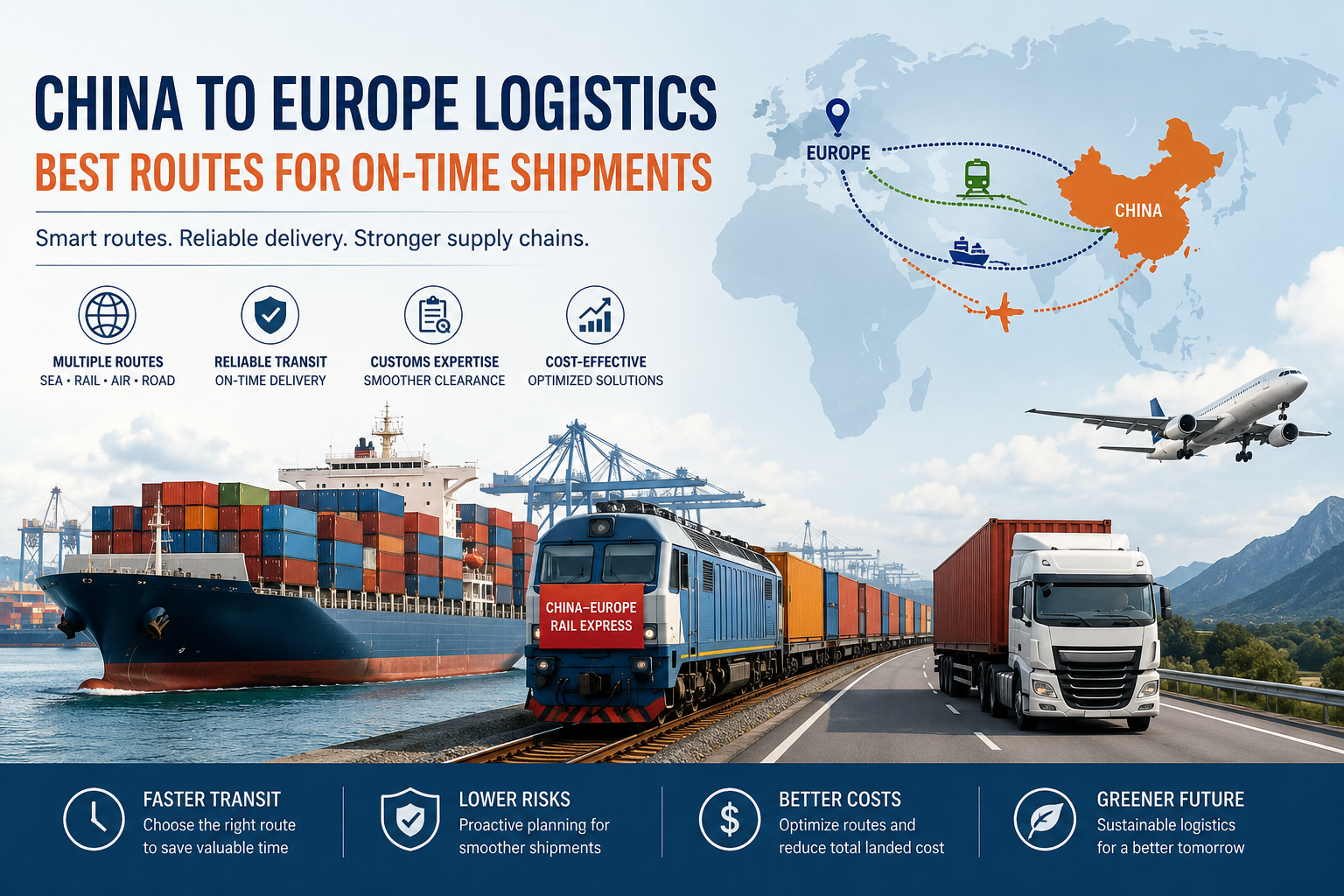
The Northern route traverses through Russia via the Trans-Siberian Railway. It is faster than sea freight but sensitive to geopolitical conditions.
3.2 Central route via Central Asia
The Central route passes through Kazakhstan and Central Asia under Belt and Road corridors, balancing cost and speed.
3.3 Southern route via maritime shipping
The Southern route uses maritime lanes via the Suez Canal, suitable for high-volume shipments with longer transit times.
4. Sea Freight Routes Overview
4.1 Major Chinese ports for Europe shipments
Shanghai, Ningbo, Shenzhen, and Guangzhou serve as primary export hubs with high throughput capacity.
4.2 Popular European destination ports
Rotterdam, Hamburg, Antwerp, and Bremerhaven are key entry points into Europe.
4.3 Average transit times and frequency
Sea freight typically takes 28 to 40 days depending on route and conditions.
5. Rail Freight Options
5.1 Belt and Road Initiative impact
The Belt and Road Initiative has significantly expanded rail connectivity across Eurasia, reducing transit times.
5.2 Key rail corridors and hubs
Key corridors include China-Kazakhstan-Russia-Europe routes with hubs in Duisburg and Hamburg.
5.3 Benefits and limitations of rail shipping
Rail offers a balance between cost and speed but has limited flexibility for oversized cargo.
6. Air Freight Considerations
6.1 Major cargo airports in China and Europe
Shanghai Pudong, Beijing Capital, Frankfurt, and Amsterdam Schiphol dominate air freight flows.
6.2 Cost versus speed trade-offs
Air freight is fast but expensive, often used for high-value or urgent shipments.
6.3 Best practices for urgent shipments
Advance booking and consolidation help ensure timely air cargo delivery.
7. Road Transportation and Last-Mile Delivery
7.1 Cross-border trucking routes
Trucking connects ports and rail terminals to final destinations across Europe.
7.2 Regulations and permits
Cross-border transport requires compliance with EU driving, weight, and cabotage regulations.
7.3 Optimizing final delivery in Europe
Local distribution networks and route optimization tools improve last-mile efficiency.
8. Multimodal Logistics Solutions
8.1 Combining rail, sea, and road
Multimodal logistics integrates multiple transport modes to maximize efficiency.
8.2 Advantages of multimodal shipping
It reduces costs while improving flexibility and resilience.
8.3 Common multimodal routes
Typical routes include sea to Hamburg followed by rail distribution across Europe.
9. Customs and Documentation Essentials
9.1 Required export and import documents
Key documents include commercial invoices, packing lists, and bills of lading.
9.2 Tariff classifications and duties
Correct HS codes ensure accurate duty calculation and faster clearance.
9.3 Tips to avoid customs delays
Pre-clearance and accurate documentation reduce border delays significantly.
10. Risk Management in China to Europe Logistics
10.1 Common risks in transit
Weather disruptions, strikes, theft, and geopolitical risks impact shipping reliability.
10.2 Insurance options for shipments
Cargo insurance protects against loss and damage during transit.
10.3 Contingency planning strategies
Alternative routing and buffer inventory help maintain supply chain continuity.
11. Technology in Logistics Management
11.1 Tracking and visibility systems
GPS and IoT tracking improve shipment visibility across the supply chain.
11.2 Predictive analytics for route optimization
AI-driven analytics help optimize routes and reduce delays.
11.3 Automation in warehouse and transport
Automation increases efficiency and reduces human error in logistics operations.
12. Cost Optimization Strategies
12.1 Comparing shipping modes
Each mode offers different trade-offs between cost and speed.
12.2 Consolidation and volume discounts
Bulk shipping reduces per-unit transportation costs.
12.3 Fuel surcharges and seasonal pricing
Fuel fluctuations impact total logistics expenses significantly.
13. Sustainability Considerations
13.1 Carbon footprint of different routes
Sea freight emits less CO2 compared to air transport.
13.2 Eco-friendly packaging and transport
Sustainable packaging reduces environmental impact.
13.3 Green logistics certifications
Certifications such as ISO 14001 validate environmental compliance.
14. Choosing the Right Freight Forwarder
14.1 Evaluating experience and network
A strong logistics network ensures smoother operations.
14.2 Service offerings and flexibility
End-to-end services improve supply chain integration.
14.3 Customer support and reliability
Responsive communication ensures operational stability.
15. Real-World Case Studies
15.1 Successful sea freight route examples
Optimized sea routes reduce delays and improve reliability.
15.2 Efficient rail transport case studies
Rail shipments from China to Germany cut transit time significantly.
15.3 Air freight solutions for time-sensitive cargo
Air transport ensures zero downtime for critical components.
16. Future Trends in China to Europe Logistics
16.1 Emerging trade corridors
New Arctic and Central Asian corridors are being developed.
16.2 Advances in logistics technology
AI and blockchain are transforming supply chain visibility.
16.3 Forecasting shipment demands and patterns
Data analytics improves demand prediction accuracy.
17. Conclusion
17.1 Key takeaways for procurement professionals
Efficient logistics requires strategic planning and route optimization.
17.2 Summary of best routes for on-time shipments
Each transport mode offers unique advantages depending on urgency and cost.
17.3 Recommendations for optimizing logistics strategy
Strong partnerships and data-driven decisions ensure reliable global logistics.
External References