Table of Contents
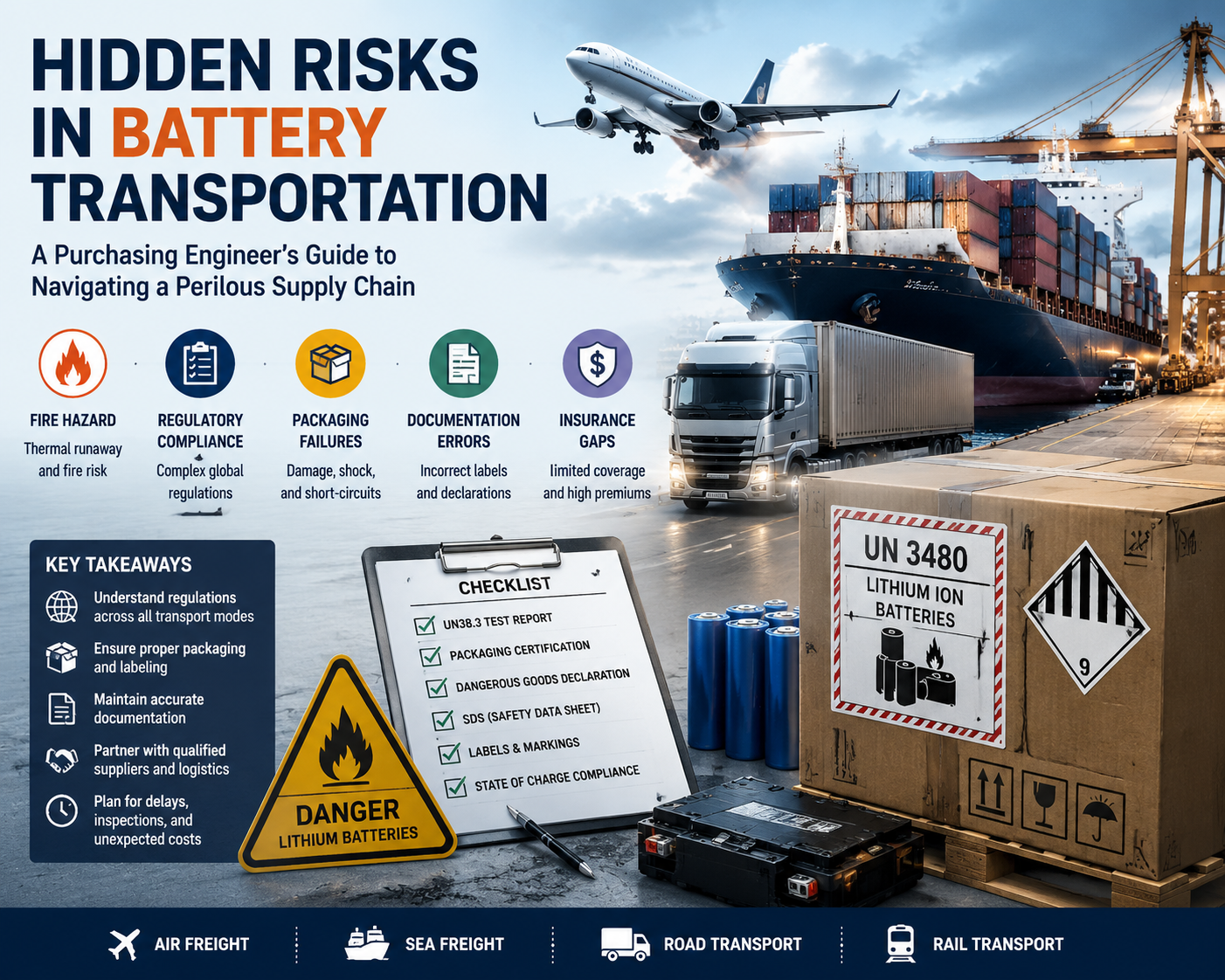
Hidden Risks in Battery Transportation: A Purchasing Engineer's Guide to Navigating a Perilous Supply Chain
1. Introduction: Hidden Risks in Battery Transportation
1.1 Why battery logistics is a high-risk supply chain segment
Battery transportation represents one of the most perilous and frequently misunderstood segments of modern logistics, primarily because the very electrochemical mechanisms that enable energy storage also create conditions conducive to catastrophic failure when subjected to mechanical stress, thermal extremes, or manufacturing anomalies. Unlike conventional dry goods where damage typically results in financial loss alone, mishandled batteries introduce the specter of thermal runaway—a self-sustaining exothermic reaction that can propagate across adjacent cells with the kind of ferocity that makes firefighters and cargo insurers lose sleep. The upshot? What you’re hauling isn’t just freight; it’s a potential Roman candle on wheels.
1.2 How procurement teams are exposed to unseen liabilities
Here’s the kicker: most procurement professionals sign logistics contracts without fully appreciating how liability shifts when hazardous materials enter the equation, leaving their organizations on the hook for everything from environmental remediation to third-party property damage. Even a seemingly minor infraction—say, a missing UN38.3 test summary or an improperly affixed Class 9 label—can void insurance coverage, trigger regulatory fines, and create legal exposure that makes a run-of-the-mill breach of contract look like small potatoes. You’re playing with fire, quite literally, if you haven’t mapped the liability transfer points across your multimodal shipping agreements.
1.3 The growing global demand for battery-powered products
As electric vehicles, portable electronics, grid storage systems, and industrial automation equipment proliferate at breakneck speed, the volume of batteries traversing global supply chains has exploded from a niche concern into a mainstream logistical headache of epic proportions. Industry analysts project double-digit annual growth in lithium battery shipments through the end of the decade, yet the regulatory infrastructure and carrier acceptance policies remain fragmented, inconsistent, and frequently playing catch-up. Translation: procurement teams are being asked to move exponentially more dangerous goods through a system that hasn’t quite gotten its act together, creating a perfect storm of operational friction and unmanaged risk.
2. Why Battery Transportation Is Structurally Complex
2.1 Energy density and inherent hazard classification challenges
The fundamental issue boils down to this: batteries store a staggering amount of potential energy in a compact form factor, and when that energy releases unintentionally—through internal short circuits, separator failures, or external damage—the results range from smoldering heat to explosive venting with flame projection. Lithium chemistry amplifies this volatility because the electrolyte is flammable and the anode/cathode materials can react violently with moisture or air, creating a failure mode that’s notoriously difficult to extinguish using conventional suppression agents. Standard dry chemical extinguishers? Mostly useless. Water? That’ll react with lithium metal to produce hydrogen gas. You see the problem.
2.2 Multi-mode logistics coordination difficulties
Battery shipments rarely travel via a single mode from origin to destination; instead, they typically bounce between trucks, trains, container vessels, and cargo aircraft, each with its own distinct set of packaging requirements, quantity limits, and stowage segregation rules that don’t always align neatly. A configuration that’s perfectly legal for road transport might get your shipment summarily rejected at an air freight gateway, and a sea container packed in compliance with IMDG Code could violate 49 CFR once it transfers to a domestic truck in Ohio. That kind of regulatory whiplash demands meticulous planning and real-time visibility across handoffs—capabilities that remain stubbornly absent in many procurement organizations.
2.3 Fragmented international compliance requirements
Just when you think you’ve mastered the nuances of IATA’s Dangerous Goods Regulations for air shipments, along comes the IMDG Code for vessels, ADR for European road transport, and a dizzying patchwork of country-specific deviations that can trip up even seasoned logistics professionals. China requires special certification for lithium battery shipments that differs from South Korea’s requirements, which differ again from Japan’s, and don’t even get me started on Brazil’s ANAC rules or Australia’s MARPOL implementation quirks. The net effect is a compliance labyrinth where ignorance is decidedly not bliss—it’s a direct path to shipment holds, customs seizures, and regulatory penalties that escalate faster than a thermal event in a fully charged pouch cell.
3. Global Regulatory Landscape for Battery Shipping
3.1 Key international rules governing lithium batteries
The United Nations Recommendations on the Transport of Dangerous Goods (UN Model Regulations) serve as the foundational framework, establishing classification criteria, packaging standards, and marking requirements that all modal regulations subsequently adopt with varying degrees of fidelity. From there, the IATA Dangerous Goods Regulations govern air transport with particular stringency—especially for passenger aircraft, where lithium battery shipments face outright bans or stringent state-of-charge restrictions depending on configuration and watt-hour rating. Underpinning everything is UN38.3, the test standard that certifies battery designs to withstand vibration, altitude simulation, thermal cycling, and impact scenarios, without which your shipment is essentially radioactive in the eyes of regulators.
3.2 Variations between air, sea, and road transport regulations
Air freight imposes the most draconian restrictions because the consequences of an in-flight fire—loss of aircraft, crew, passengers, and cargo—simply dwarf those of a truck fire on an isolated highway; consequently, IATA limits lithium battery shipments to a 30% state of charge for passenger aircraft (where permitted at all) and enforces strict net quantity caps per package. Sea freight, governed by the IMDG Code, allows higher quantities but demands more robust packaging, segregation from incompatible materials, and specialized fire suppression systems on container vessels, though enforcement at ports remains notoriously inconsistent. Road transport, regulated by ADR in Europe and 49 CFR in the United States, offers the most flexibility but introduces risks around driver training, emergency response equipment, and the simple fact that a burning semi-trailer can incinerate hours of transit time and millions in product value before firefighters arrive.
3.3 Compliance updates impacting procurement planning cycles
Regulatory changes occur on a biennial cycle for IATA and IMDG, with amendments that frequently catch procurement teams flat-footed—for example, the 2023 update that reclassified certain small lithium-metal cells under new UN numbers, requiring wholesale revisions to existing shipping papers and package markings. Staying ahead of these shifts demands either a dedicated regulatory monitoring function or a third-party logistics partner that eats compliance news for breakfast, because the alternative is discovering your carefully negotiated freight rates are suddenly worthless when carriers reject improperly documented shipments. Procurement cycles that run twelve to eighteen months must bake in regulatory uncertainty as a variable, or risk obsolescence before the first container even loads.
4. Battery Classification and Risk Categories
4.1 Lithium-ion vs lithium-metal transport differences
Lithium-ion batteries, which are rechargeable and contain lithium compounds in the electrolyte, fall under UN3480 (standalone cells/batteries) or UN3481 (contained in equipment), whereas lithium-metal batteries—typically non-rechargeable primary cells using metallic lithium—are classified under UN3090 and UN3091 respectively, with the latter facing even tighter restrictions due to the extreme reactivity of metallic lithium. The distinction matters enormously in practice: lithium-metal cells are generally prohibited on passenger aircraft outright, while lithium-ion shipments may proceed under specific conditions, and confusing the two on a dangerous goods declaration is the kind of paperwork error that generates immediate fines and potentially criminal liability. To put it bluntly, mixing them up is like confusing gasoline with diesel—both flammable, but one will get you into considerably hotter water.
4.2 UN classification and hazard identification systems
Each battery configuration receives a UN number, proper shipping name, hazard class (Class 9 for lithium batteries—Miscellaneous Dangerous Goods), packing group (typically PG II for moderate danger), and special provisions that modify standard requirements based on cell type, watt-hour rating, or lithium metal content. The classification cascade determines everything from allowable package quantities to stowage categories, segregation from other dangerous goods, and emergency response codes; get the classification wrong, and your shipment is legally considered undeclared dangerous goods—an offense that carriers and customs authorities treat with roughly the same enthusiasm as a false bomb threat. Procurement teams must therefore demand classification documentation from suppliers, validate it against regulatory texts, and maintain audit trails that prove due diligence.
4.3 Impact of classification errors on shipment rejection
When a carrier discovers misclassified batteries—whether through random inspection, documentation review, or the unfortunate scenario of an actual incident—the consequences cascade quickly from rejection to blacklisting, as most major airlines and steamship lines maintain internal watch lists of shippers with compliance violations. A single rejection triggers storage detention fees, return freight costs, order delay penalties, and the administrative nightmare of filing corrective dangerous goods declarations, all while your production line stares at an empty parts bin. Worse still, repeated violations can lead to shipper sanctions that make it functionally impossible to move any dangerous goods, forcing expensive workarounds or alternative carriers that charge premium rates for the privilege of handling your now-tainted book of business.
5. Packaging Failures and Containment Risks
5.1 Improper insulation and short-circuit hazards
The single most common packaging failure in battery logistics involves inadequate terminal protection, where exposed positive and negative contacts make physical contact with conductive materials—shipping pallets, strapping bands, even moisture—creating a closed circuit that discharges the battery and generates heat sufficient to initiate thermal runaway. UN packaging requirements mandate that each battery’s terminals be insulated using non-conductive caps, tape, or shrink-wrap, yet countless shipments arrive at warehouses with bare terminals brushing against each other like commuters on a rush-hour subway. That kind of sloppiness isn’t just a paperwork violation; it’s a literal short circuit waiting to happen.
5.2 Inadequate shock and vibration protection
Batteries in transit experience a brutal mechanical environment: potholes hammer truck suspensions, container cranes drop sea vans with sickening thuds, and conveyor systems jostle packages through sortation hubs like rag dolls in a laundry machine. Proper packaging must isolate cells from these forces using cushioning materials, rigid outer containers, and compartmentalization that prevents batteries from colliding with each other or with package walls. Weak packaging leads to dented cans, punctured separators, and internal damage that may not manifest immediately but creates latent failure conditions—the freight equivalent of a cracked foundation that collapses weeks after the inspector leaves.
5.3 Packaging certification and testing gaps
UN-certified packaging comes with test reports and marking codes that verify performance against drop tests, stacking tests, and hydrostatic pressure requirements, but these certifications expire, apply only to specific configurations, and lose validity if the packer deviates from approved designs. Procurement teams frequently accept supplier representations of “UN-certified packaging” without requesting the corresponding test reports or verifying that the markings on actual shipments match certified designs—a gap that leaves them holding the bag when customs inspectors find uncertified boxes masquerading as compliant. The bottom line: trust but verify is insufficient; verify then cut a PO.
6. Air Freight Restrictions and Operational Constraints
6.1 Airline acceptance limitations for lithium batteries
Major combination carriers like FedEx, UPS, DHL, and passenger airlines operating cargo-only flights maintain internal acceptance policies that frequently exceed regulatory minimums, with some refusing standalone lithium battery shipments entirely regardless of compliance documentation. Others accept only specific UN numbers, watt-hour ratings, or net quantities, and nearly all require prior approval, specialized training for accepting staff, and dedicated booking procedures that add lead time and administrative friction to every shipment. Procurement teams accustomed to standard freight must recalibrate expectations dramatically—you can’t just call your forwarder and say “ship it” when batteries are involved.
6.2 Cargo space prioritization and booking challenges
Even when airlines accept battery shipments, they often give them lowest priority for cargo space allocation, meaning your freight gets bumped whenever higher-value or lower-risk goods compete for limited bellyhold or main deck capacity. Peak seasons like Q4 turn battery bookings into a blood sport, with forwarders scrambling for allocations and spot rates that make sticker shock look like a mild inconvenience. The operational reality is that battery air freight requires booking windows measured in weeks, not days, and contingency plans that assume shipments will miss planned flights.
6.3 Cost surcharges driven by regulatory restrictions
Beyond base freight rates, battery shipments attract an alphabet soup of surcharges: dangerous goods fees ($50–150 per shipment), airline acceptance fees ($25–75 per air waybill), special handling charges, and security surcharges that can double or triple the landed cost compared to non-hazardous alternatives. Forwarders and airlines justify these premiums by citing increased training, insurance, and liability costs, but the net effect is a cost structure that demands rigorous total-landed-cost modeling when comparing air versus sea options. Sometimes the premium is worth paying to accelerate inventory turns; other times, it’s simply throwing money at a problem that sea freight can solve for a fraction of the expense.
7. Sea Freight Risks in Battery Transportation
7.1 Container fire risks and onboard incident control
When a lithium battery fire erupts inside an ocean container stowed deep within a vessel’s hold, the crew faces an impossible situation: standard CO2 or water mist systems may not extinguish thermal runaway, and opening container doors admits oxygen that can intensify combustion. Recent incidents—including fires aboard the Maersk Hangzhou and the YM Efficiency—have demonstrated that container fires can burn for days, forcing vessels to divert, discharge cargo in unplanned ports, or in extreme cases, be abandoned entirely. Procurement teams rarely consider the clause in their freight contracts that makes cargo owners proportionally liable for salvage and general average contributions, but when a battery fire triggers a general average declaration, you’ll learn about it the hard way.
7.2 Stowage segregation requirements and errors
The IMDG Code mandates specific segregation distances and stowage categories for battery containers, including separation from flammable liquids, oxidizing substances, and corrosive materials that could react with battery components during a leak or fire scenario. Stowage plans must account for these requirements, but container vessel operations involve hundreds of boxes loaded in rapid succession, creating ample opportunity for segregation errors that place a battery container next to incompatible dangerous goods. The result is a floating bomb where one fire triggers secondary explosions or toxic releases—a nightmare scenario that vessel operators and cargo insurers dread.
7.3 Port inspection delays and cargo holds
Customs and port authorities increasingly target battery shipments for physical inspection, given the high risk of misdeclaration and the catastrophic consequences of non-compliance. These inspections can add days or weeks to transit times as containers are pulled from stowage, moved to examination yards, opened, sampled, and resealed—all while detention and demurrage clocks tick against your shipping budget. Moreover, ports with limited dangerous goods handling capabilities may simply refuse to accept battery containers, forcing rerouting through alternative gateways with associated costs and delays. The age of just-in-time battery delivery is a fantasy; build inspection buffers into your lead time calculations or prepare for production line stoppages.
8. Customs Compliance and Border Control Risks
8.1 Misdeclaration of battery specifications
Customs declarations require precise battery data: chemistry type, watt-hour rating or lithium metal content, UN number, packaging code, quantity, and state of charge—any discrepancy between declared and actual values constitutes misdeclaration, even if unintentional. Enforcement agencies employ x-ray scanners, density meters, and random sampling to catch inconsistencies, with penalties ranging from shipment seizure to fines that escalate per violation. A single misdeclaration can flag your company for enhanced scrutiny on all future shipments, turning every border crossing into an ordeal of documentation requests and physical exams.
8.2 Country-specific import restrictions and bans
Several countries maintain import bans or severe restrictions on lithium batteries—for example, certain Middle Eastern nations prohibit air import of standalone cells, while some South American ports require pre-approval from local fire authorities before releasing battery containers. China’s CCC certification system imposes testing and registration requirements that add weeks to import cycles, and India’s BIS standards create similar friction. Procurement teams without dedicated trade compliance resources routinely discover these restrictions only when shipments arrive at destination and face refusal—a failure mode that’s entirely preventable but remarkably common.
8.3 Clearance delays due to safety verification
Even compliant shipments experience clearance delays when customs officials lack training on battery regulations or default to heightened scrutiny for any hazardous goods declaration. The practical effect is that battery shipments clear customs in days when everything aligns perfectly, but weeks when inspection queues are long or officials demand additional documentation. Supply chain planners must incorporate this variability into inventory models, carrying safety stock that offsets unpredictable border delays—a carrying cost that rarely appears in procurement scorecards but absolutely impacts total system expense.
9. Documentation Errors in Battery Shipments
9.1 Missing or incorrect MSDS documentation
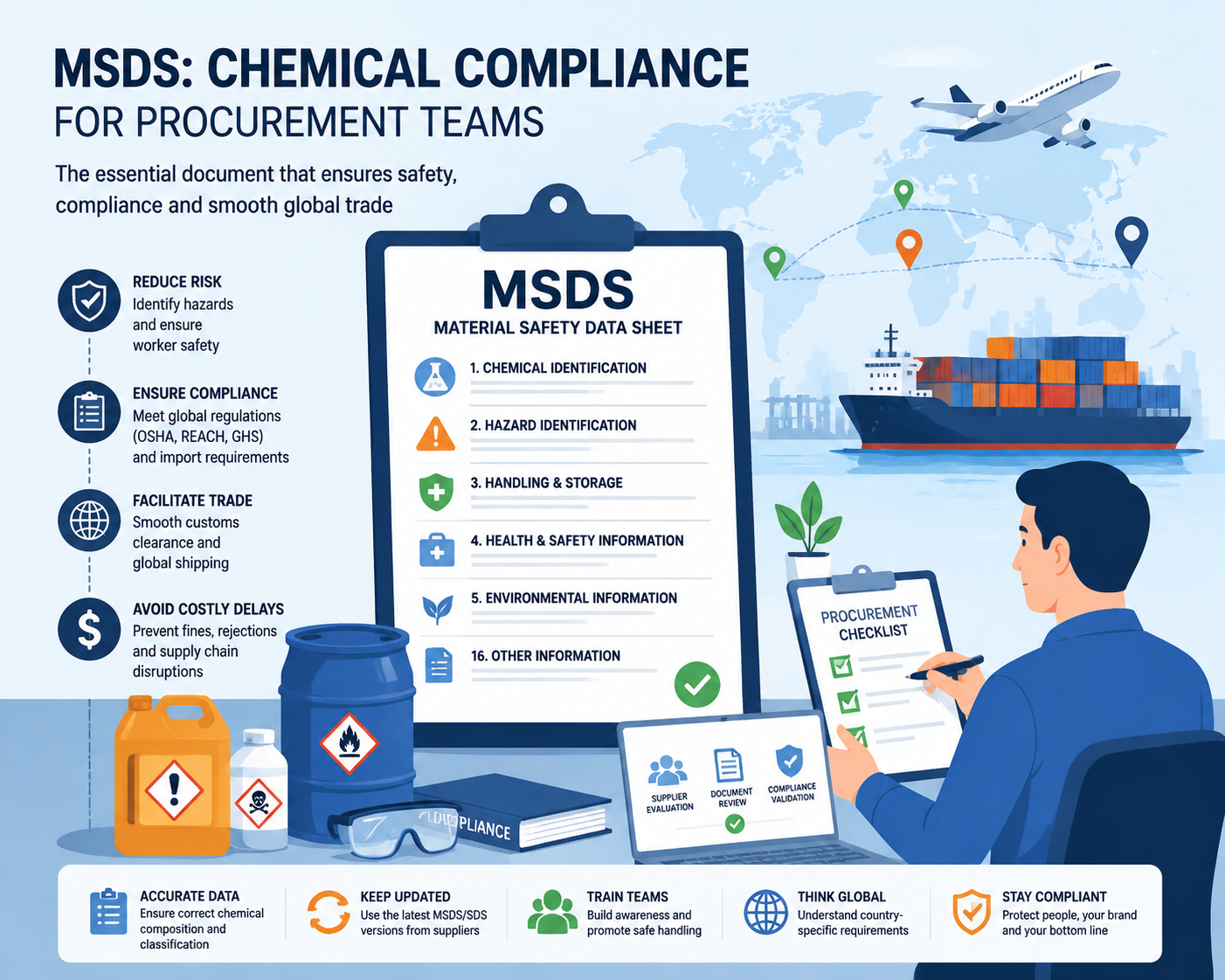
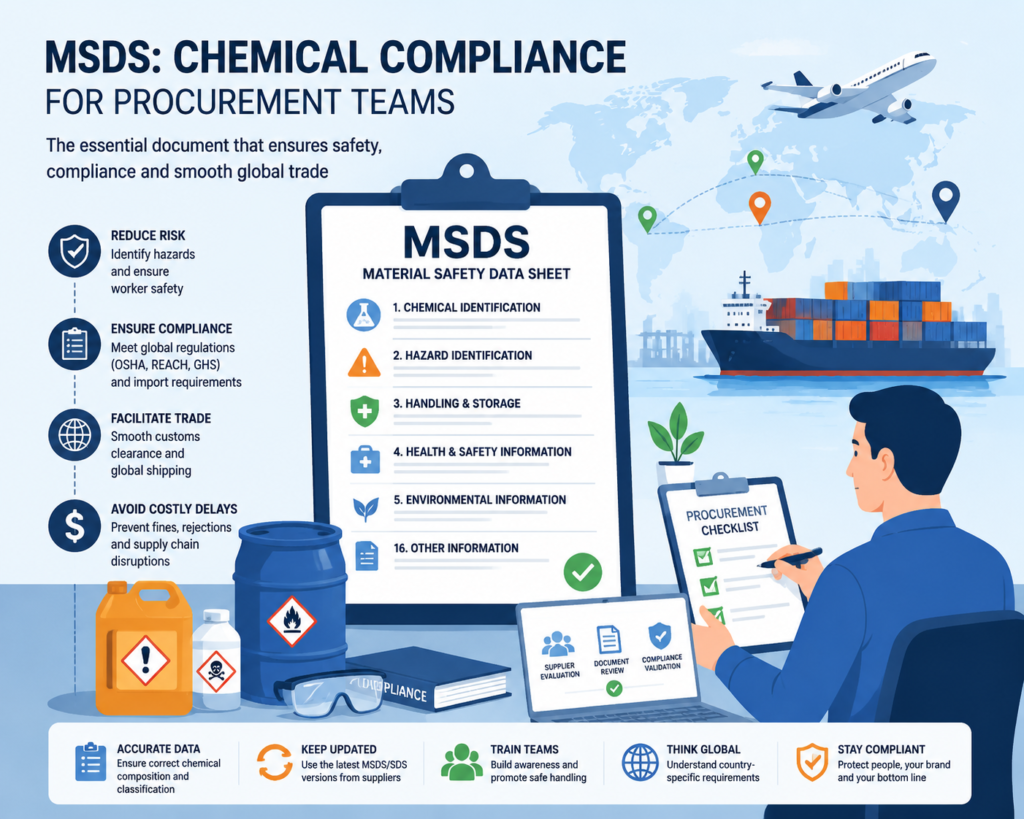
Material Safety Data Sheets (or Safety Data Sheets, as the Globally Harmonized System now designates them) must accompany each battery shipment, providing emergency responders with critical information on fire suppression, spill containment, and first aid procedures. Yet procurement teams frequently accept generic SDS documents that lack battery-specific data, use outdated formats, or omit required sections like transport classification—a deficiency that renders the document legally insufficient. Customs and carrier acceptance reviews routinely flag SDS issues, and a missing sheet can halt an entire consolidated shipment while compliance teams scramble to produce corrected documentation.
9.2 Dangerous goods declaration inconsistencies
The Dangerous Goods Declaration (DGD) or Shippers Declaration for Dangerous Goods serves as the master compliance document, certifying that the shipment meets all applicable regulations—and any inconsistency between the DGD and package markings, container labels, or accompanying commercial invoices triggers automatic rejection. Common errors include mismatched UN numbers between the DGD and package marks, incorrect net quantities, missing emergency contact information, and failure to include required special provisions. Each error requires re-documentation, re-review, and often re-tendering to carriers, bleeding lead time and administrative cost across every shipment.
9.3 Labeling and certification mismatches
Lithium battery packages require specific labels: the lithium battery mark (a striped diamond with battery pictogram and UN number), Class 9 hazard labels, and sometimes cargo aircraft only labels, each with precise size, color, and placement requirements. Certification documentation, including UN38.3 test summaries and packaging test reports, must match the actual product and packaging down to model numbers, cell configurations, and test dates. A supplier who changes packaging suppliers without updating test reports, or ships a newer battery revision under an older UN38.3 summary, creates a labeling mismatch that inspectors can identify from twenty feet away. The takeaway? Documentation isn’t a one-and-done exercise; it’s a living set of records that requires continuous verification.
10. Thermal Runaway and Fire Hazard Risks
10.1 Causes of thermal instability during transport
Thermal runaway initiates from one of several triggers: internal short circuits caused by manufacturing defects or dendrite growth, external shorts from damaged packaging or conductive debris, mechanical damage from rough handling or improper stacking, or thermal abuse from exposure to high ambient temperatures or adjacent fire sources. Once the battery’s internal temperature exceeds roughly 150°C, exothermic reactions accelerate, producing more heat than the cell can dissipate, leading to venting, smoke, flame, and in sealed cells, explosive rupture. Transport environments amplify these risks through vibration, temperature cycling between daytime heat and nighttime cold, and cumulative mechanical shocks that weaken internal structures over time.
10.2 Chain reaction risks in bulk shipments
The truly terrifying aspect of battery fires in logistics lies in propagation—one cell entering thermal runaway heats adjacent cells beyond their stability limits, creating a cascading failure that can consume entire pallets, containers, or vehicle loads within minutes. Bulk shipments of densely packed batteries essentially create a fuel load where each cell provides both ignition source and combustible material, and once propagation begins, conventional firefighting simply cannot keep pace. This is why segregation requirements limit battery quantities in individual packages and mandate specific stowage configurations—not because regulators enjoy complexity, but because they’ve modeled the fire dynamics and understand that chain reactions are the primary threat.
10.3 Emergency response limitations in transit
Consider the response reality: a truck driver on a rural highway lacks specialized training, proper extinguishing agents, and any means to cool burning cells once thermal runaway begins. A container ship crew at sea may have hours before reaching port, during which a fire can spread through multiple containers, threatening vessel integrity. Cargo aircraft carry halon systems designed for conventional fires, but halon does little to cool thermal runaway cells, and pilots face the grim calculus of emergency landing or continuing to destination with an uncontrollable fire aboard. Procurement teams rarely contemplate emergency response limitations when selecting carriers or routes, but these operational constraints directly determine survival and salvage outcomes when incidents occur.
11. Warehouse Handling and Storage Risks
11.1 Improper stacking and physical damage exposure
Warehouse personnel accustomed to stacking pallets of non-hazardous goods often apply the same practices to battery shipments, creating compression loads that exceed packaging limits and causing cell deformation, terminal crushing, or package rupture. Stack height restrictions specified on UN-certified packaging must be respected, yet overstacking remains endemic in high-volume distribution centers where productivity metrics incentivize vertical density over compliance. The damage may be latent—cells with micro-cracks or internal misalignment that function normally at receipt but fail catastrophically during subsequent transport or customer use, creating liability that extends far beyond warehouse walls.
11.2 Temperature and humidity control failures
Batteries stored in uncontrolled environments face thermal excursions that degrade performance and increase failure risk; temperatures above 45°C accelerate electrolyte decomposition, while repeated freeze-thaw cycles can mechanically stress seals and separators. Humidity poses a separate threat, as moisture ingress corrodes terminals, compromises external packaging, and in lithium-metal cells, reacts dangerously with exposed metal. Warehouses without climate-controlled dangerous goods storage areas simply cannot protect batteries during extended dwell times, yet procurement contracts rarely specify temperature and humidity requirements for storage—a gap that leaves product quality at the mercy of warehouse conditions.
11.3 Segregation of hazardous goods violations
Warehouse management systems that fail to enforce dangerous goods segregation requirements routinely place battery pallets adjacent to flammable liquids, oxidizers, corrosives, or other incompatible materials, creating secondary hazard scenarios that amplify incident consequences. A small battery fire that would otherwise remain contained can ignite adjacent flammable solvents, causing a much larger event with toxic smoke plumes and potential facility evacuation. Regulatory segregation distances exist for sound safety reasons, but they only work if warehouse operators actually follow them—and far too many don’t, especially during peak periods when every square foot of floor space gets pressed into service.
12. Last-Mile Delivery and Distribution Risks
12.1 Urban delivery restrictions for hazardous goods
Increasing numbers of cities restrict dangerous goods transport through tunnels, bridges, and city centers, forcing last-mile carriers to use circuitous routes that add transit time, fuel cost, and delivery uncertainty. Some urban delivery depots refuse to accept battery shipments entirely, requiring consignees to pick up goods at suburban distribution centers—a requirement that shifts cost and responsibility to buyers who may lack dangerous goods training or equipment. Procurement teams sourcing batteries for urban end-users must verify last-mile capabilities early, or discover post-shipment that final delivery is impossible without expensive specialized carriers.
12.2 Courier refusal and rerouting issues
Standard parcel carriers like FedEx Ground, UPS, and regional couriers frequently refuse battery shipments at pickup or sortation points when drivers or hub personnel lack dangerous goods training, even when shipments are properly documented and packaged. The result is rerouting to specialized dangerous goods carriers, often at emergency rates that dwarf standard parcel pricing, plus transit delays while shipments return to forwarders and tender to new carriers. Refusal risk correlates with carrier workforce turnover—high-turnover operations mean less trained personnel and more refusals—so procurement teams should favor carriers with stable workforces and dedicated dangerous goods teams.
12.3 Final delivery compliance verification gaps
When a battery shipment reaches its final destination, who verifies that receiving personnel handle it safely, store it properly, and maintain required emergency response equipment? In most organizations, the answer is no one—receiving clerks sign for deliveries without dangerous goods training, and batteries get shelved alongside office supplies until needed. This final-mile gap in compliance verification means that all the careful documentation, packaging, and carrier selection upstream can be undone by an untrained receiver who punctures a cell opening a box or stores batteries next to a space heater. Procurement must extend compliance requirements downstream, including contractual obligations for consignee training and facility audits.
13. Insurance Coverage Gaps in Battery Logistics
13.1 Exclusions in standard cargo insurance policies
Standard all-risk cargo insurance policies routinely exclude losses arising from “inherent vice,” a legal term encompassing the natural behavior of goods including spontaneous combustion, leakage, or deterioration—and thermal runaway falls squarely within this exclusion for most underwriters. Even policies that nominally cover dangerous goods often include sub-limits or deductibles specific to battery claims, leaving shippers exposed to catastrophic losses when incidents occur. Procurement teams must request policy wordings and engage insurance brokers to interpret exclusions, because assuming standard coverage applies to battery shipments is a recipe for uninsured loss.
13.2 High premiums for hazardous goods coverage
Specialized insurance for battery shipments commands premiums that can reach 2–5% of declared value per shipment, compared to 0.1–0.3% for general cargo, reflecting underwriters’ assessment of elevated fire, explosion, and liability risk. Deductibles often run into five or six figures, meaning small and mid-sized claims fall entirely on the shipper, and coverage may exclude consequential damages like business interruption or reputational harm. These costs must be factored into total landed cost models, but many procurement teams overlook insurance in supplier comparisons, creating an apples-to-oranges analysis that systematically understates the true cost of battery logistics.
13.3 Claim disputes due to compliance violations
When a battery shipment suffers damage and the policyholder files a claim, underwriters conduct forensic reviews of documentation, packaging, and handling records, searching for any compliance deviation that could void coverage. A missing test report, incorrect package marking, or expired certification gives insurers grounds to deny claims entirely, leaving shippers to absorb losses that can run into millions of dollars. The harsh reality is that insurance is only as good as your compliance posture—perfect documentation and handling are prerequisites for coverage, not optional extras—and procurement teams that treat compliance as a cost center rather than an insurance prerequisite are gambling with shareholder capital.
14. Supplier and Manufacturer Compliance Risks
14.1 Inconsistent battery testing standards across suppliers
Not all UN38.3 test summaries are created equal: reputable suppliers conduct full test series with accredited laboratories and maintain test records for each battery model and revision, while marginal suppliers cut corners with abbreviated testing, expired certifications, or test reports from non-accredited labs that carriers and customs may reject. Procurement teams lacking battery technical expertise struggle to distinguish between robust and deficient test documentation, accepting supplier representations that later prove inadequate when shipments face regulatory scrutiny. The solution lies in supplier audit protocols that verify test methods, lab accreditations, and change management processes for battery design revisions.
14.2 Lack of certification transparency in sourcing
Many procurement organizations source batteries through distributors or contract manufacturers who themselves lack direct visibility into original cell manufacturer testing and certification, creating a chain of custody where compliance documentation becomes increasingly unreliable with each transaction. Distributors may provide UN38.3 test summaries for similar battery models rather than the exact cells shipped, hoping that inspectors won’t notice the discrepancy—a gamble that fails catastrophically when detailed reviews occur. Direct sourcing from original manufacturers or authorized distributors, with contractual requirements for certification transparency, represents the only reliable approach to compliance assurance.
14.3 Procurement due diligence failures
Typical procurement due diligence focuses on commercial terms, quality metrics, and delivery performance, with battery-specific compliance often reduced to a checkbox marked “Dangerous Goods Documentation Provided.” This superficial approach misses critical dimensions like supplier change management (does the supplier notify customers of cell chemistry modifications?), test report currency (does the supplier re-test after design changes?), and packaging supply chain integrity (does the supplier’s packaging vendor maintain certifications?). Comprehensive due diligence requires specialized technical questionnaires, document review protocols, and periodic on-site audits—capabilities that many procurement teams must develop or outsource to third-party experts.
15. Hidden Cost Risks in Battery Transportation
15.1 Emergency surcharges and rerouting expenses
When carriers reject a battery shipment at acceptance points, emergency rerouting through specialized dangerous goods forwarders can multiply freight costs by factors of three to five, with additional surcharges for expedited handling, after-hours pickup, and enhanced documentation review. These costs rarely appear in standard freight rate negotiations because they arise from failure scenarios rather than normal operations, yet they occur frequently enough that procurement teams should model them as probabilistic expenses rather than black-swan events. A single rejection per quarter across a modest battery spend can add tens of thousands of dollars in unplanned logistics costs annually.
15.2 Storage detention and demurrage fees
When batteries sit in warehouses or port terminals beyond free time limits—whether due to inspection delays, documentation errors, or customs holds—detention and demurrage charges accumulate at rates that can exceed daily air freight costs for the same goods. Container demurrage at major ports often runs $100–300 per day per container, meaning a two-week inspection hold adds $1,400–4,200 in pure fees before considering storage, handling, or the opportunity cost of delayed inventory. These charges are avoidable through robust documentation and carrier selection, but once incurred, they’re almost impossible to recover through claims or dispute resolution.
15.3 Compliance-driven cost inflation across supply chains
Beyond direct logistics expenses, battery compliance requirements inflate costs throughout the supply chain: specialized packaging costs 30–100% more than standard alternatives, dangerous goods training adds overhead, compliance personnel require salaries, and audit programs consume management attention that could otherwise drive cost reduction. These indirect costs frequently escape procurement analytics, leading to underestimation of battery total cost of ownership and overoptimistic business cases for battery-powered products. The key insight is that battery logistics isn’t just more expensive—it’s structurally more expensive in ways that demand explicit modeling and management attention.
16. Risk Mitigation Strategies for Procurement Teams
16.1 Supplier qualification and audit frameworks
Procurement organizations must develop battery-specific supplier scorecards that evaluate UN38.3 test currency, change management processes, packaging certification maintenance, documentation accuracy rates, and past compliance violations alongside traditional quality and delivery metrics. On-site audits should verify test records against physical samples, inspect packaging inventories, review training records, and assess culture of compliance through interviews with operational staff. Qualification isn’t a one-time event; it requires periodic re-evaluation, with disqualification triggers for compliance failures that put your shipments at risk. The suppliers who complain about audit rigor are precisely the ones who can’t meet it—qualify accordingly.
16.2 End-to-end compliance monitoring systems
Spreadsheets and email chains cannot manage battery compliance at scale; procurement needs purpose-built systems that track certification expirations, validate documentation against regulatory checklists, flag discrepancies before shipments tender to carriers, and maintain audit trails for every transaction. These systems integrate with supplier portals to capture test reports and packing certifications at order placement, with warehouse management systems to verify labeling and packaging at receipt, and with transportation management systems to validate carrier acceptance before dispatch. The upfront investment in compliance technology pays for itself through avoided rejections, reduced inspection delays, and lower insurance premiums—but only if procurement champions the investment.
16.3 Strategic logistics partner selection and route planning
Not all forwarders and carriers possess equal battery capabilities; procurement should conduct structured requests for information that probe dangerous goods volumes, staff training levels, inspection pass rates, claims history, and relationships with port and customs authorities. Preferred partners should demonstrate proactive compliance management, including pre-acceptance documentation review and real-time shipment tracking with exception alerts. Route planning must account for regulatory friction points, building inspection buffers into transit timelines and maintaining alternative routes through secondary ports or border crossings when primary options experience delays. The best logistics strategy for batteries is a resilient one—multiple carrier relationships, flexible routing, and inventory positioning that decouples supply from unpredictable transport lead times.
The bottom line on battery logistics risk is simple but brutal: procurement teams that treat batteries as just another commodity will suffer predictable consequences ranging from financial losses to legal liability to supply chain meltdowns. Those who invest in compliance capabilities, supplier rigor, and strategic logistics partnerships will transform battery transportation from a vulnerability into a competitive advantage—or at least avoid watching their cargo burn on the evening news. Choose your path accordingly.
• U.S. Pipeline and Hazardous Materials Safety Administration (PHMSA) – Official hazardous materials guidance
• IATA Lithium Battery Shipping Guidelines – Industry standards & updates
• ECHA – Classification, Labelling and Packaging (CLP) Regulation for batteries in the EU
• Procurement Magazine – Supply chain risk & logistics best practices
• Internal: Dangerous Goods Compliance Checklist Battery Transportation