Table of Contents
1. Introduction to China to Germany DDP Shipping
Global sourcing has become a strategic imperative for brands seeking competitive manufacturing costs, technological expertise, and scalable production capabilities. Among the most established trade corridors in the world, the China-to-Germany route stands out due to the substantial flow of industrial equipment, consumer products, automotive components, electronics, and engineered goods. For procurement professionals, achieving cost control while maintaining delivery reliability is often the difference between healthy margins and operational headaches.
Delivered Duty Paid (DDP) shipping has emerged as one of the most practical logistics solutions for organizations importing goods from China into Germany. By consolidating transportation, customs clearance, duties, taxes, and final delivery into a single service structure, DDP significantly reduces administrative complexity and allows procurement teams to focus on supplier management, inventory planning, and strategic sourcing initiatives.
1.1 What DDP Shipping Means for Procurement Professionals
For procurement managers, purchasing engineers, and supply chain specialists, DDP shipping represents a turnkey logistics model. Under this arrangement, the seller or designated logistics provider assumes responsibility for transporting goods from the factory in China directly to the consignee's location in Germany.
Instead of coordinating multiple service providers, customs brokers, carriers, and tax authorities, buyers receive a comprehensive logistics solution with predictable costs and fewer operational variables. As many procurement professionals like to say, “fewer moving parts mean fewer things that can go sideways.”
DDP shipping transforms international procurement into a more manageable process by reducing the burden of customs compliance and freight coordination.
1.2 Why Germany is a Key Market for Global Brands
Germany serves as Europe's largest economy and one of the world's most influential industrial centers. The country maintains robust demand across automotive manufacturing, machinery production, renewable energy systems, consumer electronics, healthcare devices, and industrial automation equipment.
Global brands frequently establish distribution centers in Germany due to its strategic geographic position and advanced transportation infrastructure. Major logistics hubs enable efficient access to neighboring European markets.
For procurement professionals sourcing products from China, Germany represents not only a destination market but also a gateway into the broader European Union.
1.3 How DDP Simplifies International Logistics
International logistics often involves a labyrinth of regulations, documentation requirements, customs procedures, and transportation arrangements.
DDP simplifies these complexities by assigning responsibility to a single party. Buyers receive goods at the designated destination without having to manage customs formalities or calculate import duties independently.
This streamlined approach minimizes communication gaps, reduces administrative overhead, and improves shipment visibility throughout the supply chain.
2. Understanding Delivered Duty Paid (DDP)
2.1 Core Components of DDP Shipping
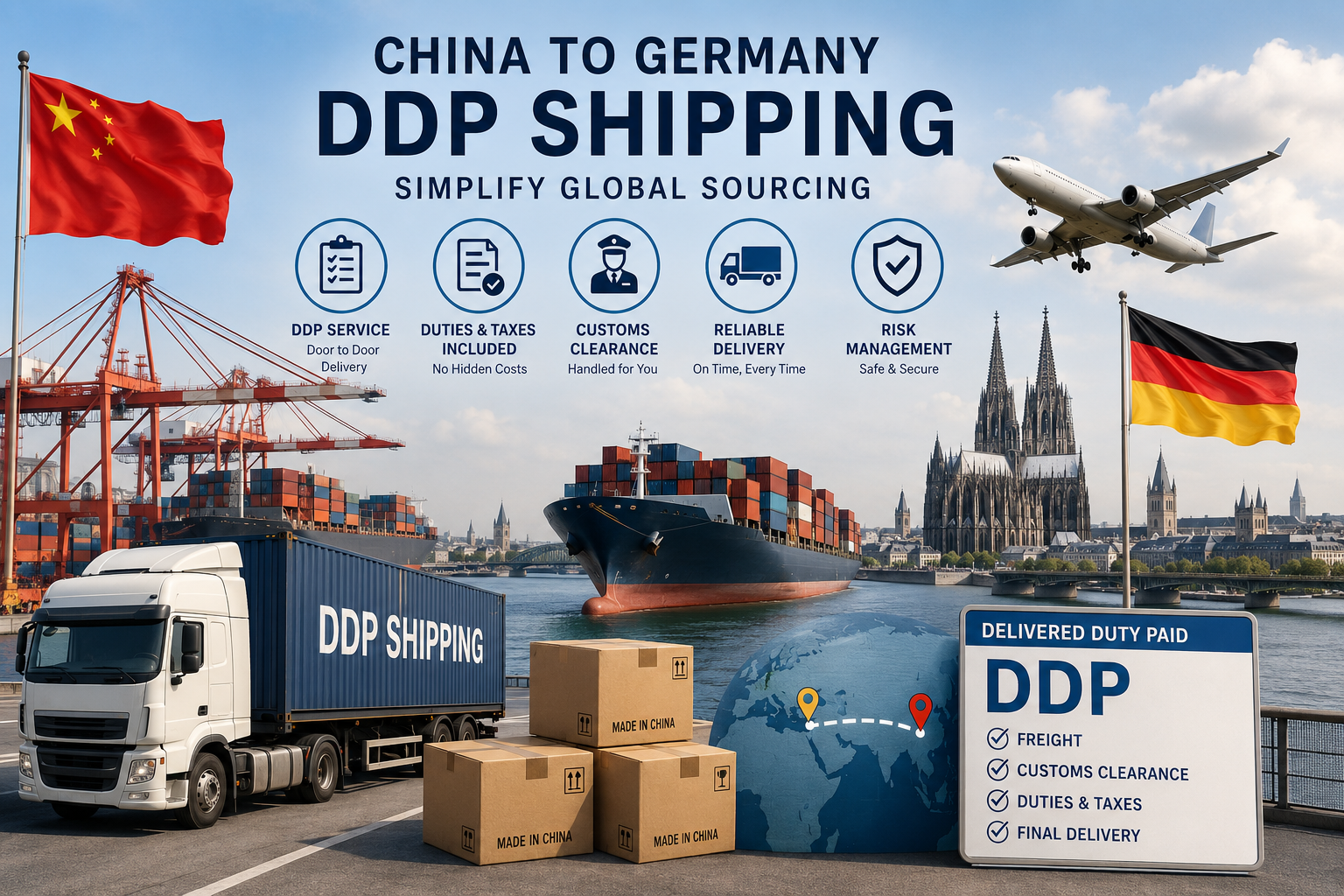
DDP shipping includes several critical elements:
- Export customs clearance in China
- International freight transportation
- Import customs clearance in Germany
- Payment of duties and taxes
- Local delivery to the final destination
- Cargo tracking and shipment management
Together, these components form a cohesive logistics solution that reduces operational fragmentation.
2.2 Differences Between DDP and Other Shipping Methods
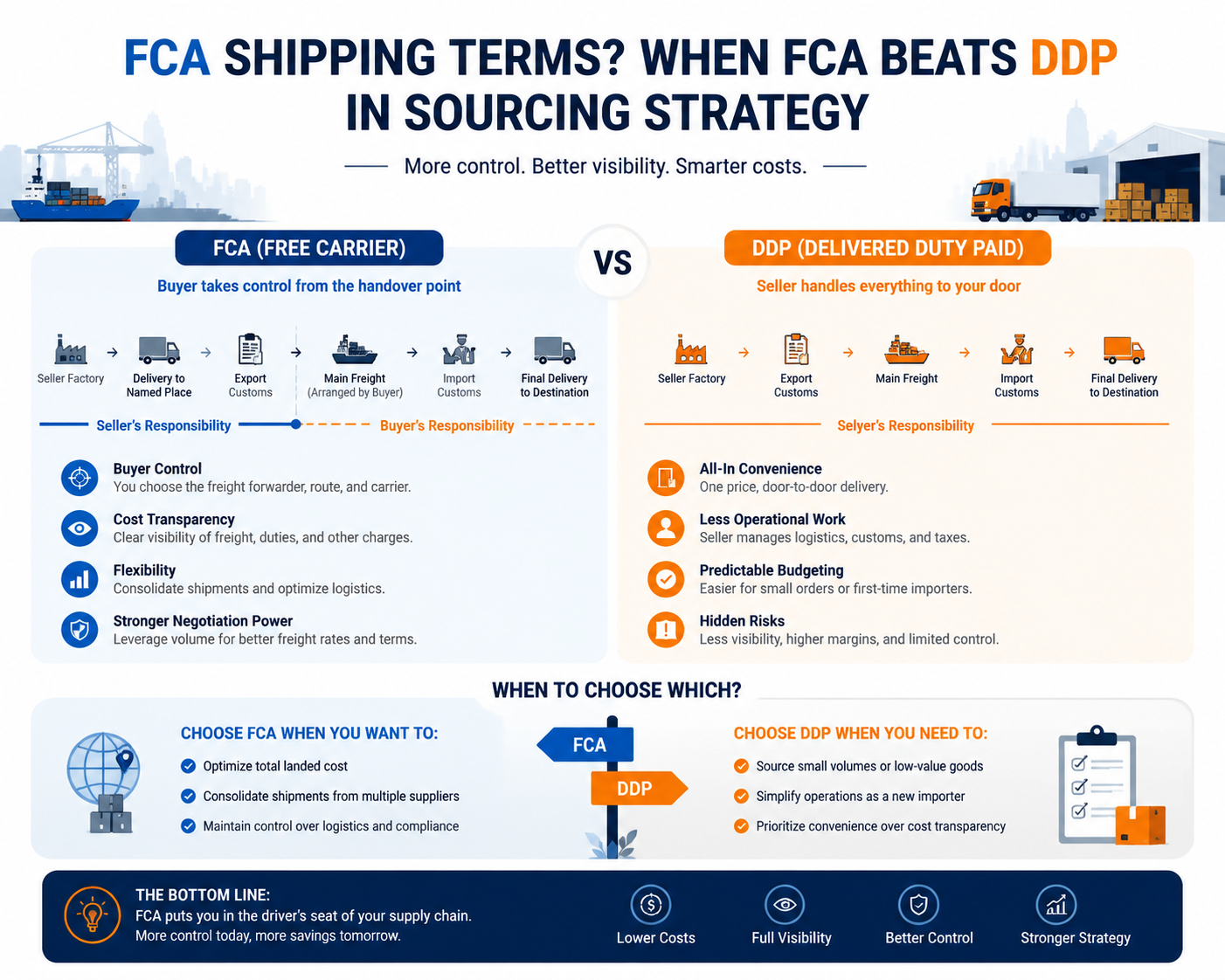
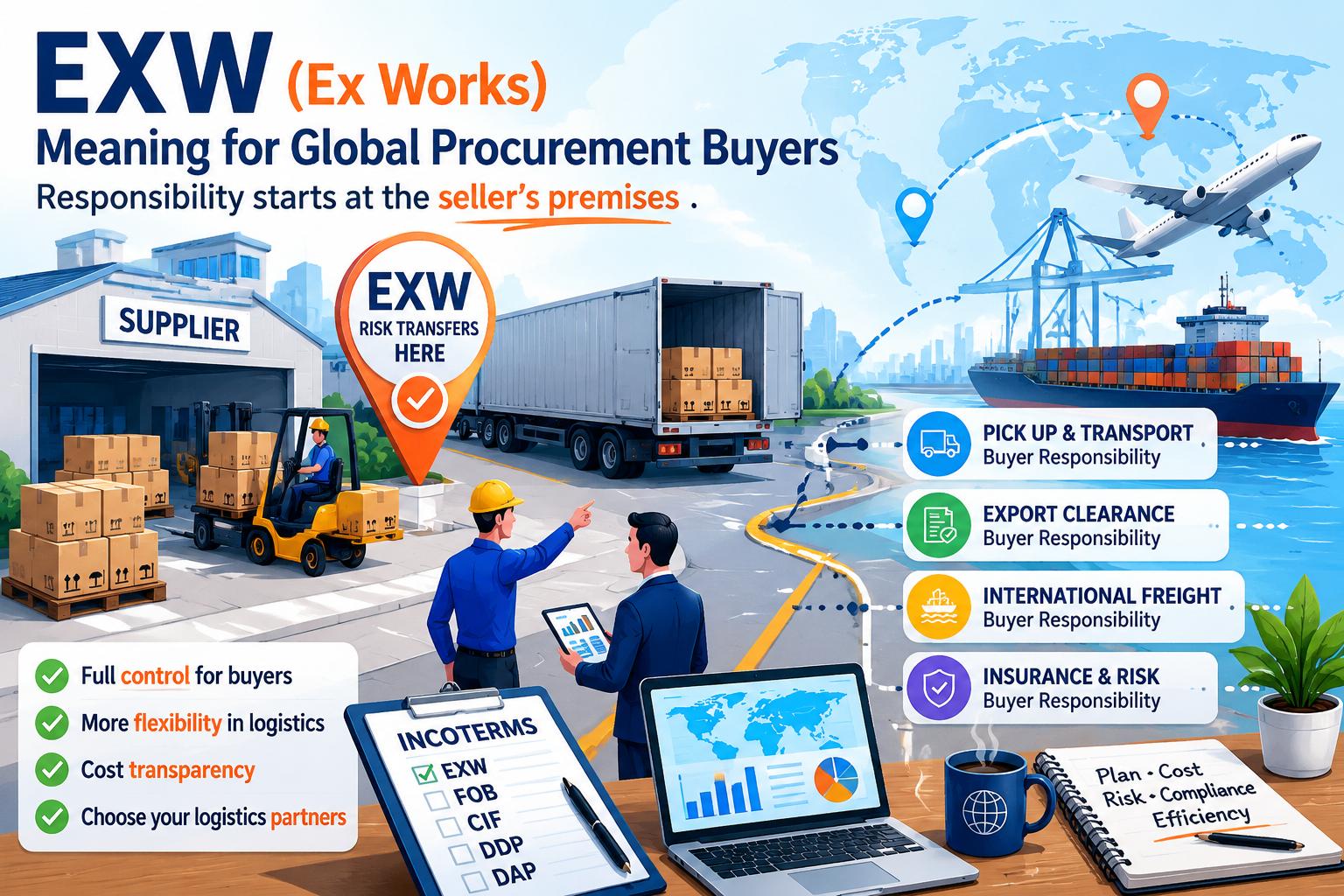
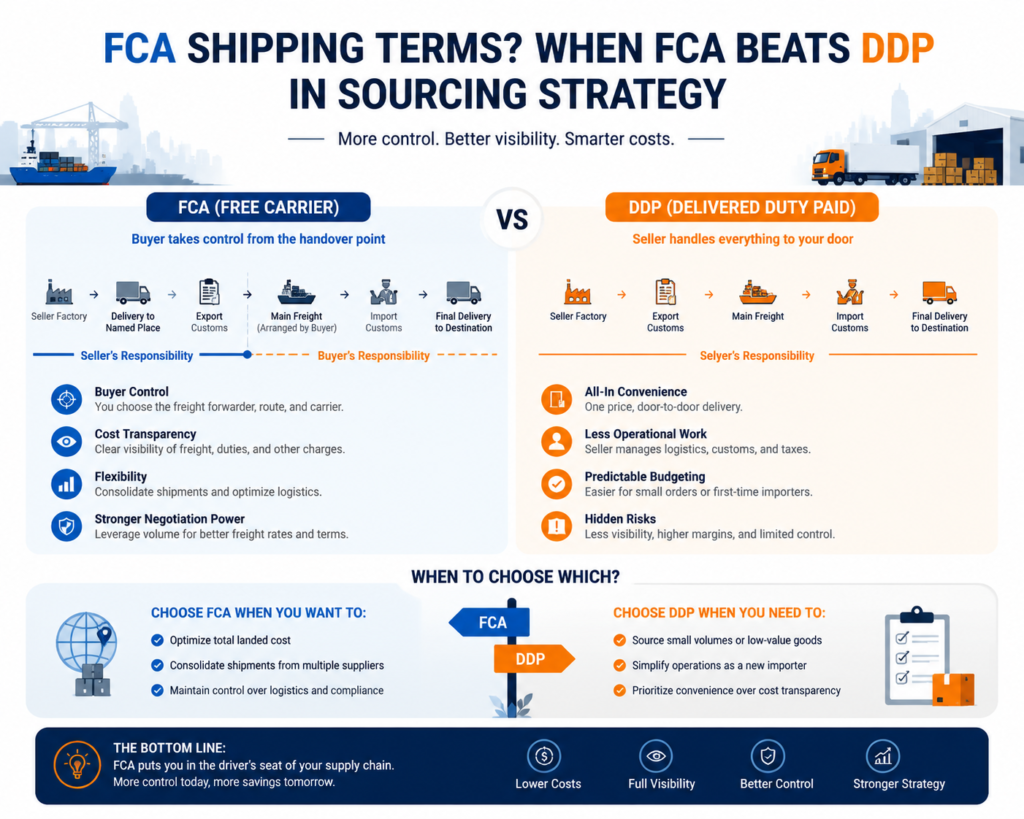
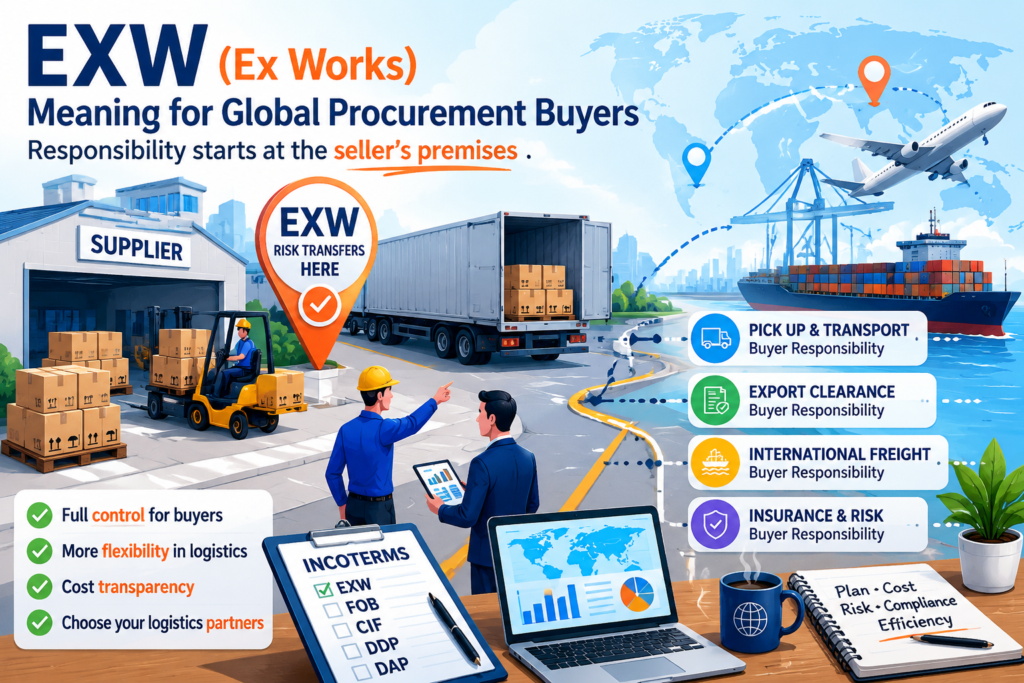
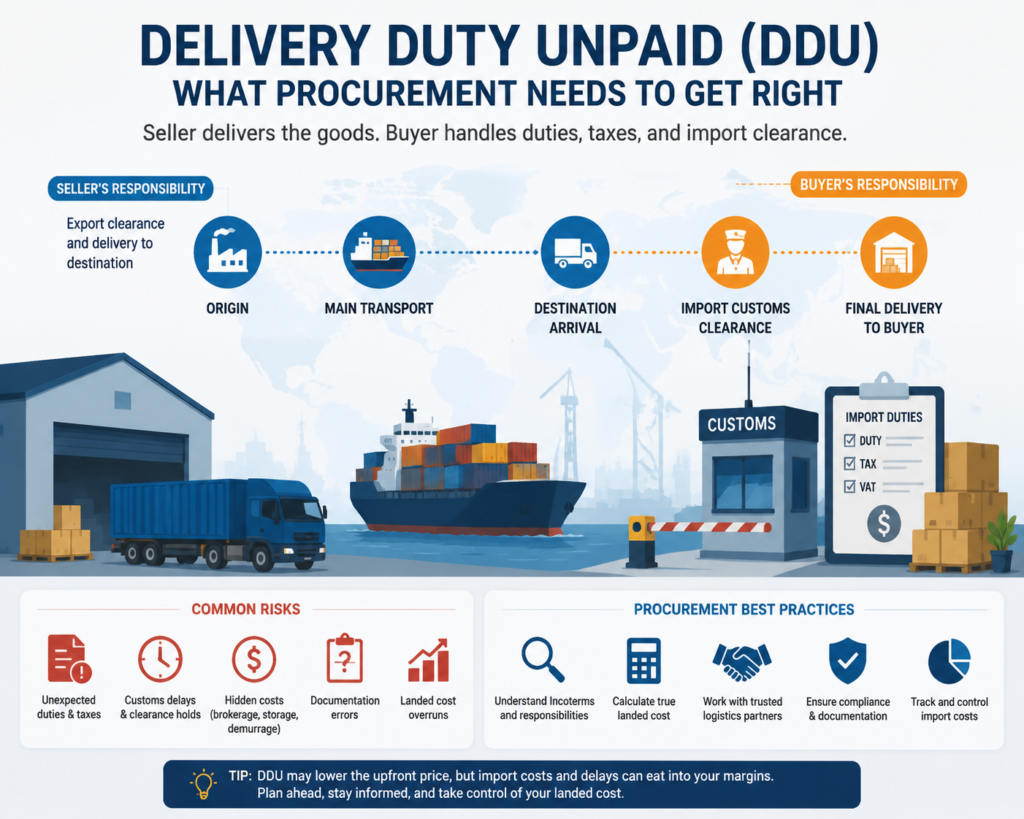
Compared with EXW, FOB, CIF, and DAP, DDP places the highest level of responsibility on the seller.
| Incoterm | Seller Responsibility | Buyer Responsibility |
|---|---|---|
| EXW | Minimal | Maximum |
| FOB | Export Clearance | Freight and Import |
| CIF | Freight and Insurance | Import Duties |
| DAP | Delivery to Destination | Duties and Taxes |
| DDP | Complete Delivery Including Duties | Minimal |
For procurement teams seeking budget predictability and administrative simplicity, DDP often provides the most comprehensive solution.
2.3 Responsibilities of Buyer and Seller Under DDP
The seller assumes responsibility for:
- Export compliance
- Freight booking
- Customs clearance
- Duty payment
- VAT management
- Final-mile delivery
The buyer's primary responsibility is receiving the goods and verifying shipment accuracy.
This division of responsibility significantly reduces procurement workload.
3. Key Benefits of Using DDP from China to Germany
3.1 Streamlined Customs Clearance
German customs procedures are highly structured and compliance-driven. Missing documentation or incorrect classifications can create substantial delays.
DDP providers handle customs processes through experienced specialists who understand tariff classifications, import requirements, and regulatory obligations.
This expertise reduces clearance risks and accelerates cargo movement.
3.2 Predictable Total Landed Costs
Procurement professionals are constantly challenged to forecast budgets accurately.
DDP pricing incorporates transportation charges, customs duties, taxes, and handling fees into one comprehensive quotation. This transparency simplifies cost calculations and minimizes unpleasant surprises.
In purchasing circles, that level of certainty is worth its weight in gold.
3.3 Reduced Supply Chain Delays
By centralizing logistics management, DDP reduces coordination delays between multiple stakeholders.
Fewer intermediaries often result in faster decision-making, more effective issue resolution, and improved delivery reliability.
4. Cost Considerations for DDP Shipping
4.1 Freight and Transportation Costs
Transportation costs depend on several factors:
- Shipment weight
- Cargo volume
- Transportation mode
- Fuel surcharges
- Seasonal demand
- Delivery location
Air freight generally commands higher rates but offers shorter transit times. Sea freight provides greater economy for large-volume shipments.
4.2 Duties, Taxes, and Import Fees
Germany applies import duties based on product classification and customs valuation.
In addition to duties, imported goods may be subject to VAT and other regulatory charges.
Understanding these costs is crucial when evaluating supplier quotations.
4.3 Insurance and Risk Management
Cargo insurance protects shipments against:
- Physical damage
- Theft
- Loss
- Natural disasters
- Transportation accidents
Although DDP providers often include insurance coverage, procurement professionals should verify policy limits and exclusions before shipment.
5. Selecting a Reliable Freight Forwarder
5.1 Criteria for Choosing a Forwarder in China
Key evaluation factors include:
- Industry experience
- German customs expertise
- Network coverage
- Financial stability
- Communication responsiveness
- Technology capabilities
An experienced forwarder acts as an extension of the procurement team.
5.2 Comparing Forwarders for German Imports
Evaluation criteria should include:
- Transit reliability
- Customs success rates
- Service flexibility
- Pricing transparency
- Customer support quality
A lower quote is not always the better deal if hidden costs emerge later.
5.3 Red Flags to Avoid
Warning signs include:
- Unrealistically low pricing
- Vague service descriptions
- Limited tracking visibility
- Poor communication
- Lack of customs expertise
If a proposal sounds too good to be true, it usually deserves closer scrutiny.
6. Packaging and Labeling Requirements
6.1 German Regulatory Standards
Imported goods must comply with applicable German and EU regulations concerning:
- Product safety
- Environmental compliance
- Packaging materials
- Consumer information
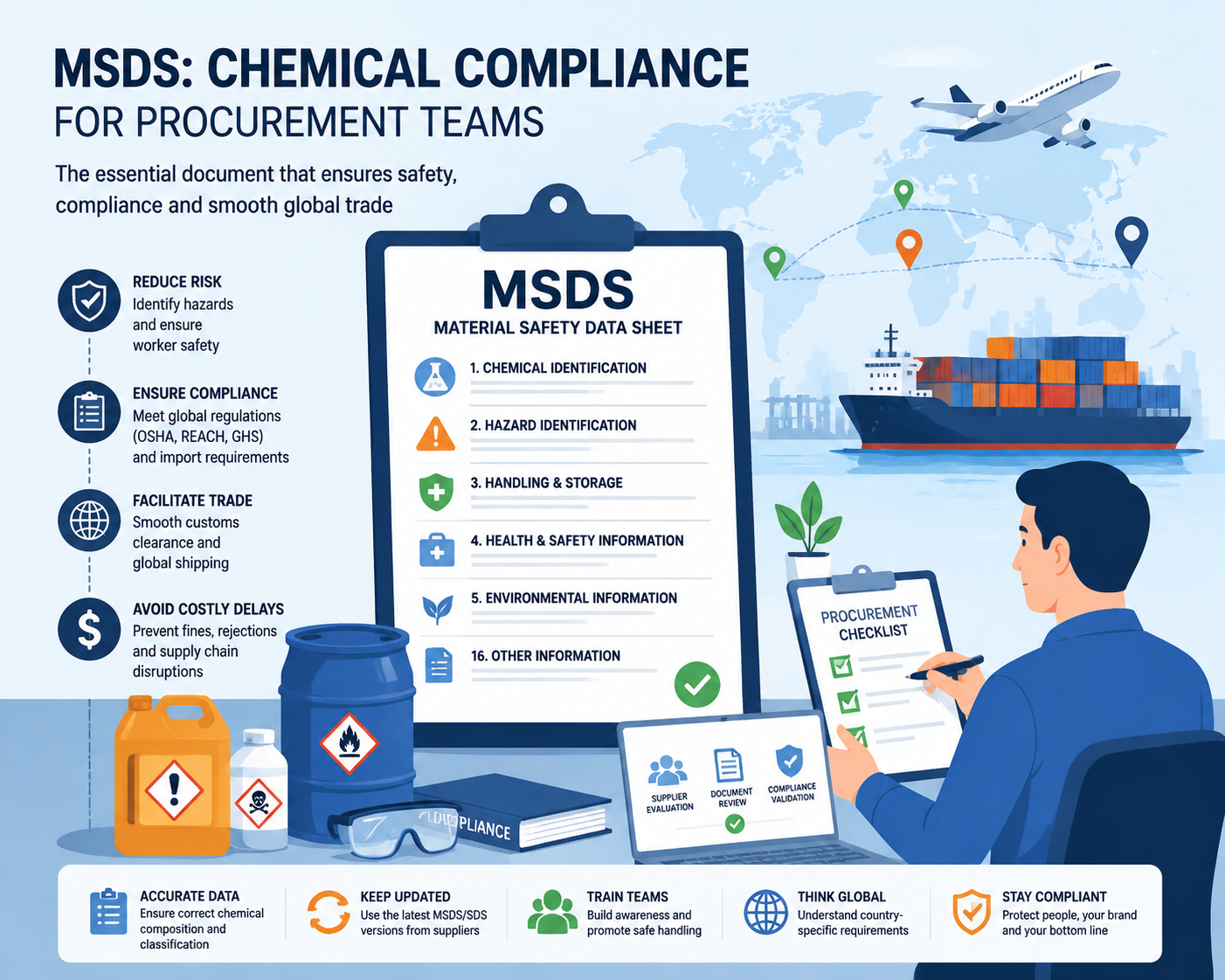
Non-compliance can result in shipment rejection or costly penalties.
6.2 Optimizing Packaging for Cost and Safety
Effective packaging balances protection and efficiency.
Best practices include:
- Appropriate cushioning
- Moisture protection
- Space optimization
- Durable materials
- Pallet stability
Engineers often view packaging as an extension of product design rather than an afterthought.
6.3 Labeling for Smooth Customs Clearance
Labels should accurately display:
- Product descriptions
- Country of origin
- Dimensions
- Weight information
- Regulatory markings
Proper labeling reduces inspection risks and clearance delays.
7. Documentation Needed for DDP Shipping
7.1 Commercial Invoice Essentials
Commercial invoices should include:
- Buyer information
- Seller information
- Product descriptions
- HS codes
- Unit values
- Total shipment value
Accuracy is paramount.
7.2 Bill of Lading and Airway Bills
These documents serve as transportation contracts and shipment records.
They provide essential information for logistics coordination and cargo tracking.
7.3 Customs Declarations and Certificates
Additional documents may include:
- Certificates of origin
- Compliance certificates
- Product test reports
- Import permits
Documentation requirements vary by product category.
8. Customs Clearance in Germany
8.1 German Import Regulations Overview
Germany maintains rigorous customs procedures designed to ensure regulatory compliance and revenue collection.
Importers must comply with EU-wide customs standards as well as country-specific requirements.
8.2 Duties and VAT Calculation
Import duties depend on:
- Product category
- HS classification
- Customs value
VAT is generally calculated using the customs value plus applicable duties and charges.
8.3 Common Customs Issues and How to Avoid Them
Common problems include:
- Incorrect HS codes
- Under-declared values
- Missing documentation
- Regulatory non-compliance
Preventive planning significantly reduces clearance disruptions.
9. Transit Times and Shipping Routes
9.1 Air Freight vs Sea Freight Options
Air freight offers:
- Speed
- Security
- Reduced inventory holding costs
Sea freight offers:
- Lower transportation costs
- High-volume capacity
- Better economics for bulk shipments
9.2 Typical Transit Times from China to Germany
Approximate transit times include:
- Air freight: 5–12 days
- Rail freight: 18–25 days
- Sea freight: 30–45 days
Actual performance varies according to routing and seasonal congestion.
9.3 Choosing the Optimal Route for Your Shipment
Route selection should consider:
- Product urgency
- Inventory levels
- Budget constraints
- Market demand
The fastest option is not always the most profitable option.
10. Tracking and Visibility
10.1 How to Monitor DDP Shipments
Modern tracking systems provide visibility across:
- Pickup
- Export processing
- International transit
- Customs clearance
- Final delivery
10.2 Technology Solutions for Supply Chain Visibility
Advanced platforms integrate:
- GPS tracking
- Cloud analytics
- Transportation management systems
- Automated notifications
Visibility reduces uncertainty throughout the supply chain.
10.3 Real-Time Alerts and Reporting
Automated alerts enable teams to react quickly to:
- Delays
- Customs holds
- Route changes
- Delivery exceptions
Timely information supports proactive decision-making.
For additional insights into international freight forwarding, visit IATA.org or consult industry guides such as Inbound Logistics DDP Guide.
11. Risk Management Strategies
11.1 Mitigating Delays and Disruptions
Risk mitigation measures include:
- Supplier diversification
- Buffer inventory
- Alternative routing
- Emergency transportation plans
Preparation often determines resilience.
11.2 Insurance Options for International Shipping
Coverage options include:
- All-risk insurance
- Named-peril policies
- General average coverage
- Specialized cargo protection
11.3 Contingency Planning for Unexpected Costs
Procurement teams should maintain contingency budgets for:
- Port congestion fees
- Customs inspections
- Fuel fluctuations
- Regulatory changes
12. Legal and Compliance Considerations
12.1 Understanding EU and German Trade Laws
Compliance involves monitoring:
- Import regulations
- Product standards
- Environmental directives
- Safety requirements
12.2 Import Restrictions and Prohibited Goods
Certain products may require:
- Licenses
- Certifications
- Special approvals
Failure to comply can result in shipment seizure.
12.3 Staying Compliant with Incoterms
A clear understanding of Incoterms prevents disputes and establishes responsibility boundaries throughout the transaction.
13. Sustainability in DDP Shipping
13.1 Reducing Carbon Footprint in Global Logistics
Sustainability initiatives include:
- Route optimization
- Consolidated shipments
- Efficient transportation modes
13.2 Eco-Friendly Packaging Solutions
Sustainable packaging may incorporate:
- Recyclable materials
- Biodegradable components
- Reduced material usage
13.3 Green Freight Forwarding Options
Many logistics providers now offer carbon-reduction programs and environmental reporting tools. For more on green logistics, see EPA Sustainable Materials Management.
14. Technology Trends Impacting DDP Shipping
14.1 Digital Customs Clearance Platforms
Digital systems accelerate:
- Document processing
- Compliance verification
- Customs communication
14.2 AI and Predictive Analytics for Freight
Artificial intelligence supports:
- Demand forecasting
- Route optimization
- Risk prediction
- Capacity planning
14.3 Automation in Warehousing and Delivery
Automation technologies include:
- Autonomous vehicles
- Robotic picking systems
- Automated sorting equipment
These innovations improve efficiency and reduce labor dependency.
15. Case Studies and Success Stories
15.1 Brands Successfully Using DDP to Germany
Many global brands leverage DDP to improve delivery reliability, reduce procurement complexity, and accelerate market entry.
The common denominator is simplified logistics management.
15.2 Lessons Learned from Common Mistakes
Frequent mistakes include:
- Selecting providers based solely on price
- Neglecting compliance verification
- Inadequate documentation control
These issues often lead to avoidable delays.
15.3 How DDP Shipping Drives Procurement Efficiency
DDP enables procurement teams to:
- Reduce administrative workload
- Improve forecasting accuracy
- Strengthen supplier relationships
- Focus on strategic initiatives
16. Best Practices for Procurement Professionals
16.1 Planning Shipments Strategically
Successful planning involves:
- Demand forecasting
- Inventory optimization
- Lead-time analysis
Strategic planning reduces emergency shipments and associated costs.
16.2 Collaborating Effectively with Suppliers
Strong supplier relationships improve:
- Information sharing
- Production visibility
- Delivery performance
Partnerships frequently outperform transactional arrangements.
16.3 Continuous Improvement in Global Sourcing
Continuous improvement requires:
- Performance monitoring
- Cost analysis
- Process optimization
- Technology adoption
The goal is sustained operational excellence.
17. Future Outlook of China to Germany DDP Shipping
17.1 Emerging Trends in International Logistics
Key developments include:
- Supply chain digitization
- Sustainability initiatives
- Enhanced visibility platforms
- Integrated logistics ecosystems
17.2 Impact of Global Trade Policies
Trade regulations continue to evolve, influencing:
- Tariffs
- Compliance obligations
- Sourcing strategies
Organizations must remain agile and informed.
17.3 Preparing for Future Procurement Challenges
Future-ready procurement teams prioritize:
- Data-driven decision-making
- Supplier resilience
- Risk diversification
- Technology investment
Adaptability will become a critical competitive advantage.
18. Conclusion
18.1 Key Takeaways for Simplifying Global Sourcing
China-to-Germany DDP shipping offers procurement professionals a practical pathway toward simplified logistics, predictable costs, reduced administrative burdens, and improved supply chain visibility.
18.2 Final Tips for Efficient DDP Shipping
- Verify forwarder expertise
- Maintain documentation accuracy
- Understand landed cost structures
- Monitor regulatory changes
- Prioritize shipment visibility
These fundamentals keep operations running like a well-tuned gearbox.
18.3 Encouraging Proactive Supply Chain Management
In an increasingly interconnected global economy, procurement success depends upon foresight, preparation, and strategic collaboration. DDP shipping provides a powerful framework for reducing complexity and enabling organizations to focus on growth, innovation, and competitive differentiation. When executed correctly, it transforms international sourcing from a logistical challenge into a strategic advantage.
For further guidance on global supply chains, visit Supply Chain Digital.