
In global logistics, International Express Lost Cargo Compensation is one of the most critical risks affecting e-commerce sellers,
importers, and supply chain operators. Even with advanced tracking systems,
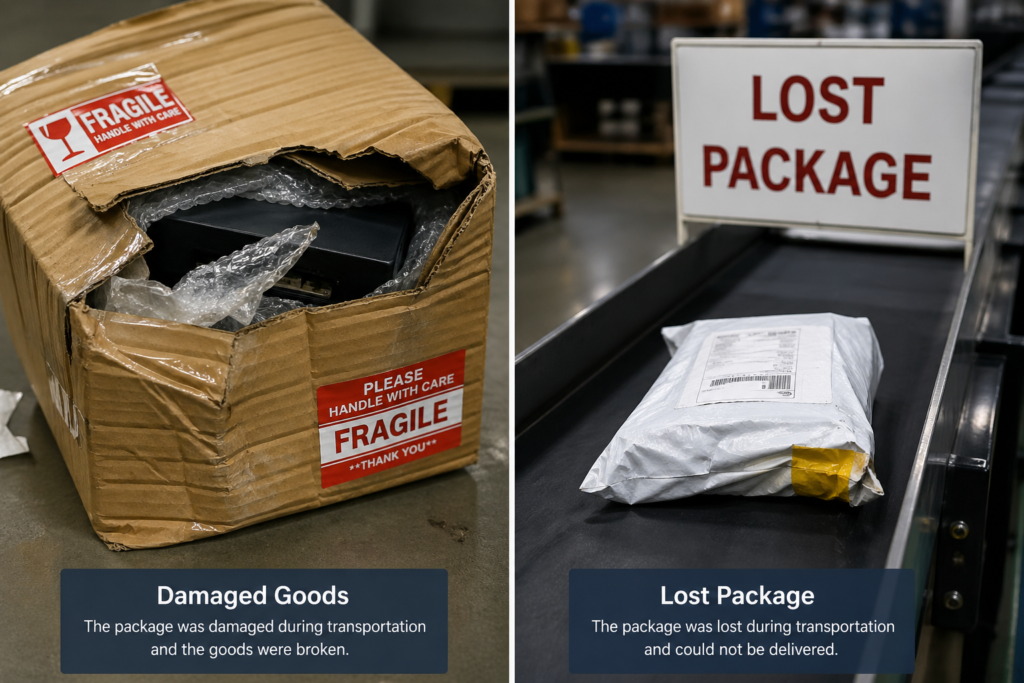
cargo loss, damage, or misrouting can still occur across multiple transit points.
1. Common Causes of Lost Shipments
International logistics involves complex handover processes, and loss may happen due to:
- Sorting errors in transit hubs
- Mislabeling or barcode failure
- Customs inspection delays or seizures
- Operational mistakes during loading/unloading
- System tracking failures
- Force majeure events (weather, strikes, flight cancellations)
2. Basic Compensation Rules in International Express Shipping
International Express Lost Cargo Compensation usually follows the principle of “limited liability” rather than “full compensation.”
Typical compensation structures include:
- Compensation per kilogram of weight
- Compensation based on declared value
- Maximum liability caps (often limited multiples of shipping fees)
For example:
- Major couriers like DHL or FedEx often compensate around a fixed amount per kg unless higher declared value is purchased
- Freight forwarders may apply customized contractual terms
👉 Without additional insurance, reimbursement is usually far below actual loss value.
3. Standard Claim Process
The general claims procedure includes:
- Confirm shipment status as lost or undelivered
- Submit formal claim request
- Provide required documents:
- Air waybill
- Commercial invoice
- Packing list
- Proof of value
- Carrier investigation
- Final compensation decision
Processing time typically ranges from 7 to 30 business days.
4. Key Challenges in Cargo Claims
Businesses often face several issues:
- Low compensation limits
- Insufficient documentation leading to rejection
- Extensive liability exemptions in terms & conditions
- No insurance coverage for full loss recovery
This makes standard carrier liability insufficient for high-value shipments.
5. How to Reduce Cargo Loss Risk
Professional logistics strategies recommend:
- Purchasing cargo insurance shipping
- Using end-to-end trackable logistics solutions
- Applying strict labeling and barcode control
- Choosing reliable customs clearance routes
- Splitting high-value shipments
- Working with experienced freight forwarders
Among these, cargo insurance remains the most effective risk mitigation tool.
📞 Call To Action