Table of Contents
US Import Compliance Update Boosts Supply Chain Security
1. US Import Compliance Update Overview and Market Impact
1.1 What the latest compliance update covers
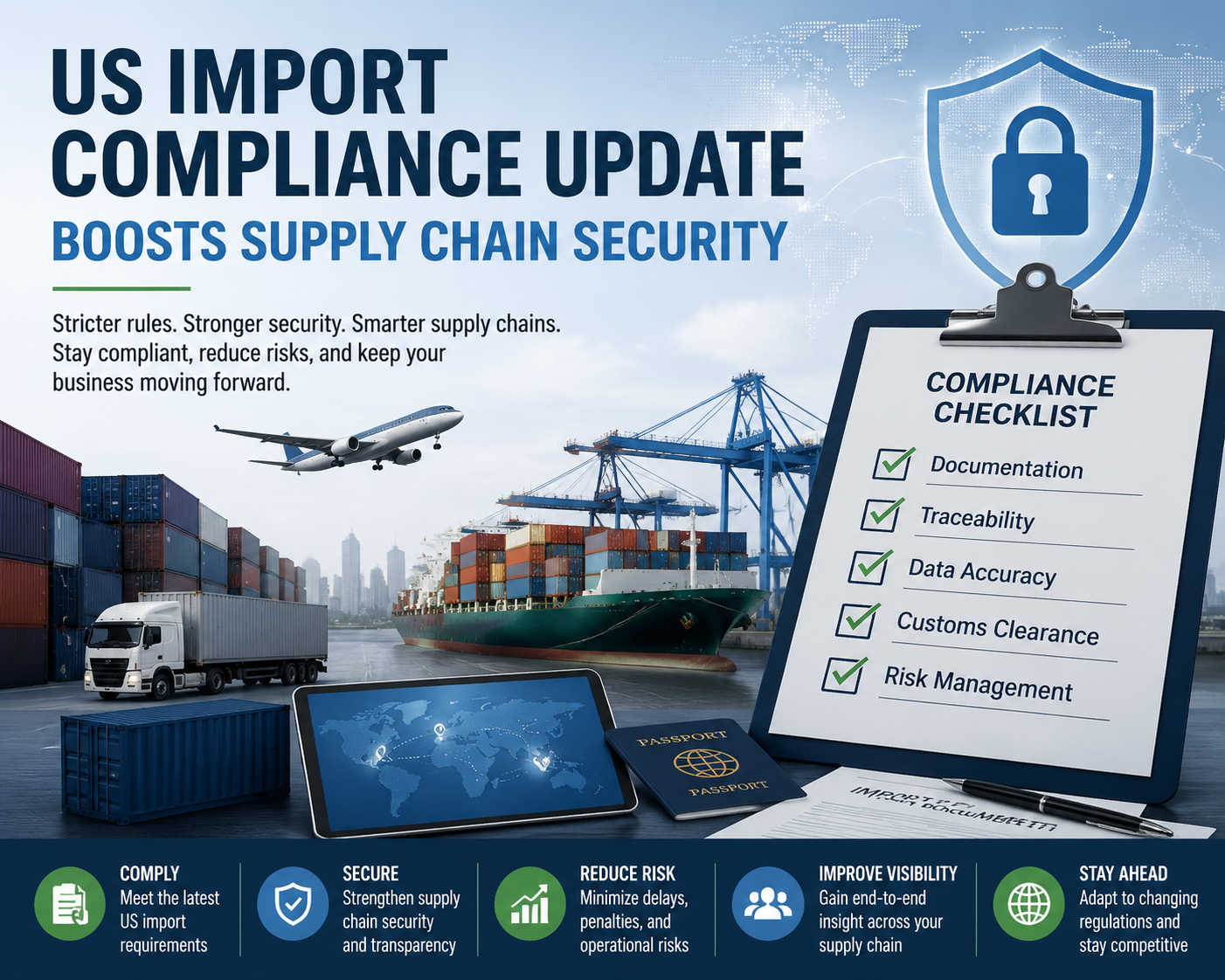
The recent US import compliance update has sent ripples through global supply chains, setting a new benchmark for how shipments must be documented, screened, and verified before reaching American shores. At its core, the update introduces stricter scrutiny on the origin of goods, harmonized classification rules, and comprehensive reporting of manufacturing processes, which means procurement teams can no longer rely on old-school paperwork shortcuts. The regulations also expand oversight into ancillary services like freight forwarding and warehousing, essentially leaving no stone unturned. For engineers and procurement specialists, it’s the kind of sweeping reform that makes you pause and rethink your sourcing strategies, because non-compliance is no longer a minor inconvenience—it’s a risk that can ripple into months of lost revenue. For reference on harmonized commodity codes, see USITC HTS Codes.
1.2 Why supply chain security is now a priority
Supply chain security has moved from being a back-office checkbox to the front-and-center issue it deserves to be. With increasing instances of counterfeit goods, cyberattacks on shipment data, and the constant threat of trade-based money laundering, US regulators are tightening the reins. From a procurement standpoint, this is less about bureaucracy and more about protecting your brand integrity. A single weak link—whether a supplier failing to meet traceability requirements or a poorly documented customs declaration—can cascade into financial penalties, shipment delays, and worst of all, reputational damage. Think of it as locking your digital and physical warehouse doors at the same time: if either is left ajar, the consequences are immediate and unavoidable. Learn more about supply chain security at CBP Trade Portal.
1.3 Industries most affected by the changes
Certain sectors feel the pinch more than others, with high-value electronics, pharmaceuticals, automotive components, and luxury goods at the top of the list. These industries deal with complex global supply networks and have historically been targets for fraud or misclassification. Food and consumer products also face increased scrutiny due to safety and labeling regulations. Procurement teams in these verticals now have to be more vigilant than ever, implementing preemptive compliance checks and auditing suppliers regularly, because even a minor oversight could translate into blocked shipments at the port, additional inspections, or costly fines. Additional insights can be found on FDA Import Program.
2. Key Drivers Behind the US Import Compliance Update
2.1 Rising geopolitical trade risks
The global trade landscape is anything but static; tariffs, sanctions, and embargoes can emerge overnight, turning what once was a stable supply chain into a high-stakes minefield. The US compliance update reflects these realities, demanding that importers demonstrate not just where goods come from but that they are sourced in adherence to legal and ethical standards. For procurement professionals, this means building geopolitical risk assessments into supplier selection and not relying solely on cost or lead time as decision drivers.
2.2 Increased customs enforcement pressure
US Customs and Border Protection has ramped up enforcement, deploying advanced technology to flag irregularities and assess risk at scale. The update signals a move toward proactive, rather than reactive, enforcement. If your shipping documentation has even slight discrepancies, expect delays or fines. Procurement teams need to tighten up verification processes, double-check harmonized codes, and ensure all supplier-provided data aligns perfectly with customs requirements.
2.3 Demand for transparent global sourcing
Transparency isn’t a buzzword anymore—it’s a mandate. Brand procurement leaders are under pressure to verify ethical labor practices, environmental compliance, and accurate product traceability. The update formalizes this expectation, essentially requiring supply chains to be auditable from raw material to final delivery. Procurement engineers now need to collaborate with suppliers to ensure each step is documented and verifiable, making transparency not just a compliance checkbox, but a strategic advantage in mitigating risk. Read more about ethical sourcing at UN Global Compact.
3. How the Update Strengthens Supply Chain Security
3.1 Enhanced cargo screening procedures
The update mandates advanced cargo screening, integrating X-ray scanning, AI-assisted anomaly detection, and risk-based profiling. For importers, this means shipments are more likely to undergo thorough inspections, which could slow timelines but drastically reduce the probability of contaminated, counterfeit, or misdeclared goods reaching the market. The bottom line is that while it may feel like an extra hoop to jump through, these procedures are a vital security layer.
3.2 Improved data sharing across agencies
Data is the new battlefield, and this compliance update turns supply chain visibility into an information-sharing exercise. Customs authorities can now access detailed supplier information, shipment histories, and even internal manufacturing logs. Procurement teams should consider integrating their ERP systems with compliance platforms to provide real-time, accurate data feeds, reducing friction and preempting audits.
3.3 Reduction of fraud and misdeclaration risks
By enforcing stricter reporting standards and expanding auditing powers, the update significantly curtails fraudulent activity and misdeclarations. Importers can no longer rely on minimal disclosure or generic product descriptions; the level of granularity required ensures that only verified goods pass through the system smoothly. For procurement engineers, this means prioritizing suppliers who can provide verifiable, traceable documentation down to the component level.
4. New Documentation Requirements for Importers
4.1 Expanded bill of lading data fields
Bills of lading now need to include expanded details such as manufacturer identifiers, production batch numbers, and precise commodity codes. This may seem like micromanagement, but it ensures a traceable, auditable shipment trail. Procurement teams must ensure that all documentation is accurate before it leaves the supplier’s hands, or face potential penalties at the US border.
4.2 Supplier and manufacturer traceability rules
Traceability requirements extend beyond just paperwork; they encompass supplier audits, material sourcing verification, and adherence to regulatory frameworks. For brands sourcing from multiple countries, this can be a logistical puzzle, but those who master it gain a competitive edge by demonstrating compliance and reliability.
4.3 Digital documentation compliance standards
The update encourages or even mandates the use of electronic documentation for easier verification and reduced human error. Systems need to be interoperable with US customs platforms, and any discrepancies can trigger automatic alerts, slowing shipments and increasing costs. Procurement engineers should invest in platforms that enable seamless digital integration with all partners.
5. Customs Clearance Process Changes
5.1 Pre-arrival filing requirements
Advance filing of shipment information is now non-negotiable. Pre-arrival data submissions allow customs to risk-profile shipments before they dock, reducing bottlenecks but demanding meticulous planning from procurement teams to ensure accuracy.
5.2 Automated risk assessment systems
AI and machine learning tools are increasingly used to flag high-risk consignments. Importers must account for automated decision-making that can hold or release shipments, necessitating precise data input and adherence to compliance standards.
5.3 Increased inspection frequency
Random and targeted inspections are on the rise, especially for high-risk commodities. Procurement teams must plan for these contingencies, factoring potential delays and additional costs into project timelines.
6. Impact on Global Procurement Strategies
6.1 Supplier qualification adjustments
Procurement teams are no longer treating supplier onboarding as a paperwork exercise; it has become a full-blown risk engineering process. Qualification now includes compliance history, documentation discipline, traceability capability, and even digital maturity. In practical terms, a supplier that once looked “good enough” on price and lead time may now be disqualified simply because their data hygiene is inconsistent or their factory records are incomplete. In real-world sourcing discussions, it’s become common to hear: “If they can’t prove it, we can’t buy it.” That’s the new baseline.
6.2 Shift toward compliant sourcing regions
Sourcing geography is quietly being reshuffled. Regions with strong compliance infrastructure, standardized export documentation, and stable regulatory alignment with US requirements are gaining preference. This doesn’t mean low-cost regions are out, but the bar for entry is higher. Procurement engineers are increasingly balancing landed cost against compliance friction—because a cheap unit price means nothing if the shipment sits in customs limbo for two weeks.
6.3 Cost implications for procurement teams
Compliance is no longer invisible in the cost stack. It shows up in audits, documentation systems, supplier training, and extended clearance timelines. The “hidden tax” of compliance is real: more admin labor, more tech investment, and more buffer inventory. In procurement meetings, the conversation has shifted from “How cheap can we buy?” to “What is the true compliance-adjusted landed cost?”—and that changes everything.
7. Data Accuracy and Digital Compliance Expectations
7.1 Importance of real-time shipment data
Static spreadsheets are out; real-time visibility is in. Customs authorities now expect near-live updates on shipment status, product classification, and supplier declarations. From a procurement engineering standpoint, this means data latency is a risk factor. If your shipment data is even slightly outdated, it can trigger red flags. In short, stale data is now almost as bad as wrong data.
7.2 Integration with customs platforms
Modern compliance is increasingly API-driven. Procurement systems, freight forwarders, and customs platforms are expected to “talk” to each other seamlessly. This level of integration reduces manual entry errors but demands upfront system alignment. Many organizations are now investing heavily in ERP-to-customs bridges because disconnected systems are basically compliance liabilities waiting to happen.
7.3 Consequences of data inconsistencies
Inconsistent data is the silent killer of smooth customs clearance. A mismatch between invoice descriptions, HS codes, and packing lists can stall entire shipments. Worse, repeated inconsistencies can flag a company as high-risk. Procurement teams are now treating data consistency like a quality control metric—because in the eyes of customs, it absolutely is one.
8. Role of Freight Forwarders in Compliance
8.1 Acting as compliance intermediaries
Freight forwarders are no longer just logistics coordinators—they’ve become compliance gatekeepers. They sit between suppliers and customs authorities, ensuring documentation accuracy and regulatory alignment. For procurement teams, choosing a forwarder is now as strategic as choosing a supplier. The wrong partner can quietly derail an entire shipment pipeline.
8.2 Supporting accurate documentation flow
Forwarders are increasingly responsible for validating shipping documents before submission. This includes checking bill of lading consistency, verifying product descriptions, and aligning data formats with US requirements. In practice, they act like the last line of defense before data hits customs systems. A good forwarder catches issues before they become expensive problems.
8.3 Risk mitigation through logistics expertise
Experienced forwarders bring more than transportation—they bring pattern recognition. They know which routes trigger inspections, which commodity codes are under scrutiny, and how to structure filings to minimize friction. Procurement engineers who leverage this expertise effectively are essentially outsourcing part of their compliance risk management.
9. Customs Enforcement and Penalty Risks
9.1 Common violations under new rules
The most frequent issues are not dramatic—they are operational: incorrect HS codes, incomplete manufacturer information, undervalued declarations, and inconsistent documentation sets. These small errors now carry disproportionate weight under stricter enforcement frameworks. It’s the classic “small leak sinks the ship” scenario.
9.2 Financial penalties and shipment delays
Penalties are no longer symbolic. They can escalate quickly into significant fines, storage charges, and demurrage costs. But the real pain point is delay. In today’s just-in-time supply chains, a 5–10 day customs hold can disrupt production schedules, retail launches, and customer commitments. That’s where procurement risk becomes business risk.
9.3 Compliance audit procedures
Audits are becoming more structured, data-driven, and frequent. Companies may be required to present full traceability records, supplier documentation chains, and transactional histories. Procurement teams need audit-ready systems, not “let’s compile this in a rush” spreadsheets. In this environment, audit preparedness is continuous, not reactive.
10. Supply Chain Visibility Requirements
10.1 End-to-end shipment tracking expectations
Visibility now extends from raw material sourcing all the way to final delivery. Procurement teams are expected to know where goods are, who handled them, and what transformations occurred along the way. It’s no longer enough to say “in transit”—stakeholders want granular, timestamped updates.
10.2 Supplier-level transparency demands
Suppliers are being asked to open up deeper operational data, including sub-tier sourcing. This is where things get complex, because many suppliers are not used to this level of disclosure. Procurement engineers often find themselves acting as translators between compliance expectations and supplier capabilities.
10.3 Technology enabling visibility improvements
IoT tracking, blockchain-based ledgers, and cloud logistics dashboards are becoming standard tools. These systems reduce blind spots and allow procurement teams to spot disruptions before they escalate. In practice, visibility technology is turning supply chains from black boxes into monitored pipelines.
11. Technology Adoption in Compliance Management
11.1 AI-driven risk detection tools
AI systems are now scanning shipment data for anomalies faster than any human team could. They flag inconsistencies, predict inspection likelihood, and even recommend corrective actions. For procurement engineers, this is like having a co-pilot constantly checking your compliance posture.
11.2 Blockchain for shipment traceability
Blockchain is increasingly used to create immutable records of product movement and transformation. While still evolving in adoption, it offers a strong solution for industries where provenance is critical. Once data is recorded, it cannot be altered—something customs authorities value highly.
11.3 Cloud-based customs platforms
Cloud platforms are centralizing compliance workflows, making documentation accessible, standardized, and auditable. Procurement teams benefit from reduced manual workload and improved collaboration across suppliers, forwarders, and internal teams. The direction is clear: compliance is moving to the cloud.
12. Effects on Cross-Border Manufacturing
12.1 Shifts in production location decisions
Manufacturing decisions are no longer purely cost-driven. Compliance complexity is now part of the equation. Some brands are relocating production closer to end markets to reduce regulatory friction. Others are consolidating suppliers to simplify documentation chains.
12.2 Compliance costs for manufacturers
Manufacturers are investing more in documentation systems, certification processes, and traceability infrastructure. These costs are often passed downstream, affecting procurement budgets. The hidden reality: compliance is becoming a production input, not just a shipping requirement.
12.3 Impact on just-in-time production models
Just-in-time systems are under pressure because delays caused by compliance checks introduce uncertainty. Many procurement teams are quietly shifting toward hybrid models with safety buffers. It’s not abandonment of JIT—it’s adaptation to a more regulated environment.
13. Mitigating Supply Chain Disruptions
13.1 Pre-shipment compliance checks
Pre-shipment validation is becoming standard practice. This includes document verification, HS code confirmation, and supplier data audits before goods even leave the factory. It’s far cheaper to fix issues at origin than at the port.
13.2 Buffer planning and inventory strategies
Procurement teams are reintroducing strategic buffers to absorb customs delays. This is a pragmatic shift—less lean ideology, more operational resilience. Safety stock is making a quiet comeback.
13.3 Alternative routing options
Diversifying shipping routes and ports of entry reduces exposure to bottlenecks. Smart procurement planning now includes contingency routing scenarios, especially for high-value or time-sensitive goods. Flexibility is becoming a competitive advantage.
14. Best Practices for Brand Procurement Teams
14.1 Supplier compliance audits
Regular audits ensure suppliers maintain documentation accuracy and regulatory alignment. These audits are no longer annual checkboxes but ongoing governance mechanisms. Procurement teams are embedding compliance KPIs into supplier scorecards.
14.2 Contract clauses for regulatory protection
Contracts now include explicit compliance obligations, liability clauses, and documentation standards. This legal structuring protects brands when suppliers fail to meet requirements. In essence, compliance risk is being contractually redistributed.
14.3 Internal compliance training programs
Procurement teams are investing in training to ensure staff understand evolving regulations. Knowledge gaps can be expensive. Well-trained teams reduce errors, improve documentation quality, and respond faster to regulatory changes.
15. Case Examples of Compliance Failures and Successes
15.1 Delays caused by incomplete documentation
In multiple real-world scenarios, shipments have been held for weeks due to missing manufacturer identifiers or inconsistent invoice data. The lesson is simple: incomplete documentation is operational sabotage in slow motion.
15.2 Cost savings from proactive compliance
Companies that invested early in compliance automation and supplier training have significantly reduced clearance delays and penalty exposure. In some cases, they’ve turned compliance into a competitive advantage, securing faster market entry.
15.3 Lessons learned from global brands
Leading brands now treat compliance as part of product design and sourcing strategy, not an afterthought. The key takeaway is clear: embedding compliance early in the supply chain lifecycle prevents downstream chaos.
16. Future Outlook of US Import Compliance
16.1 Expected regulatory tightening trends
The trajectory points toward even stricter enforcement, expanded data requirements, and deeper supply chain scrutiny. Procurement teams should expect progressively finer-grained reporting obligations, where product-level transparency becomes the baseline rather than the exception. In practice, this means compliance is shifting from periodic verification to continuous governance embedded directly into sourcing workflows.
16.2 Increased automation in customs systems
Automation is rapidly redefining how customs authorities evaluate shipments. Machine learning models are increasingly responsible for flagging anomalies, validating documentation consistency, and prioritizing inspections. For procurement engineers, this creates a new operating reality: if the data is clean, clearance is fast; if not, the system will not hesitate to escalate scrutiny. The “garbage in, garbage out” principle has never been more financially consequential.
16.3 Long-term implications for global trade networks
Global trade networks are gradually evolving into highly digitized, compliance-intensive ecosystems where visibility, traceability, and data integrity dictate competitiveness. Over time, this will likely compress inefficient intermediaries, reward digitally mature suppliers, and reshape sourcing footprints toward regions with stronger regulatory alignment. For procurement professionals, the shift is clear: compliance is no longer overhead—it is infrastructure, and those who treat it as such will stay ahead of the curve.