Table of Contents
1. Introduction to Shipping from China to Italy
1.1 Overview of China-Italy trade relations
The trade relationship between China and Italy has grown exponentially over the past decade, driven by the demand for high-quality Italian goods in Asia and competitive Chinese manufacturing in Europe. From automotive components to industrial machinery, Italy relies on a robust import pipeline, and China has positioned itself as a primary sourcing hub. This trade corridor isn’t just about volume—it’s about precision, timing, and reliability, where every shipment can make or break your production schedule.
1.2 Importance of freight decisions for buyers
Freight decisions are far more than a line item in a purchase order—they directly affect cost, lead time, and operational efficiency. For a procurement engineer juggling multiple vendors, selecting the right shipping terms can save tens of thousands in hidden fees, reduce customs headaches, and ensure that inventory arrives exactly when needed. A misstep here can cause cascading delays across production, sales, and client fulfillment.
1.3 Common shipping challenges
Importing from China comes with a laundry list of challenges: unexpected port congestion, fluctuating freight rates, customs inspections, VAT surprises, and even geopolitical factors. Buyers also contend with language barriers, discrepancies in product documentation, and the unpredictability of last-mile delivery in Italy. Without a clear understanding of shipping terms, these hurdles can quickly balloon into costly delays. For more on international trade, see World Trade Organization.
2. Understanding DDP and DAP Incoterms
2.1 Definition of DDP (Delivered Duty Paid)
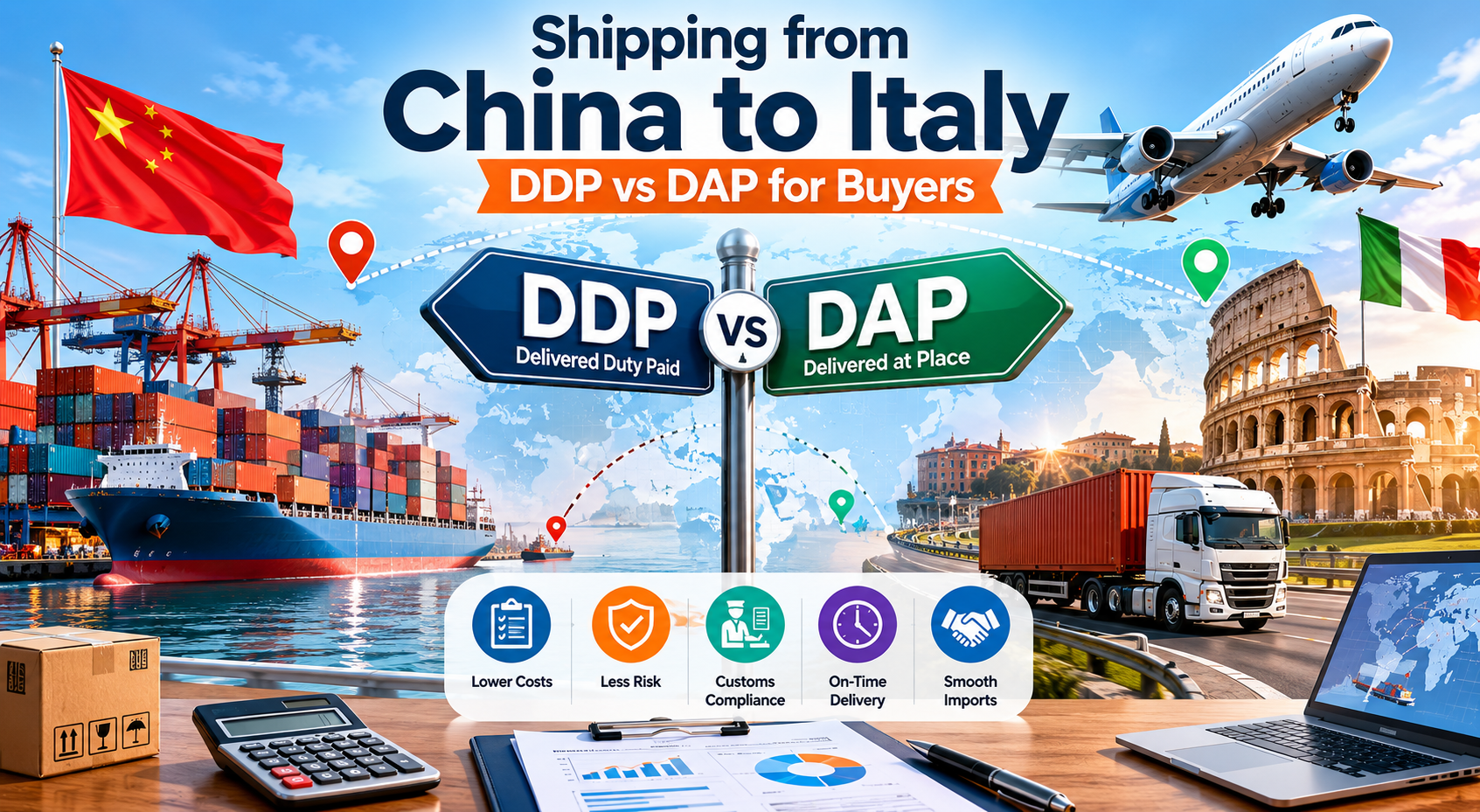
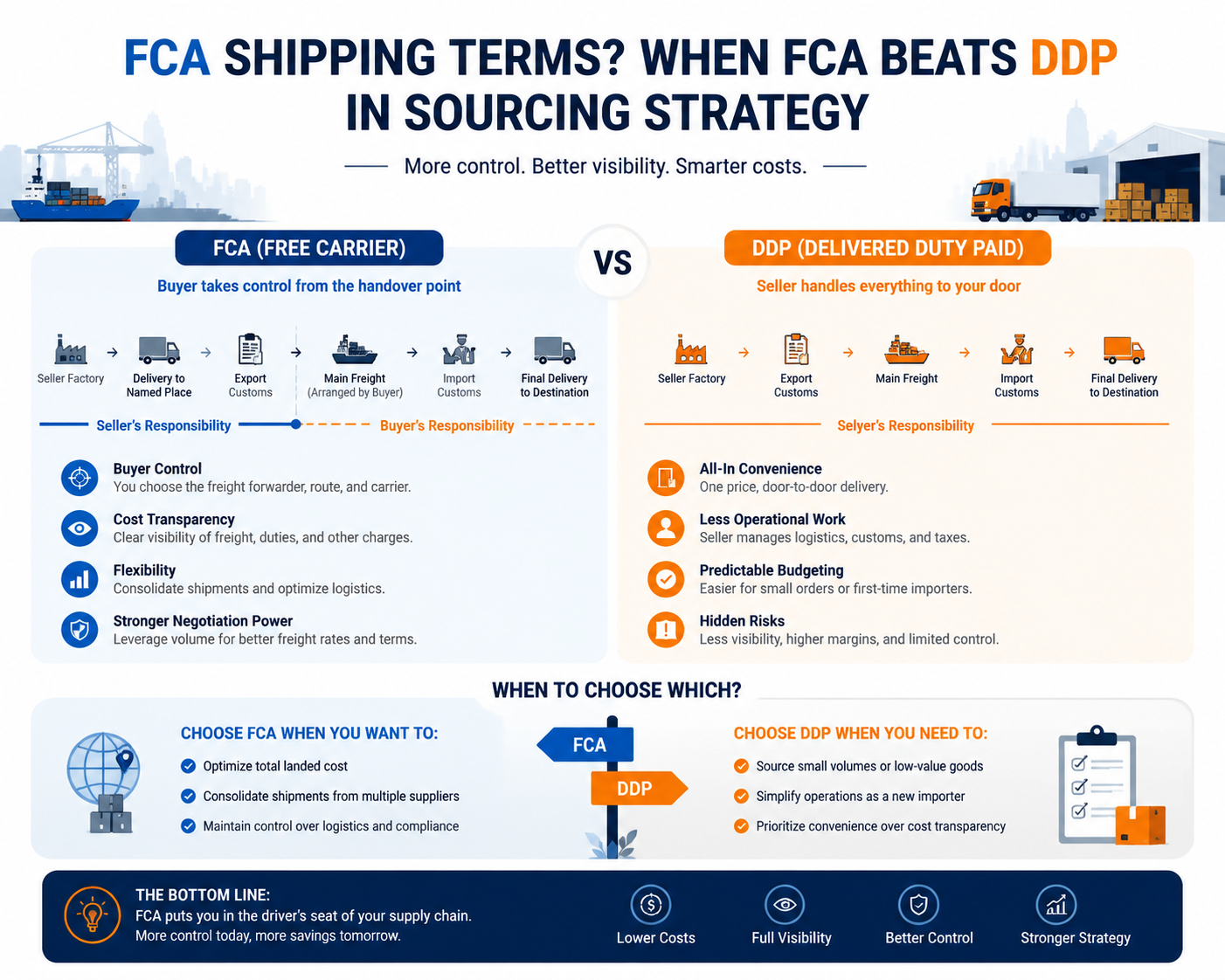
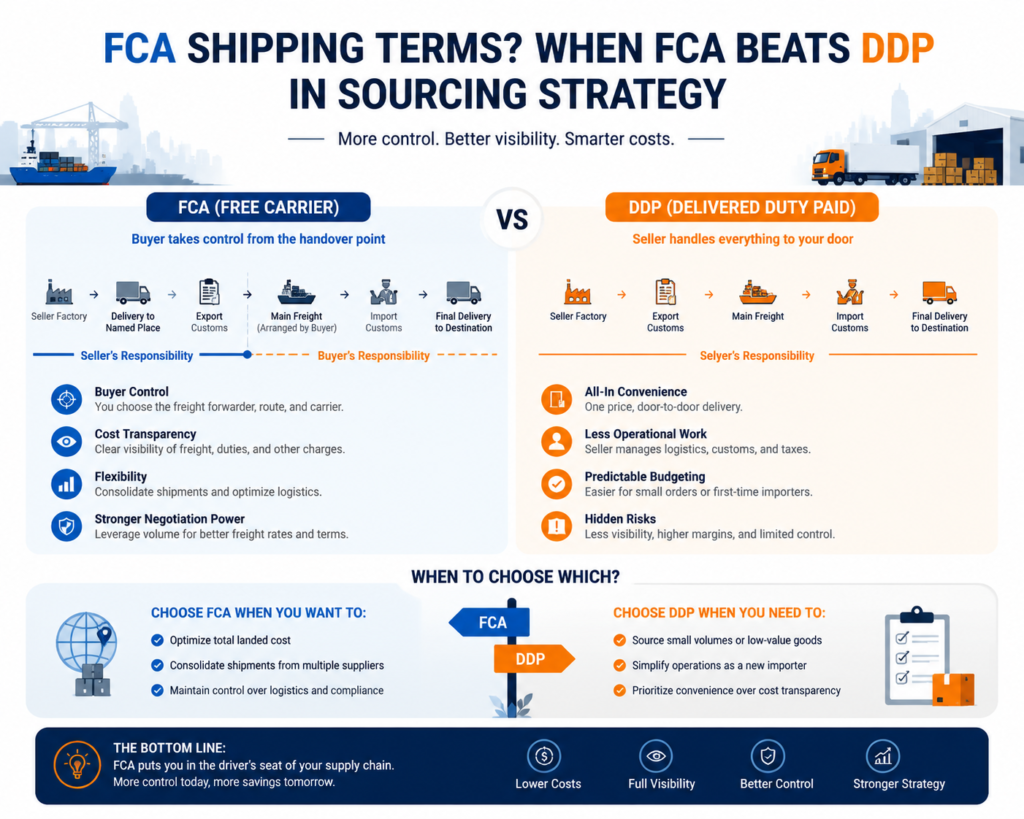
DDP, or Delivered Duty Paid, places the lion’s share of responsibility on the seller. All transportation costs, duties, taxes, and customs formalities are handled by the exporter, allowing the buyer to receive goods at their doorstep with minimal administrative burden. For busy procurement teams, DDP is akin to a “turnkey” solution where control is traded for convenience.
2.2 Definition of DAP (Delivered at Place)
DAP, or Delivered at Place, shifts certain responsibilities to the buyer. While the seller handles the shipment to the agreed destination, the buyer assumes responsibility for import duties, VAT, and customs clearance. This model gives buyers more flexibility to manage tax strategies but requires hands-on coordination with local authorities and logistics partners.
2.3 Key differences between DDP and DAP
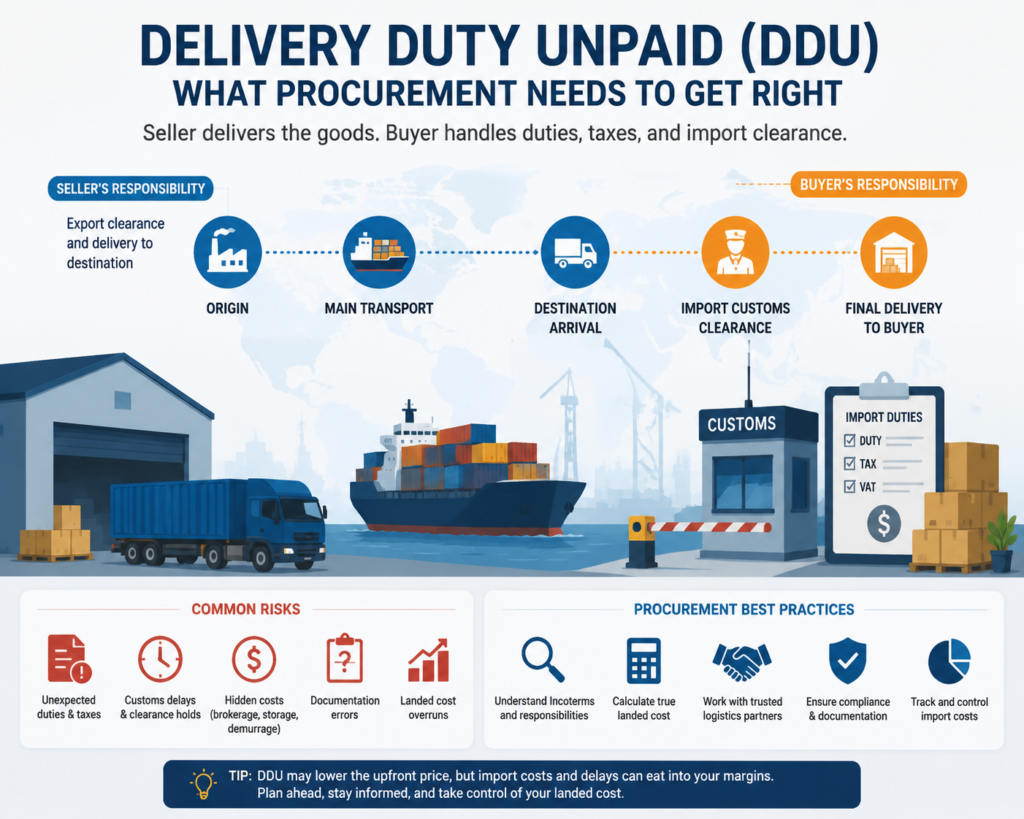
The core distinction lies in who foots the bill for duties and taxes and who handles customs. DDP simplifies the buyer’s workload at a potentially higher upfront cost, whereas DAP can reduce shipping charges but requires deeper knowledge of import processes. For buyers, the choice hinges on balancing convenience, cost, and in-house expertise. More on Incoterms: Wikipedia - Incoterms.
3. Why Incoterms Matter for Buyers
3.1 Impact on total landed cost
Every freight term directly influences the landed cost—the sum of product price, shipping, duties, taxes, and ancillary fees. Misjudging this figure can skew budgets, misalign pricing strategies, and erode profit margins.
3.2 Risk allocation between seller and buyer
DDP and DAP also allocate risk differently. Under DDP, the seller bears the brunt of delays, damages, or customs complications; under DAP, the buyer assumes these risks once the shipment crosses the origin port. Proper understanding allows buyers to hedge against unexpected disruptions.
3.3 Influence on supply chain efficiency
Choosing the right Incoterm isn’t just about cost—it affects lead times, inventory management, and responsiveness to market demand. A misaligned choice can create bottlenecks, forcing emergency air shipments or production halts.
4. How DDP Works in Practice
4.1 Seller responsibilities under DDP
The seller handles everything from packaging, freight forwarding, customs clearance, and payment of import duties to delivery at the buyer’s warehouse. Essentially, the buyer just waits for the shipment to arrive, reducing operational overhead.
4.2 Customs clearance and taxes
Customs clearance under DDP is managed entirely by the seller. They calculate VAT, pay import duties, and ensure compliance with Italian regulations. This removes complexity for buyers but can make costs slightly higher due to service premiums.
4.3 Delivery to buyer’s doorstep
With DDP, goods are delivered directly to the buyer’s location, minimizing handling risks and administrative tasks. It’s a plug-and-play approach, perfect for companies lacking a dedicated import team.
5. How DAP Works in Practice
5.1 Seller responsibilities under DAP
The seller’s duties end once the shipment reaches the agreed destination in Italy. They are responsible for safe transportation but not for customs clearance or import charges, which places the onus on the buyer.
5.2 Buyer responsibilities at destination
Buyers must manage all aspects of customs, pay VAT, and coordinate local logistics to complete delivery. This demands precise planning and familiarity with Italian import regulations.
5.3 Handling customs and import duties
Under DAP, buyers must ensure accurate tariff classification, proper documentation, and timely payments to avoid fines or shipment delays. Missteps can result in goods being held at the port or additional storage fees. Learn more about Italian customs at Agenzia Dogane e Monopoli.
6. Cost Comparison Between DDP and DAP
6.1 Freight charges under each term
DDP generally comes at a higher freight cost due to the comprehensive service, while DAP may offer lower initial shipping charges but can accumulate hidden costs at customs.
6.2 Duties, taxes, and hidden fees
Hidden fees under DAP include customs brokerage, VAT miscalculations, and storage fees, which are bundled into DDP upfront. Buyers must carefully weigh total landed cost rather than just shipping invoices.
6.3 Budgeting for procurement professionals
Procurement teams need to factor in both visible and invisible costs when evaluating DDP versus DAP. Ignoring post-arrival charges can derail project budgets and distort ROI calculations.
7. Risk Management in DDP vs DAP
7.1 Who bears shipment risk
DDP transfers risk to the seller until delivery, while DAP places the responsibility on the buyer once the goods reach the agreed destination. Understanding this helps mitigate liability exposure.
7.2 Liability for customs issues
Customs holds can be costly. Under DDP, sellers handle these issues, whereas DAP buyers must resolve them themselves, potentially delaying production schedules.
7.3 Managing delivery delays
Timely updates, real-time tracking, and contingency planning are critical. Buyers under DAP need robust logistics oversight, while DDP offers a more hands-off approach.
8. Impact on Supply Chain Visibility
8.1 Tracking and monitoring shipments
Both terms require visibility, but DAP demands tighter control over customs milestones, while DDP emphasizes end-to-end tracking without buyer intervention.
8.2 Communication with logistics partners
DAP requires more proactive communication with brokers and freight forwarders, while DDP reduces the need for constant updates.
8.3 Transparency in cost and timing
DDP provides upfront clarity on total cost, whereas DAP may involve variable fees, requiring meticulous record-keeping.
9. Legal Considerations for Buyers
9.1 Contract terms and Incoterms compliance
Contracts must clearly specify whether DDP or DAP applies, detailing responsibilities, risk transfer, and payment obligations to avoid legal disputes.
9.2 Liability clauses in international shipping
Liability for loss, damage, or misdeclaration should be explicitly stated, especially under DAP, where buyers assume customs risk.
9.3 Legal recourse for disputes
Buyers should know the arbitration venues, governing law, and dispute resolution process before finalizing any shipment agreement. More on trade law: UNCITRAL.
10. Choosing the Right Option for Your Business
10.1 Evaluating company resources
Assess whether your team has the expertise to handle customs, VAT, and last-mile logistics in Italy when considering DAP.
10.2 Assessing import expertise in Italy
Local knowledge is invaluable. Companies with limited Italian logistics experience may benefit more from DDP.
10.3 Volume and frequency of shipments
High-volume regular shipments may justify handling DAP to reduce per-unit costs, whereas sporadic shipments often favor DDP for simplicity.
11. Customs Clearance Process in Italy
11.1 Required documentation for DDP
Invoices, packing lists, certificates of origin, and tax declarations are handled by the seller.
11.2 Required documentation for DAP
Buyers must submit accurate paperwork, calculate duties, and coordinate with Italian customs brokers to avoid delays.
11.3 Common delays and how to avoid them
Incomplete documentation, wrong HS codes, and unpaid VAT are typical culprits; proactive verification and pre-clearance help prevent bottlenecks.
12. Shipping Time Considerations
12.1 Transit time differences between DDP and DAP
Transit is similar, but DAP may see longer delays due to customs clearance under buyer responsibility.
12.2 Seasonal and port-related delays
Peak shipping seasons, port congestion, and holidays can affect both DDP and DAP shipments; planning ahead mitigates surprises.
12.3 Planning inventory and procurement schedules
Lead time buffers are critical, especially under DAP, to prevent production stoppages or stockouts.
13. Tax and Duty Implications
13.1 VAT and import duty calculations
Accurate assessment ensures compliance and prevents unexpected cash outflows.
13.2 Avoiding double taxation
Coordination between seller invoices and local customs prevents duplicate VAT or duty payments.
13.3 Strategic tax planning for buyers
Advanced planning allows leveraging exemptions, duty deferrals, or bonded warehouse solutions under DAP.
14. Freight Forwarder Selection Tips
14.1 Evaluating reliability and reputation
Check client references, certifications, and experience with China-Italy shipments.
14.2 Service offerings for DDP and DAP
Ensure the forwarder can handle either term effectively, including customs clearance, insurance, and last-mile delivery.
14.3 Negotiating better terms and rates
Volume discounts, bundled services, and payment terms can significantly reduce total landed cost.
15. Case Studies and Examples
15.1 Example of a DDP shipment to Italy
A mid-size machinery supplier shipped to Milan with DDP, paying a premium upfront but avoiding customs headaches and ensuring on-time delivery.
15.2 Example of a DAP shipment to Italy
An electronics buyer opted for DAP, saving on freight but experiencing minor delays due to VAT miscalculations, highlighting the need for in-house expertise.
15.3 Lessons learned from past shipments
Understanding hidden costs, customs requirements, and forwarder reliability is key to preventing avoidable delays and expenses.
16. Best Practices for Buyers
16.1 Combining DDP and DAP strategically
For frequent, high-volume shipments, a hybrid approach can balance cost savings with operational convenience.
16.2 Reducing hidden costs and delays
Pre-clearance, accurate documentation, and clear communication with suppliers and forwarders prevent nasty surprises.
16.3 Building long-term logistics partnerships
Reliable forwarders, local customs brokers, and proactive communication form the backbone of an efficient import operation.
17. Technology Tools for Shipping Management
17.1 Shipment tracking software
Real-time dashboards allow buyers to anticipate delays and respond proactively.
17.2 Customs and duty calculators
These tools prevent miscalculations that could lead to fines or shipment holds.
17.3 Communication platforms with suppliers
Integrated messaging reduces miscommunication and keeps all stakeholders aligned on shipping milestones.
18. Conclusion and Recommendations
18.1 Summary of key differences
DDP offers convenience and risk mitigation at a higher upfront cost, while DAP provides cost flexibility but demands expertise and oversight.
18.2 Choosing based on business priorities
Evaluate in-house capabilities, shipment volume, and risk tolerance to select the most suitable Incoterm.
18.3 Final tips for smooth shipments
Plan ahead, use trusted freight partners, maintain accurate documentation, and leverage technology to ensure that every shipment from China to Italy arrives on time, on budget, and hassle-free.