Table of Contents
1. Introduction to China to Europe Import VAT
What import VAT means in cross-border trade
Import VAT in cross-border trade functions as a fiscal gatekeeper imposed at the point of entry into the European market, essentially acting like a consumption tax prepayment that ensures goods originating from outside the EU are brought into parity with domestically circulated products. From a purchase engineering standpoint, it is not merely a tax line item but a structural cost variable that directly reshapes landed cost architecture, especially when shipments scale from sporadic sourcing to continuous supply chain pipelines where every percentage point quietly compounds into budget distortion.
Why EU VAT rules matter for Chinese imports
EU VAT rules are not just bureaucratic formalities; they are a regulatory lattice that dictates how value is recognized, declared, and ultimately taxed when goods arrive from China, and overlooking them is like building procurement strategy on shifting sand. In real-world sourcing scenarios, inconsistent VAT treatment across EU member states can trigger unexpected cash outflows, delayed clearance, or even cargo immobilization.
Impact on global procurement strategies
From a strategic procurement lens, import VAT reshapes sourcing calculus by influencing supplier selection, Incoterms negotiation, and even inventory positioning decisions, because VAT exposure can either be deferred, reclaimed, or locked as sunk cost depending on structuring finesse.
2. Overview of EU Import VAT System
Structure of VAT in the European Union
The EU VAT system operates as a harmonized yet locally administered framework, meaning each member state applies its own rate while adhering to overarching EU directives.
Differences between VAT and customs duty
VAT and customs duty are often confused, but they serve fundamentally different fiscal purposes: customs duty is a trade policy instrument, while VAT is a consumption-based tax.
Key VAT principles for imported goods
Imported goods are taxed based on destination principle taxation, ensuring a level playing field between EU-produced and imported goods.
Reference: Value Added Tax Overview
3. How Import VAT is Calculated in the EU
Taxable value components
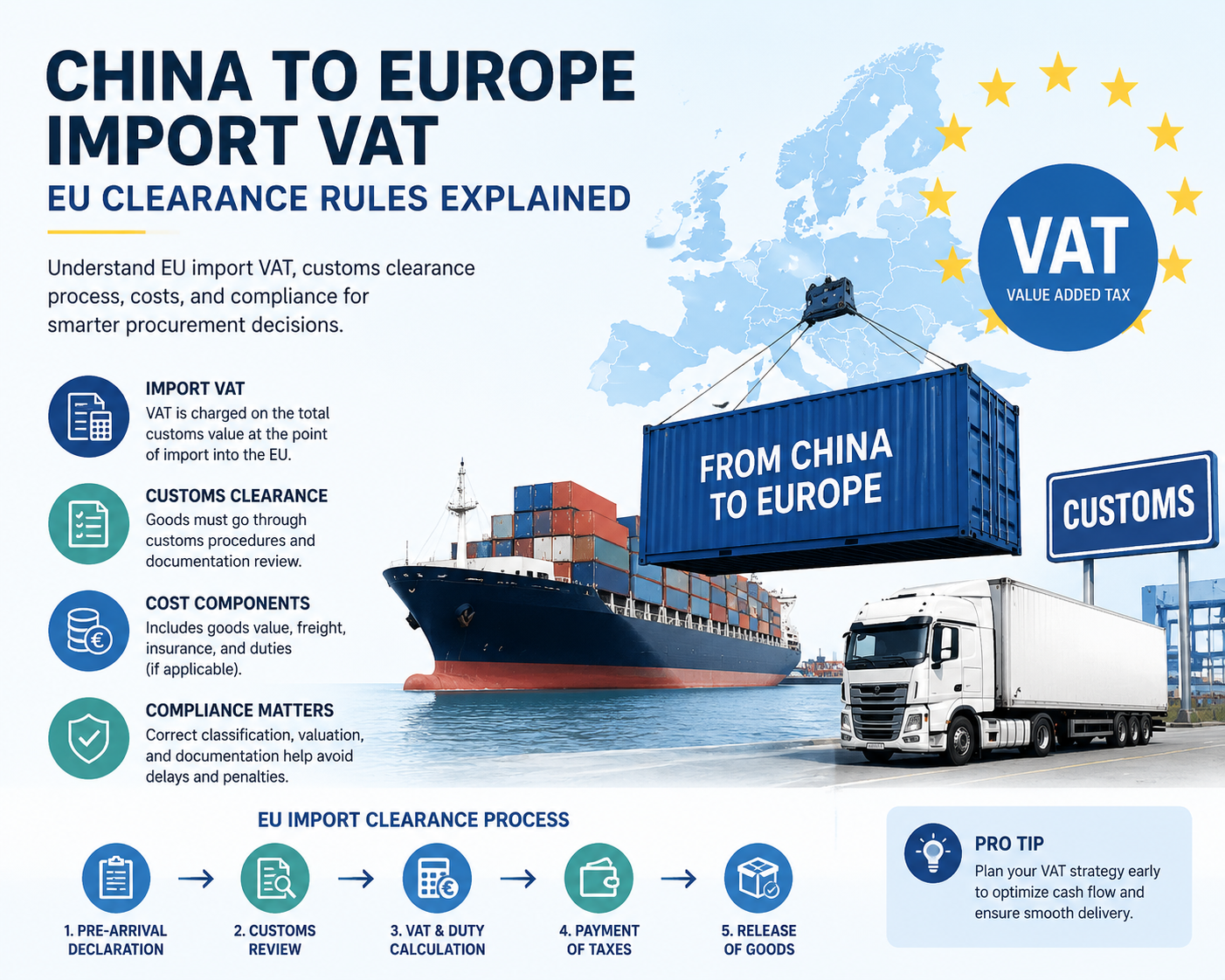
The taxable base for import VAT typically includes the customs value of goods plus applicable duties.
Inclusion of freight and insurance costs
Freight and insurance are usually embedded into the taxable value, meaning logistics decisions directly influence tax exposure.
Country-specific VAT rate differences
Although the EU shares a common VAT framework, rates vary significantly across member states.
4. Customs Clearance Process in the EU
Step-by-step import clearance flow
The clearance process begins with pre-arrival data submission, followed by valuation review, VAT calculation, inspection, and release authorization.
Role of customs authorities in VAT collection
Customs authorities act as fiscal intermediaries for VAT collection at the border.
Required documentation during clearance
Essential documents include commercial invoices, packing lists, bill of lading, and customs declarations.
Reference: European Commission VAT System
5. Key VAT Registration Requirements
When foreign sellers need VAT registration
Foreign suppliers may need VAT registration when storing goods in the EU or selling directly to consumers.
Role of EU VAT numbers for importers
An EU VAT number enables businesses to reclaim input VAT and operate within the tax system transparently.
Impact of EORI registration
The EORI number functions as a customs identity key required for import clearance.
6. Importer of Record Responsibilities
Definition of importer of record (IOR)
The importer of record is the legal entity responsible for ensuring goods comply with import regulations and taxes are properly paid.
VAT liabilities for procurement teams
When acting as IOR, procurement teams assume direct VAT liability.
Risk allocation in supply chains
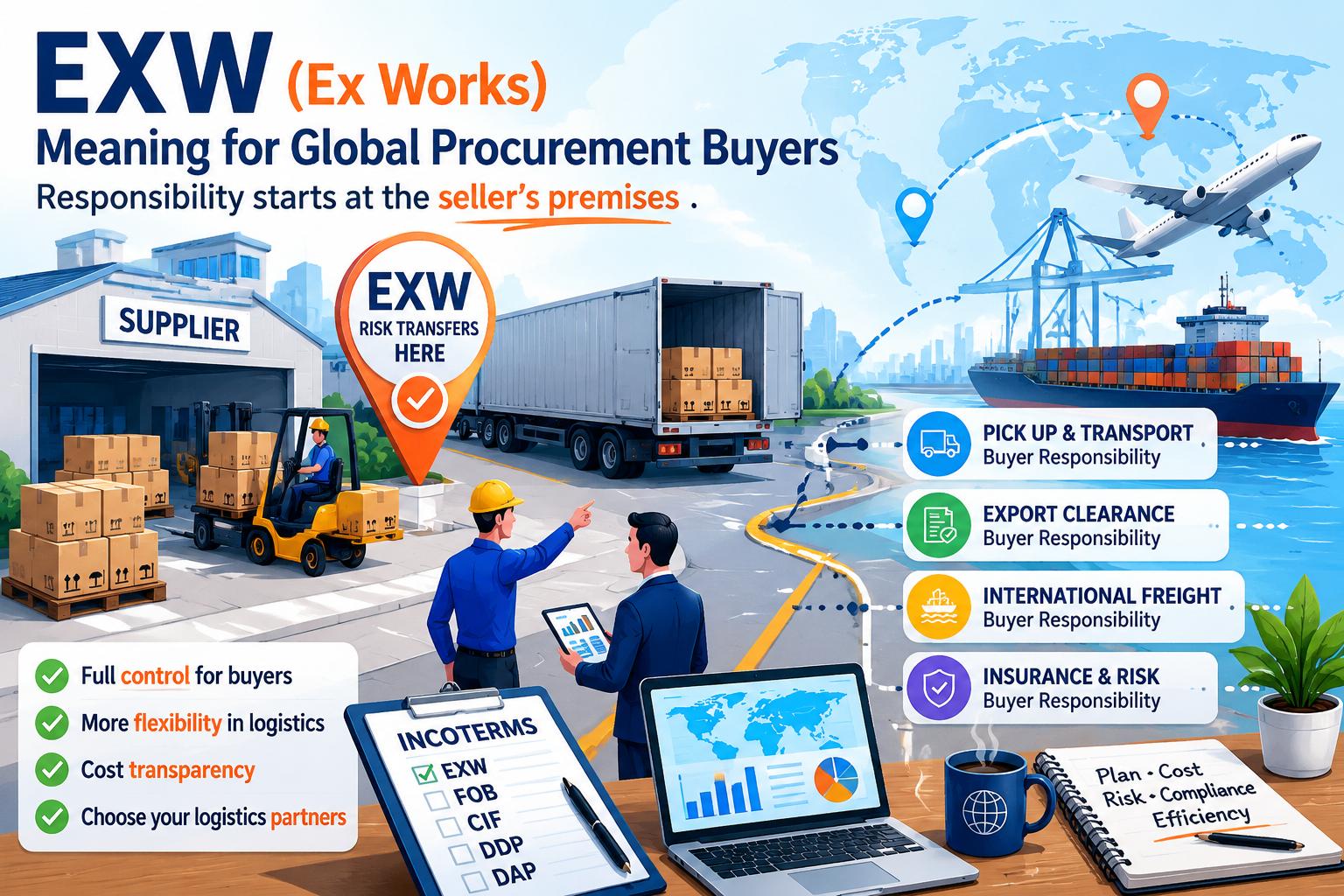
Risk allocation depends heavily on contractual structuring and Incoterms selection.
7. DDP vs DAP in EU Imports
Differences in VAT handling under DDP
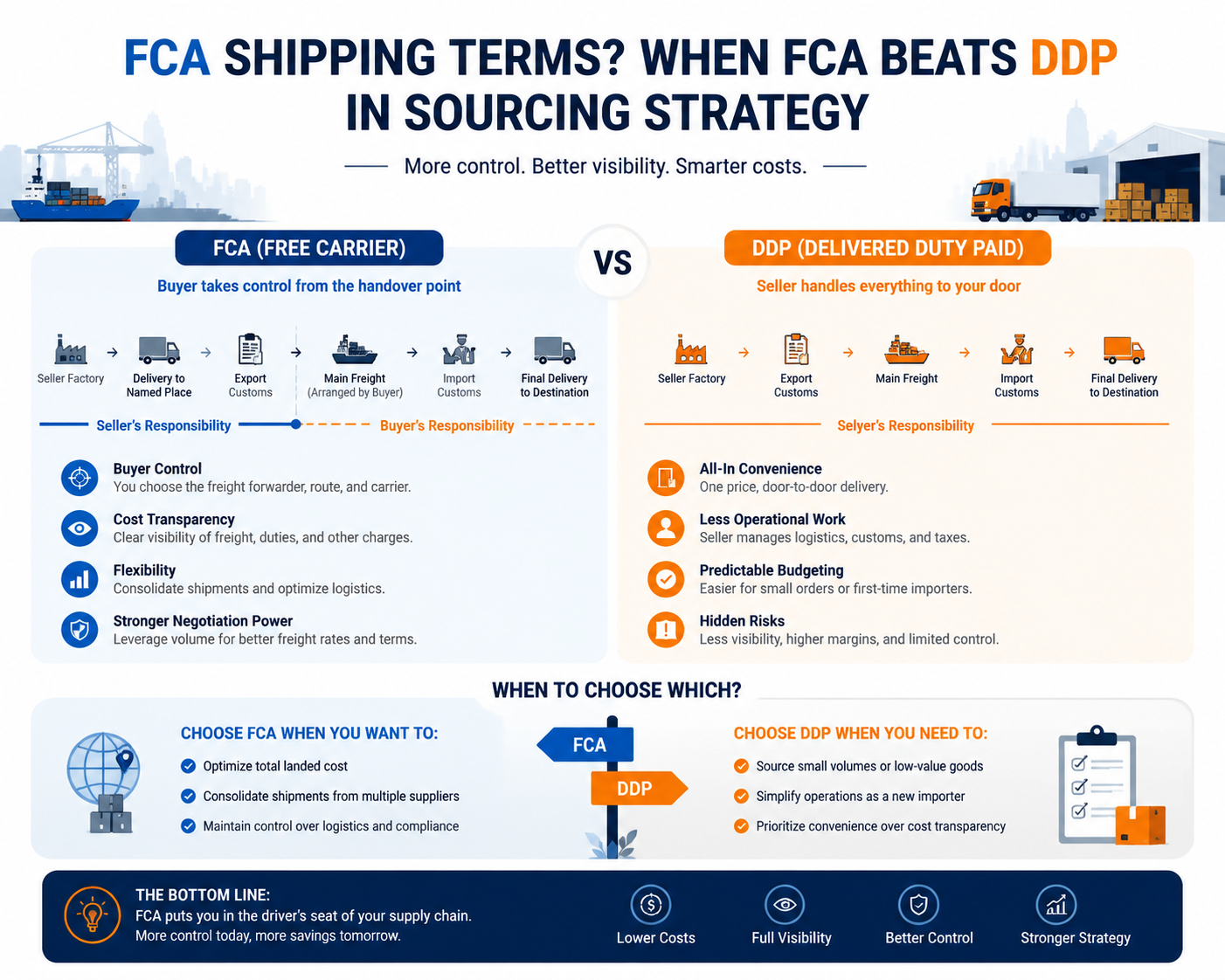
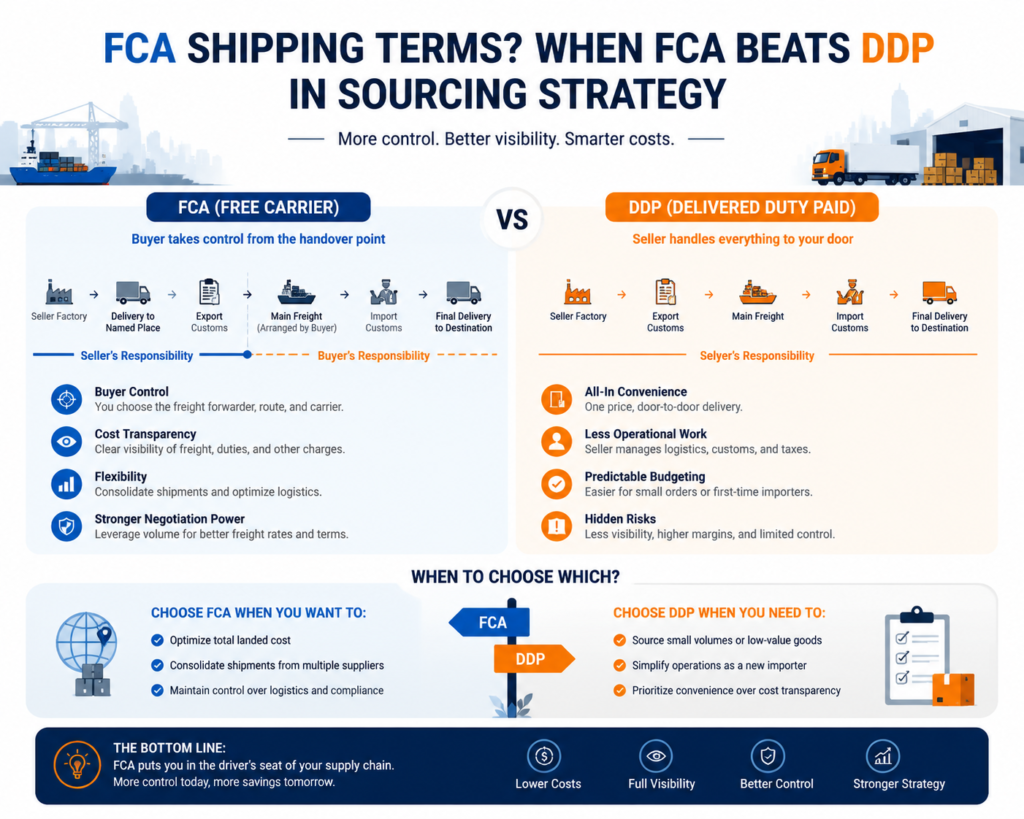
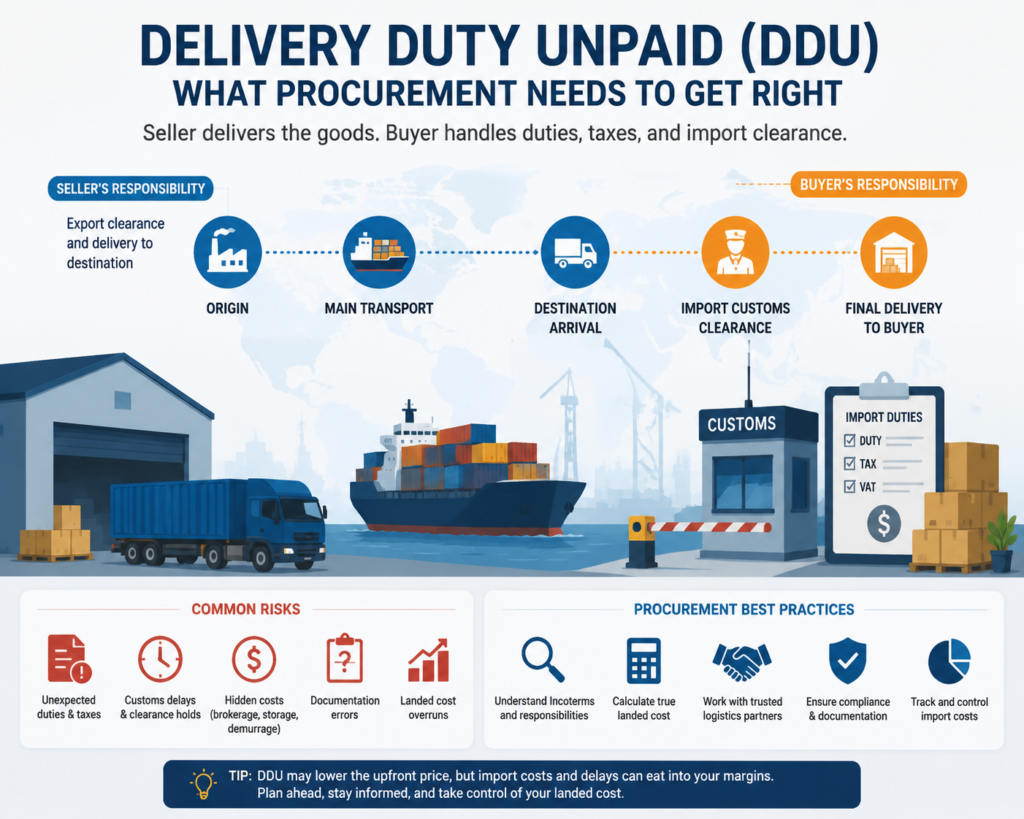
Under DDP terms, the seller assumes responsibility for VAT and customs clearance.
Cost implications for procurement buyers
DAP shifts VAT responsibility to the buyer, requiring upfront cash flow allocation.
Risk control in each shipping term
DDP reduces operational risk but increases supplier dependency.
8. VAT Payment Timing and Cash Flow Impact
When VAT is paid during import process
VAT is typically paid at customs clearance, creating upfront cash flow pressure.
Deferred VAT accounting options
Certain EU countries allow deferred VAT accounting to improve liquidity.
Cash flow planning for importers
Effective planning synchronizes procurement cycles with tax obligations.
9. VAT Deduction and Recovery Mechanisms
Input VAT recovery eligibility
Input VAT can generally be recovered if goods are used for taxable business activities.
Documentation needed for VAT reclaim
Reclaiming VAT requires invoices, import declarations, and proof of payment.
Common mistakes in VAT recovery
Frequent errors include mismatched invoices and incorrect VAT numbers.
10. Country-Level VAT Differences in Europe
VAT variations across major EU markets
Different EU countries apply varying VAT rates affecting landed cost.
Impact on multi-country distribution
Multi-country distribution increases compliance complexity significantly.
Strategic planning for regional imports
Strategic planning involves selecting optimal entry points for tax efficiency.
11. Customs Valuation Rules in the EU
Methods used to determine customs value
Customs value is determined using transaction value methods.
Treatment of transfer pricing and invoices
Transfer pricing must align with customs valuation rules.
Adjustments affecting VAT base
Royalties and tooling costs may be included in customs value.
Reference: World Customs Organization
12. Common VAT Compliance Risks
Misclassification of goods
Incorrect HS classification leads to incorrect VAT and duty application.
Undervaluation issues
Undervaluing goods can result in penalties and audits.
Documentation errors in customs declarations
Even minor inconsistencies can trigger compliance reviews.
13. Impact of Import VAT on Total Landed Cost
VAT as part of total landed cost structure
VAT significantly contributes to landed cost and impacts pricing models.
Pricing strategy implications for procurement
Procurement pricing must incorporate VAT exposure to avoid margin erosion.
Margin pressure on imported goods
VAT can compress margins if not properly reclaimed.
14. VAT Optimization Strategies for Importers
Structuring supply chains efficiently
Efficient structuring reduces overall tax friction.
Use of fiscal representatives in the EU
Fiscal representatives manage VAT obligations on behalf of foreign entities.
Leveraging bonded warehousing
Bonded warehouses allow VAT deferral until goods enter circulation.
15. Role of Freight Forwarders in VAT Management
Support in customs documentation
Freight forwarders assist in preparing accurate documentation.
Coordination with EU customs brokers
They act as intermediaries between importers and customs brokers.
Reducing compliance risks in logistics
They minimize risk of delays and penalties through procedural accuracy.
16. Digital Customs Systems in the EU
Introduction to EU import digitalization
The EU is progressively digitizing customs processes through electronic declarations.
Automated VAT processing systems
Automation reduces human error and improves tax calculation accuracy.
Benefits for cross-border procurement
Digital systems improve clearance speed and predictability.
17. Brexit and Its Impact on Import VAT
VAT changes for UK vs EU imports
Brexit introduced a clear VAT separation between UK and EU systems.
Dual compliance requirements
Companies must maintain separate VAT registrations.
Adjustments in logistics routing
Supply chains have been rerouted for tax efficiency.
18. Industry-Specific VAT Considerations
Electronics and high-value goods
High-value goods require precise valuation and documentation control.
Apparel and fast-moving consumer goods
High turnover products require efficient VAT recovery cycles.
Industrial equipment and machinery imports
Complex valuation arises due to installation and service components.
19. Case Study: China to Europe Import Flow
Typical VAT cost breakdown example
A standard import includes product cost, freight, duty, and VAT.
Common operational challenges
Challenges include documentation mismatches and clearance delays.
Optimization outcomes for importers
Optimized flows improve margin predictability and clearance speed.
20. Future Trends in EU Import VAT Regulations
Expected regulatory tightening
The EU is moving toward stricter enforcement and transparency.
Digital tax reporting expansion
Real-time reporting systems will increase data requirements.
Implications for global procurement teams
Procurement teams must integrate tax intelligence into sourcing decisions.