Table of Contents
1. Introduction to Mexico DDP vs DAP
1.1 Understanding the Basics of DDP
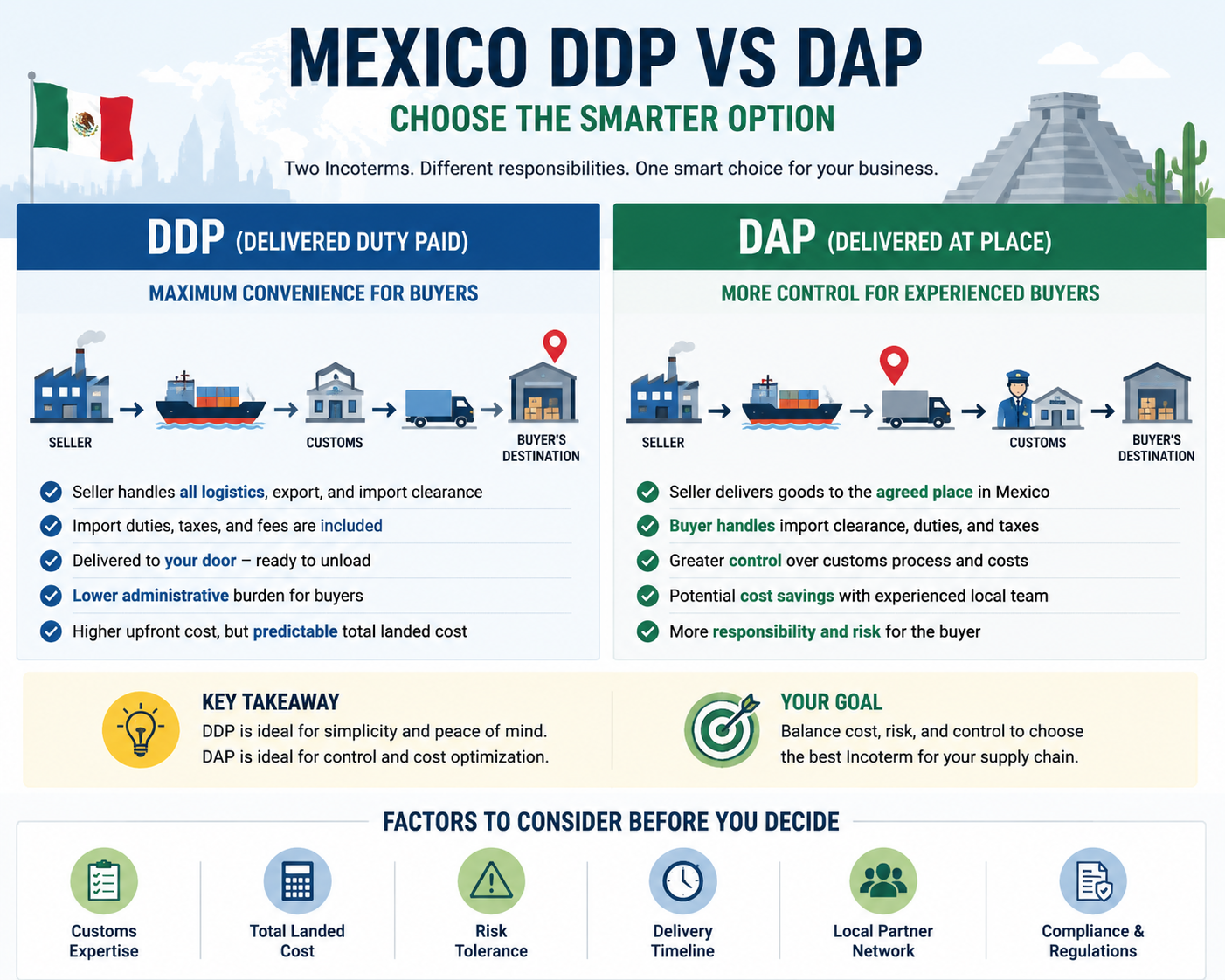
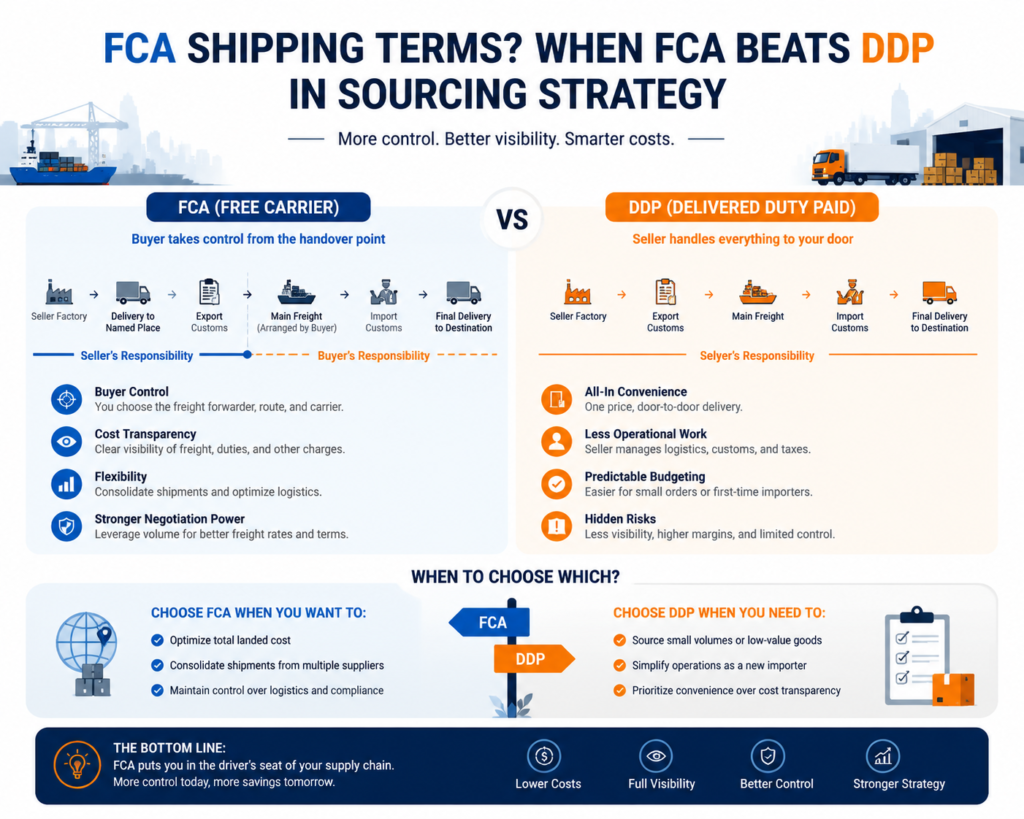
Delivered Duty Paid, or DDP, is the unicorn of international shipping for procurement pros—it’s where the seller basically shoulders the entire logistical burden, from exporting out of their warehouse to navigating the labyrinthine customs landscape in Mexico, right down to delivering the goods to your doorstep or warehouse. As a procurement engineer, you quickly realize that DDP gives you a kind of stress-free shipping nirvana: no fumbling with customs, no last-minute tax surprises, and no frantic calls trying to figure out who’s responsible when the shipment is stuck at the border. In a nutshell, DDP puts you, the buyer, in the driver’s seat without actually driving.
1.2 Understanding the Basics of DAP
Delivered at Place, or DAP, flips the responsibility script. Here, the seller takes the cargo to a specified point in Mexico, but the onus for customs clearance, import duties, and internal taxes lands squarely on your lap. Think of it as buying a ticket to a concert but having to figure out the ride and parking yourself. DAP can work wonders if your internal logistics and customs team is sharp, nimble, and loves a good challenge—but missteps can get expensive fast.
1.3 Why Choosing the Right Option Matters for Brands
Choosing between DDP and DAP isn’t just a checkbox on your procurement form; it’s a strategic decision that can affect your bottom line, your brand’s reputation, and the efficiency of your entire supply chain. One wrong choice can mean delayed shipments, unanticipated customs fees, or even legal headaches. For global brands shipping into Mexico, the choice directly influences how smoothly goods hit the shelves, how costs are distributed, and how risk is managed—all crucial elements when you’re operating in high-volume, fast-paced markets.
2. Key Differences Between DDP and DAP
2.1 Responsibility for Customs Clearance
DDP means the seller is the hero here—they handle all paperwork, clearances, and interactions with Mexican customs authorities. In DAP, the baton passes to the buyer, and any slip-ups can lead to penalties or shipment delays. It’s critical for procurement teams to understand who carries this load, because customs clearance isn’t just paperwork—it’s navigating a legal minefield where one small misstep can grind your supply chain to a halt.
2.2 Cost Allocation Between Buyer and Seller
In DDP, costs are front-loaded with the seller—they pay duties, taxes, and fees, which are factored into the price. In DAP, the buyer shoulders these costs, and without careful forecasting, you may find yourself paying more than anticipated. Smart procurement engineers treat this like a chess game, calculating each potential expense to avoid nasty surprises.
2.3 Risk Management in Transit
Risk under DDP is largely on the seller until goods reach your door, including loss, damage, and compliance issues. Under DAP, the buyer inherits part of that risk the moment the goods cross the border, making insurance planning and contingency strategies non-negotiable. Understanding these nuances can be the difference between a smooth operation and a logistical nightmare.
3. How DDP Works in Mexico
3.1 Seller Responsibilities Under DDP
The seller is responsible for the entire logistics chain—from warehousing and international transport to customs clearance and final delivery. They must also navigate any Mexican import regulations, ensuring compliance with local tax laws and documentation. Essentially, the seller is the quarterback calling every play, while the buyer sits back and monitors.
3.2 Import Duties and Taxes Included
With DDP, import duties, VAT, and other taxes are prepaid by the seller. This provides procurement teams with cost predictability, eliminating unexpected bills that can throw off monthly budgets. It’s a major advantage when planning high-volume shipments, especially for brands scaling rapidly in Mexico. For more information on Mexican VAT, see Wikipedia VAT Overview.
3.3 Delivery to Final Destination
Final delivery under DDP is typically arranged by the seller, ensuring that goods arrive at the buyer’s warehouse or designated location. This eliminates the need for buyers to coordinate with local carriers, which can be tricky in regions with variable infrastructure quality or inconsistent carrier reliability.
4. How DAP Works in Mexico
4.1 Buyer Responsibilities Under DAP
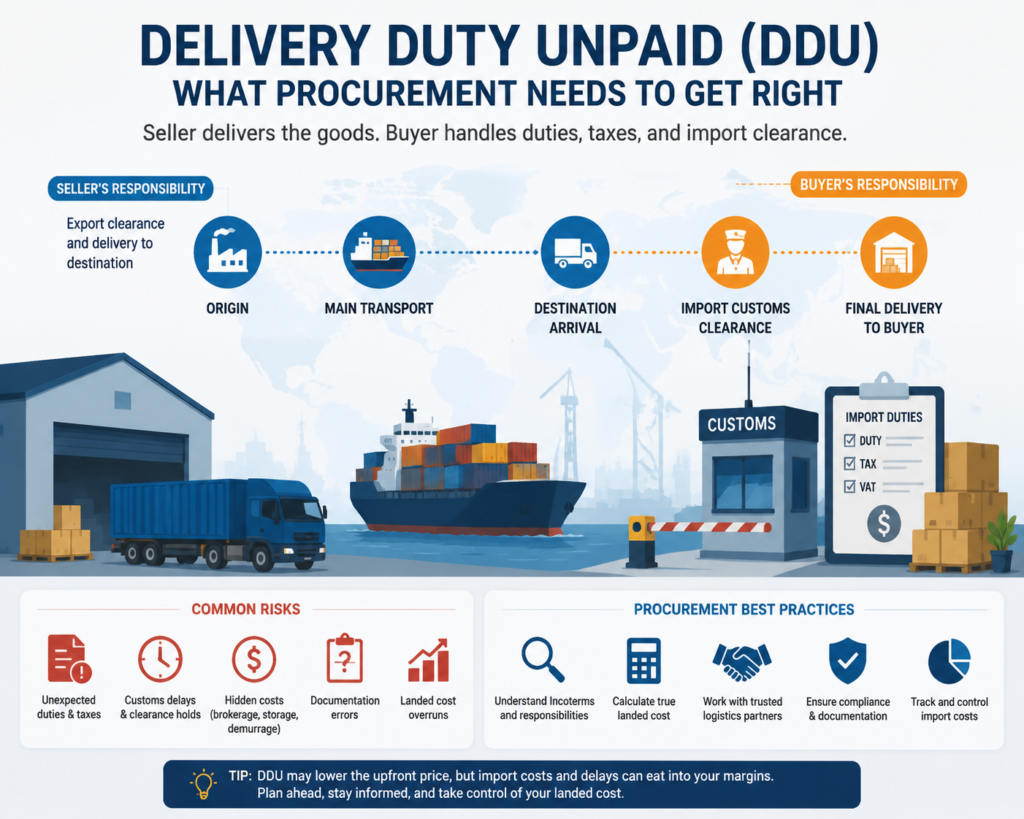
Under DAP, the buyer must handle customs clearance and pay all import duties and taxes. This means having a team—or trusted logistics partner—ready to navigate Mexican regulations, handle paperwork accurately, and ensure compliance. Any misstep can delay shipments or trigger fines, so precision and foresight are key.
4.2 Handling Import Duties and Taxes
Buyers must calculate duties and taxes accurately to avoid overspending or penalties. Tools like Mexican customs calculators and duty forecasting software can help, but human oversight remains critical, as errors in classification or documentation can trigger audits.
4.3 Delivery Expectations and Limitations
DAP stops short of final delivery responsibilities; the seller only guarantees that goods reach the agreed-upon location. This could be a port, airport, or regional warehouse. The buyer must then coordinate internal transportation, which adds complexity and requires strong local partnerships. A detailed guide on Mexican customs procedures can be found at Trade.gov Mexico Guide.
5. Cost Implications of DDP vs DAP
5.1 Upfront Shipping Costs
DDP typically has higher upfront costs, as the seller bundles duties, taxes, and logistics into the price. DAP may appear cheaper at first glance, but those savings can evaporate if customs or internal transportation costs are underestimated.
5.2 Hidden Fees and Charges
Hidden charges are the silent killers of supply chains. Under DAP, unanticipated duties, port handling fees, or documentation charges can sneak up on you. DDP often absorbs these, offering predictability—but it comes at a premium.
5.3 Total Landed Cost Calculation
Calculating total landed cost involves summing the product cost, shipping, customs duties, taxes, insurance, and internal transport. DDP simplifies this for the buyer, while DAP requires meticulous internal calculations to avoid misbudgeting. Precision here can save significant cash and prevent strained supplier relationships. For a deeper dive, see Investopedia Landed Cost.
6. Risk Considerations for Brand Procurement
6.1 Liability for Lost or Damaged Goods
DDP generally shifts liability to the seller until delivery. DAP hands over liability at the delivery point, meaning buyers need robust insurance and contingency planning to protect inventory. A single mishandled shipment can cascade into lost sales and damaged brand reputation.
6.2 Compliance Risks and Penalties
Non-compliance with Mexican import regulations can result in fines, delayed shipments, and reputational damage. DDP mitigates this risk by placing responsibility with the seller, while DAP requires buyers to be diligent in their regulatory oversight.
6.3 Mitigating Supply Chain Disruptions
Mitigating risk requires scenario planning. DDP reduces operational touchpoints for buyers, whereas DAP demands internal readiness to solve customs or transport disruptions swiftly. Backup carriers, contingency budgets, and proactive monitoring are essential in DAP arrangements.
7. Impact on Supply Chain Efficiency
7.1 Streamlining Logistics Processes
DDP offers a seamless, end-to-end process that can dramatically reduce internal workflow stress. DAP may introduce bottlenecks if customs clearance or local delivery isn’t perfectly coordinated. Efficiency here translates directly into faster inventory turnover and fewer headaches for procurement teams.
7.2 Coordination Between Supplier and Buyer
DDP reduces the need for tight coordination post-export; the seller manages most touchpoints. DAP requires proactive communication with local carriers, customs brokers, and internal teams to ensure smooth delivery.
7.3 Reducing Delivery Delays
DDP mitigates delays by centralizing responsibility, while DAP exposes buyers to the vagaries of Mexican customs and local logistics. Planning for DAP demands buffer times and contingency strategies to maintain consistent supply.
8. Customs Clearance Challenges in Mexico
8.1 Documentation Requirements
Mexican customs demand precise documentation: commercial invoices, packing lists, certificates of origin, and regulatory approvals. Errors can halt shipments.
8.2 Common Issues and How to Avoid Them
Frequent problems include misclassification of goods, incomplete paperwork, and overlooked duties. Using professional customs brokers or software to double-check filings can prevent costly delays.
8.3 Working with Local Customs Brokers
Brokers can be lifesavers for DAP shipments. They navigate local regulations, expedite clearance, and advise on optimal duty classifications, saving time and money while reducing risk. Additional guidance is available at US Customs & Border Protection.
9. Choosing DDP for Your Brand
9.1 When DDP Makes Sense
DDP is ideal when brands prioritize predictability, have limited customs expertise, or want to offload risk. High-value goods or tight deadlines also favor DDP.
9.2 Benefits for Procurement Professionals
Benefits include simplified logistics, predictable costs, and reduced operational burden, freeing procurement teams to focus on strategic sourcing rather than firefighting delays.
9.3 Case Examples of Successful DDP Use
Brands importing electronics or fashion items often prefer DDP to avoid complex customs headaches, ensuring inventory hits shelves on time and budgets remain intact.
10. Choosing DAP for Your Brand
10.1 When DAP Makes Sense
DAP is a smart choice when buyers have local expertise, want cost control over duties, or have flexible logistics operations that can handle customs clearance efficiently.
10.2 Benefits for Procurement Professionals
Benefits include potential cost savings, control over customs processes, and the ability to integrate with existing local logistics networks.
10.3 Case Examples of Successful DAP Use
Industrial machinery, automotive components, and bulk raw material importers frequently favor DAP because they already possess established customs infrastructure in Mexico. For example, a multinational manufacturer importing CNC equipment may leverage its own customs broker, tax recovery process, and inland transportation network, allowing it to reduce total logistics expenditure compared to a DDP arrangement. In such cases, the procurement department gains greater transparency and control over every cost element.
11. Comparing Delivery Timelines
11.1 Average Transit Times for DDP
DDP transit times depend heavily on the freight forwarder's capabilities and customs expertise. For air freight from China to Mexico, deliveries commonly range from 7 to 15 days. Sea freight shipments typically require 25 to 45 days depending on the port pair and inland destination. Because the seller manages customs clearance, procurement teams often experience fewer administrative interruptions. However, if the seller lacks a strong Mexican import structure, customs processing can become a bottleneck.
11.2 Average Transit Times for DAP
DAP shipping timelines may initially appear similar to DDP, but customs clearance is performed by the buyer after cargo arrival. If documentation, permits, or duty payments are not prepared in advance, additional delays can occur. Experienced procurement organizations often minimize these delays through pre-clearance planning and close coordination with customs brokers. In optimized operations, DAP transit performance can rival DDP.
11.3 How Delays Impact Brand Operations
A delayed shipment affects far more than transportation schedules. Consequences may include production downtime, inventory shortages, missed promotional campaigns, retail stockouts, increased emergency freight costs, and customer dissatisfaction. As many procurement professionals say, "One delayed container can create ten different problems." Supply chains operate like interconnected gears; when one gear slips, the entire mechanism feels the impact.
12. Legal Considerations in Mexico
12.1 Import Regulations and Compliance
Mexico maintains strict import regulations covering product classification, labeling, safety certifications, and customs declarations. Certain products may require NOM certifications, import permits, health registrations, or specialized documentation. Failure to comply can result in shipment holds, penalties, or cargo seizure.
12.2 Liability Clauses in Contracts
International purchase agreements should clearly define Incoterms, transfer of risk, insurance obligations, customs responsibilities, and dispute procedures. Ambiguity creates vulnerability. A well-structured contract eliminates uncertainty and protects both parties from costly disagreements.
12.3 Dispute Resolution Options
Cross-border disputes are not uncommon. Common resolution mechanisms include commercial negotiation, mediation, arbitration, and litigation. Many international procurement contracts favor arbitration because it offers greater neutrality and efficiency than court proceedings.
13. Tax Implications for Brands
13.1 Understanding VAT and Import Duties
Mexican imports are generally subject to import duties, Value Added Tax (VAT), customs processing fees, and additional regulatory charges where applicable. The exact tax burden depends on product classification, country of origin, and applicable trade agreements.
13.2 Tax Benefits of DDP vs DAP
DDP provides simplicity because taxes are prepaid by the seller. Procurement teams gain clear budgeting and fewer administrative obligations. DAP offers greater control; companies with sophisticated tax departments may optimize duty structures, reclaim eligible taxes, and improve cash-flow management. The better option depends largely on organizational maturity and local expertise.
13.3 Planning for Accurate Cost Forecasting
Accurate forecasting requires consideration of freight costs, insurance, duties, VAT, currency fluctuations, port charges, and inland transportation. Elite procurement teams maintain landed-cost models that are continuously updated as market conditions evolve.
14. Technology Solutions to Manage DDP and DAP
14.1 Tracking Tools for Shipments
Modern supply chains increasingly rely on real-time visibility platforms. These systems provide cargo tracking, milestone notifications, delay alerts, and exception management. Visibility reduces uncertainty and enables proactive decision-making.
14.2 Digital Customs Clearance Platforms
Digital customs platforms streamline documentation management, classification verification, duty calculations, and regulatory compliance. Automation reduces human error and accelerates customs processing.
14.3 Supply Chain Automation for Efficiency
Advanced organizations use automation to generate shipping documents, schedule transportation, monitor supplier performance, and analyze landed costs. Automation transforms procurement from a reactive function into a strategic value creator.
15. Common Mistakes Brands Make
15.1 Misjudging Total Landed Cost
Many buyers focus solely on freight quotations while overlooking taxes, duties, handling fees, and inland transportation. This creates budget variances that can significantly impact profitability.
15.2 Ignoring Customs Requirements
Incomplete documentation remains one of the most common causes of shipment delays. Procurement teams should establish standardized compliance checklists and conduct regular audits to ensure documentation accuracy.
15.3 Underestimating Risk Exposure
Some organizations assume logistics risks are minimal until a disruption occurs. Risk exposure can include port congestion, customs inspections, regulatory changes, cargo damage, and supplier failures. A robust risk management strategy should always accompany international procurement programs.
16. How to Decide the Smarter Option
16.1 Assessing Your Brand's Needs
Begin by evaluating internal customs expertise, budget priorities, delivery urgency, supply chain complexity, and available local resources. The optimal Incoterm should align with operational capabilities rather than theoretical cost savings.
16.2 Calculating Cost vs Risk
Procurement decisions should never be based solely on price. Evaluate cost predictability, customs control, administrative burden, risk exposure, and operational flexibility. The cheapest option on paper is not always the least expensive in practice.
16.3 Creating a Standardized Decision Framework
Leading procurement organizations develop decision matrices incorporating product value, shipment frequency, regulatory complexity, internal expertise, and risk tolerance. This systematic approach improves consistency and minimizes costly decision-making errors.
17. Conclusion and Next Steps
17.1 Recap of Key Differences
The fundamental distinction is straightforward: DDP places responsibility on the seller, and DAP places greater responsibility on the buyer. While the concept sounds simple, the operational implications are substantial.
17.2 Strategic Recommendations for Procurement
For most brands entering Mexico for the first time, DDP often provides a smoother experience due to reduced complexity and predictable costs. For organizations with established Mexican operations, experienced customs teams, and sophisticated tax management capabilities, DAP may unlock meaningful cost advantages and operational control.
17.3 Preparing for Future Mexico Shipments
Successful procurement professionals recognize that international logistics is not merely about moving cargo; it is about orchestrating cost, risk, compliance, and service performance into a cohesive strategy. Before selecting DDP or DAP for Mexico, conduct a comprehensive assessment of your supply chain capabilities, customs expertise, and long-term business objectives. By balancing operational control against administrative complexity, brands can make informed decisions that enhance resilience, improve profitability, and support sustainable growth in the Mexican market. In many cases, the smartest choice is not universally DDP or universally DAP—it is the option that best aligns with your organization's procurement maturity, risk appetite, and supply chain architecture.